Big Hops review: great veggie-powered movement before it gets lost in the weeds
No genre is as unforgiving as the 3D platformer. It's not just that you inevitably invite comparisons to some of the best games ever made (all of them starring Mario). It's that the basic elements of the genre - precision platforming, expressive movement, a camera generous enough to show it all - are only ever an inch away from plunging the player into miserable frustration.
So it is with Big Hops, which is a hop, skip and a jump from Mario Odyssey and yet, in its worst moments, feels more like a big oops.
The Big Hops release trailer.
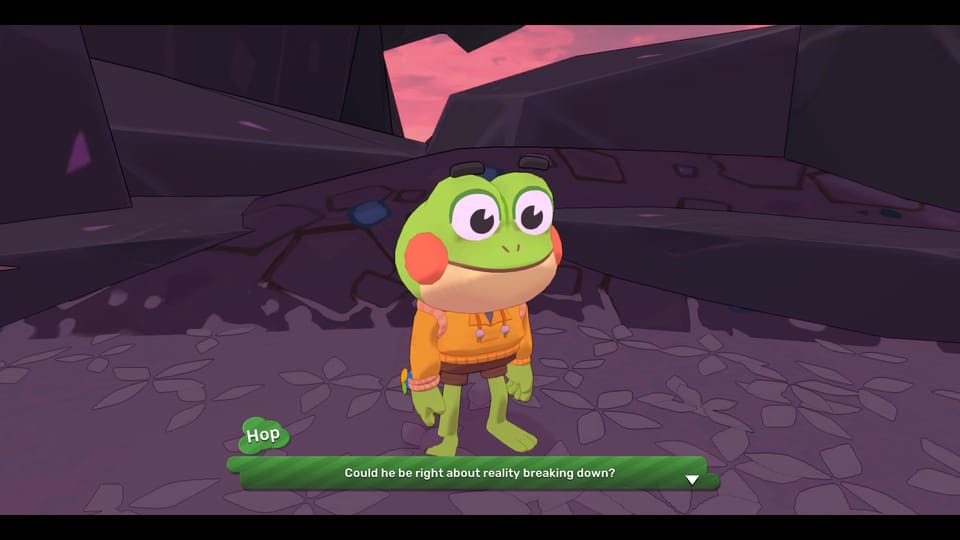
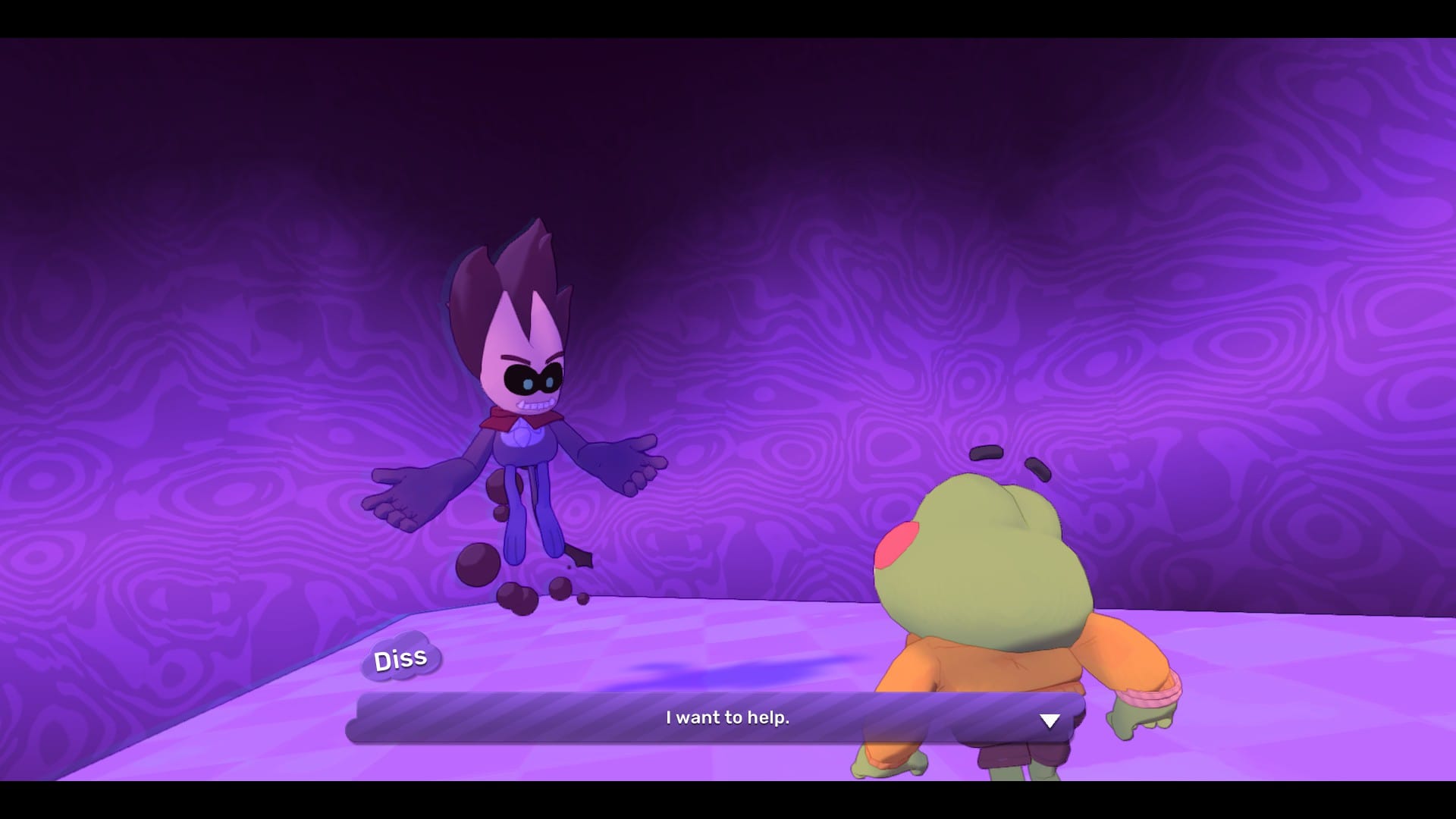
You play as Hop, a little green frog who lives in a forest with his mother and sister. Through an encounter with Diss, a kind of ambiguous trickster genie, he is whisked away to the void, a purple dimension of floating islands with topsy-turvy gravity reminiscent of Mario Galaxy. The void, in turn, connects to other worlds, and Hop must venture through a desert, tropical islands and deep mines to figure out Diss's motivation and collect parts for an airship (reminiscent of Mario Odyssey) that can take him home.
'There are basically no 3D platformers on PC that feel as good as this.'
I say that 3D platformers inevitably draw comparisons to the genre greats, but Big Hops leans hard towards those comparisons. More surprising is that it initially survives them. Hop can run, jump, roll, slide, crouch jump and climb, and you can chain some of those moves together to build momentum and bound across landscapes at tremendous speed. As I learned to roll into jumps then into slides on an open desert plane, I was fully in love. Hop can also traverse the canyon of that desert world by sliding upon metal rails like Tony Hawk and throughout use his tongue as a hook-shot to reel towards or swing from grapple points, less like Tony Hawk.
There are basically no 3D platformers on PC that feel as good as Big Hops does in these moments. Sadly, Hop's tongue is also the beginning of all Big Hop's problems. Aside from grappling, you can use it to pick up items, including vegetables that grow in each world. These vegetables have helpful properties when placed: mushrooms act as jump pads, acorns grow vines you can climb indefinitely without losing stamina, balloons can be tied to items to make them float, and so on.
On their own terms, these veggies are an exciting and ever-expanding library of new ways to traverse increasingly vertical levels. The problem is that, if you use them correctly, you bound across a level in seconds, never stopping for a moment to think, and if you do have to stop to think, they quickly become a fiddly and ambiguous frustration.
If you screw up a jump in any platformer, you typically know why. You jumped too early, or you rolled too late, or you tried to swing when you should have dived. The best levels are designed with the precise measurements of all your movement abilities carefully considered, and failure always lies in your hands.
Once the veggies got involved, it was a lot less clear why I was failing in Big Hops. Perhaps I placed the sticky-blob shooter in the wrong position on the wall, given that there were typically no markings to steer me? Maybe I could try a little higher next time, or a different wall entirely? Perhaps I simply grappled to the moving blob at the wrong moment, or at the wrong angle, or mis-timed my dive afterwards? Perhaps I mis-timed it all, and landed poorly on the moving platform that was my target. Perhaps it was the second jump where I erred, and I should bring more items in my backpack next time.
All these questions whizzed through my head as I fell into the void, again and again. It was worse when I had to use multiple vegetables in sequence and each error slowly turned the world into a mess of mis-placed mushrooms and tightropes to nowhere that made me long for a reset button.
This clumsiness initially seemed my own, a minor disconnect between power-ups and level design that I was amplifying due to lack of skill, and which I could muddle my way through before resuming the joyous act of bounding and climbing.
'And yet, here I am, in a pit of frustration, trying to snap my Xbox controller in half.'
Yet the incoherence seemed to compound over time, each new world introducing more systems until I began to see those tightropes to nowhere as a hackneyed metaphor.
Hops' backpack lets you carry up to four vegetables initially, and is expandable so you can carry more. This means that the level design can't control what abilities you have access to during each platforming challenge. A nearby bush will indicate that the game clearly wants me to traverse a section with oil balls, for example, which create grapple points, but the mushrooms in my bag since two levels ago might be easier and render the entire challenge moot. Or I might be carrying juices which extend my stamina such that I can simply climb straight up a cliff face without needing to do any jumping or veggie-wrangling at all.
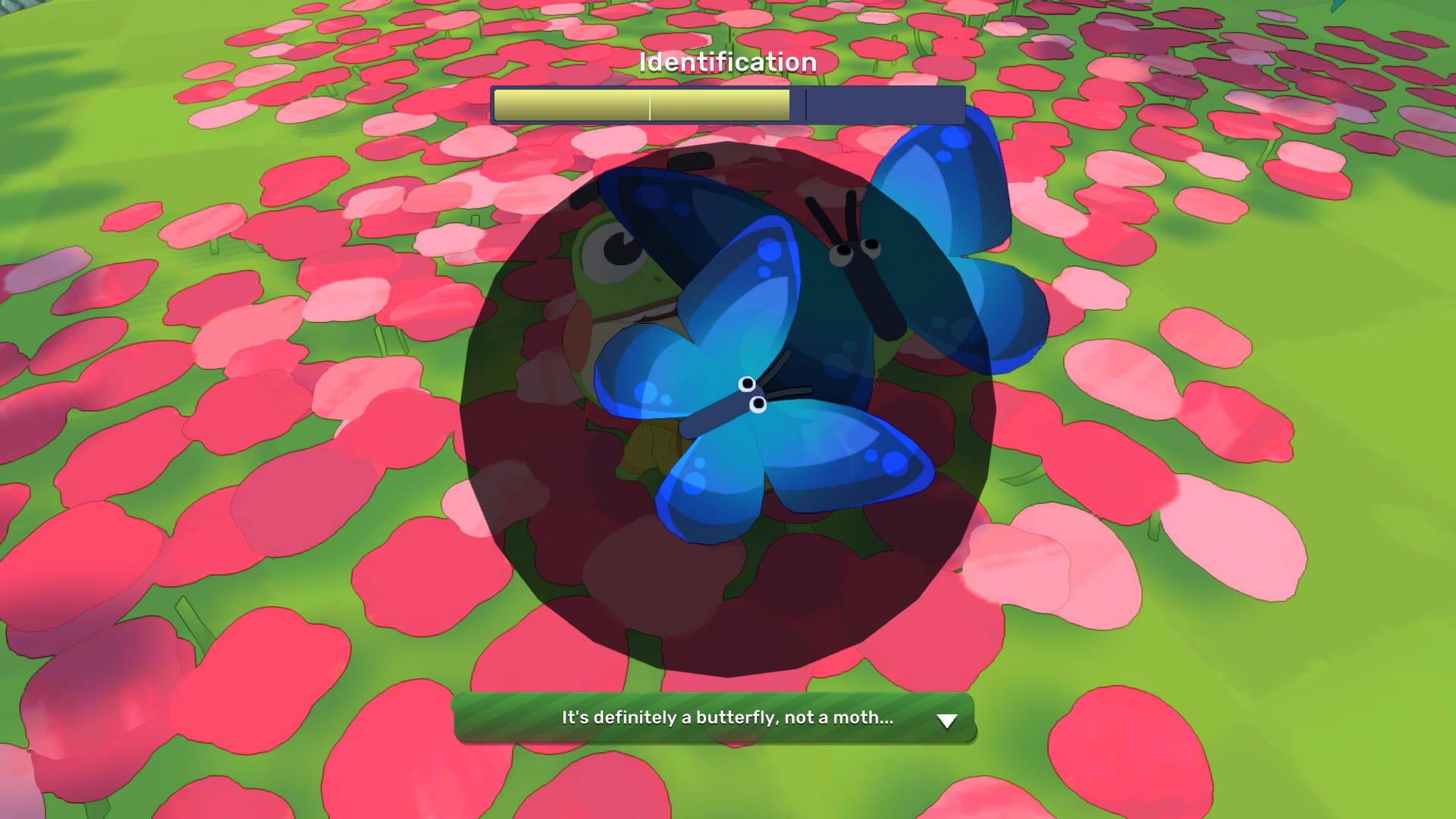
This feels less like creative problem solving than like skirting around problems entirely.
Similarly, I dutifully collected items for Diss called Dark Drips, each of which granted the choice between two power-enhancing perks. I would say that at least half the perks I was offered were for more perk slots, which felt pointless, doubly so when the "choice" was inexplicably between an extra slot or an extra slot. The remainder were unexciting additions to the compass or health-enhancement I never needed, because a single "eat anything" perk turned nearly every prop into a health boost. Fundamentally, because the game can't predict what perks I'd have access to at any given moment, the level design can't make use of the powers granted via perks, which all but guarantees that they not be too useful.
There's a whole range of collectibles that likewise feel without purpose. My wallet was eventually too full to fit more coins inside, because I wasn't interested in purchasing outfits. I collected lots of bugs, which was cute, but unlocking the ability to turn bugs into stamina-granting juice was pointless because I was never in serious need of a stamina boost.
The fundamental incoherence here means that all these peripheral systems - health, stamina, collectibles, trinkets, vegetables - often end up feeling like unnecessary cruft.
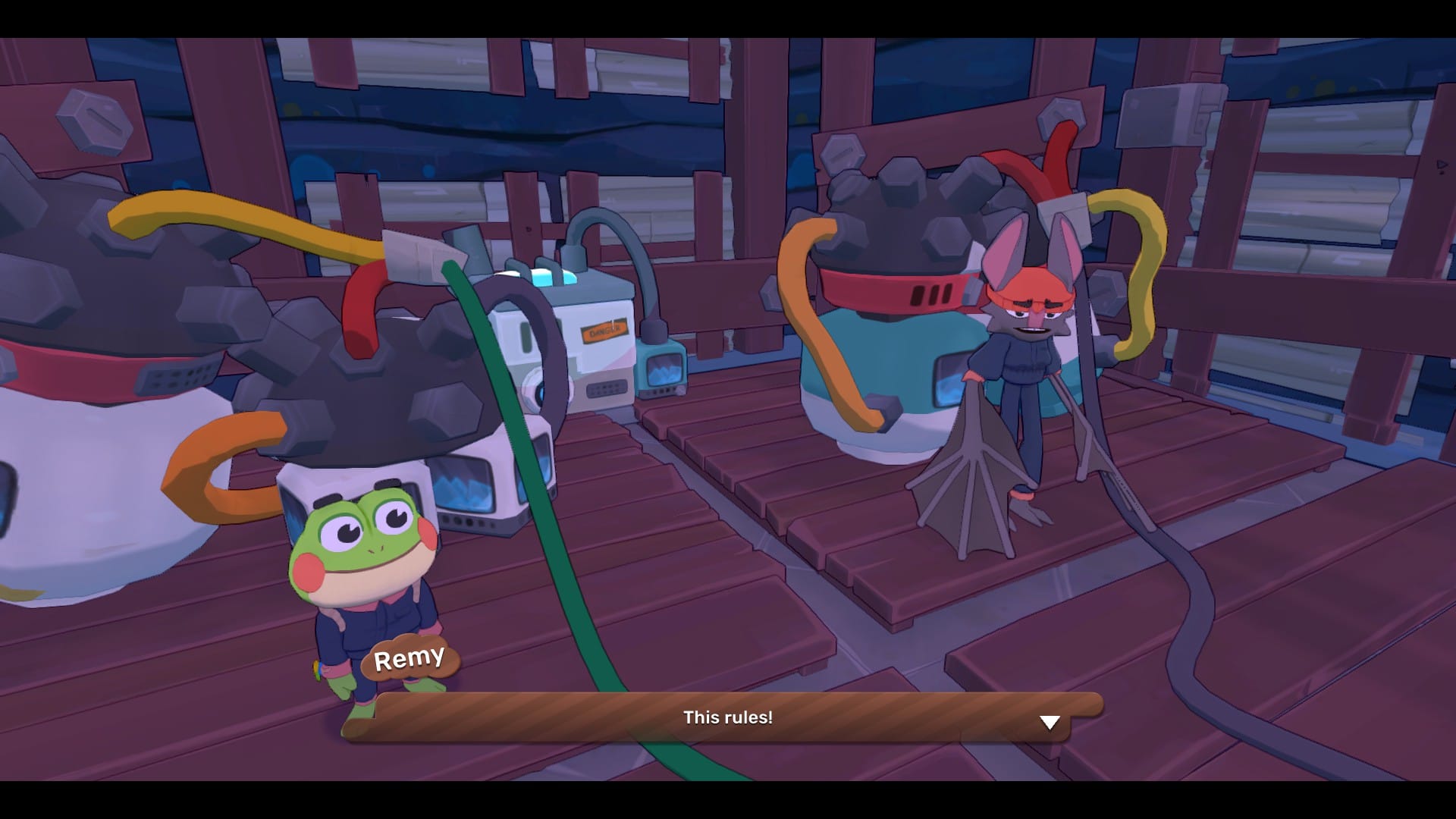
Cruft, at least, can be ignored. It's slightly harder to ignore some other issues - a couple of soft-locks, an extended late-game minecart sequence that left me exhausted and motion sick, and an emotionally muddled story about corrupt municipal authorities.
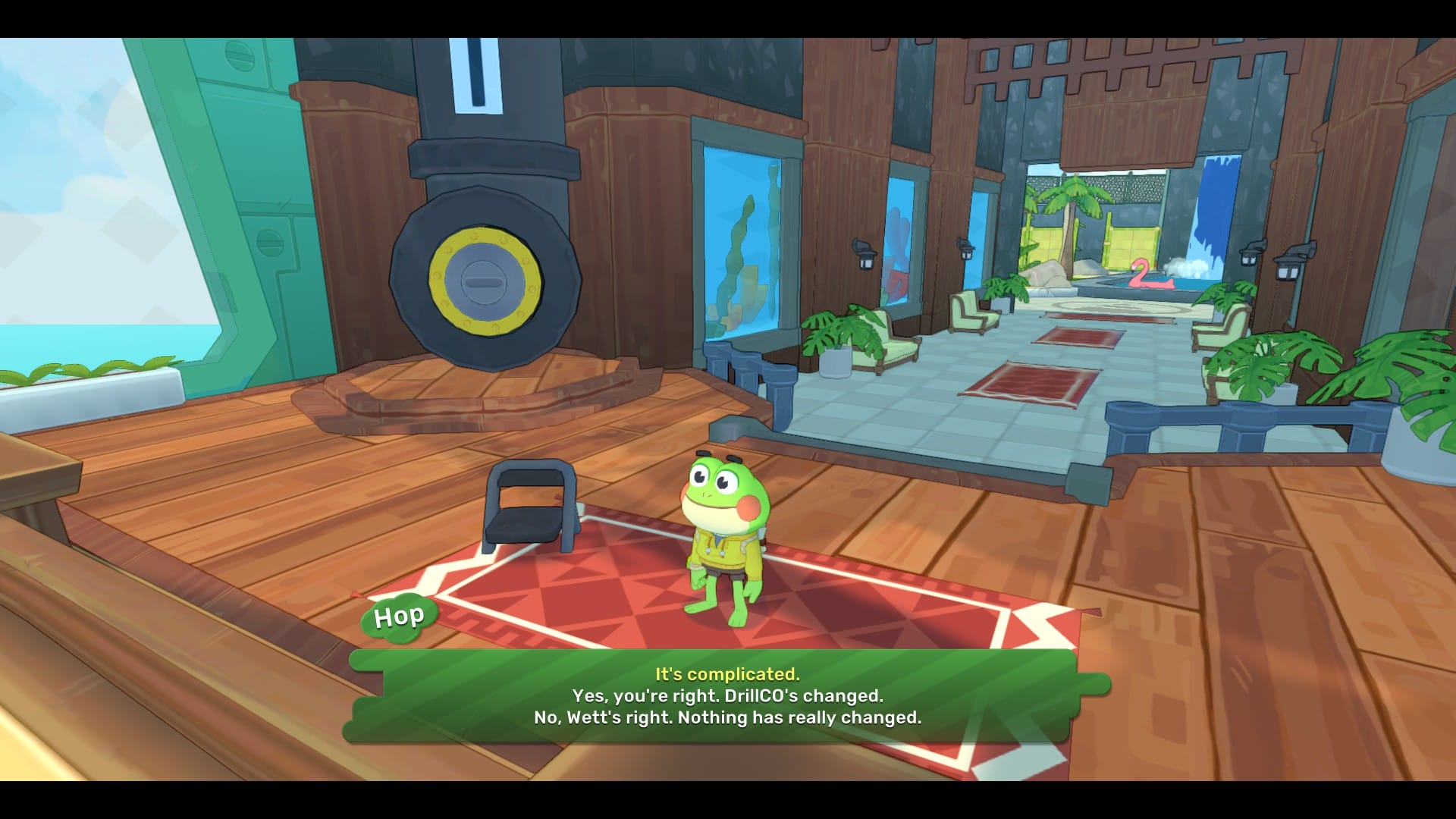
But see? This is what I meant up top. Despite my gripes, I enjoyed my time with Big Hops. Its movement does feel great. There really are basically no 3D platformers that feel this good on PC. It is lush and colourful, with endless ideas, bountiful hub worlds that are worth exploring, and a jaunty soundtrack to boot. And yet eventually there I was, in a pit of frustration, trying to snap my Xbox controller in half.
At one point during that minecart sequence, Hop plummeted into the void for the umpteenth time, and Big Hops crashed to desktop. I yelled "oh thank god" and went to bed. It's pretty good, you should play it.


Comments ()