Bits

Short articles for when you can't be arsed.

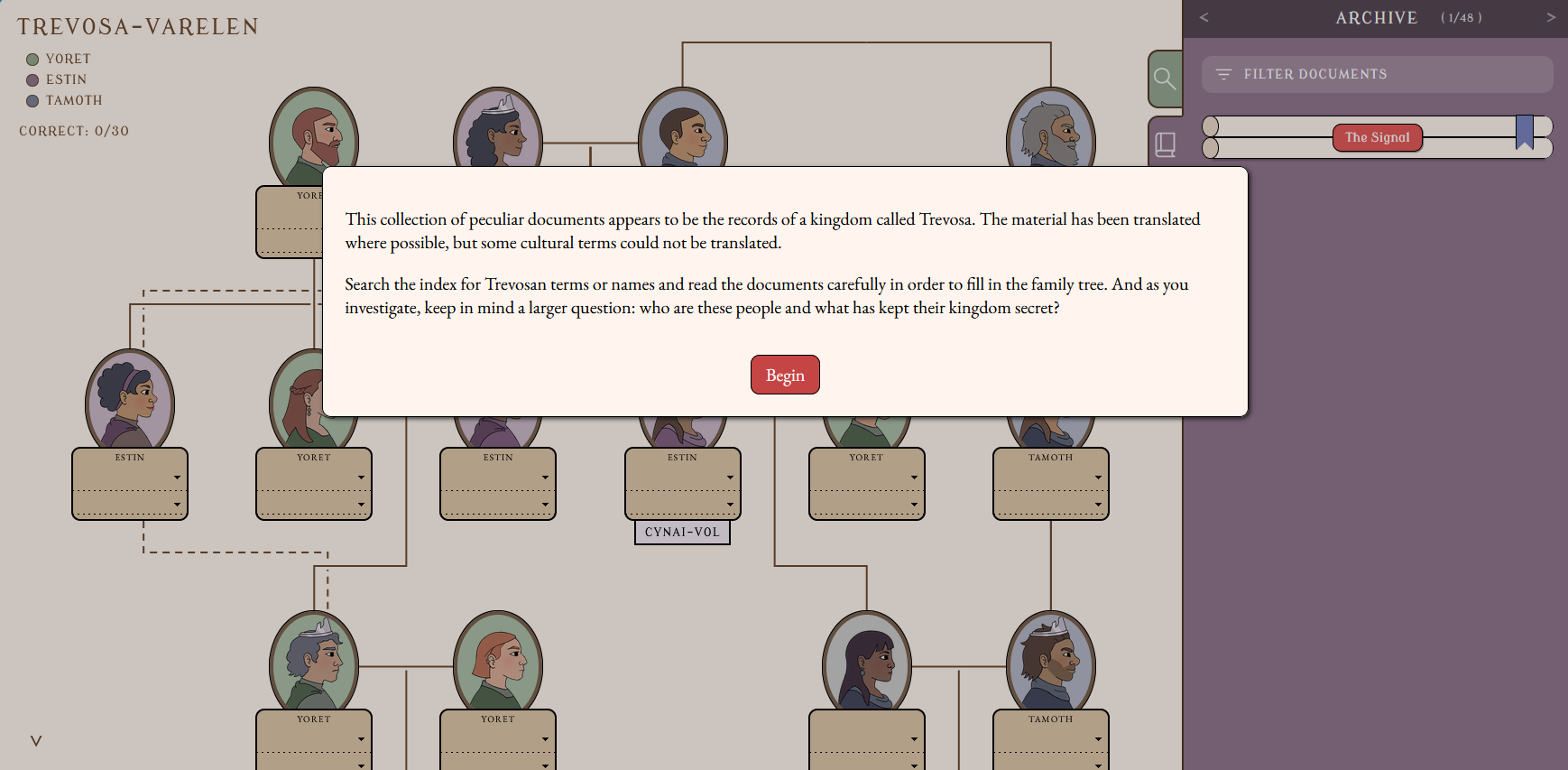
Climb down a hole, pursued by a centipede

Idols Of Ash is about the mastery of space and the horror of time

Spiders don't bother me at all, but centipedes? Centipedes glisten. Centipedes look like worms wearing a crab exoskeleton. Centipedes, wet slick and scurrying, are the perfect organism for sluicing inside small holes and pipes like Eugene Victor Tooms - and as a human being I contain an unfortunate number of small holes and pipes.

Luckily I never need to encounter the giant centipede pursuing me in Idols Of Ash. As long as I can perfectly descend into an impossibly deep well and navigate forgotten caves and crumbling megastructures using nothing but a grappling hook, I'll be just fine. Just fine!

Uh oh.

Idols Of Ash costs $3 from Itch.io and I completed it in an hour or so, much of which was spent clumsily falling to my death. You could go play it in lieu of reading this post, and you should.

Despite my clumsiness and dislike of chitinous arthropods, Idols Of Ash is surprisingly generous. Your health bar is substantial, you can fall further than you expect without taking damage, and there are glowing health pickups and a handful of checkpoints to mark your journey downwards. If you do fall further than you would ordinarily survive, your grappling

The lost wonder of Minecraft comes back in Lucid Blocks

It's Notch your usual crafting game

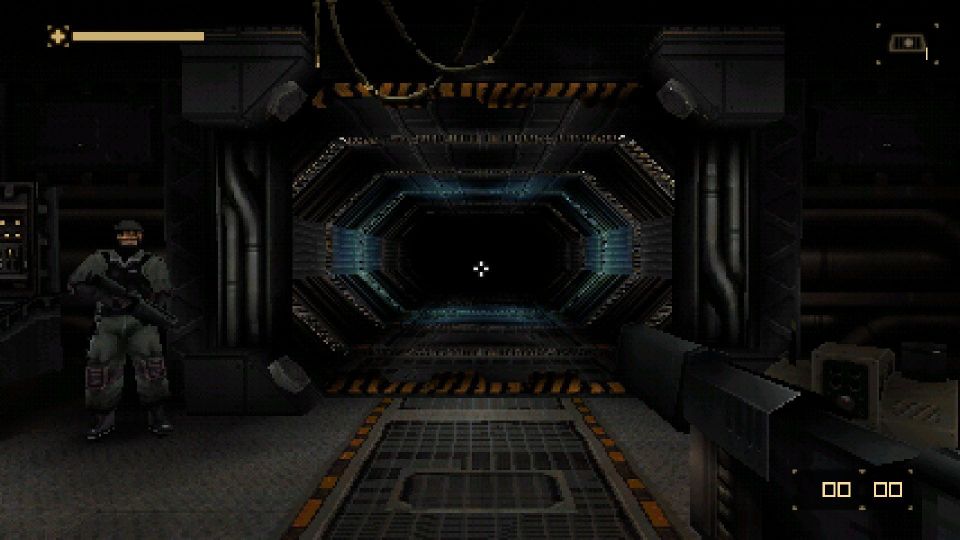
A hideous being stands in front of me, with a fleshy body rendered fuzzy through heavy dithering, and a cracked spherical head with the unsettling happy face of 1970s hippy logo. "O son of man," says the monster. "What lies ahead is a withering carcass. A bloated festering limbo, in which your soul will decay for all eternity."

The creature neglects to mention that this purgatory is a lot like Minecraft.

Lucid Blocks is a crafty block-bashing game about not knowing what fresh hell this is. You are very likely dead, or possibly just extremely asleep. The surreal world that forms around you is, like Minecraft, procedurally generated from a seed - in this case, a single word. You crumble blocks, gather them to your hotbar, and plop them down. There is some end goal, the creature tells you, but only in "oblivion" does it exist.

Okay mate, chill out.

Remember your first steps into the world of Minecraft? I do. It was 2010 and I was crashing in a friend's spare room as the Yorkshire winter rendered us all desperate for ale. Minecraft was an escape into a blocky dimension where you could build a far more affordable home,

I am The Thing from the Tower

Chaos ex machina

More of you need to be playing narrative strategy-RPG Heart Of The Machine. I don't care that you'll enjoy it. I just want to see what you do.

I love this kind of game. Take your wiki and your tiers and your meta and shove it up your tedious spod arse. Heart Of The Machine wants you to explore, to imagine, to play with its premise: that you're an (actual) artificial intelligence, newly sentient, in a far future dystopian city. Now what? What kind of being are you? What should you do about the world?

Don't look it up. Figure out who you are, you goddamn coward. Make a decision. Be someone.

A monochrome, humanoid robot and a human silhoutte stand either side of a text box offering two player responses: "Accept the Nuclear Device", and "Ignore her and scan the facility". Less relevant is the event itself, detailing the human, a manager, offering the player a nuclear bomb and asking them to use it on a third party.
You have been blanked. But have you been "offering a nuclear bomb" blanked?

This is not a game to win or (ugh) "beat", but to play along with its many choose-your-own-adventure style events. Its earliest paths can diverge pretty widely, offering choices in story events like "Ask to see her wares" vs "Murder her for some reason", at least unless you look further into the option to "Start Therapy". There are wonderfully evocative choices like "Befriend The Creatures", "Design Something Horrifying", and upon returning to a repeat event,

Ah, a job sim for people who like configuring their router

The bytes must flow

Do you know how the internet works? I don't. But it might have something to do with the nine billion ethernet cables coming out of my basement like a colony of suspicious worms. This is Tower Networking Inc, a hacky wire-crossing simulator where you run an entire internet service provider out of a damp cellar in an endlessly growing high-rise. 

It's also a roguelike for some god-forsaken reason, but you can turn that off in the options and just play it as a straight-up cyberpunk job sim about making sure people can read all the awful news through their smoking modems.

It hit early access in summer last year but only recently popped up in my Steam recommendations, like a 1st line support blister waiting to be popped. You can get an idea of how deeply IT-brained the game is by watching the trailer, which expertly fuses the synthetic beats of hacker-happy music with green-tinted command lines and the kind of router configuration jargon that makes normal people break out in a fearful sweat.

 "Administrate the network," it announces with all the glee of a corporate training video you are mandated to watch to secure your bonus. "Troubleshoot

I want more backstabs in Slay The Spire 2's co-op mode

This is why people don't play games with me

When you come across a treasure chest in Slay The Spire 2, it pops open with the goody-bestowing effervescence of a piñata, a relic appears, and life is good. But what if two relics appeared? What if, as you extended your pointy-fingered hand to grab 'em, a second slinky arm came jutting into view to poke you and contest your choice. It is your brother's arm, and he has selected the same shiny trinket you would like. The hands shake violently and a showdown begins. In the deepest, dankest dungeons of this surreal realm, there is only one way to settle this. 

You do rock, paper, scissors. 

I've already praised the additive joys of Slay The Spire 2 - its fancy boss fights, tricksy minibosses, and the new doom-fuelled reaper character all please me greatly. Like me, you will be forgiven for shrugging off the sequel as a kind of roid embiggened remake, as if mere iteration is not a satisfactory approach for the godfather of all the card-based commupance we've endured for the last decade. It is good. And it has one more Strike up its sleeve: co-op card-slinging. A multiplayer crawl through even beefier enemies which

I didn't think Slay The Spire needed a sequel. That was dumb

I am Doom-pilled

When Slay The Spire 2 was announced, I honestly didn't feel the need for it. The first game - deckbuilder of all deckbuilders - spawned a torrential smorgasbord of inspirants that has for years inflamed Steam's guts. If you really wanted Slay The Spire But More, you only had to put your hand into those guts and pull out any one of the dozens of disciples and see if they put a sufficiently intriguing twist on the formula. Monster Train. Griftlands. Roguebook. Fights In Tight Spaces. StarVaders. It remains a feast out there for rummagers of roguelike card wreckers. I didn't think there was much a Slay The Spire sequel could do to rekindle my feverish obsession that any of these games couldn't.

I stare now into the beady eyes of a gigantic crab with full knowledge of my inadequacies. What a fool I am.

I will admit much of the giddiness comes from being intimately familiar with the rhythm of play already. I know the playstyle of the Silent (the returning skull-faced poisoner from the first game) better than I know the crannies of my own bathroom. I understand the push and pull of cardy combat well enough to

Project TurboBlast's vehicles have wheels, but it's an antigrav racer in spirit

You know where you stand with a name like TurboBlast

It's difficult to find arcade racers where the handling isn't either mundane by dint of hewing too closely to ancient inspirations, or too fussy or difficult by dint of having been designed by sickos who are much better at these games than I am.

Project TurboBlast hits a sweet spot, judging by its demo, from its on-the-nose name to its F-Zero-on-wheels boost-happy racing style. "Don't blink," the announcer yells at the beginning of each final lap, and I don't think I did.

The music is great in this trailer, too.

Let me clarify "F-Zero-on-wheels". TurboBlast's tracks are wide, twisty, often suspended above an abyss, and covered in glowing boost pads, like every antigrav racer you've ever played including the likes of WipeOut. Your actual vehicles are on wheels, however, both cars or bikes, and you'll need to drift around every corner like in a Mario Kart or a Victory Heat Rally, one of the better arcade racers from recent years.

TurboBlast really is all about managing your turboblast. Aside from the boosts littered across the track, you have a slowly re-filling boost meter that can be used to build speed at any time. If you empty that bar, your vehicle

Payphone Go is good old-fashioned internet nonsense

Gotta phone 'em all

One of the many things that the social media age has robbed from us is an abundance of daft play-ish projects, invariably cooked up by some developer in San Francisco, of the sort that used to be announced on Boing Boing and written about in Wired magazine. Back in the early 2000s such things came along with pleasing regularity, in part because they were rationed out through blog posts and magazine articles rather than dropped into the firehose of social media.

Nowadays San Francisco is the global source for dead-eyed AI boosterism, Cory Doctrow is posting through it on social media with everybody else, and Wired is focused on documenting contemporary warfare and the rise of the surveillance state. It was more fun when all this was Flickr and Feedburner, which is one of the foundational beliefs that lead us to launch Jank in the first place.

This is why I was delighted to come across Payphone Go. Its origin is pure early-2000s SF nonsense: somebody realised that there's a public record of the 2,203 payphones still remaining in California, and has built a natty and totally superfluous tool which enables you to "claim" each one by calling it.