Jeremy Peel is an award-nominated writer, podcaster and videogame consultant of 15 years' experience, which makes him an old fart in journalist years. He loves Deus Ex with all his heart and tends to side with Tracer Tong at the end these days.
In the wake of Microsoft’s latest decision to lay off, kick out, and otherwise terrorise its stable of game developers, onlookers were understandably outraged. If you've been a PC gamer for the past twenty years, there was probably a secondary feeling: one of familiarity.
If you predominantly play on PC, Microsoft has always been a force that destroys your favourite developers and makes the experience of playing your favourite games worse. You don't even have an era of BMX helmets and neon green consoles to look back fondly upon; instead your memory is filled with Games For Windows Live error messages and all the other studios Microsoft cut down.
How ambition turned an open-world pioneer into a janky cult classic
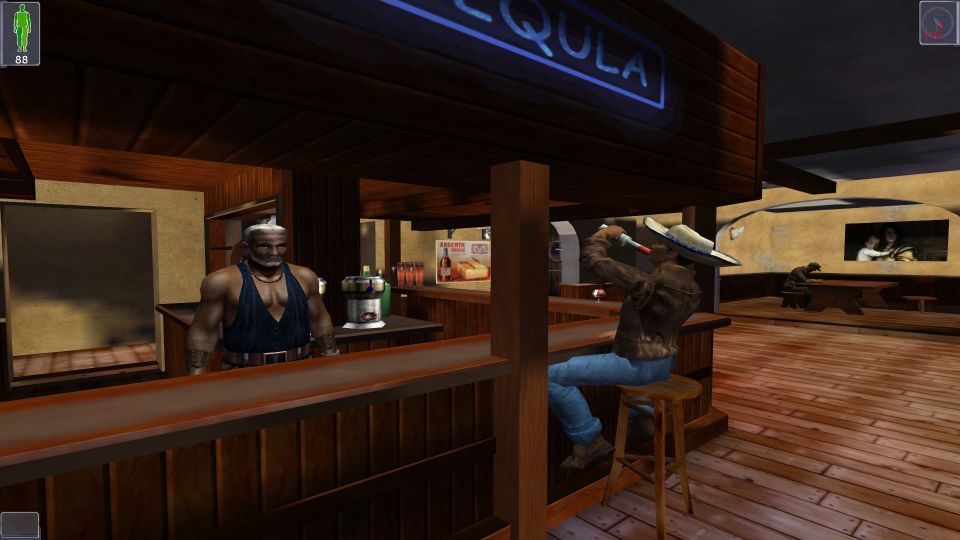
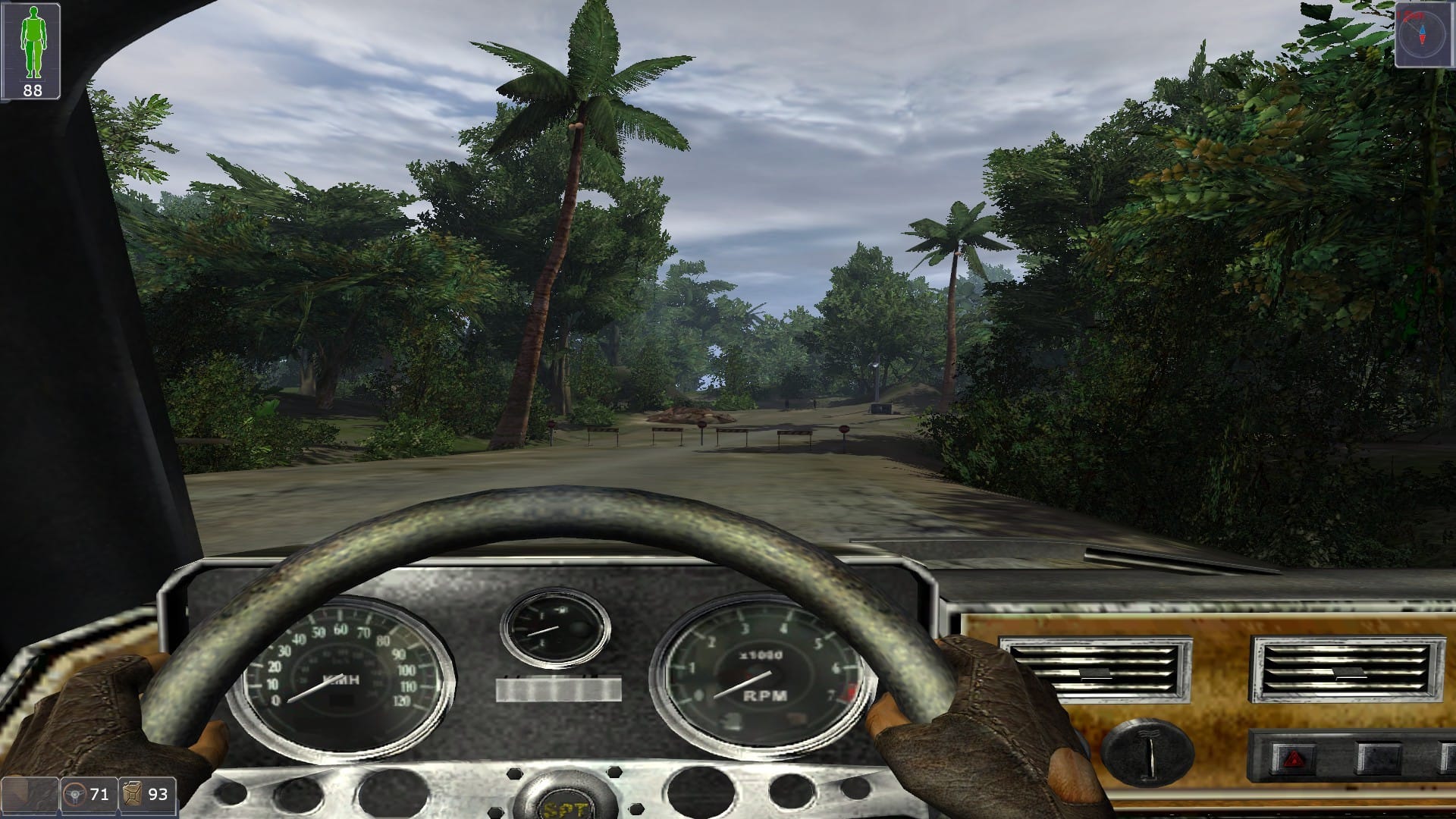
Sometimes, when a dad squints at a monitor to assess their child's latest PC gaming obsession, they say exactly the right thing. Ilya Gulyaev's dad suggested that, if he liked modding Operation Flashpoint so much, he should seek out an apprenticeship.
"He literally told me to pick up a copy of a local PC gaming magazine, find an article about Ukrainian videogames in development, write down the company names, look them up in the phone book, and call them," Gulyaev says. "Back in those days, such a direct approach actually worked."
The year was 2003. Stalker: Shadow of Chernobyl was little more than a crackle on a Geiger counter, and Ukraine's development scene was in its nascency. "It was in an absolutely embryonic state," says Oleksandr Khrutskyi, who worked at Boiling Point developer Deep Shadows. "I think there were probably no more than one or two thousand people working in the games industry across the entire country."
The team grappled with open-world problems which hadn't been solved by the wider industry
Ukrainians had only a decade earlier detached themselves from the Soviet Union, but the resulting governmental flux was to the benefit of budding developers. "Weak tax policy and imperfect intellectual property laws opened great opportunities to anyone who understood how to operate a computer," says Oleksandr Honcharuk, who worked on Boiling Point as a 3D artist. "We received untaxed payment in the envelopes. If we wanted to try any software, we rode to the book market and bought any cracked software we wanted. Official versions we bought only for final compiling and exporting. These factors lowered the cost of the development dramatically."
Many entrants to this new field were self-taught enthusiasts, but even they were surprised to see Gulyaev walk into the rented three-room apartment that Deep Shadows called an office with his dad in tow. "Imagine our wonder," says Honcharuk. "Because he was only 15 years old." Nonetheless, Gulyaev proved himself as a 3D modeller, recreating an M167 Vulcan Air Defense System as a test assignment. "It ended up being used in the game because I did it well, receiving only two rounds of feedback for my first-ever real in-game asset," Gulyaev says. "After that, they felt confident giving me more work."
We can’t go over it, we can’t go under it… or can we?
Getting directions in a city devastated by plague and gang warfare is an alarming business. Excuse me, sir, how might one reach Holger Square, and the office of the High Overseer?
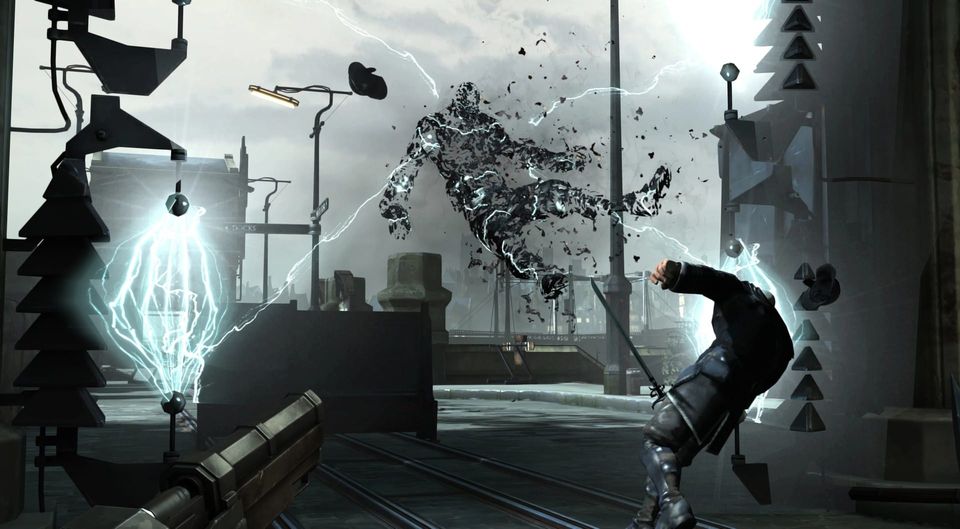
“It’ll be a rough trip,” says Samuel the boatman. “Used to be you’d go straight up Clavering Boulevard, but now it’s not so easy. City Watch still holds the bigger streets and they’ve set up those Wall of Light checkpoints. A man walks through one of those and he ends up burned to a crisp.”
Good gracious, the things they can do with whale oil these days. Sure enough, a banner hangs above the ancient gate that breaks up the Boulevard: ‘THE BOLDEST MEASURES ARE THE SAFEST’. Beneath it, a 16-beam floodlight illuminates the cobbles. And beneath that, a deceptively clear passage, beset by ominous cables and machinery. Through the gap, the City Watch passes unharmed; anyone else is vaporised instantly.
How do you let go of game characters you adore - especially when developers won't let you
Your final session with a game rarely registers as such. A new release turns your head and eventually you notice that months have gone by since you last pressed the big green button on Steam. By which point, any muscle memory has atrophied, or been muddled by different sets of keyboard shortcuts. Playing that game again will be difficult and, really, how good was it in the first place? This is the most common kind of gaming goodbye: an apathetic drift towards other distractions.
But there's another type: the goodbye to the game you've fallen in love with, in which the characters are fond companions and trustworthy accomplices. At a certain point, the rhythms of their conversation tapped their way into your brain, becoming a song you're happy to have stuck in your head. A welcome and soothing accompaniment to everyday life. Bidding adieu to characters like that takes careful management.
On the one hand, you value their company, and don't want to part too soon. On the other, they deserve proper closure, and that typically comes with the developer-mandated ending to the game in question. Spend too much time mopping up side-quests and
When I heard that grenade-spamming was becoming a dominant strategy in Marathon, I was shocked. Mainly because, for the first 50 hours or so in Bungie’s extraction shooter, I’d forgotten to use grenades at all. In a desperate situation, I’m much more likely to reach for the stick that shoots death - the one that’s onscreen at all times. Grenades are relegated to bumper buttons and distinguished by icons I haven’t bothered to learn. Let them sit in their inventory and listen to muffled gunfire.
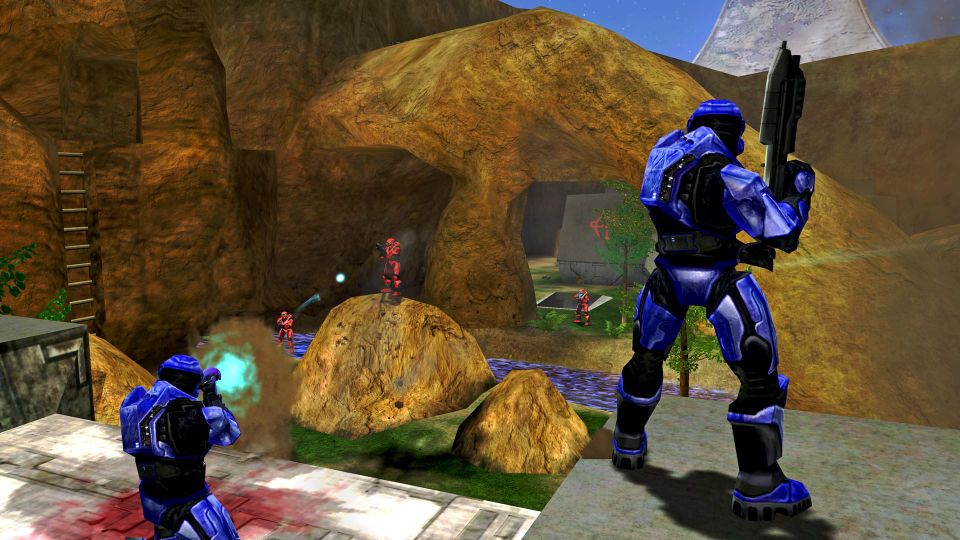
But it wasn’t always thus. Halo: Combat Evolved was born in a time before aim-down-sights. Which means, when I play it on the Steam Deck, the whole length of the left trigger is given over to grenades. Even when I plonk the machine down on the couch to go grab a drink, there’s a reasonable chance I’ll accidentally throw a hot potato. That’s just how easily accessible grenades are on the ringworld.
They’re also a highly visible part of Halo’s combat sandbox. When I get the jump on an Elite, and the lanky alien goes down with a growl of anguish, a
A perma-smiling comfort on the cold surface of Tau Ceti IV
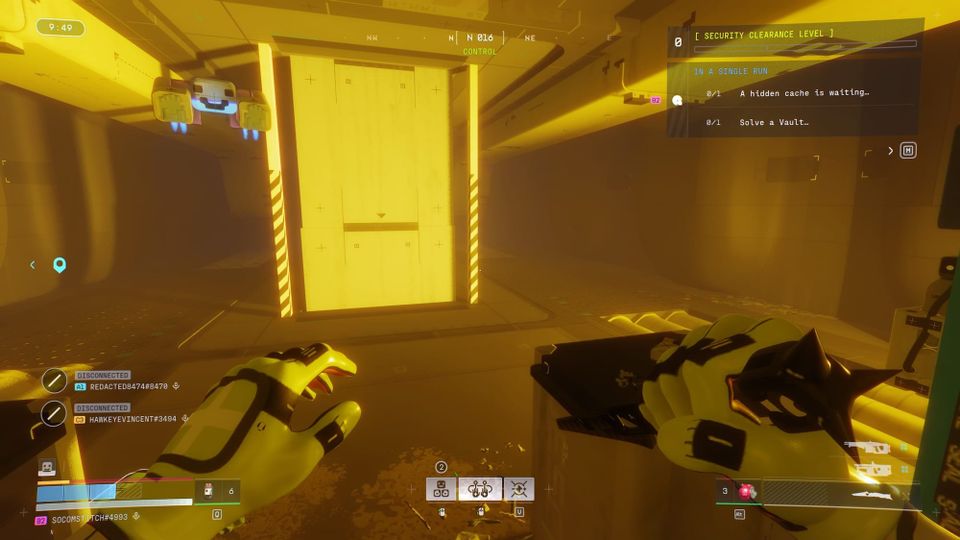
Marathon is frightening. Especially in solo mode, where the silence of rival players is so acute you can hear the blood pumping in your ears, Bungie’s extraction shooter slips into a form of unscripted survival horror. One that makes you entirely responsible for your own safety, on a world that would be awful enough without all the murderers. Have you seen the wildlife? The bugs splatter you with ichor and the birds tell on you, giving up your position to any rivals who might listen. "Caw! He’s here, lads! Grease your elbows for a knifing!"
It’s a terror that turns even the sensible visitor superstitious. Leaves you hankering, on some level beneath active thought, for a good-luck charm or totem. That’s what I realised the first time a teammate hurled a med drone in my direction. The little blocky bot made a gleeful parabola across the crags of Perimeter and settled comfortingly over my left shoulder. Some enterprising robotics engineer had tuned its digital display to show a reassuring smile - much like the face of Minecraft’s iconic creeper, but with the frown turned upside down.