
Jon is Editorial Director of GamesIndustry.biz. He has previously managed a lot of games websites and worked at a lot of live events. He contributes to Jank in his spare time and doesn't cover anything here that he's covered at work.
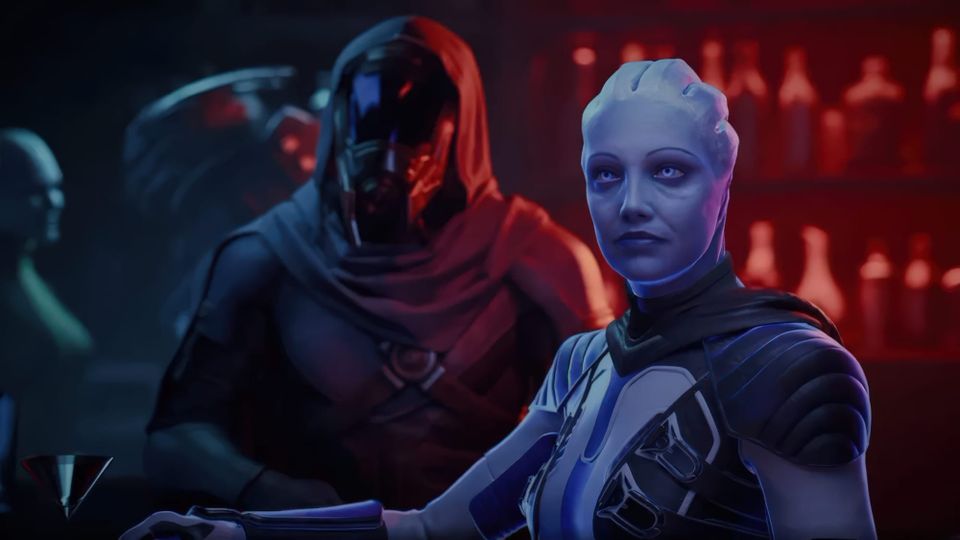
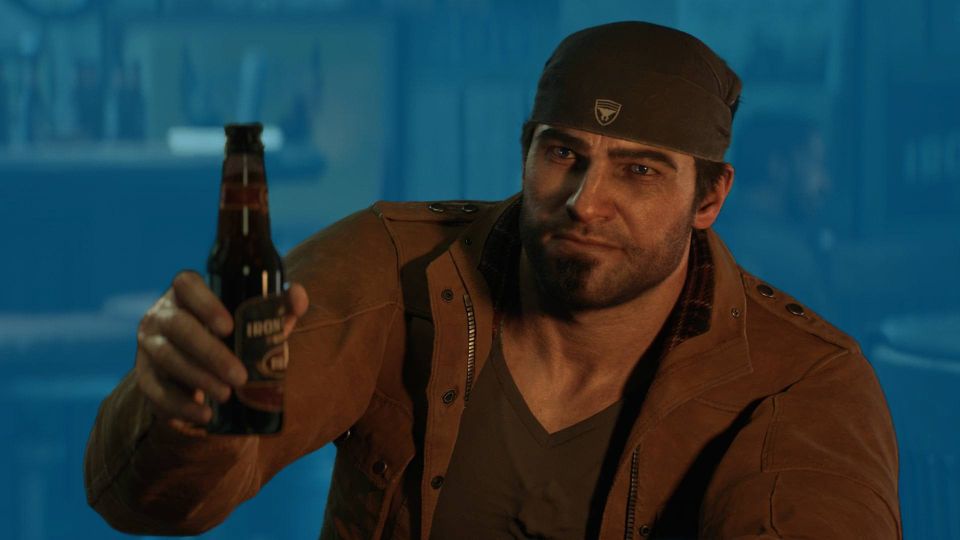
I have played Star Wars: Zero Company for about three hours total, and approaching a quarter of that time was spent in the character creator. This is fairly common. If I have any aspiration to spend time with a game that is equipped with a character creation tool - if I have any commitment beyond vague tourism - then I consider it essential to pick though all the options and craft something that, invariably, makes me laugh.
I would do this even if the character’s appearance is limited to a 32x32 headshot at the bottom of a stats chart, because vibe is important to me and sometimes the vibe demands an eyepatch, or high-piled set of dreadlocks, or a truly hideous jacket colour. The more serious the game, the more important this becomes: there is no text exchange about crop rotation or galactic diplomacy that cannot be improved by my character staring implacably ahead while looking like they were dressed by a five-year-old picking from the most cursed remnant rail in TK Maxx.
Sometimes I will play it straight and come up with something conventionally attractive, as long as it’s not a boring white man
Another week in the PC gaming mines and oh, such wonders it has produced. Nic Ruben wrote an ode to parrying in general and its delivery in Onimusha in particular.
At their best, nailing a string of parries and ripostes feels like performing Swan Lake while winning a rap battle against god. At their worst, they're the design equivalent of blending a bag of spinach into sugary pasta sauce so fussy toddlers don't realise they're eating quicktime event.
Graham spoke to the people who put Spelunky 1 in Spelunky 2 to create a new, still more powerful Spelunky. This is very important to people like us who have spent hundreds of hours in each game.
Spelunky 2's World 1, by comparison, feels designed for the player. "Spelunky 2 essentially did away with level feelings and moved its extended content into dedicated areas you can visit by taking branching paths, which ends up trading variation for player choice," says SNF. One of those choices happens at the end of World 1 after you fight a mini boss. You can decide whether to go left or right to determine what kind of World 2 you get, but
Total Playtime is the official Jank podcast, funded entirely by our paying subscribers (and formerly our backers on Patreon). This week’s episode is free, but subscribers get additional episodes every other week. You may join them by subscribing here, and you can find all previous episodes here.
For the first time in a while all four of us could make this recording, and it's a free-to-all news episode to boot. This meant we had to address the twin issues of Gamescom and an abundance of GTA 6 footage, both from vegetable-themed hackers and latterly Rockstar themselves via an extended preview on Netflix. The former is a much more interesting discussion point, although not particularly impressive unless it later transpires it was the previous GTA hacker doing it with even less technology this time.
I am also able to share some limited insights from Gamescom, although not all that much because I only saw three games and one of them I can't write about. Please support Jank so that we have enough money to send Brendy next year and have him report on all the very weirdest games on the different international stages.
It has been a very long week in videogames, between the hundreds of games and conversations about them at Gamescom, and the single billion-dollar game that Rockstar chose to finally show off in the middle of it. As an independent media outlet we didn’t cover either of those things, though, and that’s partially a matter of free-thinking principle and also because Graham and I were both away for work so Brendy had to hold the fort. He did a grand job though, starting with taxi reports from Hell Let Loose: Vietnam.
Even for seasoned FPS players, it's easy to look at games like Hell Let Loose: Vietnam and dismiss them as a sweaty Call Of Duty for people who take a deathmatch too seriously. It's even easier to reject it for the social discomfort of having to actually talk to strangers over the internet. But this is something I love about multiplayer war 'em ups - the small, temporary friendships you forge in hellish circumstances, the micropals you make during a big push or a desperate last stand. The medic who follows you everywhere. The squad leader who says "good fuckin job boys!" when
It has been a big week on Jank. By far the main event was Brendy’s extensive explanation of why he doesn’t like auto-battler games, which continues to rack up online commentary from the tiring “let people enjoy things” (he at no point suggested they shouldn’t) to the intriguing “there is a semi-arbitrary distinction between game feel rooted in physical movement and game feel rooted in UX design” (busted).
My point is not that these games make us lesser players or lesser people. It's just that they're not half as interesting or groundbreaking as their huge sales numbers and endless praise suggest. Just because something is powerfully psychologically compulsive doesn't make it good art. Just because something eats your time, doesn't make it worth your time.
So much of our life is already made slick with the grease of automation. It is absurd to think of anybody wanting the self-reading book, the self-watching movie. Why would I want the self-playing game? The whole distinction of games as a medium is that they are about doing stuff. The game that leans more and more towards autoplaying threatens to
Total Playtime is the official Jank podcast, funded entirely by our paying subscribers (and formerly our backers on Patreon). This week’s episode is free, but subscribers get additional episodes every other week. You may join them by subscribing here, and you can find all previous episodes here.
Alice and Nate were both unavailable this week, prompting Brendy and I to realise the crushing shortage of local whimsy in our lives. Our daily existence is simply devoid of rural oddities or freestyle whimsy that lends itself to a banging cold open, so we ended up with several minutes of middle-aged car chat which Brendy heroically drags back to a gaming reference.
Those matters aside we turn to the matters of the week, chiefly Saber’s CEO lashing out at a departed writer who handled it by having a great night out that ended in karaoke, which is the sort of karmic vengeance we should all aspire to. Plus: good philanthropy yet with concerns about whether philanthropy can actually be good, the ongoing destructive instincts of large corporations, and big walks with medium guns.
Our music is by God Ribbon, our art is by Marsh Davies
Here’s what we will do if more of you all support us
Seven months into Jank’s life, we have finally put up the paywall, compelling more readers to join the exalted ranks of the discerning literati who have backed us from the beginning. Now, it is time to start tempting more into joining the fold.
At the time of writing, we have been blessed by 747 paying subscribers, bolstered by a series of folks who've contributed one-off donations. We are hugely thankful for all of them: we're grateful that people want to support this sort of website, and we're only able to do it thanks to their generous support. Our audience is small, but perfectly formed: the Discord remains a chill and pleasant place to be, and spawned a dedicated channel for pet photos right on schedule.
The founders do not currently draw any salary from Jank. We are doing this because we want it to exist, and to endure without exhausting obligations to traffic and advertising. The income from subscribers covers our hosting costs for the website and podcast, plus other business expenses, but it’s mostly going on paying other writers to contribute posts to the site: every new subscription will go towards
We created Text Adventure, our videogame book club, with sincerely open minds: we wanted to see how official novels intersect with, and perhaps elevate, the games on which they are based. The answer, six books in is: badly and emphatically not, respectively.
There is of course a tension between what makes a good book and what makes a good game. A novel, by definition, lives or dies by narrative; a game lives or dies by gameplay. An effective character in a game is one that’s distinct enough to be meaningful but flexible enough to bend to the player’s will; a character in a novel needs to be built such that the reader understands the choices they will see them make. Worldbuilding in prose can be done precisely and with the assumption that the reader is paying attention; worldbuilding in games is done via multiple formats by multiple people and with the assumption that the player will not notice unless you forcibly control their gaze, and even then, only maybe.
It is possible for a videogame book to bridge this divide, but based on our first season not all of them try. I don't want to just blame the writers for this: I suspect that they were commissioned on a flat rate with a hard deadline and issued with either a voluminous and unyielding brand bible or a marketing Powerpoint, or both, and made the best they could in the time available to them. It is technically possible to create something great under such circumstances if you try hard enough, but anybody who’s done creative work-for-hire will have found themselves coming up against somebody with the power of creative sign-off and zero-to-negative creative ability, and after a while you accept that it’s easier to just cash the cheque and move on.
The nadir of our first season was Assassin’s Creed Brotherhood, a mesmerisingly terrible book which set out to include the entire game, side-quests and all, along with correctly capitalised references to the trademarked weapons technology. Its slavish reproduction makes abundantly clear how bad so many game stories are, because absent the engagement that comes from holding a controller it’s just a series of too many events with not enough connecting tissue.
You don't realise how much plot there is in an Assassin's Creed game until you have to read a 500-page summary of it.
This approach of ruthless documentation is doomed to fail because the vast majority of games are, necessarily, driven by what’s fun to play and the narrative is usually something that’s forced to align with that. The simplest solution is to separate the two entirely, like the visual novel-style conversational asides between characters that break up gameplay in titles like Tactical Breach Wizards, but the sort of game that’s big enough to get a spin-off novel invariably weaves its story into the game itself.