Total Playtime is now the official Jank podcast, and is produced thanks to the support of our paying subscribers (and formerly our backers on Patreon). This week's episode is exclusive to paying subscribers: you may join them by subscribing here, and you can find all previous episodes here.
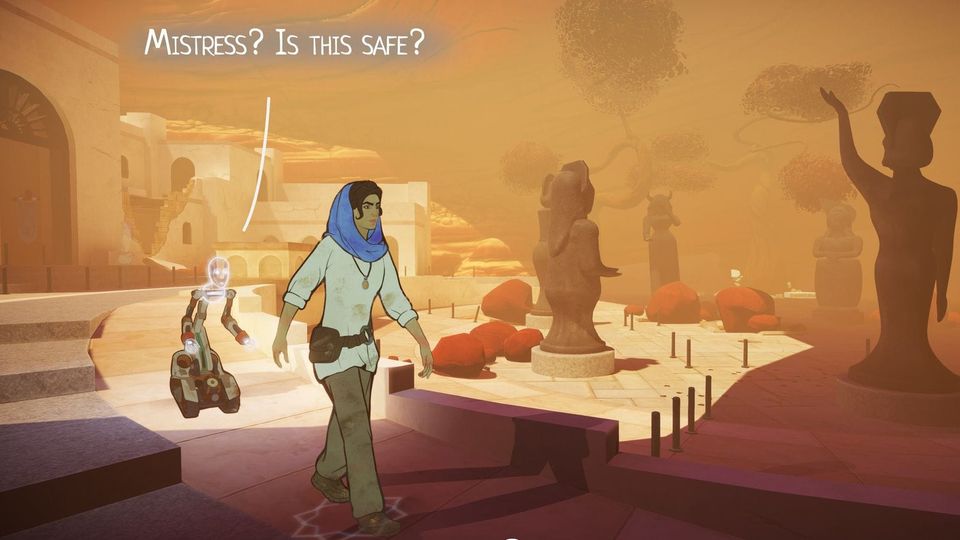
Behold the first episode of Text Adventure's second series. It's only fitting that our video game book book club forces us to contort our titles into the malformed and over-punctuated shape of many video game titles! We very much put our best foot forward this week with Heaven's Vault 1: The Loop, by Jon Ingold, earning the highest single score a book has gotten in this series.
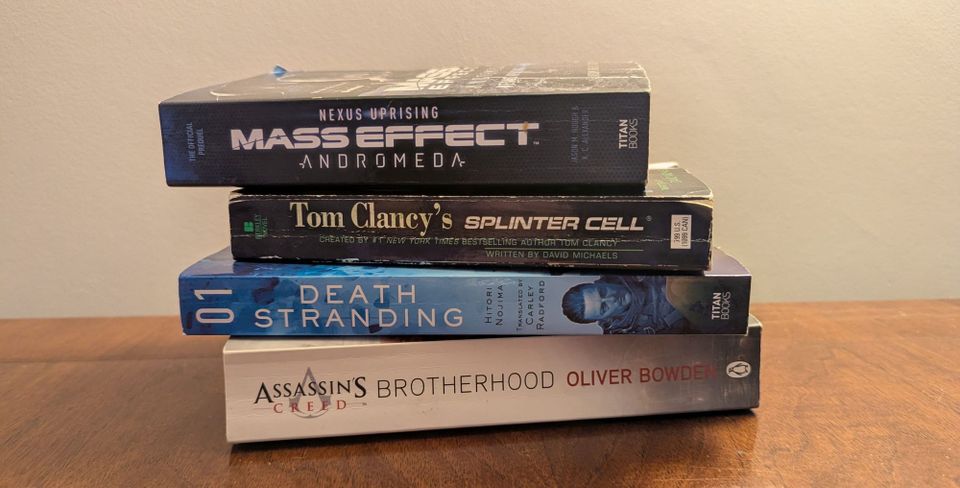
We created Text Adventure, our videogame book club, with sincerely open minds: we wanted to see how official novels intersect with, and perhaps elevate, the games on which they are based. The answer, six books in is: badly and emphatically not, respectively.
There is of course a tension between what makes a good book and what makes a good game. A novel, by definition, lives or dies by narrative; a game lives or dies by gameplay. An effective character in a game is one that’s distinct enough to be meaningful but flexible enough to bend to the player’s will; a character in a novel needs to be built such that the reader understands the choices they will see them make. Worldbuilding in prose can be done precisely and with the assumption that the reader is paying attention; worldbuilding in games is done via multiple formats by multiple people and with the assumption that the player will not notice unless you forcibly control their gaze, and even then, only maybe.
It is possible for a videogame book to bridge this divide, but based on our first season not all of them try. I don't want to just blame the writers for this: I suspect that they were commissioned on a flat rate with a hard deadline and issued with either a voluminous and unyielding brand bible or a marketing Powerpoint, or both, and made the best they could in the time available to them. It is technically possible to create something great under such circumstances if you try hard enough, but anybody who’s done creative work-for-hire will have found themselves coming up against somebody with the power of creative sign-off and zero-to-negative creative ability, and after a while you accept that it’s easier to just cash the cheque and move on.
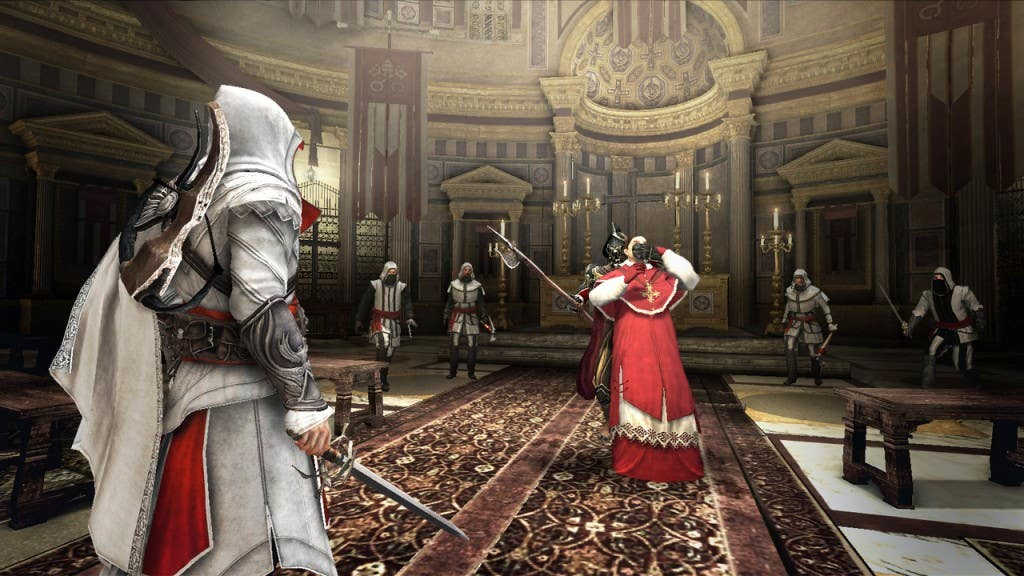
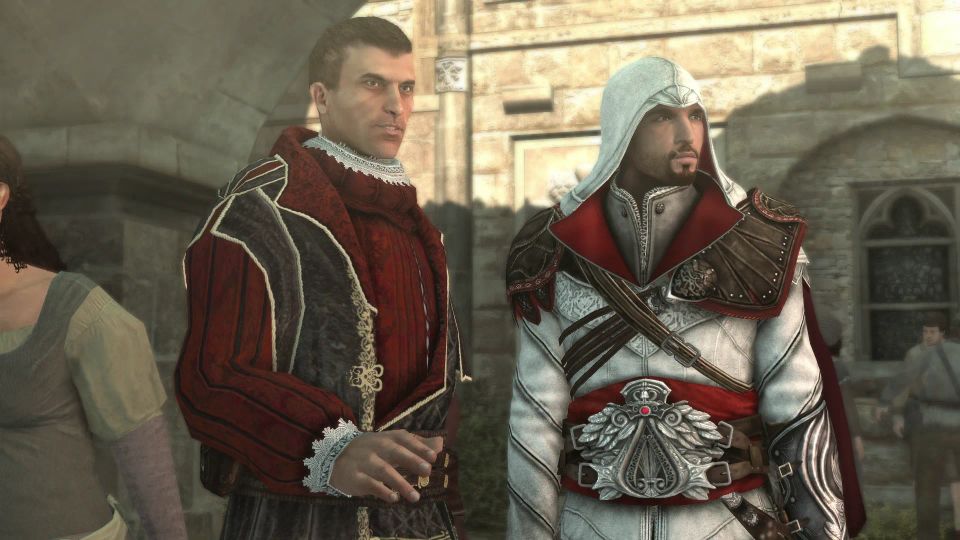
The nadir of our first season was Assassin’s Creed Brotherhood, a mesmerisingly terrible book which set out to include the entire game, side-quests and all, along with correctly capitalised references to the trademarked weapons technology. Its slavish reproduction makes abundantly clear how bad so many game stories are, because absent the engagement that comes from holding a controller it’s just a series of too many events with not enough connecting tissue.
You don't realise how much plot there is in an Assassin's Creed game until you have to read a 500-page summary of it.
This approach of ruthless documentation is doomed to fail because the vast majority of games are, necessarily, driven by what’s fun to play and the narrative is usually something that’s forced to align with that. The simplest solution is to separate the two entirely, like the visual novel-style conversational asides between characters that break up gameplay in titles like Tactical Breach Wizards, but the sort of game that’s big enough to get a spin-off novel invariably weaves its story into the game itself.
We can now reveal the slate for the second series, with a new Text Adventure coming every month for the special sausages who sign up to support Jank. It's important to note that we didn't set out to make Text Adventure a series where we were very mean about books. Unfortunately, almost all the ones we read in the first series were very bad, but we solicited recommendations for actually good ones this time, so the first book stepping up to the Text Adventure guillotine is Heaven's Vault Book 1: The Loop by Jon Ingold.
The full list, with the date the episode will air, is as follows:
Total Playtime is now the official Jank podcast, hosted by Alice Bell, Jon Hicks, Brendan Caldwell and Nate Crowley. Text Adventure is our videogame book club, in which we read a videogame novelisation and try very hard to like it. Ahead of the imminent arrival of Season 2 of Text Adventure, we’re finishing up our summaries of the first season.
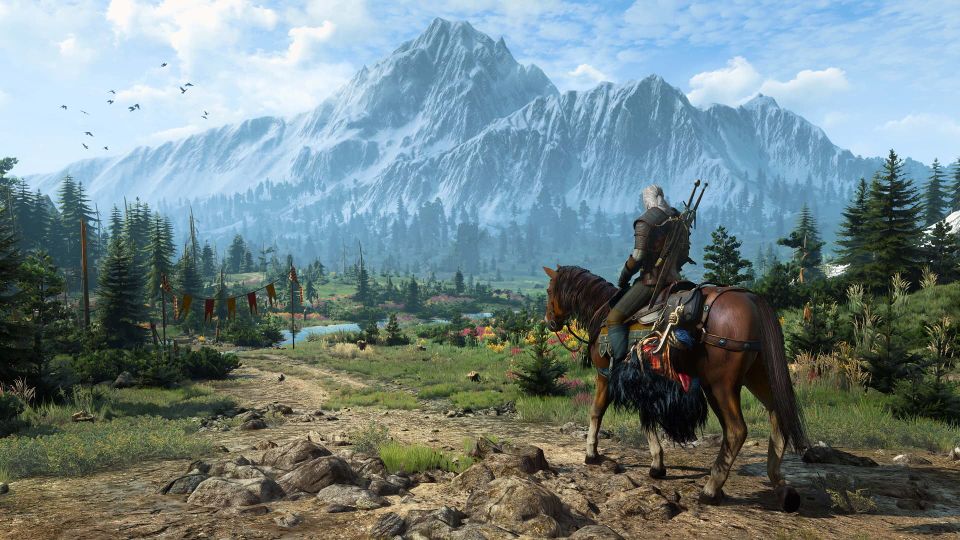
This article series has not matched the broadcast order because I wanted to end here, with Andrzej Sapkoski's The Witcher: The Last Wish: a collection of short stories that is more-or-less (the publishing order is somewhat haphazard) the first time that anybody encountered roving monster slayer Geralt of Rivia. It is by some distance the best book we read, and unfortunately I must assume that is because it was written as standalone prose rather than something that was backed out of a game world.
Total Playtime is the official Jank podcast, hosted by Alice Bell, Jon Hicks, Brendan Caldwell and Nate Crowley. Text Adventure is our videogame book club, in which we read a videogame novelisation and try very hard to like it. Ahead of the imminent arrival of Season 2 of Text Adventure, we’re summarising the episodes of the first season, which aired while Total Playtime was still Patreon-funded.
In this episode, we considered it appropriate to review a book about a malignant spirit haunting a former workplace by summoning former colleague Matthew Castle, now of The Back Page podcast, who joins as our guest and was able to offer both incisive judgement and additional deep Castle lore for fans of the old RPS podcast.
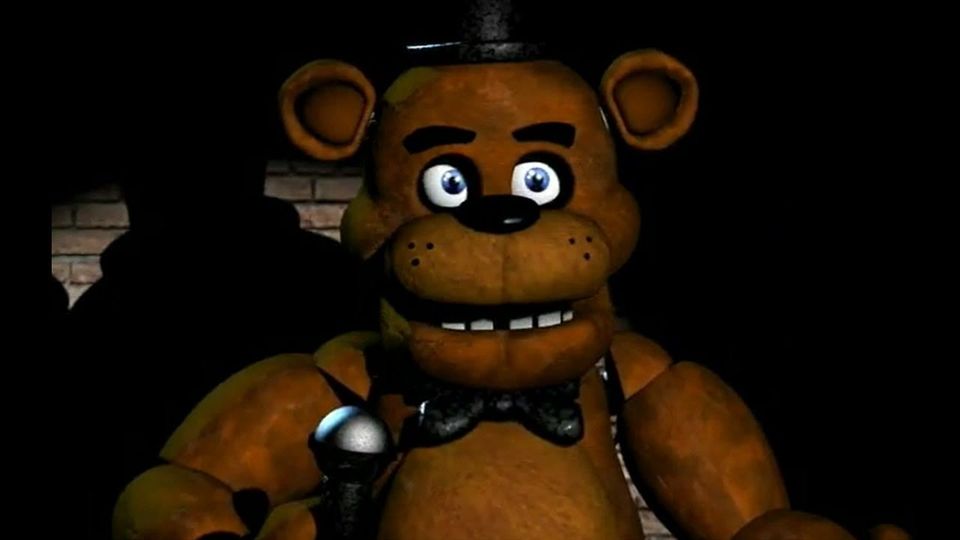
The warning is there right in the author’s bio, which says of series creator Scott Cawthon that “while he is a game designer by trade, he is first and foremost a storyteller at heart”. This description indicates both a strong self-regard and tendency towards over-writing, which explains quite a lot about the hundreds of pages that follow.
Cawthon has since stepped away from the simple but very effective survival horror series that made him extremely rich, but back in 2015 he was still closely involved in everything that carried the name. This included co-writing the first novelisation alongside Kira Breed-Wrisley, a professional ghostwriter who went on to become the go-to FNAF novelist for a time: looking at the voluminous list of rewrites and departed collaborators on the movie, one suspects she was blessed with a supernatural patience.
There are traces here of something that could have been an average-to-good genre piece - a Goosebumps-plus teen horror story or a functional B-movie. The protagonist, Charlie, has a functioning inner life; there is an understanding of young lives and young obsessions, there are sometimes whole paragraphs of evocative prose. There is also, unfortunately, a non-negotiable requirement to spend five nights in a location where no sane person would spend five minutes, and that is merely one element of an increasingly incoherent morass of narrative elements that one suspects were dropped in throughout the writing process.
Total Playtime is a Patreon-supported podcast about videogames, hosted by Alice Bell, Jon Hicks, Brendan Caldwell and Nate Crowley. Jank has partnered with them to bring their premium episodes to our paying subscribers - but we’re making this episode free to all.
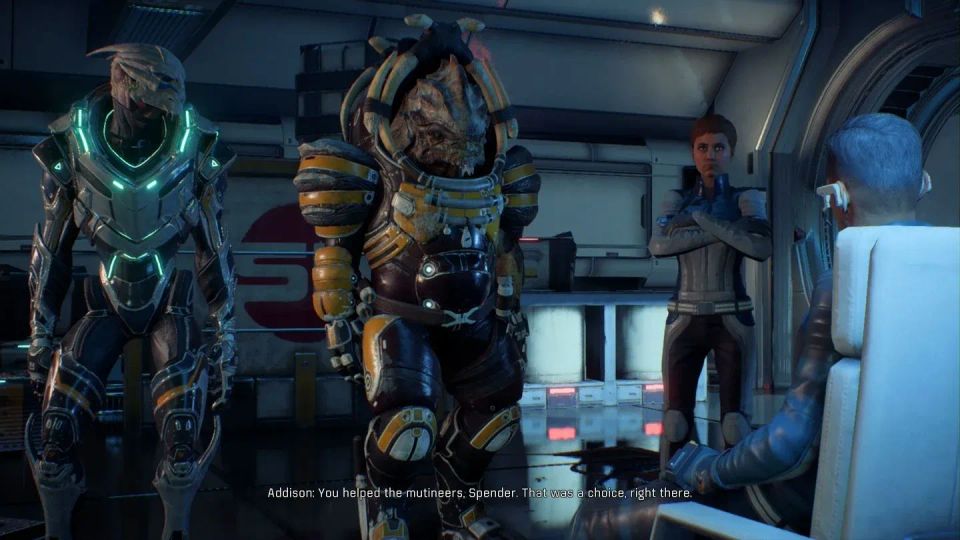
Text Adventure is Total Playtime’s videogame book club, in which we read a videogame novelisation and try very hard to like it. In this episode, first released to Patrons last year, we were joined by RPS’s Edwin Evans-Thirlwell to read Mass Effect Andromeda: Nexus Uprising, the first of three novels about Bioware’s ill-fated sequel and the first chronological instalment, telling as it does the story of how the wheels came off the Andromeda Initiative well before Messrs. Ryder showed up at the start of the game. That means it’s the first Text Adventure book that isn’t forced to slavishly reproduce the events of the game, an advantage it proceeds to squander at some length.
Text Adventure - Mass Effect Andromeda Nexus Uprising
0:00
/5034.631836
The end goal is right there in the title: the uprising on the Nexus space station, the aftermath of which greets you
Total Playtime is a Patreon-supported podcast about videogames, hosted by Alice Bell, Jon Hicks, Brendan Caldwell and Nate Crowley. Jank has partnered with them to bring their premium episodes to our paying subscribers, and we’re also surfacing entries of Text Adventure, their video game book club.
This was the first book in the Text Adventure series, chosen according to the rigorous selection criteria of “what books do I own already,” and having completed the first season I am confident it is the worst. Its almost mesmerising awfulness is derived from a baffling commitment to including the entire plot of the game, which means it has to cram in five years of Ezio’s rebuilding the Guild of Assassins along with significant chunks of Rome. Nothing is excised, everything is present, including the clumsily staged tutorial VO.
Text Adventure: Assassins Creed Brotherhood by Oliver Bowden
0:00
/5467.794285
This is comically antithetical to good storytelling: quite apart from the fact there’s enough plot here to support a five-part series, key parts of the narrative machinery are missing entirely. Characters are introduced and then murdered immediately, people take time out from plot beats to recount
Total Playtime is a Patreon-supported podcast about videogames, hosted by Alice Bell, Jon Hicks, Brendan Caldwell and Nate Crowley. Jank has partnered with them to bring their premium episodes to our paying subscribers - but we’re making this episode free to all.
Text Adventure is Total Playtime’s videogame book club, in which we read a videogame novelisation and try very hard to like it. In this episode, Alice, Nate and I were joined by the delightful Johnny Chiodini to read the first book based on Sam Fisher, Tom Clancy’s Splinter Cell by David Michaels. Nate fell at the first hurdle by erroneously reading the second novelisation, Tom Clancy’s Splinter Cell: Operation Barracuda, which speaks to the professionalism of the Total Playtime operation and why we felt it aligned with a website called Jank.
The practical impact of this error was limited, as both books are archetypal hoo-rah Clancyverse publications of the mid-2000s, when the US-lead invasions of Iraq and Afghanistan were still fresh. Both books were best-sellers, neither of them are any good, and the first is notable for capturing the spirit of the game in a startlingly negative way.