What we learned from reading five terrible game books and one good one
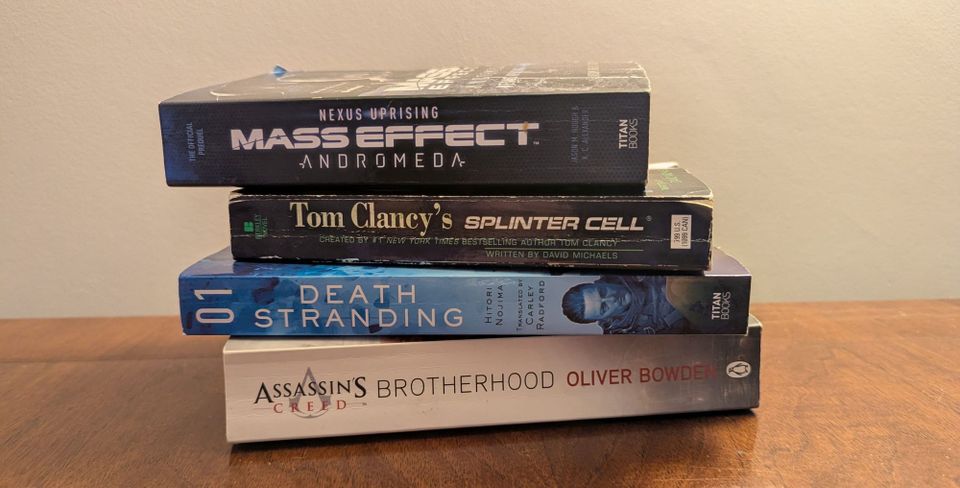
We created Text Adventure, our videogame book club, with sincerely open minds: we wanted to see how official novels intersect with, and perhaps elevate, the games on which they are based. The answer, six books in is: badly and emphatically not, respectively.
There is of course a tension between what makes a good book and what makes a good game. A novel, by definition, lives or dies by narrative; a game lives or dies by gameplay. An effective character in a game is one that’s distinct enough to be meaningful but flexible enough to bend to the player’s will; a character in a novel needs to be built such that the reader understands the choices they will see them make. Worldbuilding in prose can be done precisely and with the assumption that the reader is paying attention; worldbuilding in games is done via multiple formats by multiple people and with the assumption that the player will not notice unless you forcibly control their gaze, and even then, only maybe.
It is possible for a videogame book to bridge this divide, but based on our first season not all of them try. I don't want to just blame the writers for this: I suspect that they were commissioned on a flat rate with a hard deadline and issued with either a voluminous and unyielding brand bible or a marketing Powerpoint, or both, and made the best they could in the time available to them. It is technically possible to create something great under such circumstances if you try hard enough, but anybody who’s done creative work-for-hire will have found themselves coming up against somebody with the power of creative sign-off and zero-to-negative creative ability, and after a while you accept that it’s easier to just cash the cheque and move on.
The nadir of our first season was Assassin’s Creed Brotherhood, a mesmerisingly terrible book which set out to include the entire game, side-quests and all, along with correctly capitalised references to the trademarked weapons technology. Its slavish reproduction makes abundantly clear how bad so many game stories are, because absent the engagement that comes from holding a controller it’s just a series of too many events with not enough connecting tissue.
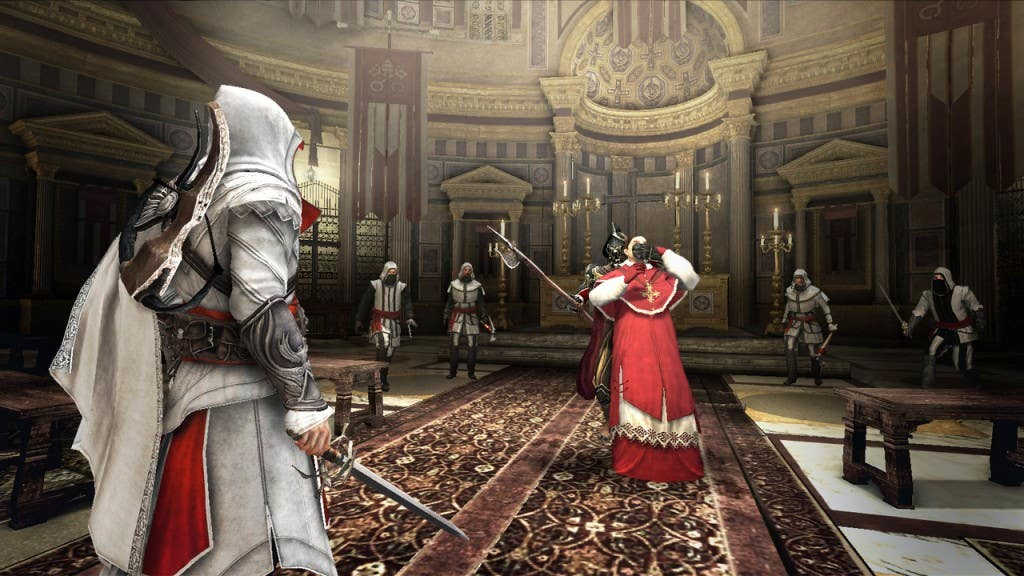
This approach of ruthless documentation is doomed to fail because the vast majority of games are, necessarily, driven by what’s fun to play and the narrative is usually something that’s forced to align with that. The simplest solution is to separate the two entirely, like the visual novel-style conversational asides between characters that break up gameplay in titles like Tactical Breach Wizards, but the sort of game that’s big enough to get a spin-off novel invariably weaves its story into the game itself.
This post is for paying subscribers only