Brendan is a critic and games journalist with 15 years experience, and writer on a few indie games which he is honour-bound never to talk about on Jank.
Genres are multiplying at the rate of black mould. The survivorslikes, the tidy-uppers, the gamblotrons - they spread beyond our control. I enjoyed that library game. Now I vomit at the sight of clutter in a screenshot. This era of PC games is the equivalent of that time you casually told your mum you like figs and now every week she shows up with another 1kg bag of figs. Dried figs, rehydrated figs, fresh figs, figs with roguelite elements, figs with character customisation. Please mum! No more figs!
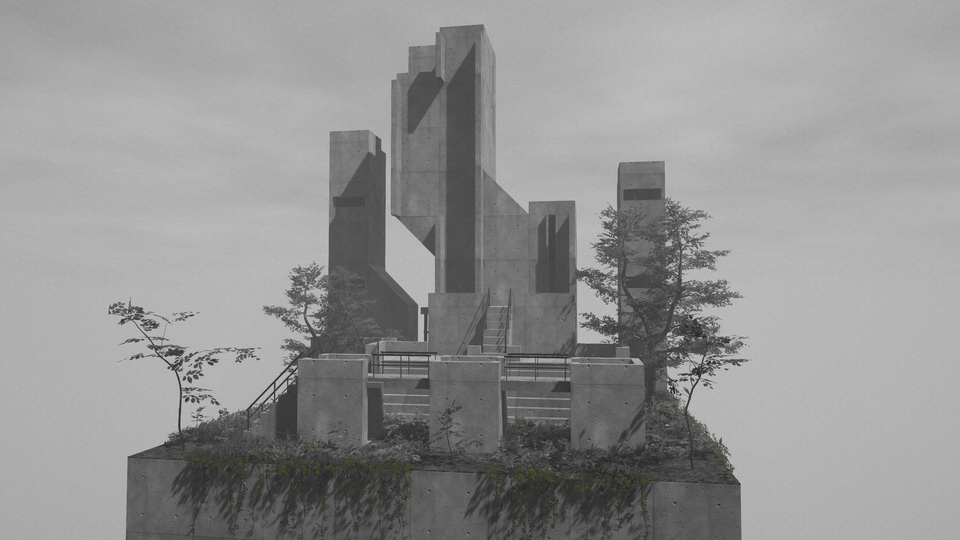
But sometimes a genre grows quietly and gently, far from the slopweeds. The sandbox building game has yet to sicken me. Townscaper, Tiny Glade, and Sandcastle are toys of cosy architecture. But what if you wanted a toy for harsh architecture? Here you go. Tiny Brutalism is $5 and will have you feeling like... like... okay, look, I don't know famous architect names and every time I write about brutalism I have to go look them up. I thought László Tóth was a real person. Anyway, this little videogame about building blocky concrete shapes is good.
It's straightforward. Pick a plot size (8 x 8, 12 x 12, and so
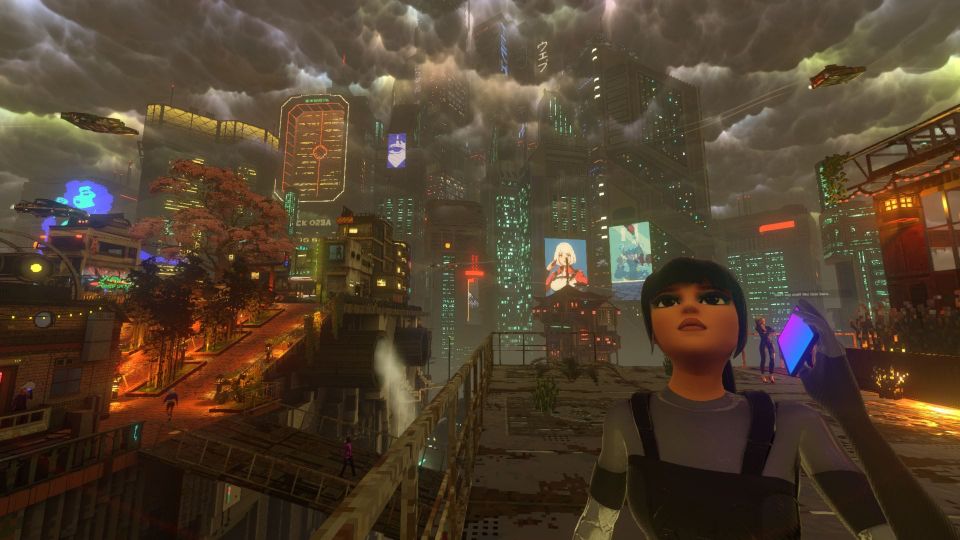
The best thing you can do in Nivalis Nights is hold down the J key and watch your list of quests vanish. The city will flood your eyes. Freaks in plastic clothes roam the plazas, bright adverts are reflected in rainkissed slabs, little delivery robots zip around at knee height, hovertaxis thrum overhead, the walls are plastered with signs and graffiti and posters and aircon units. The sky is... god, is it boiling? Why didn't you see all this before? Well, it's easy to miss when you're blinkered by small business chores.
At any time almost a quarter of the screen in this flashy life sim is covered by a long to-do list full of objectives like "restock ingredients" or "buy a houseplant". Not only does this homework menu take up more real estate than the highrises towering over you, it also acts as a constant reminder to go go go, do do do, quest quest quest! It was only when I learned to make this journal disappear and ignored my workload that Nivalis' biggest strengths beamed through the smog. It's a wet cyberworld built for pedestrian ambling and for chatting to random strangers. In other words: quit your videogame job. Forget about your bank balance, for once in your life, and go for a walk in the neon rain. You won't regret it.
🌆
Living In Sim is our monthly column about simulation games, and the frequently stupid misadventures they inspire.
On your very first day in Nivalis some guy you barely know gifts you his rundown ramen stand, and kindly includes all the debt that goes with it. To pay that off you'll need to find ingredients, source new soup recipes, hire waiters, and get more bums on seats (seats sold separately). From here, the game spirals out into other life sim territory - supplement your noodle stand by going fishing, try your luck at wreck hunting, start an urban farm, buy an apartment, decorate the apartment, abandon the apartment for a nicer, more expensive apartment. Have you too grown immune to the paradox that home ownership is achievable in dystopian videogames but not in reality? Cool. Let's move on.
Here's how to recreate the bargain buckets you remember
Consider this: you've just been handed a tenner from your grandmother. She doesn't know what the hell she's doing. She thinks you'll spend it on sweets, or put it in your piggy bank. What a fucking idiot! No, you're going to rummage through the bargain bucket at your local game shop.
Except, oh no, all the game shops are dead. That's okay, Steam is having a sale this week. The correct way to find proper deals in a Steam sale is to create your own bargain bin by fiddling with the dials and sliders of the store's search page, like a coked-up rodent messing with levers in a lab experiment. One of these has got to open the cage, right? No. The cage is capitalism. And you are trapped. The best you can hope for is for cheap videogames to come sliding down the tubes. Let me aid you in this by taking ten pounds (British, valuable, suspicious) and seeing what we could buy in the Steam Autumn sale with granny's cash.
First, let's go to the Global Top Sellers list and crank that price slider all the way down
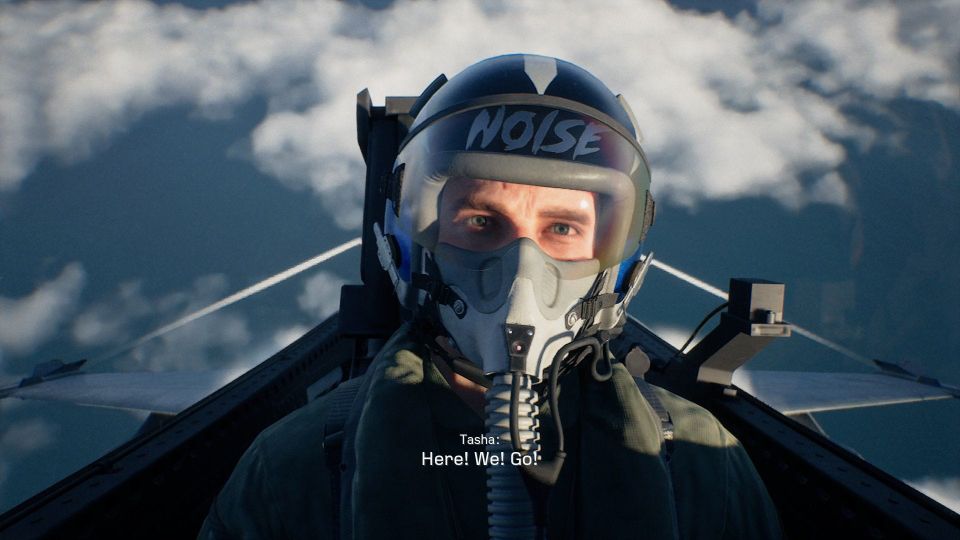
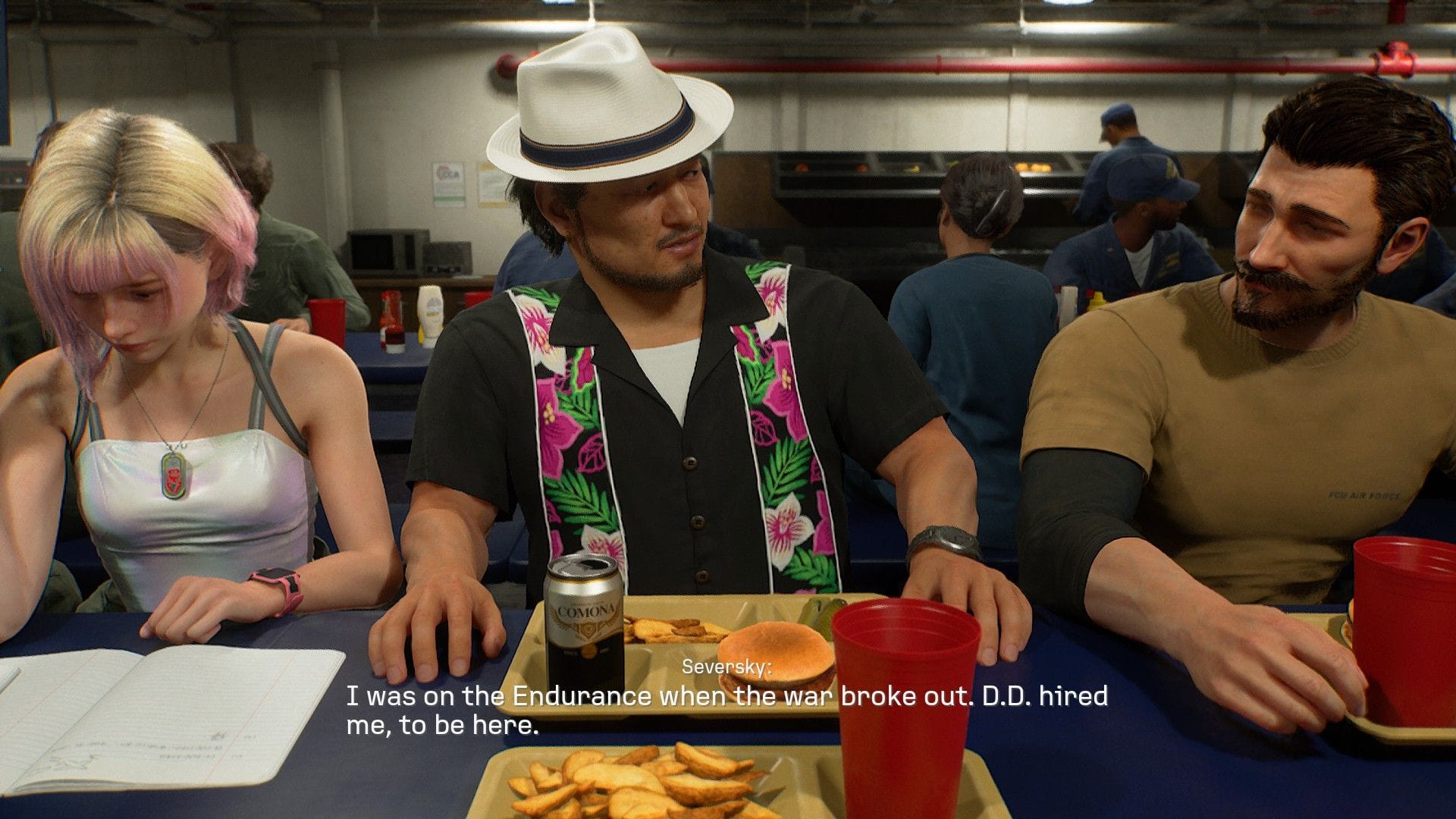
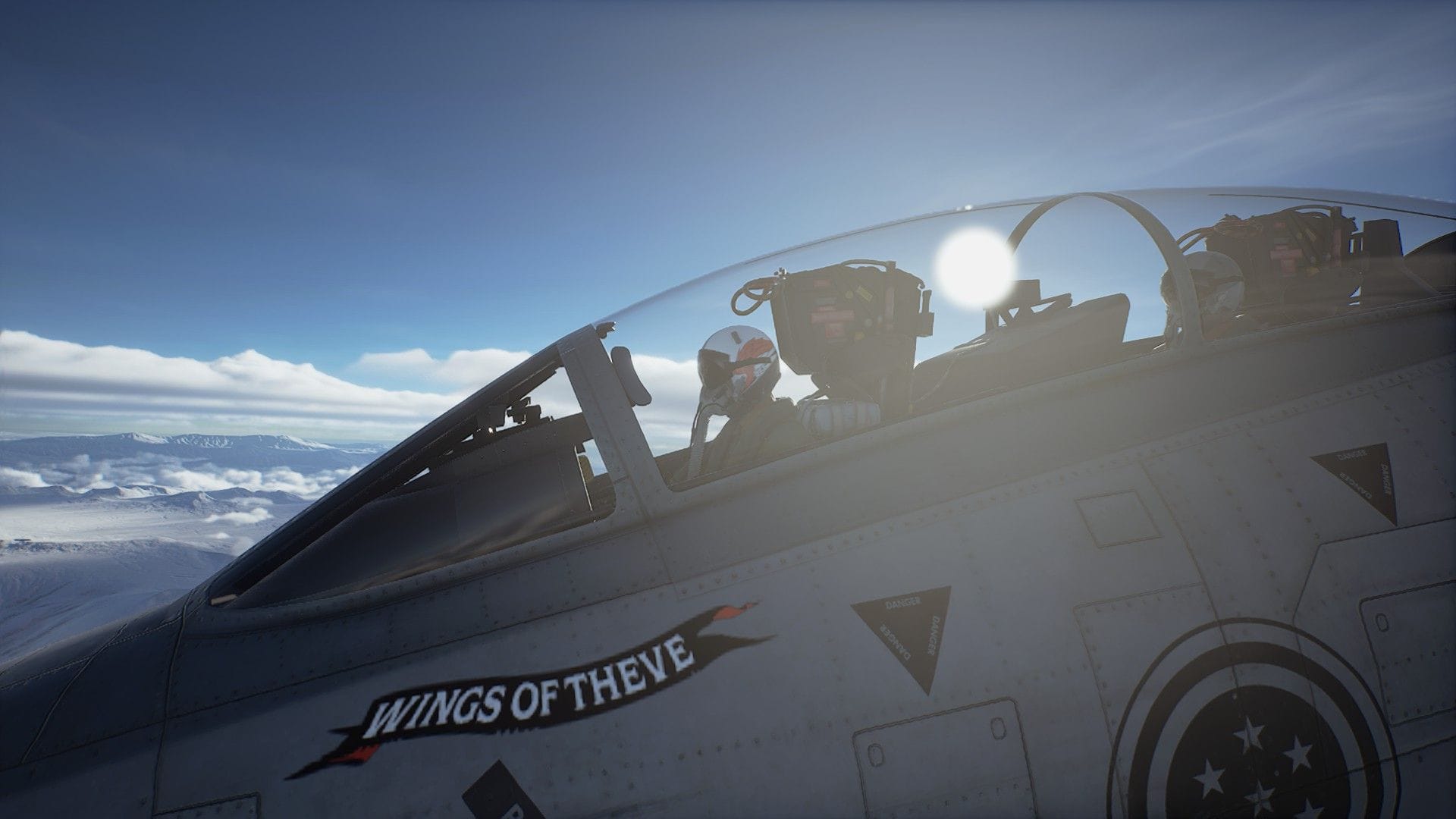
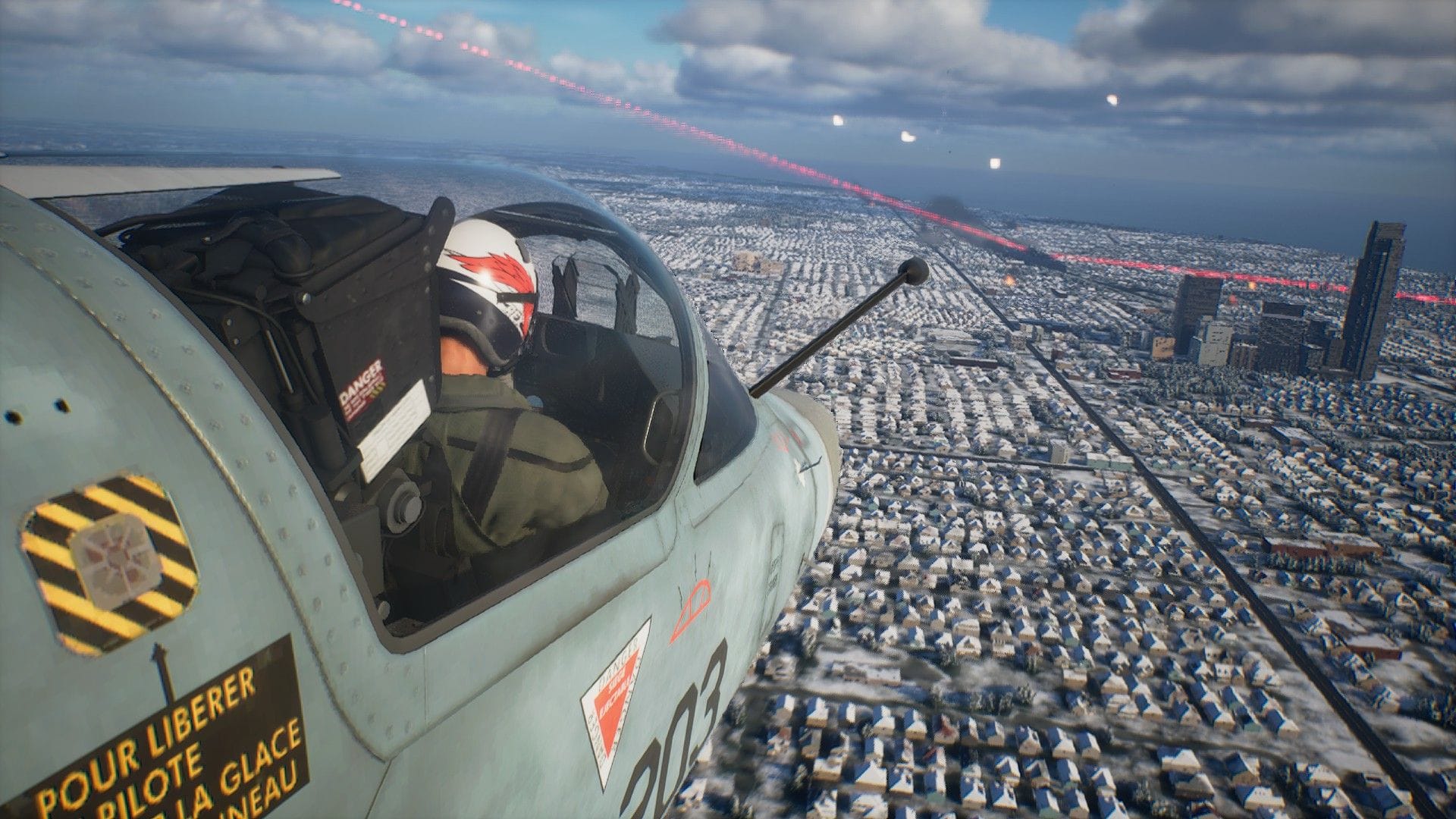
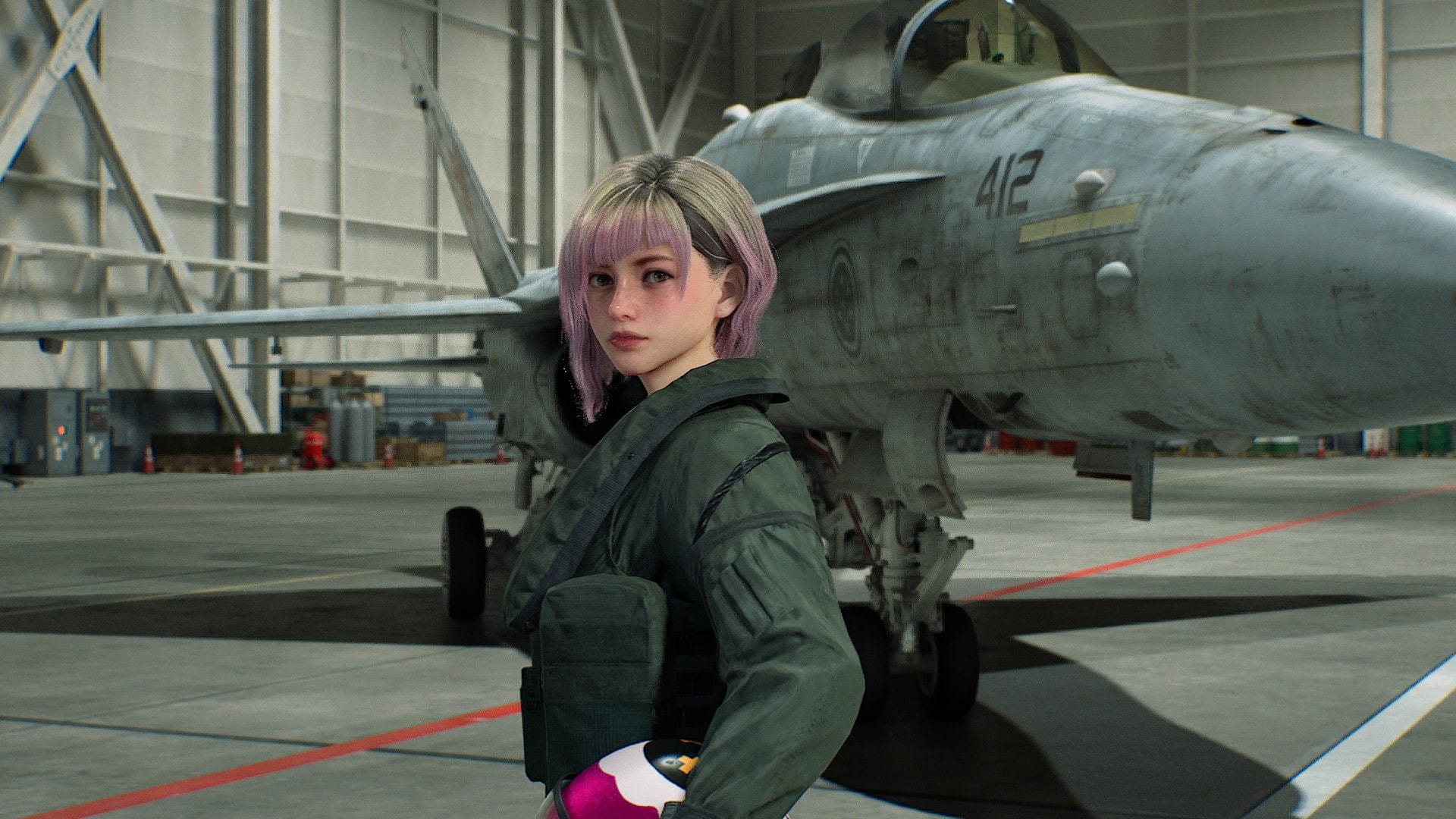
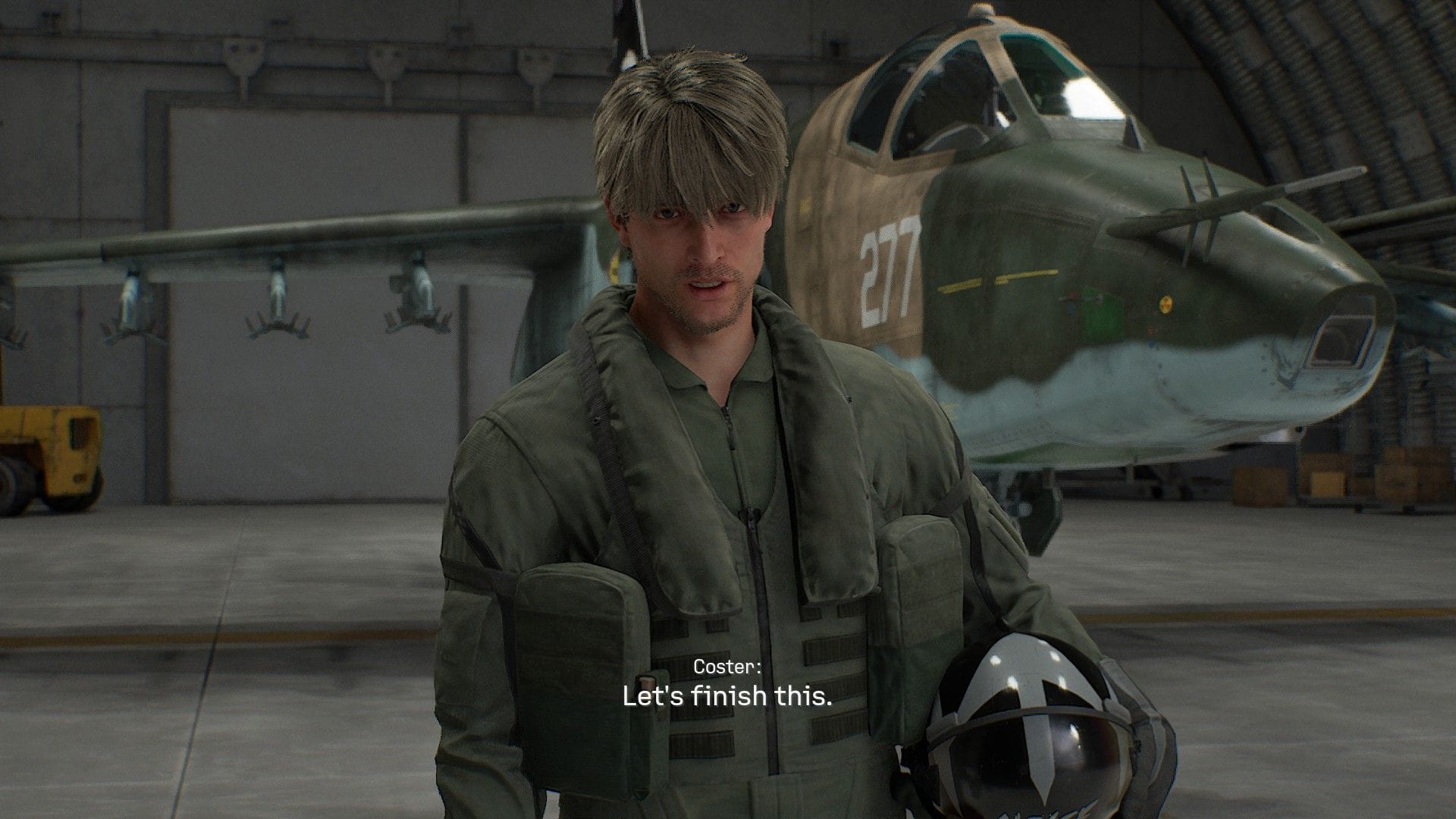
If Ace Combat 7 lacked anything (and I don't think it did) you might say it was a feeling of getting close to your wingmates. Project Aces think so anyway. Ace Combat 8: Wings of Theve repeatedly plonks you right on the deck of its aircraft carrier homebase, in first-person perspective and proximate enough to reach out and touch your squadpal's perfectly rendered stubble. You cannot get much closer than this. But there is a sense of overcompensation. Mission by mission this passive in-flight entertainment takes over and the player gets fewer displays of spectacular air buffoonery of their own.
Luckily, the story is continuously stupid in the refreshing way Ace Combat can be. I don't think this new jetshootser is as airtight as the previous game in the series. There is, frankly, a lot of filler. You find yourself going through the motions of popping ground targets until the next lengthy story beat can hit. But when it's good, it remains an explosive cavalcade of implausibilities that makes me laugh. For Ace Combat, that's enough.
You play as a silent pilot known to the world as "Wings". But only because you've inherited this nickname, Dread Pirate Roberts style, from a pilot you knew for less than a day. To top it off, you now hear his lyrical inner monologue inside your own head for the whole game. It's an off-beat choice that, at first, reminded me of the dead narrator in Sunset Blvd, but was cheapened as soon as the voice drew attention to the conceit ("So you can hear me?" he says. "This is weird for me too."). But that's videogames in general and Ace Combat games in particular. They like to spell things out in big letters written in smoke in the sky.
Between the voice in your head, the canteen chats, and the rock musicians, it feels like the narrative designers have been playing a lot of Cyberpunk 2077.
The series' characteristically farfetched storytelling - a head-on collision of sincere cultural observation and comically militant absurdity - is standing to attention throughout. Once again, it's WAR. The best interpretation of these rocketing jet 'em ups I've read is that they belong to the mecha genre. They are theatrical in a disarming way that'll win over anyone willing to accept a world where convicted felons are allowed to fly MIG-29s to atone for their crimes, where global wars with millions of casualties happen every 10 years but where there's still enough optimism to build space elevators and gleaming futuristic cities just in time for the next weapon of mass destruction to be invented. There are interesting themes in Ace Combat games - they are delivered with the subtlety of a cruise missile.
This airship has a 1km wingspan. It deserves to be shot down for its hubris alone.
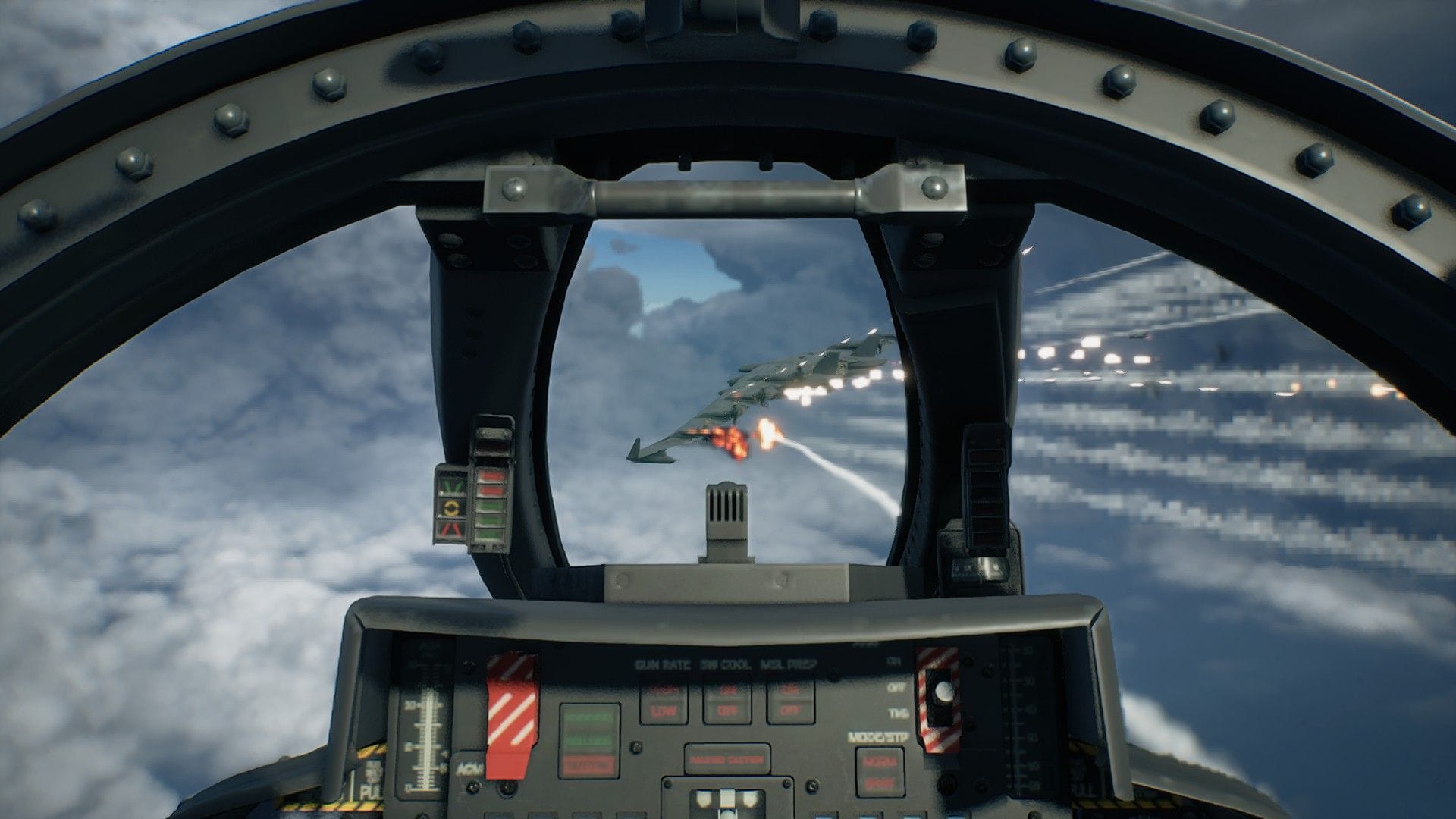
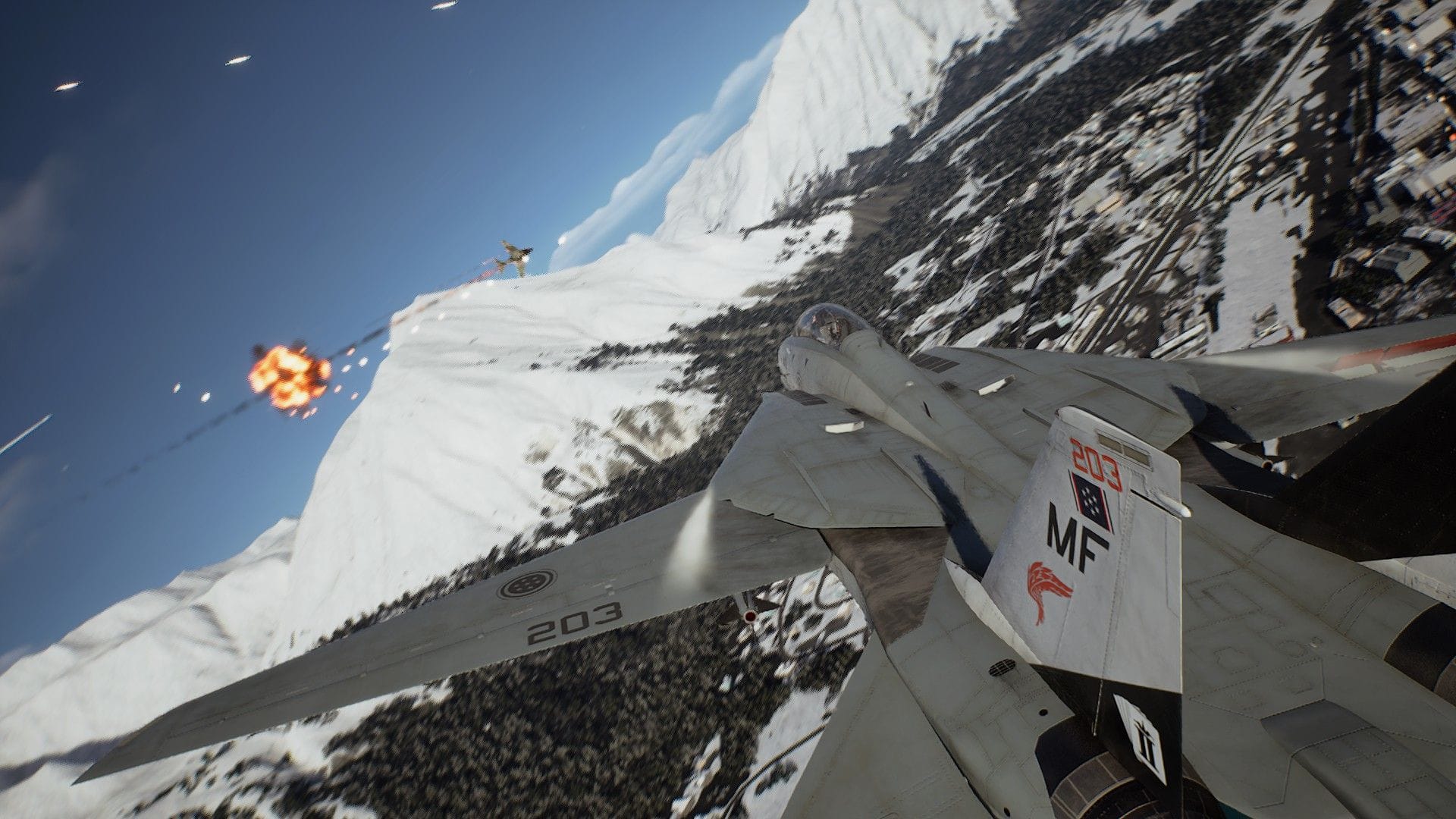
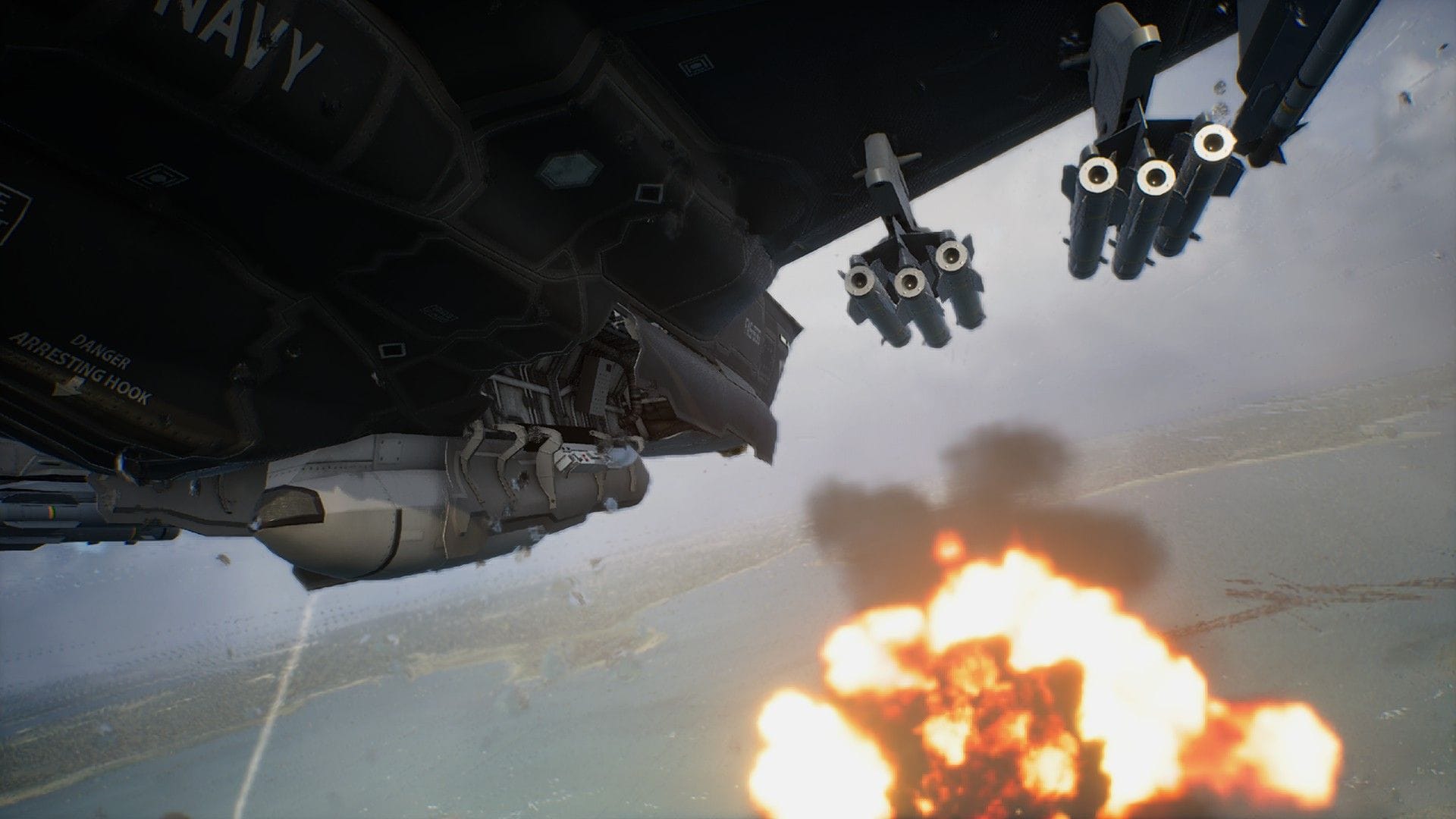
As for what it's actually like to fly: yup, feels good. You airbrake hard into high gravity turns, launch special air-to-air ordinance, pop flares when a missile is locked onto you, and chase bad guys through drippy clouds when your homing reticule is interrupted by beautifully composed sky mist. I miss the thunderstorms of its predecessor but its possible I just didn't fly through the right bits of dark heaven.
Some of the most tense air battles can involve a ferocious amount of airwave chatter. Fighter squadrons, ground troops, commanding officers, and enemy trashtalkers compete for your focus at a clattering pace. In these missions, the feeling can be one of chaotic overwhelm. You are flying through an aural storm of in my sightses, on your sixes, and bombs awayses, with both friendlies and rivals blasting music over the comms. Among all this staticky crosstalk you have to listen for mission critical information - who to shoot and when to get 'em shot by. It's as much an exercise in concentration as a test of your piloting skills.
The post-flight replay after every mission really lets you enjoy whatever dusty graphics card you cannot currently afford to replace. Still looks decent on my crumbling Nvidia RTX 3060. But be warned: I had plenty of hitches and drops when playing on medium settings.
You kit out your jet accordingly. A mission with lots of ground targets? Stuff your steel belly full o' bombs. Anticipate a dogfight with some nippy aces? Pick something fast and stock up on missiles with special guidance abilities. As ever, you earn points in each mission to spend on new planes and parts. You'll fit gadgets to make your missiles lock-on faster, or reload quicker, or grant extra space to carry more ordnance. Later you can unlock some green-flavoured support planes that you'll fob off on your comrades because their special electronic warfare gizmos buff your own missile lock capabilities.
With 30 missions in total, they were destined to be hit and miss. Highlights include flying under the struts of a floating island and blasting the support pillars as you glide past. Or dodging huge glowing bursts of railgun fire from land battleships that have burrowed in among innocent skyscrapers, like a cat at the back of a cupboard filled with delicate glassware.
You pick the planes for the rest of your squadron too, and they give you a little one-liner before you decide, which is cute the first time but tried my patience the 30+ subsequent times.
But there are an equal amount of shrugfests and simple "kill everything" missions set against a timer. One mission sees you and a pilot buddy crashing in enemy turf - a South American coded country full of resistance fighters. Your escape sees you stealth-flying through green blobs of radar in an rickety old plane at agonisingly slow pace while the stakes are melodramatised to you via dialogue on the radio. Aside from being a repeat of Ace Combat 7's most annoying mission, there is almost zero tension. You're just gliding gently to the exit while everyone says: "Oh no!" On the other hand, this is also where the story throttles up to perilously high levels of glamourous idiocy.
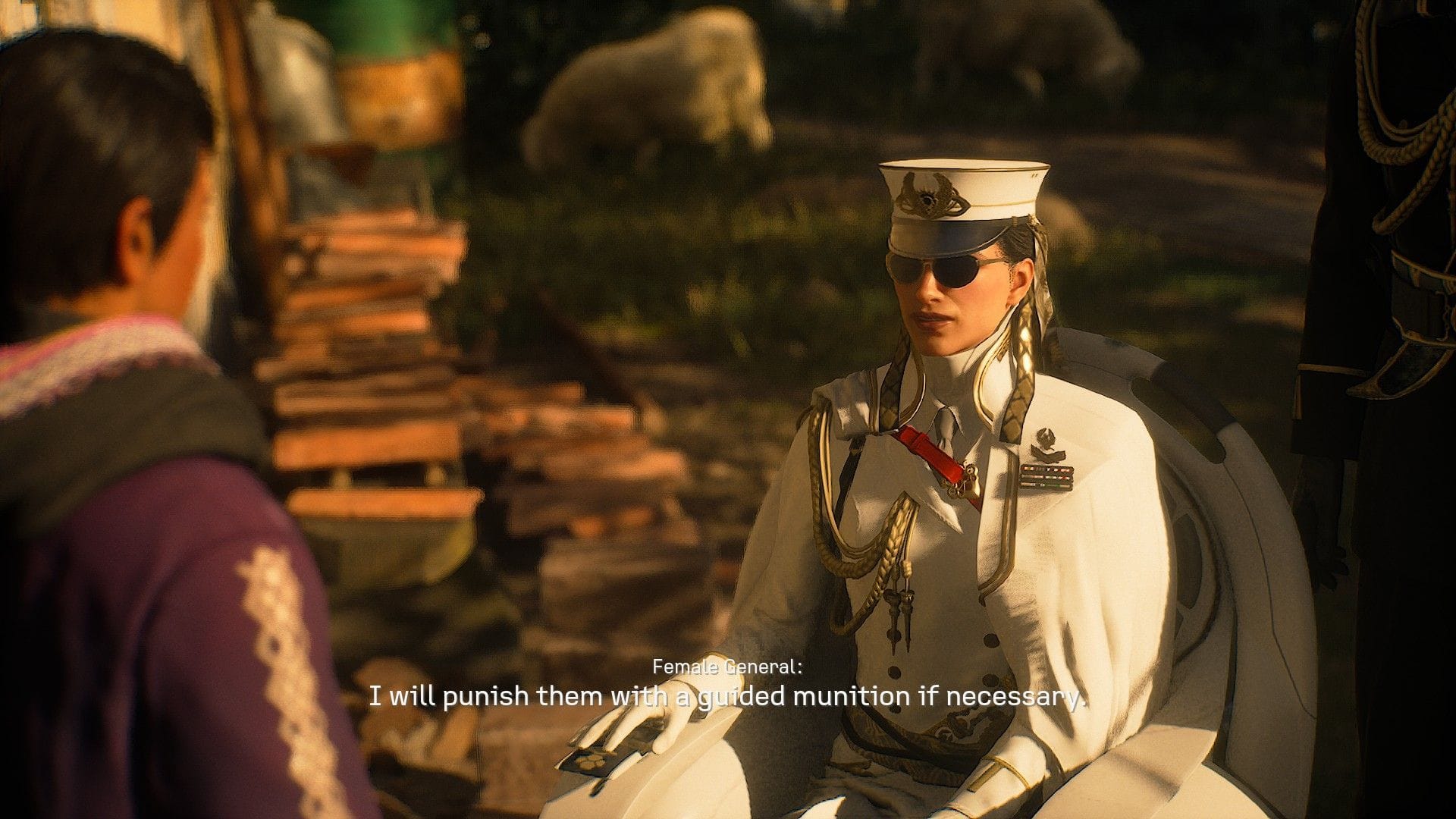
The village you crash near just happens to be visited by the most important General of the enemy air force - a futuristic wheelchair-bound woman of deadpan villainry. The first-person sequence that follows is a kind of Inglorious Basterds style dinner scene with four ace pilots squinting at each other (your head is on a swivel during these sequences, so you can look around, but not do much more). The villainess is served tea and, instead of extending her good arm to take the teacup, a robot arm rises from beneath the table and passes the cup to her working hand. It is a hilarious and needless flex of robotics.
The General notices a villager has been hurt by soldiers and shows her sympathetic side... by promising to launch a missile at the culprits.
This character is not alone in her animeness. Many others feel like the result of a brainstorming session taken to hard-drinking extremes. What if there was a pacifist ghost? What if a famous rock band could pilot F-16s? What if the General was a nomadic tribal heiress? What if the British air traffic guy was called "Dealer" and spoke entirely in gambling metaphors? What if there were a bunch of pilots who hid underground until they went crazy from being deprived of flying for too long?
They should really change some of these lightbulbs
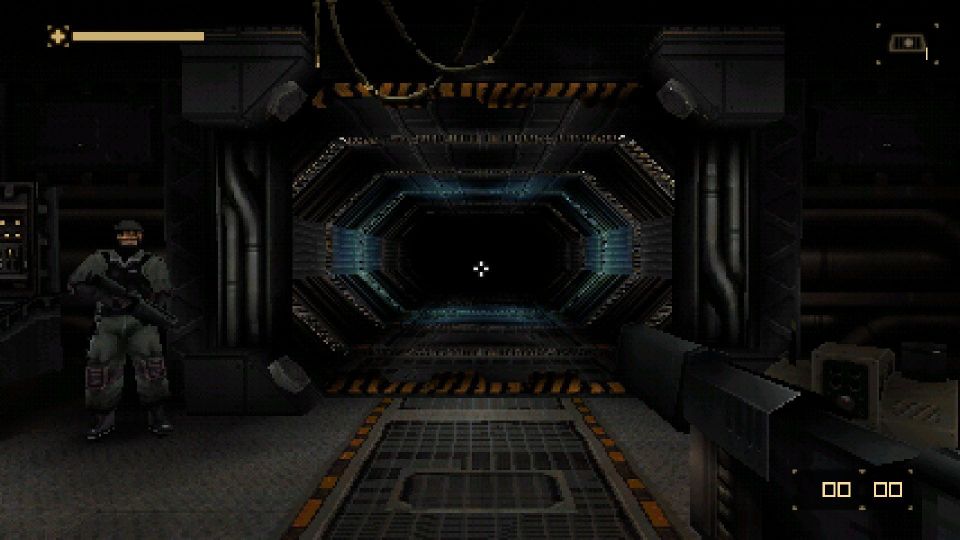
I want to call Derelikt a "love letter" to sci-fi corridors, but its probably more of an affectionate PDA diary entry, quickly scribbled as alien creatures breached the doors of the sleeping quarters. Or maybe a romantic memo written in blood on the windows of the biological testing facilities. An affectionate post-it note, stuck next to a gore spattered keypad that reads: "I love you, space corridors! Anyway the code is 2000 - the year I shit myself playing a demo for Alien Resurrection."
Derelikt is still in development, but it's open to playtesters this week. So I went clattering down its metal passageways in search of my childhood. I didn't find it - you never do. But I did go "ah, that's nice" quite a lot.
The aesthetic inspirations are Alien Resurrection for the most primal of PlayStations, yes, but the attention to detail goes far beyond your average boomer shooter's post-processing shaders. The textures warp as you turn your view. Vertices snap as they reach the edge of your display. The end of a corridor is often pitch black, a recreation of the PlayStation's infamously limited draw distance. It is sci-fi
They finally invented Ayn Rand's Battlefield. Wardogs is the sort of huge multiplayer team battler you are familiar with, except now you have a bank balance. You earn a wad of cash with every kill, revive, heal, drop-off, or bit of construction work. Destroy a sandbag for a meagre $14. Blow up a vehicle to pocket a cool $300. Kill a person - that's $2,250. You then use that cash to buy weapons, armour, ammo, and vehicles. The profit motive drives everything.
"You have to spend money to make money," says a gruff NPC vendor, expounding the game's philosophy. Well, fuck you, shop with a mouth. We will not spend a single dollar. Instead, the Jank writers have instigated the ultimate test of tightfistedness. Which of us can make the most money in Wardogs without spending anything? Let's find out.
The rules
Our goal for this challenge is to earn as much cash as possible. We must spend $0. We are allowed five lives, and we are going in cold. That means we have not played the game before, except to do the tutorial. Less Wardogging, more Rawdogging, if you will.
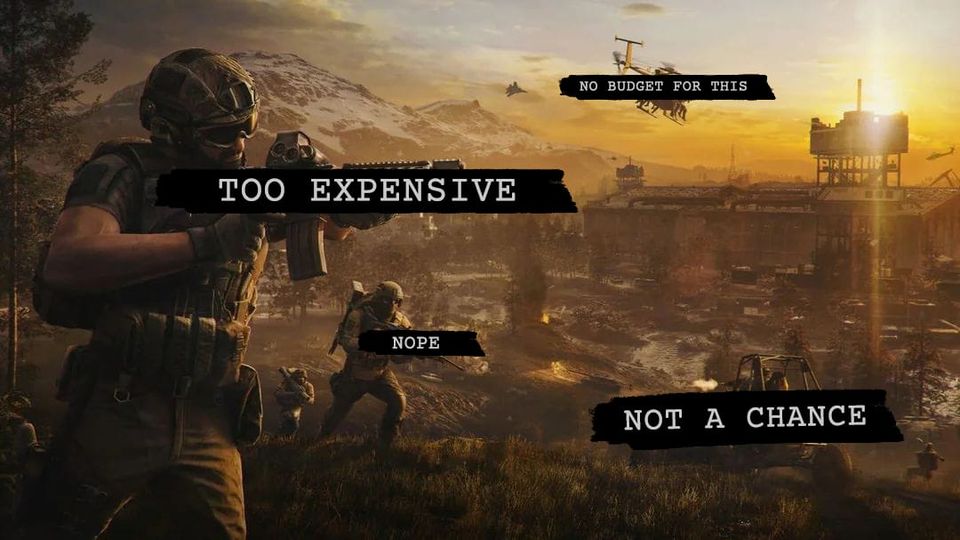
This will not be easy. Even a hammer to build sandbags, or a wrench to fix vehicles can cost 50 warbucks. Reliable firearms are much dearer. Spawning a fighter jet is out of the question. Every player starts with $10,000 when they buy the game. We're not allowed to use any of it. Let's see how we get on.
You cannot reload in Sprawl Zero. Instead, you mindwarp a fallen gun straight to your hand, unload all the bullets into a cyborg guard, then javelin the hollowed weapon at his colleague's skull. You then brainsnatch that victim's rifle into your fingers while it's still falling from his dead hands, and you do it all again.
For the first half hour of this retro blastathon, I habitually hammered the R key after loosing a few bullets. It did nothing. Body memory will not help you here, even if your head memory is summoning visions of the 2000s sci-fi shooters this dusty megacity is inspired by. You will navigate blocky levels full of secrets while lobbing empty pistols into the faces of your enemies and tossing back grenades. The gag presents itself. This is literally a throwback shooter.
You are a cybernetic killfiend of the Junta, the city's ruling force. A terrorist group are doing terrorism, and worse! They're being preachy about it. It's your job to bleed 'em out and silence their cultish leader, Silas. I say "your job" but it's clear from the protagonist's robotic recitations ("Memory is the phantom. Autonomy is the flaw.") that you are a pre-programmed, captive killing instrument doing the dirty work of your shadowy, fash overseers. Not that your cult foes are clean-cut goodies. Better just keep murdering until the plot twists happen.
It is technically a prequel to a wall-running FPS called Sprawl from a few years ago. I sensed a few nods to that story but they have gone completely over my head.
Yes, 2000s shooters may be the soul, but the body is all Doom 2016. It is a rhythmic, flowing shooter that demands the player keep pace. Enemies are nippy and move around arenas with cowardly self-preservation, making movement more important than cover. The combat rhythm is a dance on repeat: pick up, shoot, punch, dash - not forgetting to use your abilities to mix things up. You telepathically pluck up gas cannisters and chuck them at dudes, and you earn your health back by remembering to use bullet-time every so often, which generates glowy green healing drops.
Most importantly, the lack of ammo forces you to snap up and try out every gun, even those you don't like so much. Dropped weapons are coloured according to rarity, so you can easily teleyoink a rare purple pistol and ignore the everyday grey guns. But sometimes you have to improvise and use whatever's grabbable in a heartbeat.
The environment design is smoggy, brutalist, and devoid of nature. Between this and Vholume, it is a great time for concrete futurehells.
I commend this as an act of despotic game design. The developers are forcing you to eat your vegetables because - as it turns out - some vegetables are delicious and you will feel better having digested all your grenade launchers. In 2001 some hardwired troglodytes moaned about Halo only letting you carry two guns at any time, but this was the most interesting change in mainstream shooter design for a decade. Sprawl Zero pushes that logic a little further and builds a whole game around it. It makes one big combat decision and commits. For that alone, it is worth playing.
And they're threatening to execute it if their demands are not met
Last week I learned that if you serve in the Territorial Army, even for a short time, you get a discount to Disney World. There is some kind of insight here for a clever person to make, something about the intersection between playfighting and realfighting. Perhaps hiding under the camo of each soldier boy, with all their manoeuvres and training and trigger discipline, we are destined to find a little kid playing pew pew.
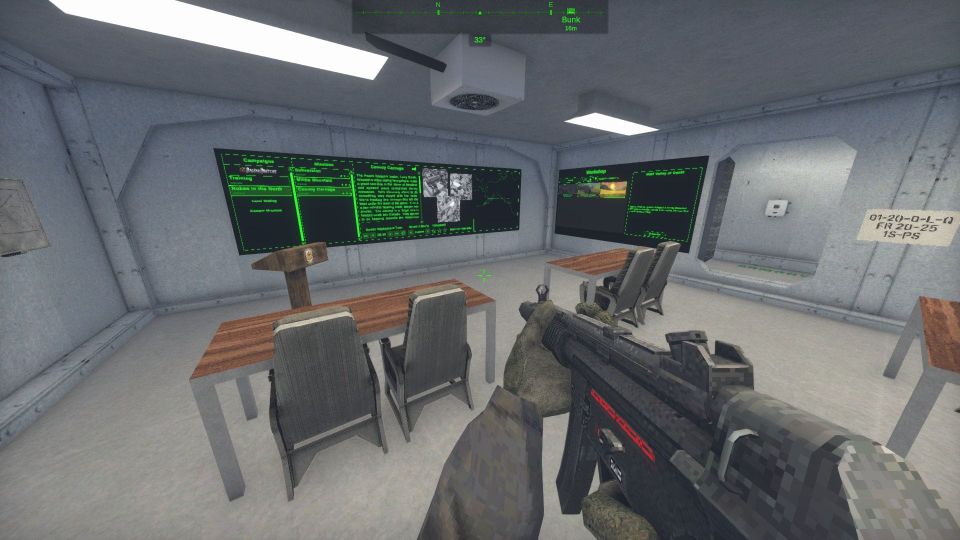
If we dip hard enough into tactical first-person military sim Dagger Directive, maybe we'll find that inner child. Its genetic material is Tomothon McClancy's Rainbow Six (1998) or maybe more accurately Rogue Spear. The aesthetic is rooted firmly in early 2000s counterterrorism shooters like Soldier Of Fortune. The cursor in the menus is a crosshair. When you quit to desktop it asks: "Do you really want to go back to being a civilian?" This game could not be more Y2K if it came on a free CD-ROM in a packet of breakfast cereal sponsored by the US Navy SEALs.
💣
Living In Sim is our monthly column about simulation games, and the frequently stupid misadventures they inspire.
Yet it's no boomer shooter, not exactly. The simulation elements go surprisingly hard. There are ricochet physics, shrapnel from frag grenades, ACOG scopes with adjustable ranges, and only lying prone will give you a truly steady aim. You will perish with a single hit, and enemies go down just as quick. You can either use nightvision goggles or your scope, never both. There's no HUD to speak of - no ammo counter, no health bars - and reloading a clip that's still half-full is a waste of bullets. Veteran milsimmers are free to turn the crosshair off completely in the settings, although I will not surrender this. A man must have his comforts.
The tutorial mission made me worry there was a problem with the scale in the levels. It's a long empty jaunt from the obstacle course to the firing range for seemingly no reason. Only when I played the real missions did I understand this is reflective of the whole game. Maps are expansive combat zones - snowy mountain ranges, whole towns surrounded by broad prairies, stretches of rural countryside with village after village.