Brendan is a critic and games journalist with 15 years experience, and writer on a few indie games which he is honour-bound never to talk about on Jank.
A good parkour game is a gauntlet of faith. You follow the flow of a city designed by some invisible hand: paving stones tilted at angles suggestive of a left turn, a warm light inviting you into a distant doorway, some plank of corrugated scrap extended toward an unseen edge. You are chasing a breadcrumb trail, except you don't always know what's crumb and what's dirt. Over and over, you leap without looking. Sometimes that means you die. But, when it's done right, you feel like you are predicting the future mere milliseconds ahead of time.
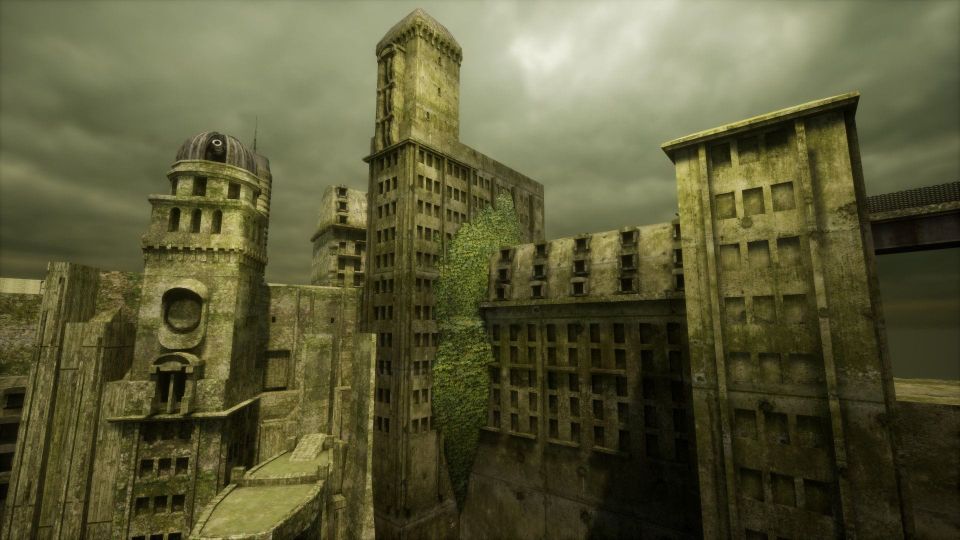
The best levels of Vholume make me feel like a clairvoyant with springs for legs. The worst feel like a brief test of my faith, nothing more. The protagonist of this wall-running platformer will often wheeze as if they're running out of breath. At the end of one run, I realised I had been holding my own lungs for the two full minutes it took me to hit the dark doorway that marks the finish line. This game is such a rush, it will deprive you of oxygen.
The Commander Goes Zapping in Hell Let Loose: Vietnam
"War is fun," says the commander. "You get to shoot things."
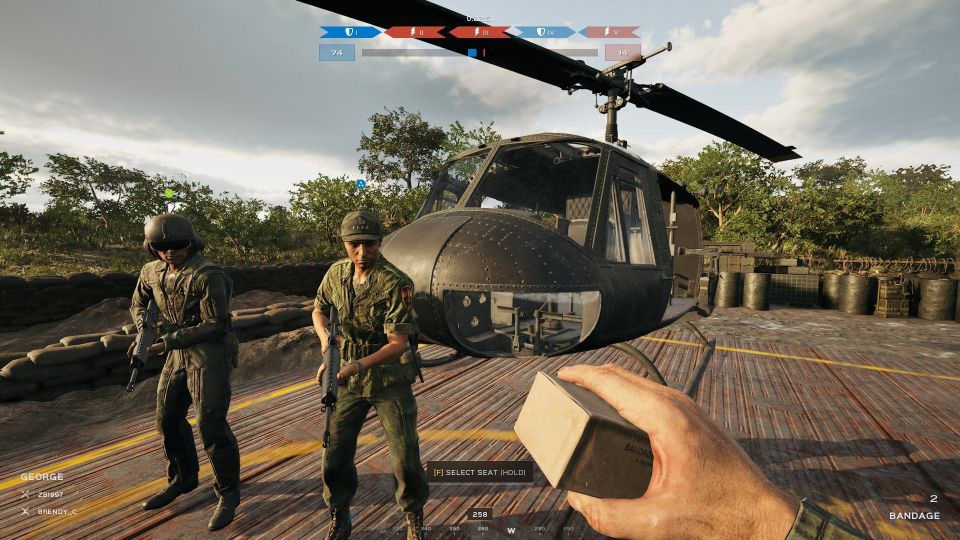
The radio is cracking heavy static, the helicopter blades are whud-whud-whudding over our heads, bullets are whipping past, or plinking loudly against the chopper's hull. The commander in the seat next to me is still speaking but I can only hear snippets of what he says. It's almost impossible to make out the rest of his rubber-banding words.
"It's -— and yeah -— sometimes you -— shot at -— that's -— "
I'd like to say this is an atmospheric feature of Hell Let Loose: Vietnam, the latest multiplayer shooter to be set in the jungles of 1960s Vietnam. But it's really just the game's comm systems buckling under the pressure of a war sim that relies on wall-to-wall chatter. The pilot, who has a clearer radio channel with me, translates.
"Basically, he says: war is fun!"
Like the conflict it's based on, the warfare in Hell Let Loose: Vietnam is not symmetrical. The two factions don't have matching abilities. US players can fly helicopters and drop napalm strikes. The North Vietnamese have tunnel systems and better camouflage. The first Hell Let Loose, set during WWII, had the same hardcore tactical battling and quick deaths. But the factions generally used the same explodey technologies and methods of war. Here, each side has a distinct flavour. The sound of choppers either makes you anxious or relieved.
Down on the ground, you either can't see ten feet ahead of you for jungle bushes, or you can see for miles (and be sniped for miles). You can take a boat downriver, but a dozen muzzle flashes might erupt from the bushes at any moment. You almost never see the person who riflewrecks you from a mysterious position in an abandoned fishing village. The safest place, surely, is a hundred feet up in the sky.
A trail of white smoke whooshes past our helicopter.
"Wow," says the pilot. "Rude."
The commander stirs next to me. "Was that an RPG?" he asks.
Maybe you've observed this too. There's a line some games cross past which you no longer feel like you're playing the game. The game is playing itself, and you are there to be fed feel-good brainjuices. I'm not talking about idle games - you're doing something, but you're not really doing something. Sometimes you click a glorified "next" button and flashy numbers rocket upwards. Sometimes you put a pip into a skill tree over here, instead of over there. Poncle's bestselling bulletnothing is the leading exemplar of this. I think it's rubbish, partly because it feels like treacle. But mostly because it is accelerating a dull trend in game design: to make the game auto-go while building a coffin of upgrades around the player until they have precisely zero thoughts, swimming in whatever the opposite of a sensory deprivation tank is, flooded with dopamine. Death, I say! Death to the self-playing videogame.
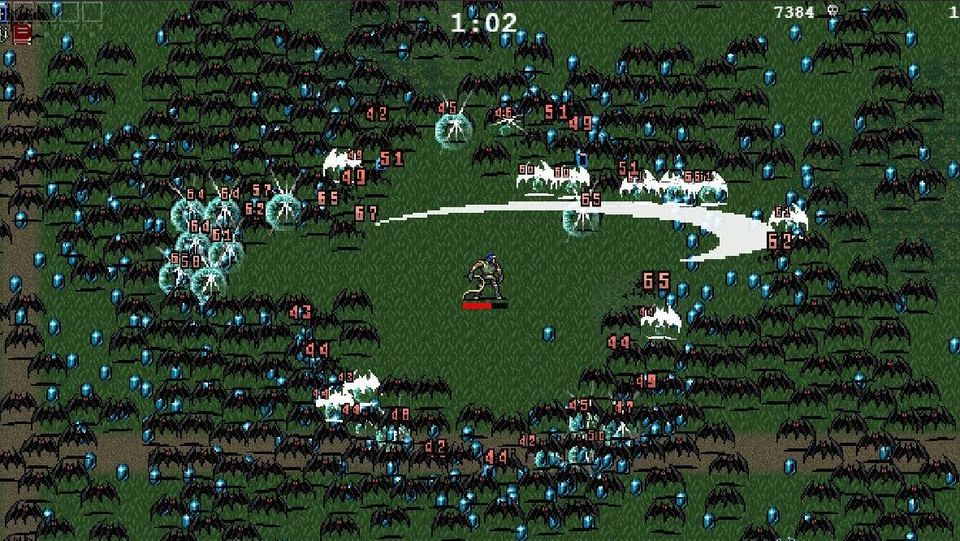
Vampire Survivors is not alone in hoodwinking me into the sensation that I am doing something when in fact I am a sad void pressing left and then right. Loop Hero sets your hero autotumbling around a circuit of monsters, and the closest it comes to having meaningful decisions is in the basic Carcassoning of resource and monster tiles. Ball X Pit is a roguelike ransacking of a classic arcade brickblooper with autofiring bullets. It eventually contains a full admission of defeat to the automaton approach to game design: an unlockable character called "the Radical" who will play brickblasting runs on your behalf and choose upgrades without any input from the player whatsoever.
Vampire Survivors turned a basic shmup into a karmic hamster wheel. BallXPit is an LCD brickpong toy running on cruise control.
The self-playing game automates a primary verb of play. That is a fancy way of saying: Me no shoot, game shoot for me. It then gets you as fast as possible onto a trundling treadmill of dopamine and ostensible progress, while sort of reminding you of another game you played before. The physicality of this "kernel" genre underneath is not really needed. It just needs to look like bullet hell. It just needs to seem like Breakout. They can become lauded, successful games, praised for their addictive charms and approachability.
To me, they are automated fun. Poisoning hand-to-eye happiness with the anti-activity of the idle game. We are lurching toward the idlefication of all genres. Why stop at Asteroids and Breakout? Let us automate Doom. Let us automate Street Fighter. Let us automate Rogue. You think I'm joking, but somebody is already working on the latter and it's giving me a bad case of the squinty eyes.
Self-playing games take microdecisions away from you in favour of macrodecisions. You don't need to choose where to aim your gun every second, but you will need to decide what ammo upgrade to select for the next level. This is an inviting approach for game designers (and not unique to the self-playing game). It allows designers to sidestep the difficult psuedoart of "gamefeel", and player skill becomes less of an issue to account for. You can focus on the metagame, the upgrades and abilities and perks and extras. The exofun. All you need to do is make the braintickling numbers work, and then make it look flashy.
But what if some genres are the microdecisions?
If somebody automated Devil Daggers, I would stab them in the hands with a barbeque fork. If somebody automated Tetris, I would have them arrested. When a designer of a racing game makes drifting round corners feel the perfect balance of scrapey and buttery, this feeling can carry the entire racer despite how bad its story mode inevitably is. On the other hand, when somebody strips an essential verb out of Asteroids and claps on an incremental skill tree, I can't help but feel they have piggybacked on the physical feeling unlocked by bygone engineers to deliver what is effectively Cookie Clicker under the hood. This is not a revolutionary new form. It is Candy Box sans the sense of humour, with a lobotomised arcade classic attached.
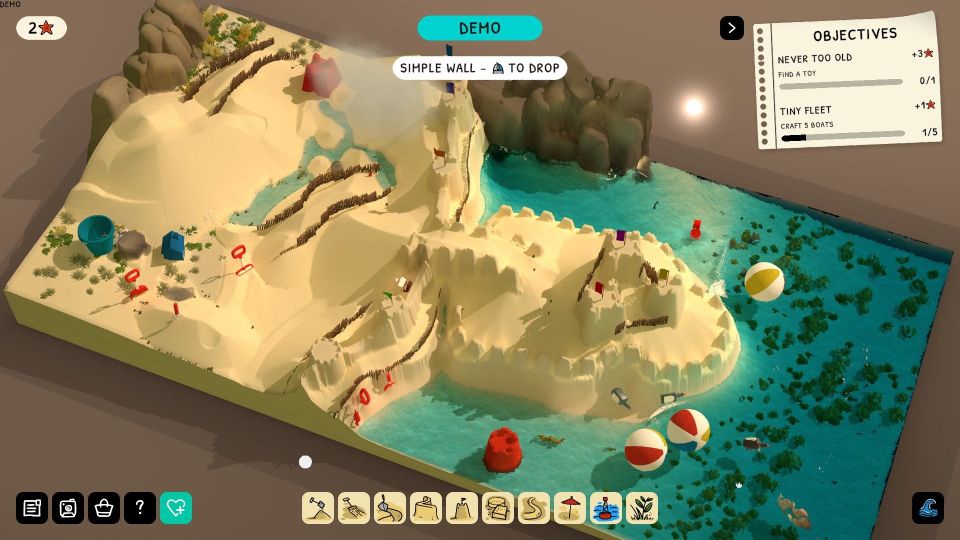
I have long dreamt of this game. The elevator pitch is so simple and straightforward that it was an inevitability, and yet it has taken years for someone to do the premise justice. Sandcastle is a sandbox game in the most literal sense - all you do is build a sandcastle as the tide washes in and out, slowly eroding the walls and turrets of your small fortress.
You get buckets, spades, bits of old wood. There is no goal. You are a kid on the beach and nobody is coming to put more sunscreen on you and interrupt your building efforts.
I barely need to describe it any further. You get the entire idea from the video above. There are different types of wall to build (do you like your crenellations in classic or gothic flavour?) along with various sizes of sand bucket, and a bunch of decorative trinkets to save from the waves. Miniature tiki torches, umbrellas, cool shells, that sort of thing. Glass bottles will wash up and you click on them to unlock new building tools, like a handy trowel or a neat little roller that will smoosh everything flat.
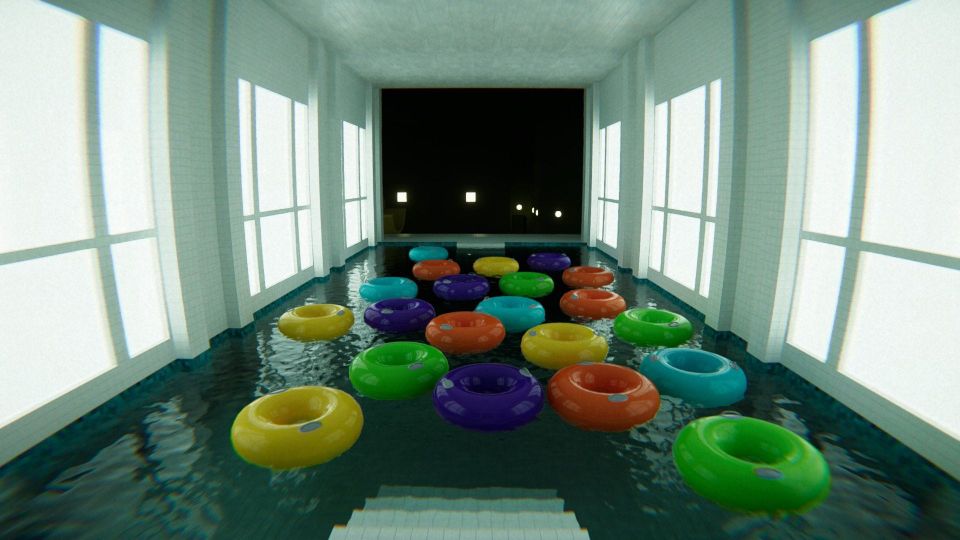
My hometown swimming pool had this one weird corridor. It was a long, tiled hall from the men's changing room to the main pool. This narrow corridor housed an ankle-deep pool of water, which you stepped down into, went on about two or three metres, and then you stepped out. I think the idea was that your feet are disgusting and must be cleansed before they are allowed to meet other feet. Whatever the rationale, this footbath came to feel like a ritual. A hoofwade before you plunged in proper, a minor something to pass through on your way to better water. It gave a sense of anticipation to this long wet hall. The sound of laughter and whistles echoed from the far end, and to get to those sounds you had to splosh through a rectangular puddle full of concentrated foot cells. Gross, a bit creepy, but also sort of fun.
That swimming pool is gone now. They bulldozed it and built a new one the next town over. But I thought of its weird hallway more than once as I waded through the eerie and abandoned megaleisure complex of Pools. It is suggested this place is a mysterious and sinister purgatory, but I would 100% visit it in real life.
Pools is a walking simulator from 2024 based on the internet fad of "liminal space", the same uncanny architectural Reddit fuel that spawned the Backrooms. You wake up in an echoing and dripping waterworld and are forced to explore its labyrinth of swimming pools. It is a cathedral to chlorine. The sound design is incredible. Walk from one tightly flooded tunnel into a huge cistern with towering pillars and you can hear the entire atmosphere change. Sure, this is a first-person wanderabout for stoned architecture students, but it's also just a good soak for the senses. It is the closest I have come to feeling wet through a screen.
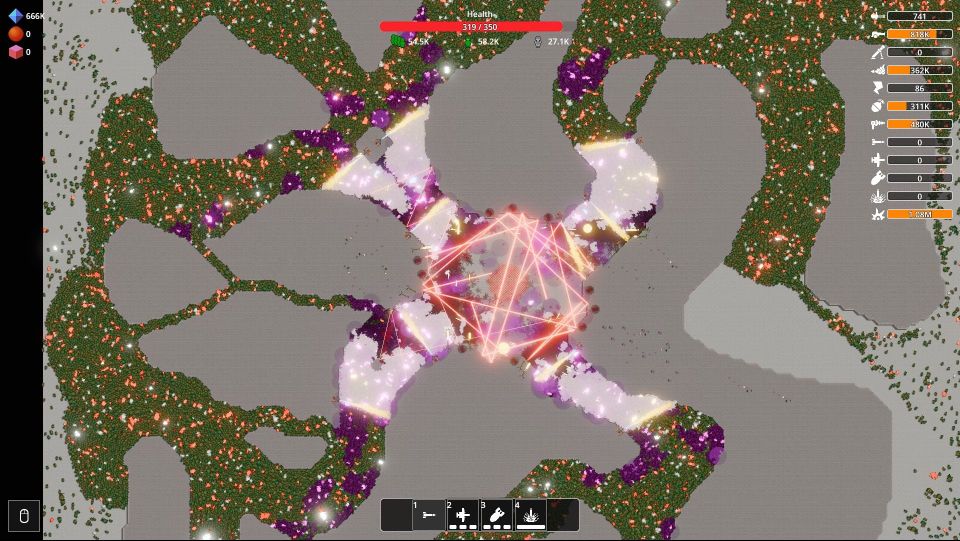
Hello to all fans of watching sand hypnotically pass through the bottleneck of an hourglass, I come to you with a gift. Sir, We Have An Orc Problem is a snacky kill 'em all about fending off a flood of little green murderers with lasers, flamethrowers, and cannons. There are so many of the wee freaks that they move like the particles of a physics-based fluid. It is pleasing to look at even before you find the choke points of each level and blast each small pillager into bloodbits with a mortar barrage.
It's cheap, it's chewable, and it reminds me, in the best possible way, of a compulsive Flash game that would have swept over every PC in my secondary school like a greasy, green plague of wicked idleness. Please, look at these runny GIFs and tell me you are not intrigued.
It is classic tower defence in many ways. You place turrets 'n' Tesla coils and try to stem the flow of attackers before they cross a threshold and slurp up all your health. You get extra abilities to help out in a pinch. You can call in an airplane strafing run. You
Jank has been alive for six months. That's older than some babies I know. Since our launch at the dawning of the year we've been writing non-stop, except for the hours 9am to 5pm, which is when we have to work real jobs to feed our families, dogs, and cars. Like many of you, we are not permitted to Jank on company time.
This hasn't slowed us down. We've written over 200 articles so far, and commissioned more from our favourite word mercenaries roaming the land. You've maybe missed a few of these articles and I don't blame you - you're a busy person, you have obscure JRPGs to play I have never heard of. So here's a round-up of our best work so far. Alongside a quick look at our plans for the future.
We reviewed new and old games
We've reviewed 17 games in total so far, which may not sound like much compared to bigger websites. But look at us, we're tiny. Some sites no longer bother to write reviews at all, or only focus on the big releases. But we don't discriminate between
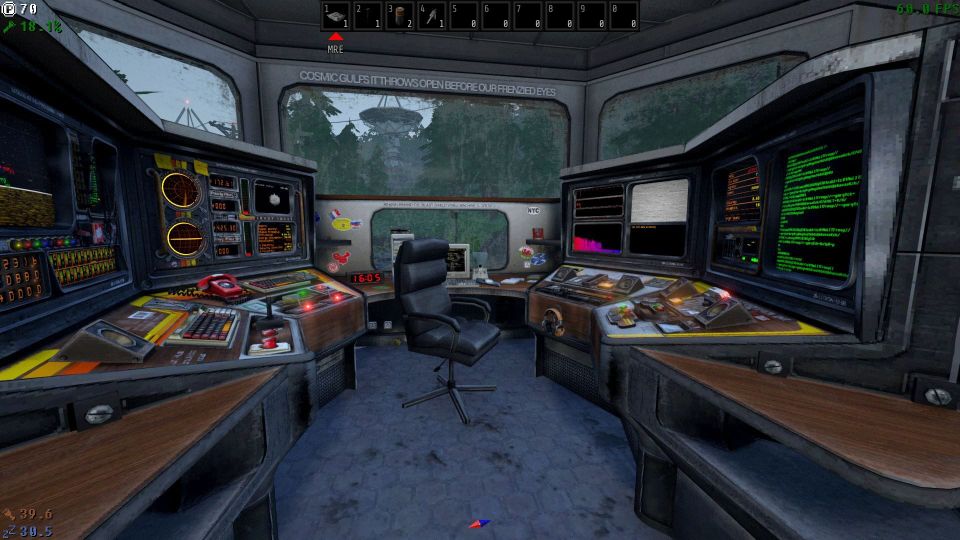
If aliens are watching, I hope they can't see the state of my bedroom. Voices Of The Void is a job sim about being a lonely engineer in a remote signals laboratory, pointing big satellites at the sky in the search for extraterrestrial life. You are like Jodie Foster in Contact, except less qualified. It is extremely my cup of hot tea. It is also about living in a disgusting dormitory full of cockroaches.
I spent the first hours in this surprisingly complex and funny sim not pressing buttons on the old analogue machinery required to do my job, but instead sweeping up years of rubbish that had piled up in the abandoned lab before I took over. Chinese takeaway cartons, bottles, fried circuit boards, busted keyboards, indeterminate pulp. If the little grey men do send a message, I might miss it. I am busy scrubbing the toilet.
👽
Living In Sim is our monthly column about simulation games, and the frequently stupid misadventures they inspire.
You arrive to the lab in the dead of night, your first task to simply go around switching on the lights in every room. You read the emails waiting for you on the computer running on the desk. Your science boss wants you to record signals from space and send the recordings to them every day on hard drives, alongside other data on a big tape reel. I ignore the emails, take a look around, find the cleaner's closet, and come back with a roll of black bin bags. I am NOT working in this absolute shit hole until I have at least cleaned up my desk.