Brendan is a critic and games journalist with 15 years experience, and writer on a few indie games which he is honour-bound never to talk about on Jank.
Big concrete is taking over. There are now enough megastructures in games to justify a whole bundle on Steam. You may not be familiar with the term "megastructure" if you've not yet been cornered by your architecture-obsessed pal in the pub, or by your manga mate who keeps telling you to read Blame. It is basically an artificial space so huge you can't easily conceptualise it. One enormous planet-covering city encased in a shell. An orbital world many thousands of kilometers in circumference. Thatawful shopping mall in Edmonton, Alberta.
Big weird places that make you feel like an insignificant pipsqueak, essentially. Megastructures are not new to videogames. The subterranean complex of Portal 2 stretched further than fans of the first game would have guessed, and the cavernous corridors of Halo suggest a galaxy of long-lost giants. But now indie developers are increasingly exploring these colossal spaces. And small developers, it turns out, go pretty big.
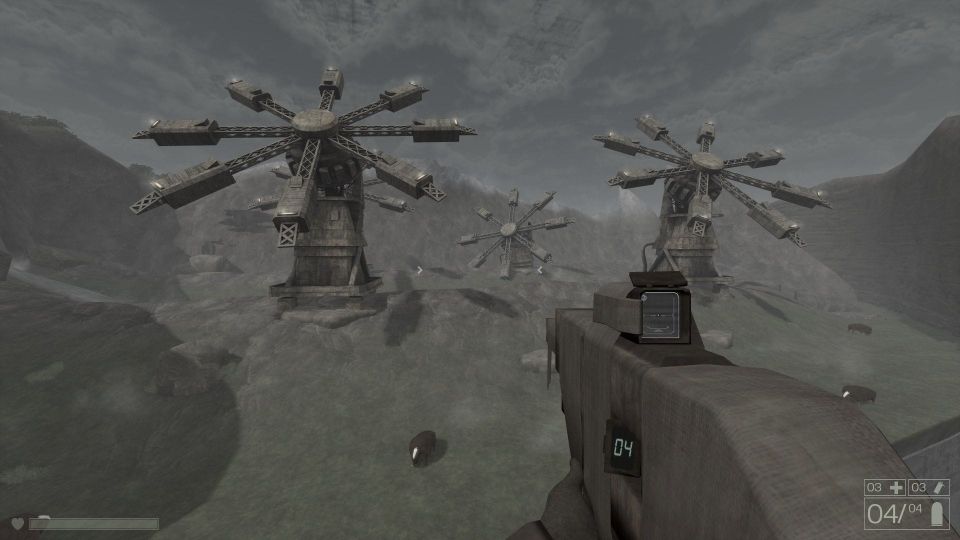
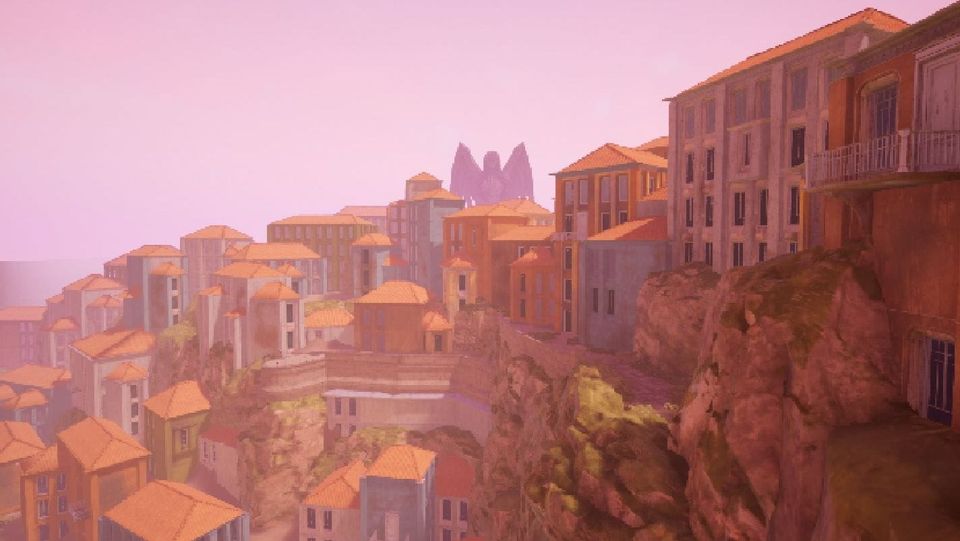
"I spent quite a lot of time in my childhood staring out at vast roads from nearby hills full of little travelling dots," says Aleksandra Herout, developer of Metal Garden, a first-person shooter set in a drab land with a titanic concrete ceiling for a sky. "As the place I grew up in is a transport hub for the greater region, there was much of this architecture to be found in local landscapes.
"It wasn't just the size that made them stick with me, but also the sense of anticipation. The promise that this open road would lead me somewhere else. I kept returning to this feeling again and again throughout my life, and it very much impacted the visual language of Metal Garden."
'It is large enough if it makes your head spin and heart pound'
In Herout's 2-3 hour singleplayer shooter, you wander lonely hilltops and lurk through deep blocky catacombs, routinely blasting dark gunfolk and beefy catlads who - it is suggested - have caught wind of a priceless discovery: a way out of the structure. The shotguns and sniper rifles are straightforward, and the jetboot doublejump is as satisfying as equivalent leaps in Destiny 2. But it's the landscape that makes Metal Garden easy to recommend (plus it costs peanuts).
Hello, enjoyers of Jank. I am informed there are a lot of new readers among you, swamping through the gates thanks to a brutal takedown of Dungeon Crawler Carl. Come in, come in, warm yourself by the burning effigy of Ernest Cline. I think you're going to like it here.
This newsletter is normally scribbled by Jonty. But this week he's missing, presumed on holiday. I'll do my best to fill your eyes with games industry newsbits in his absence. This will be difficult. I've been distracted because I have only this week learned of Jimothy, a creature which is either a raccoon in Seattle with shortened spine syndrome, or the latest cryptid stalking America, depending on who you ask. Anyway, I'll try. Onto the videogames.
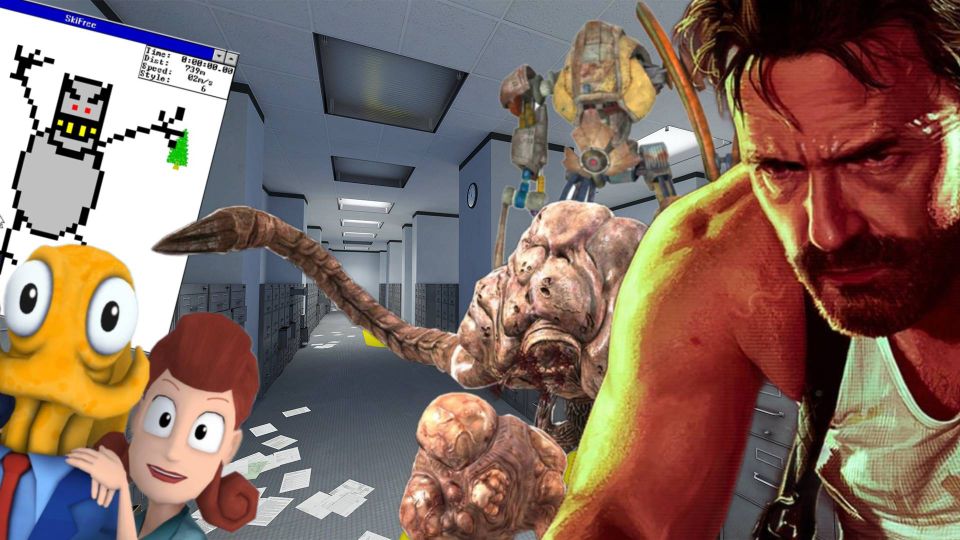
We began the week with a brawl. The season finale of Character Select (in which we pit game characters against one another) saw Max Payne, Octodad, Dog from Half-Life 2, the Flood from Halo, and SkiFree's Yeti having a free-
Asha Sharma wants to call the recent layoffs at Xbox-owned game studios a "reset". This is because of the connotations the word brings - a reset is a mildly disruptive way to solve a problem. When your PC is being glitchy, a reset is kind of annoying, but it fixes things. When you have over-complicated a spreadsheet, a reset will take everything back to the start. A reset has the feel of icy water splashed on your face during a difficult day, a dive into a cold pool when your week is going bad. A clean slate. A fresh do-over. A reset is a brief but ultimately freeing moment of discomfort or inconvenience, followed by excitement at a new start.
This is not that. The wrecking ball currently crashing through Xbox is anything but cleansing. If we are to use a word or phrase to describe the ongoing layoffs, why not reach for words which truly reflect the human cost, impact and intent of the action. How about "bloodletting" or "demolition job"? What about "slash and burn"? This is an act of cutting, violent in its method, drastic in scope and ultimately a form of self-inflicted
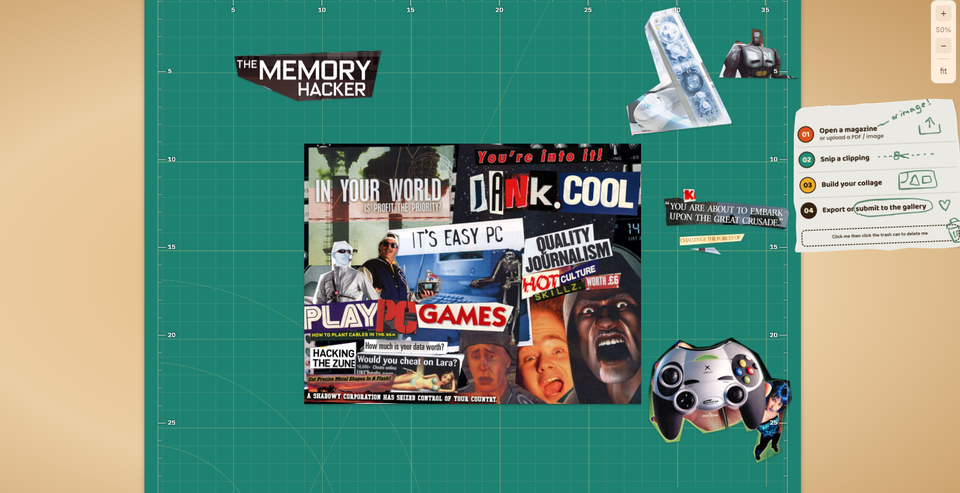
We love a good internet toy here in the Jank yard. Clipart.studio is a time-wastin' gizmo by designer Sami Smith that lets you cut out bits from old magazine PDFs saved in the Internet Archive, and stick them together on a canvas in a work of collage art. The digital-only downside is that you cannot later peel the dried PVC glue off your fingers like a big snake molting its skin in the desert. Ah, well.
The magazines are many. You can clip the curls out of Cosmo, the singers out of Smash Hits, and the parasites out of Popular Science. But of course there is a solid core of 1990s-2000s videogame mags to rip and/or tear from. PC Zone, Electronic Gaming Monthly, Nintendo Power, and Play are the ones that show up the most. You can also add your own PDFs to snip from, if you are so inclined.
The tools are simple - slice and dice, click and drag, undo, and shift the clipouts from front to back. Export your final collage when you're done and show off to friends who I guarantee will not care about your finished masterwork but will care
You may remember the brutal massacre that occurred while I was on paternity leave. In the first season of Character Select, we pitted heroic game characters against one another in bloodthirsty brawls and let you argue on their behalf. After careful review of the duels (and comments in support of the various fighters) we can confirm at least five beloved fictional personalities have perished, although the true death toll is probably closer to 50. (Spoilers: the entire population of Stardew Valley has been killed.)
The survivors are listed in the headline above, however, keen-eyed readers may notice the presence of yet more "vs" between them - the dread abbreviation. Well done. You have discovered the truth: the great killing spree is not over. In this gore-soaked season finale, those who remain must now face off in a ferocious free-for-all. Only one will walk away. You, reader, will decide who.
Before we crack on to the battle royale. Let's review the destruction that came before. Thanks to all Jankers who commented with their version of events. In the fight summaries below we've selected our favourite battle outcomes from your collective twisted imaginings. Crowdsourced violence, it's
A woman made of leaves asks you this question in City Of Muse, a little-known seaside walking sim released in 2021. "What are you: a brick or a builder?" she says. It's a question I have often remembered, from a tiny game, likely long forgotten by the few who played it.
As Wall Week comes to a close, I want to take a sincere moment at the end of our overextended joke to talk about what we are building here at Jank, and why a paywall is more than just a turnstile charging an entry fee. This article is not paywalled - you're invited in.
When we talk about videogame walls for Wall Week, we're not always thinking of them as a divider. Even our own paywall, which is as porous and reliant on good will as any other, isn't meant to be some impassable and offensive barrier. If I build a wall in Age of Empires 2, or fix a broken one with a team of multiplayer engineers in Foxhole, I'm keeping my enemies out. But when I build a castle rampart or a cabin wall in Minecraft, I'm thinking of the future,
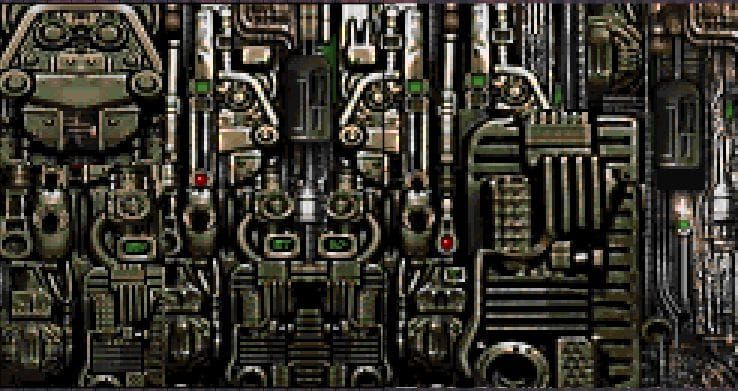
Good walls make for good videogames, as Robert Frost probably wrote. That's why we wanted to celebrate these load-bearing pillars of the medium. They are the textures that engulf us, the boundaries that restrain us, the low cover that protects us, and the canvases awaiting messages daubed in blood or ink to entertain us. They are the ironically overlooked line-of-sight breakers that form the backbone of almost every game you've ever played.
From first-person shooters to collaborative adventures to ancient puzzle games, these are the best walls in PC games.
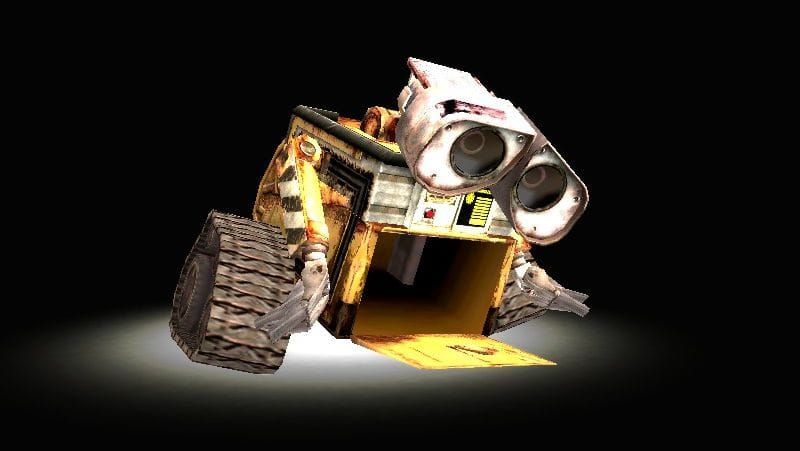
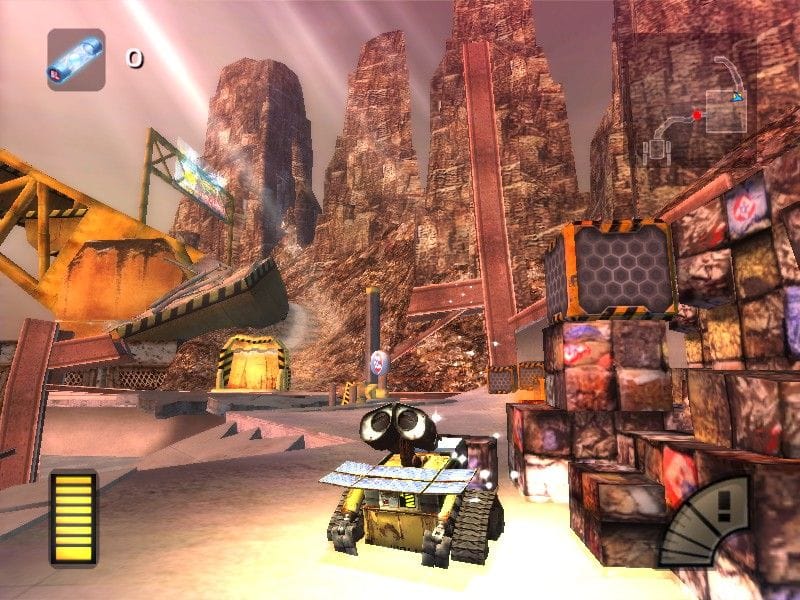
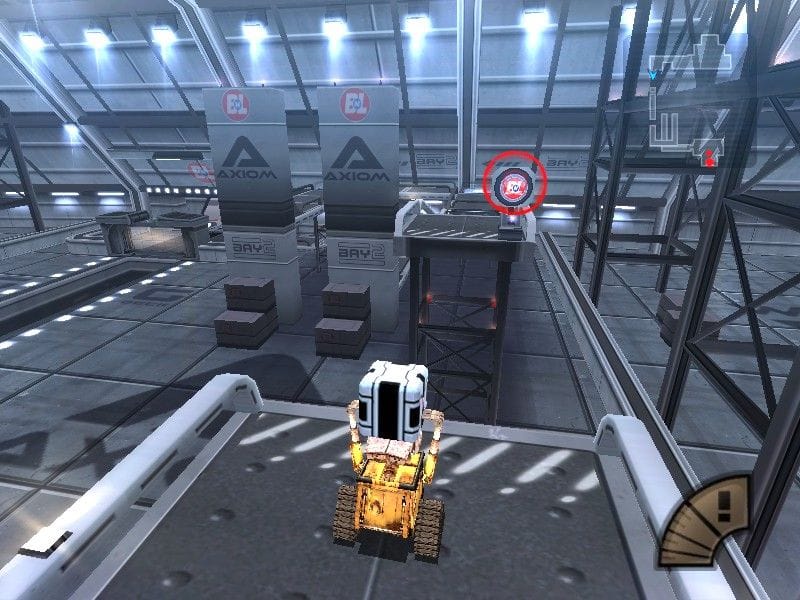
The world of Wall-e (2008) is covered in half-pipes and quarter pipes, as if designed by a committee of Thrasher magazine photographers. It is a wasteland of human detritus and dead buildings, many of which have helpfully collapsed into useful ramps and handy pathways lined by traffic cones. The afterearth of Wall-e is functionally indistinguishable from the post-apocalypse of The Last Of Us, insofar as it is a landscape of signposting and affordances. Finding an old children's toy in the dust of a failed civilisation offers a poignant moment. Good thing they sparkle to make sure you spot them.
Why am I reviewing Wall-e, a licensed Disney tie-in from the year of our dirt 2008? Well, I've been informed we're doing Wall-e week at Jank and I thought: "Weird, but okay".
To quickly enlighten you. This is a gentle children's platformer full of set pieces loosely adopted from the film. It has racing levels, gentle box-slinging puzzles, and bright diode collectioneering. There is an insufferable looping calypso track that will make you want to perforate your own eardrums. In one level you may spend a grand total of 120 seconds guiding the floating iPod called Eva away from a sandstorm while blasting incoming obstacles with lasers. In another you will be hoovering up a hundred gizmos to unlock a door. Honey, we're videogamesing. Its best levels showcase the sediment layers of game design practices over the preceding decades that have compacted to produce, finally, a semi-competent movie tie-in for nine year olds. Its worst levels are a kind of shitty Sonic.
You recharge your health in sunbeams and throw cubes a lot.
I did not play Wall-e when it first graced the most bargainous of buckets at your local Gamestop in 2008, which has since transformed into a pawn shop that BUYS YOUR GOLD TODAY. I cannot meaningfully review it in the context of its own time - a year in which I concede Left 4 Dead, BioShock, Portal, Burnout Paradise and Mass Effect may have overshadowed it. All the flesh components of my cerebellum have long since become infected with a kind of psychic mold from the intervening history of pandemics, financial collapses, and news stories about gorillas from Cincinnati being shot in the head.