Fantasy Life i: The Girl Who Stole Time review
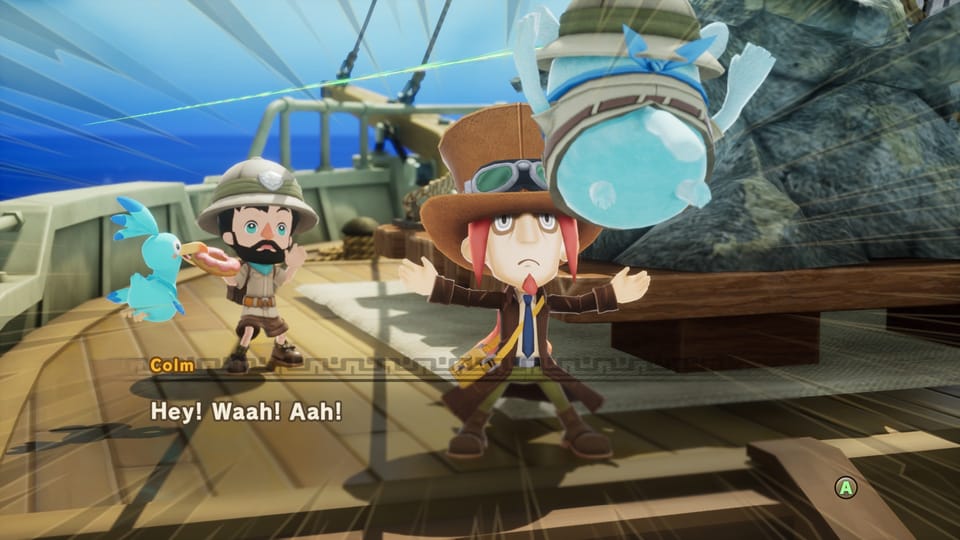
Early in Fantasy Life i, a character tells me that I stink. It's the stench of idleness, he says, and the only solution is to get a job. This happens after I've washed ashore on a beautiful tropical island where my first instinct is to enjoy the sunshine or, more prudently, find the means to urgently save the friends I last saw stranded at sea upon a sinking ship. Rescue can wait, apparently, because first I need to prove my worth by seeking out a career. "How are you going to help people without a job?" I am asked.
I started playing Fantasy Life i last year almost immediately after giving notice at my job of twelve years. "Friend," I wanted to say, "simply having a job doesn't keep the stink off."
Fantasy Life calls its 14 different careers "Lives" - no I will not write an entire essay about this - and the unifying fantasy offered by each one is that your work is a mutually beneficial transaction that helps everybody, makes the world a better place, and rewards you with both personal satisfaction and upward mobility. You perform this work for always-grateful townspeople around a colourful and familiar fantasy world, and for the leaders of each career guild, who celebrate and reward you appropriately. There are no shareholders to please, no bosses to blithely slash your budgets, no mediating force between you and the fruits of your labour; it is a fantasy life indeed. The irony is that its very nature as a videogame means that it is simultaneously, inescapably, fundamentally a waste of time.
Fantasy Life further splits its 14 careers into three categories - combat, crafting and gathering - and these categories broadly define which quests you can take and the nature of your interactions. Paladin and mercenary and hunter are combat lives, and your tasks will involve murdering ten of this or five of that. Combat itself is real-time and simple, conducted via primary and secondary attacks, a charge attack, a dash move, and careful management of a stamina gauge.
I chose Hunter as my starting class, which armed me with a bow and infinite arrows, and I used the same attack routine for the entire game. I'd approach a mob of enemies and drop a hail of sleep arrows from above, which would incapacitate a percentage of foes. I'd then use primary attacks to mop up the sleepers, and a secondary retreat-and-counter attack to keep distance from any enemies that dared to fight back.
This tactic never failed me, whatever I was fighting. I murdered Licky Geckos and Forest Panthers and sentient corns and many ghosts and Bitey Sharks and several types of goat and at least one reality-destroying dragon and never once had to vary my playstyle.
"All of [it] feeds into Base Camp, a sort of miniature Animal Crossing."
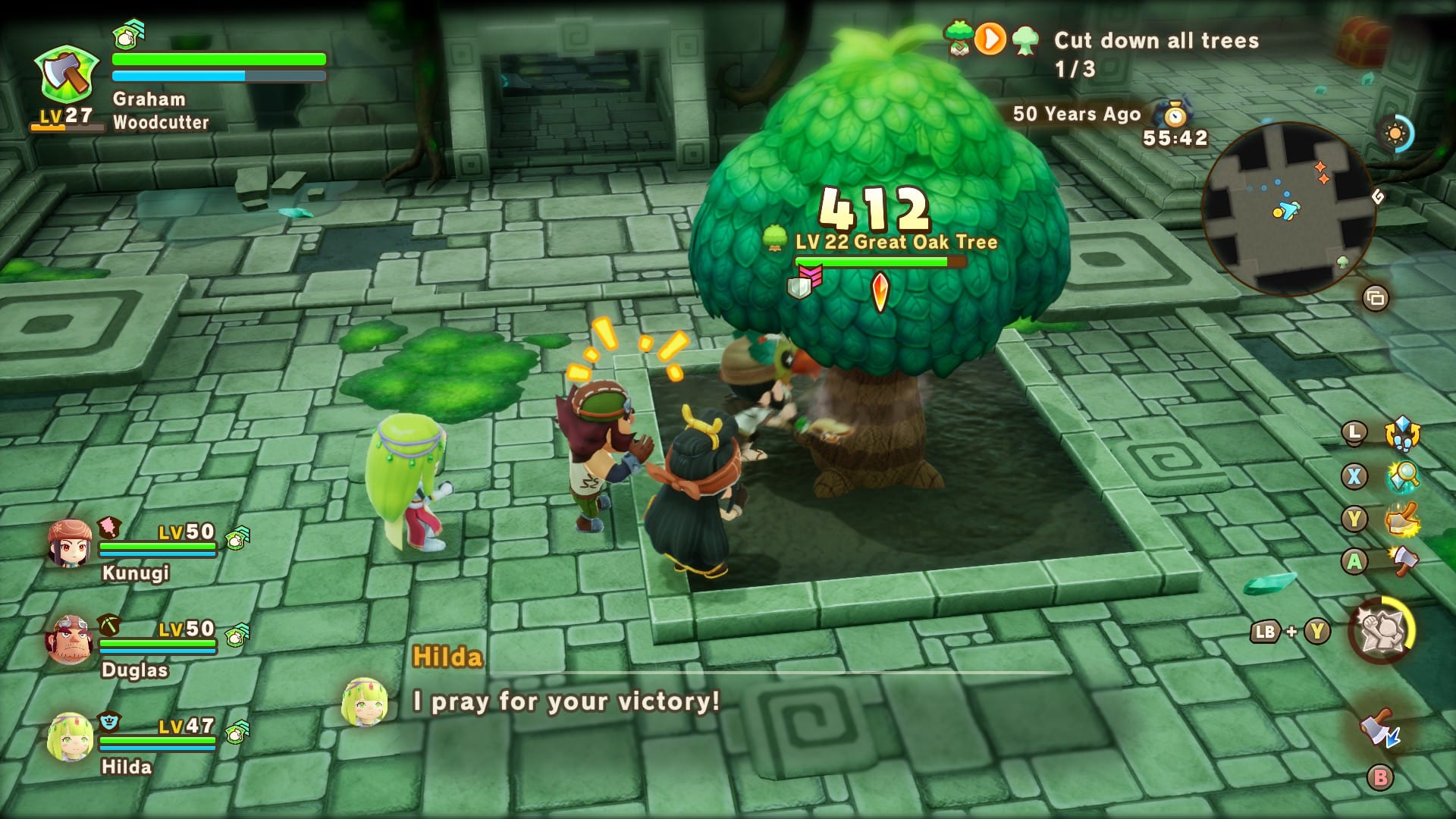
It turned out I didn't mind the repetition, and combat alone was a relaxing way to spend successive evenings. Variety is ultimately available via the ability to switch between jobs on the fly with a simple button press, and you will accrue nearly every job in the course of the main story, but in reality this is only variety in the most superficial sense since gathering and crafting jobs work almost the exact same way. When chopping down a tree, mining a rock or catching a fish, your enemies - by which I mean trees, rocks and fish - will still have a health bar and a weak spot. Crafting lives are a little different and require you to use a workbench and perform press/mash/hold button presses within a time limit to create chairs, weapons, wallpapers, stews.
Lives each feel similar because they're each wrapped in similar Skill Boards, a map of branching perks that are unlocked with points earned by levelling up. Fantasy Life i, you soon realise, is really a game that's more about meta-progression, and the Skill Board is the tip of the meta-progressive iceberg. Every action performed in Fantasy Life is a few seconds of necessary activity suspended in an ocean of higher-order objectives and upgrade tracks which collectively provide the context to make your repetitive actions feel worthwhile, rather than merely diverting. In this extended metaphor, my spare time is the Titanic and I am going for a swim.
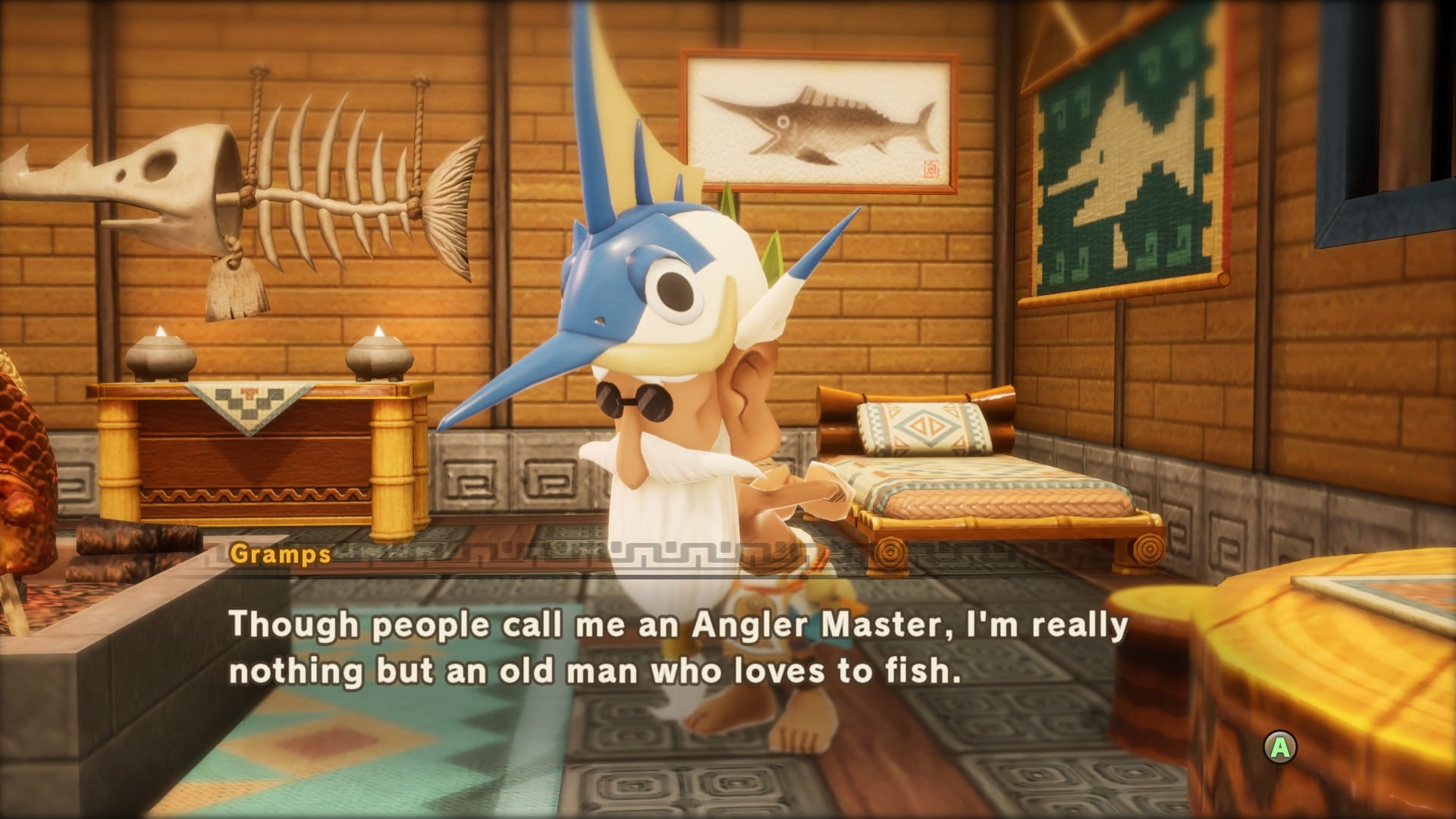
Fantasy Life i is most rewarding if you grab a handful of Lives early on. You will unlock new islands and destinations to visit as you play through the main quests, riding your bone dragon to each to explore forests and caves and encounter enemies to fight, crops to harvest, fish to fish, and so on. It helps if you can perform double or triple duty, heading to a specific location to murder a frog but then thinking, "Well, since I'm here, I may as well also gather some coconuts."
The rewards for any activity then, in turn, feed into every other activity. Mining rocks brings you ore which, using the Blacksmith Life, you can craft into armour to help during your combat Lives. Cutting down trees gives you different kinds of wood, which can be crafted into flooring or furniture via the Artist or Carpenter Lives.
All of which further feeds into Fantasy Life i's Base Camp, a sort of miniature Animal Crossing. Hop on your dragon and fly 1000 years into the future, for reasons that make sense as you play the story, and you'll arrive on a deserted island you can slowly reclaim and build upon. Here you can construct homes for (up to 6) of your party members, plant crops and trees, and decorate every house with wallpaper and furniture and statuary. It has creative tools that are easier to use than ACNH (you could bulk craft since launch, for example) and it has even blander residents to befriend.
There's also Ginormosia, another completely separate open world area which operates, if we're being generous, like Breath Of The Wild lite, in that there's rockfaces to climb, towers to activate, and shrines containing straightforward challenges to complete which unlock dozens more residents for your Base Camp.
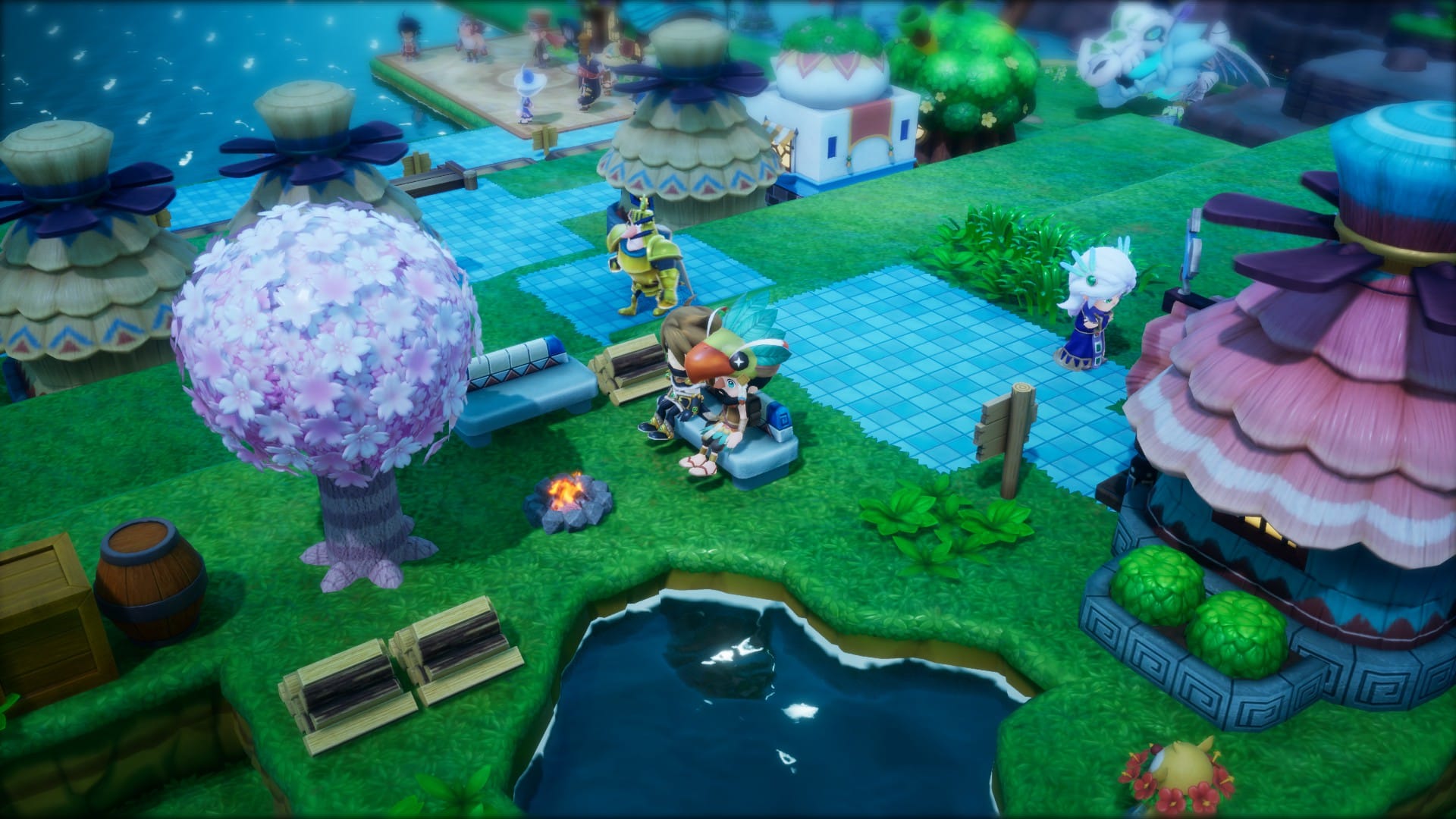
Everywhere you look in Fantasy Life i, there's something to be levelled up. Your base camp? It has a star rating bestowed upon you by a talking fountain statue based on how much you've upgraded it, and an Area Level increased by completing activities in the zone. Ginormosia? Each area can be levelled by completing challenges and activities, which in turn increases the level of enemies in that area and brings greater rewards. Your base camp residents? They can level up their own skills, becoming more useful to you when helping you to mine rocks or fight fish, and you can increase their affinity level with you by performing favours for them.
Your equipment all have stats and star ratings which can be increased. You can plant a tree in your base camp which grants access to a randomised dungeon, which lets you travel back in time, ten years at a time, to tackle increasingly difficult challenges. The tree can also be levelled up every 100 years, because of course it can.
"[It's] a game that feels desperate to inconvenience you as little as possible"
It feels cheap, but in reality I find this shameless dopamine-hacking far more enjoyable than Animal Crossing: New Horizon's daily chores. It helps that Fantasy Life gives you the means to cheese your way to progress. Sometimes I'd connect to a higher-level player's world and just follow them around as they performed tasks, ambiently soaking up XP by sitting nearby as they caught fish and chopped down trees until I'd advanced dozens of levels in just a few minutes. (Typical middle management.) Neither I or the game give a damn about shortcuts like this.
When I choose to perform my own labour and harvest a Boss Veggie, an onion that I've grown which has become sentient, for the hundredth time, and hammer the button on its weak spot for the thousandth, the repetition of it all doesn't matter to me. I'm surprised by this because I normally see a game with a long runtime and a lot of busywork or repetition and immediately lose all desire to play it. This is why I bounce off so many JRPGs, a genre in which job systems and cheerful questgivers and numbing grind are commonplace.
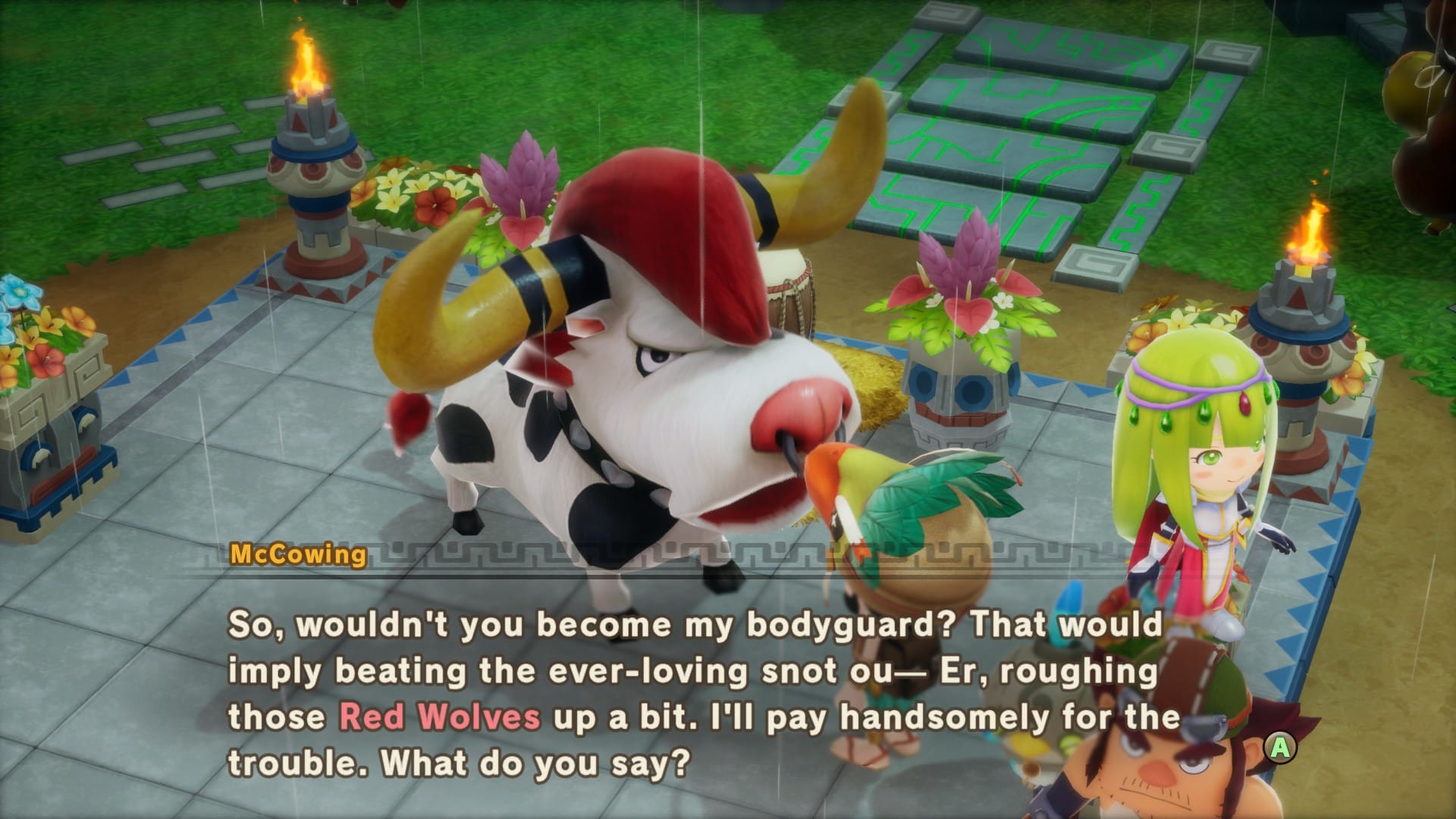
I can try to reason why Fantasy Life i didn't trigger those same feelings of existential desperation, but I'm not convinced by my own arguments. It's exceptionally colourful and breezy, which certainly helps, and I always found its people and places charming. Its combat and movement feel good in the hands. It's perhaps notable that its designers have spoken about the game feeling "suffocating" and "stressful" during development, causing them to "practically remake" it a year before release to expand the world and add climbing and fast travel. The result is a game that feels desperate to inconvenience you as little as possible even as it wastes your time.
And yet, can I really claim that I spent fifty hours grinding out progress in a kid-friendly storybook JRPG, a genre I don't normally gel with, because it has fast travel and other quality-of-life features? No, I think the more likely cause is this: I played the majority of the game alongside my son, with him on Switch making his own village, crafting his own noodle dishes, and slicing up his own tortoises. We sometimes connected online for two-player (or more, with matchmade strangers) dungeon fighting and open world exploration, but even late at night, when he was asleep and I was playing alone, I knew what I was doing had value to him, and so it had value to me.
As a critic, this feels like cheating. I'd rather base my arguments solely in the work, but in this instance my experience with Fantasy Life is inseparable from the context in which I played it.
I'm not sure where this leaves you since, alas, my son isn't available as downloadable DLC, and I don't know if you have family or friends that you could play Fantasy Life i with that might imbue it with the level of meaning it had for me. I have no idea whether you would find it worthwhile to play alone, only that it's obviously well made and that I personally would have found it the bad kind of waste of time. Instead, Fantasy Life i was the best time I had playing a game in 2025. I still cherish it almost a year later.
And what do you know, now I have a new job, too. I smell amazing, thanks.


Comments ()