How asset streaming is - and isn't - enabling new ideas for game design

It may seem like damning with faint praise to say that the best part of 007: First Light was its tutorial, but the training montage of IO Interactive's Bond simulator was arguably the standout sequence in a game that wasn't short of spectacular moments. The level's rapid-fire cuts between driving, shooting and sneaking within MI6's Maltese training facility managed to be instructive, thrilling and novel in the same moment, proving in five electric minutes that IO had the cinematic eye to handle 007.
But the sequence also shone a spotlight on one of recent history's more significant technologies: asset streaming. The last half decade has brought this method of data streaming to the fore, as the proliferation of solid state drives (SSDs) dramatically reduced loading times and facilitated rapid world and level changes. Alongside First Light's training montage, asset streaming has been held responsible for other snazzy sequences, particularly on PlayStation 5 where an SSD and "instant loading" were heavily touted features, such as the rapid portal transitions seen in Insomniac's Spider-Man 2 and Ratchet & Clank: Rift Apart.
Yet while asset streaming may be the technological poster child of this console generation, the technology - and data streaming in general - has long played a central role in how games are made. At the same time, there's more to these flashy set-pieces than fast loading times. Understanding why is important at a time when the relationship between creativity and technology is being scrutinised more intensely than ever.
But first, and at the risk of sounding like a primetime BBC documentary presenter, what is asset streaming? In layman's terms, it's where games load digital resources from your storage drive into memory as and when they are needed. "There's a game world, and there could be hundreds of different entities that take up the world, and those entities are assembled via different pieces of information," says Autumn Willow, senior game designer at Supermassive Games. "To render it in the software, the GPU needs to store in memory the addresses of all these different things … this where you get the idea of RAM. You can only remember so much, and modern game engines have ways to mitigate that, but at the end of the day, there is a hard limit."
"New technology, it's really only worth what it can do to enable creativity"
Asset streaming essentially ensures that your PC only needs to hold in memory the relevant data for that particular moment of whatever game you're playing. It's the reason open world games can present players with such vast landscapes without their computer melting. A game like Elder Scrolls V only needs to load a specific chunk of Skyrim at any given moment, rather than the entire world.
But asset streaming is also an umbrella term for numerous technologies that have developed gradually through game development history, all of which revolve around shunting different types of data from storage into memory. One of the earliest examples relevant to games is texture streaming, which essentially does what asset streaming does, but for high-resolution textures rather than entire objects.
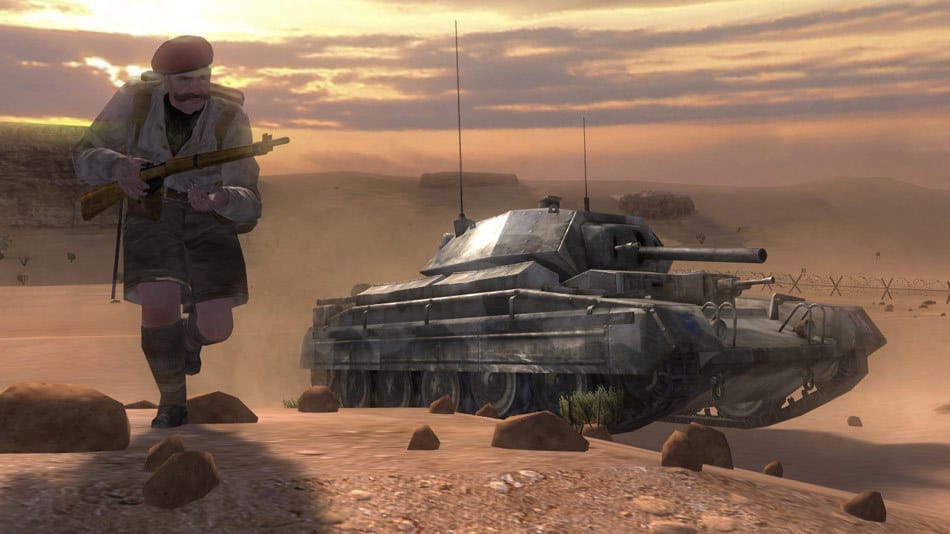
"Texture streaming is a technique that effectively increases the available console memory by not keeping textures (the color map, normal map, and specular map) in memory when they are not currently needed." says Robert Field, who was an engineering lead at Infinity Ward from 2003 to 2009. "As long as a lower-resolution version of a texture remains in memory as a backup, the worst-case scenario for an unexpected need for that texture is just a temporary blurry image." You've probably played a game where entering a new area presented you with soupy, low resolution textures, before the high resolution versions popped into place.
This post is for paying subscribers only