
Hunt: Showdown is still showing other extraction shooters how it's done
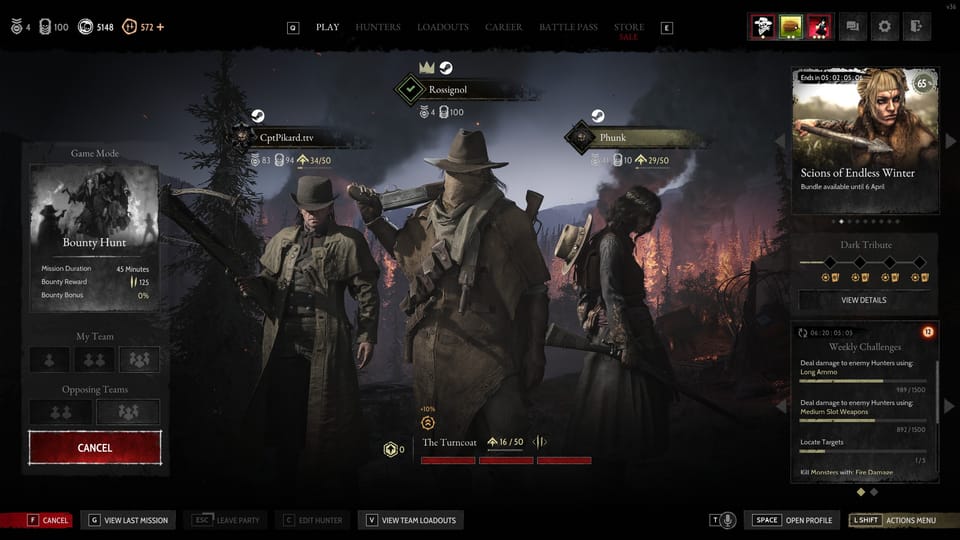
Sure, these fresh gunslingers have a lot going for them. Jonny Embark and Bungie The Kid both shoot from the hip and they certainly put on a show. Those young guns make a lot of noise. But it's the quiet, gnarly old gunfighter you should really fear. That guy sat on the porch with a distant look like he has seen too much? The old timer chewing something he pulled out of his horse? He's the one to pay attention to. Because he survived.
The survival of Hunt Showdown is not simply the survival of players as they escape with characters unmurdered from its (thankfully crafting-free) first-person extraction game, but also in the title's remarkable ability to persist and grow over many years in a world where most multiplayer efforts are quietly taken out in the yard and shot. In the deadly corral of a hit-driven hobby the master has modestly abided, and in the year of our lord 2026 Hunt is not simply one of the most impressive and competently designed extraction games, it also has a fairly good claim on being one of the best multiplayer shooters ever made. As a veteran of the old times myself, I don't say that lightly.
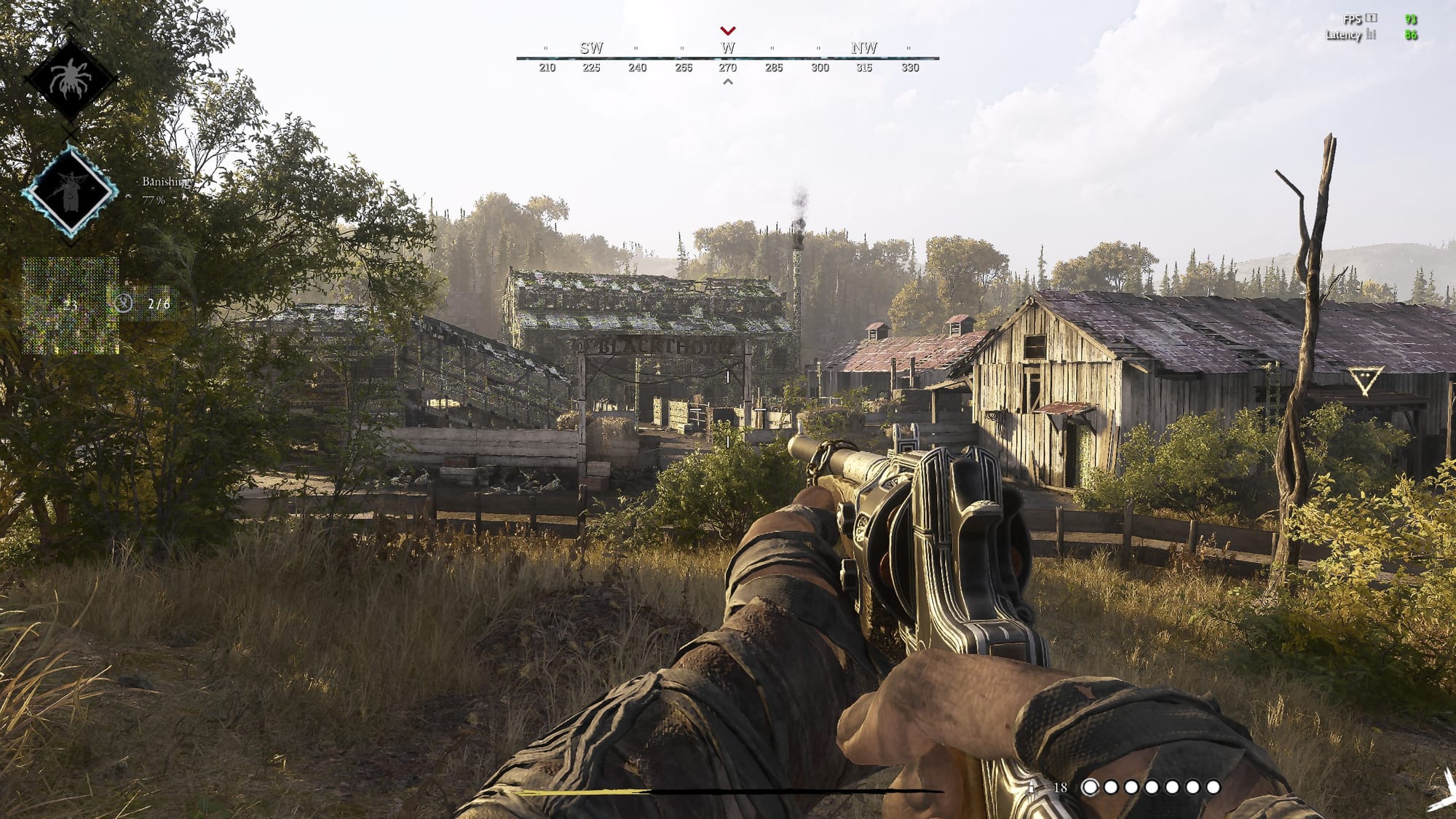
But I do take a moment to talk with another old timer about it. Design Director Dennis Schwarz has been with Crytek since the boxed game days, and he was instrumental in making sure Hunt created a category of its own. In a time where Battle Royale gameplay was just beginning to cohere, the Crytek team had to decide what to do, and their option was for a game that looked quite unlike anything else.
"We didn't want any contracting circles or anything that completely limits play. We wanted to maintain that sense of the open world sandbox," he explains. "And if you play a DayZ or Rust or whatever you just do your thing. However, marrying that concept with a matched-based environment, so you have a clear objective, where you have a time factor in there: that was what we wanted to get to, without actually knowing how to get there in the first place."
So Hunt Showdown was a prototype for a previously unimagined game type: the PvPvE bounty hunt. And while it established an extraordinarily stable combat game (differentiated and grounded, as Schwarz explains, by the cycle-times and limitations of weapons from the end of the 19th century) the result was an experiment that lived by its own code. The philosophy has been one of continuous, cautiously incremental evolution. The cowboy range is a laboratory where the mutant is continuously appraised and altered. The most recent update, some eight years into the live game, feels like one of the most ambitious experiments so far.
"The pitch we had internally was that the player needs to build a mental map every single round, but we give them that information to be able to build that map," explains Schwarz. He returns to this point repeatedly. It's that information economy in the game – what the player knows; which sounds travel and how far; what the distance and direction of every single gunshot is; how the map reveals things about the world; what is visible or audible in the hunter's magical "dark sight" mode – that all combines together to build this model. And the information provided to build it has changed significantly across eight years of iteration.
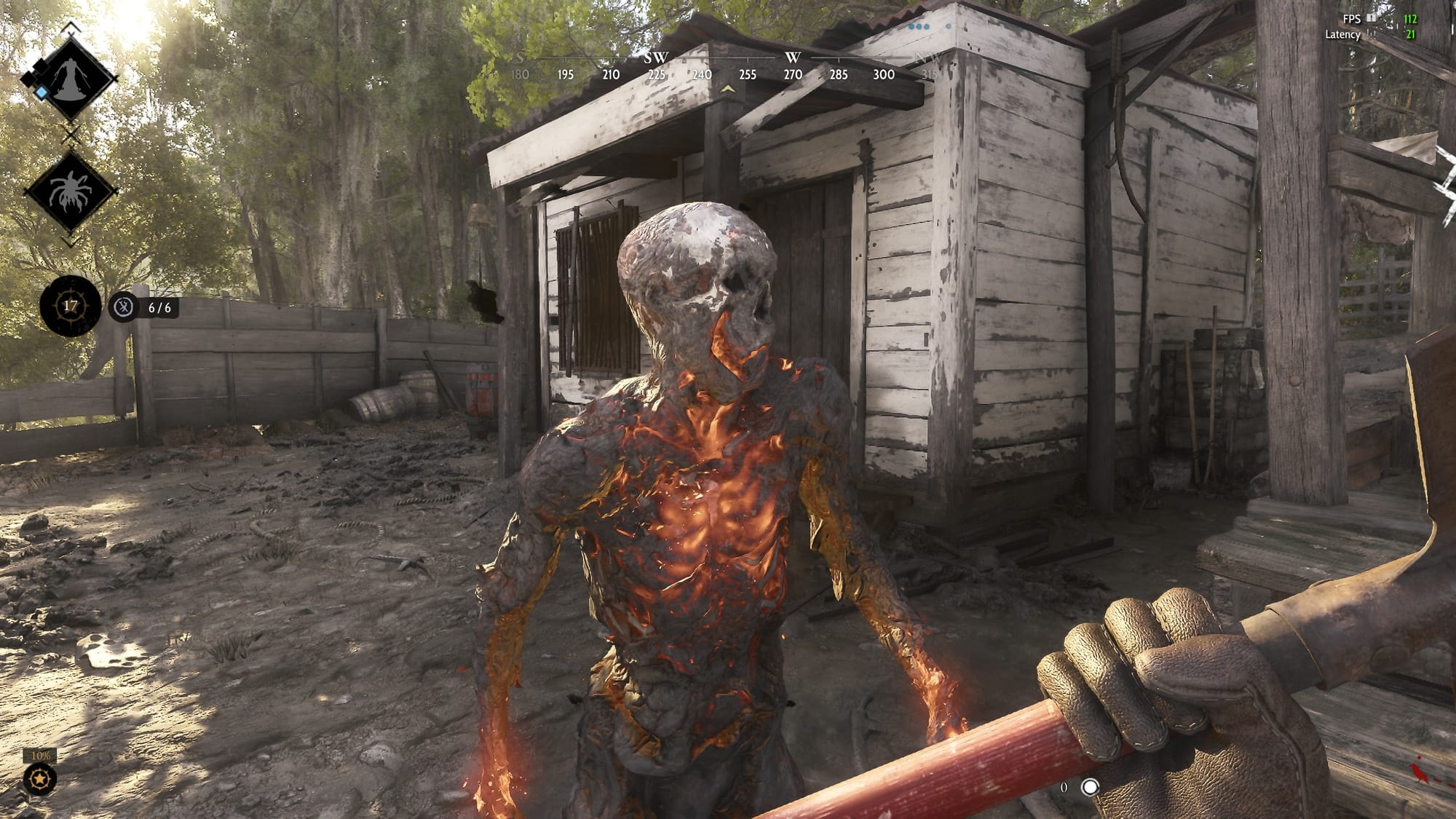
There are layers to how this has been refreshed for the current version of the game. The 'physical' world of Hunt is now more responsive, with vault points being damaged, doors being left ajar, or the corpses of sound-trap animals being left behind after being dealt with. These environmental clues leave a trackable trail: "It sounds like it's just a small thing," says Schwarz. "But it adds so much to your ability to understand that 'okay, they went across the bridge over there,' or 'these can't be the same guys that are doing the shooting at Northwest now. There's another team over here.' This is all a mental map piece," he says, "and for us this is all just variables and the right technical choices."
There are other layers, too, though: the Tarot card system, which was introduced as another experiment a few seasons back, provides a toolkit for getting more information about the world, such as where the boss is, or where nearby players are. Most radically of all, the current Devil's Trail update removes the extraction site locations from the map entirely. In an extraction game. "In Soul Survivor [the solo battle royale mode] we hid the resupply points so we looked if we could refine that [for the main game mode] and then we asked 'what if we were to hide the extracts points as well?' It sparked all sorts of iterations."
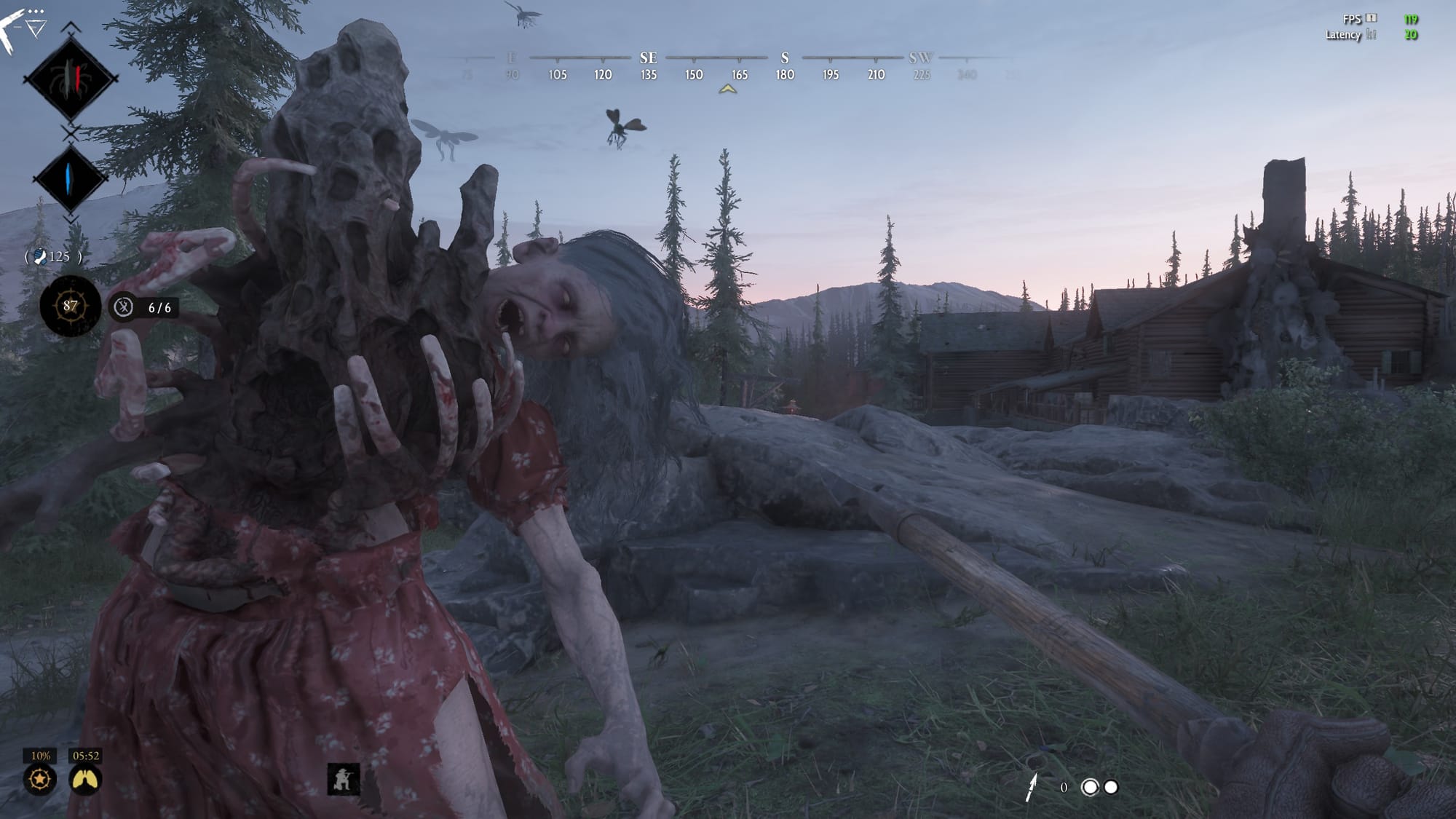
Schwarz talks about how the game in its current state has to offer something for both beginners and veterans. Reading the subtle clues in the environment might be an advanced skill that veterans can get something out of, still expanding their mastery after all these years, but that has to be a bonus and not a gating mechanism. "We also needed to make sure that if you followed the objective path, if you just go clue by clue to the boss and then kill it, then you have a chance to get out as well. So the banish [of the boss] should at least reveal the exit, so that you're never stuck in that layer."
The consequences of these changes for the game have been quite pronounced in play. Hunters are forced to engage more aggressively when they don't have all the information about where their quarry might flee to and people meet and challenge each other at the scout towers – new points on the map where more information can be gleaned.
Yet not all of the new avenues of information have worked out. Crytek's experimentalism means having to respond quickly to mistakes, as Schwarz explained when I asked about the 'All Ears' trait, a player-power which had been removed even before I had checked in to play the Devil's Trail update. "So basically it's a trait where you have a directional microphone, if you take a modern terminology," explains Schwarz. "You use darksight [the secondary vision mode] and then within your point of view you can hear players a bit better. By a bit, I mean a lot." It was clear rather quickly that experienced players had just been handed a game-changing tool. "We should have been a bit more sweaty, trying it out," says Schwarz. "We misunderstood some of the potential of it being too strong for the way we tuned it." Like a few other abilities that have appeared over the years, it has been removed, pending reappraisal.
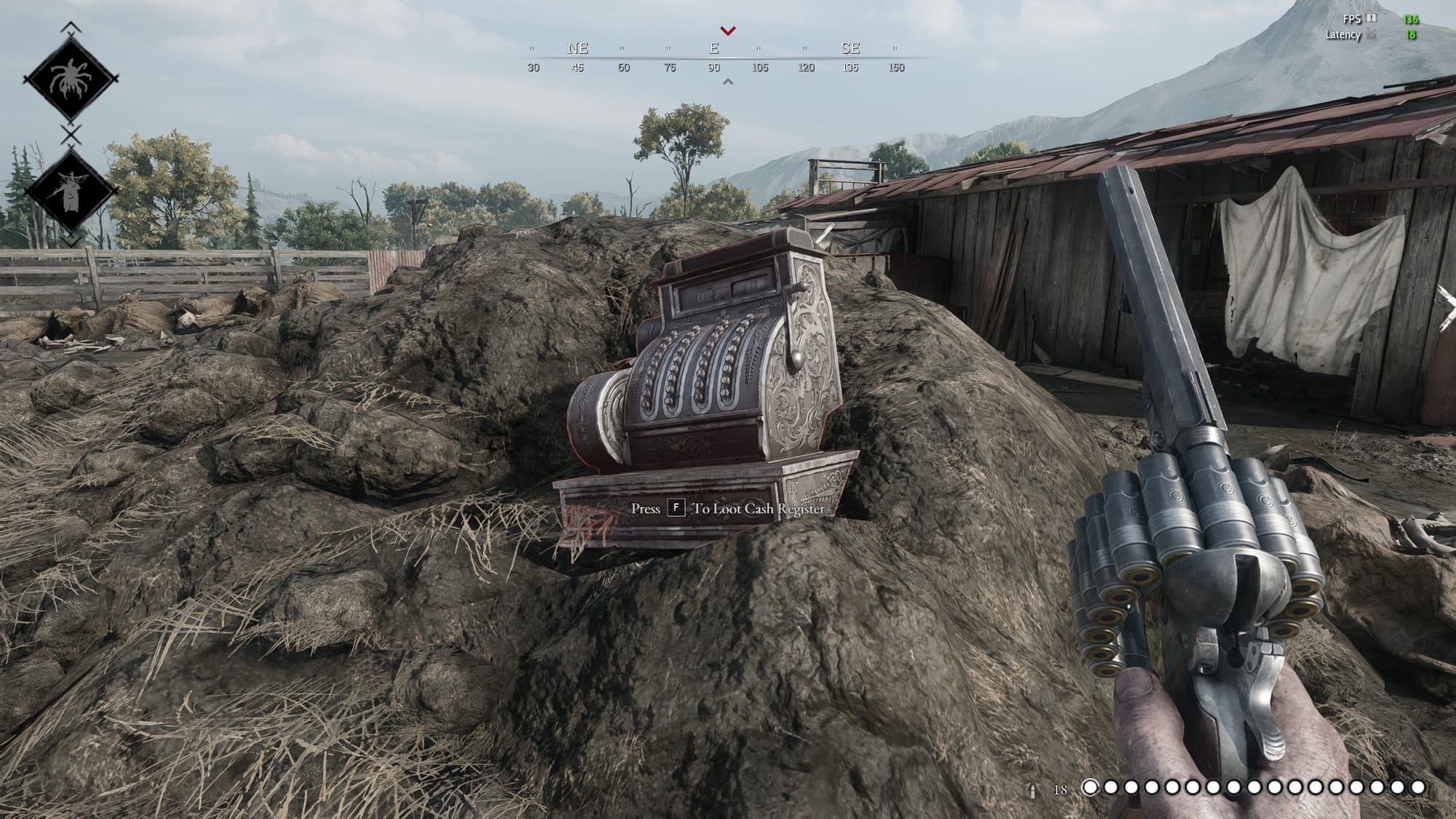
This is the cost, though, of a PvPvE game which has so many moving parts. "Because of the sandbox nature of the game it's easy to introduce something with good intent, and then all of sudden you create a completely different dominating strategy or something falls apart," says Schwarz. The miracle however, from my point of view, is that this has happened so infrequently and that so little has fallen apart. As a long-term player I have often read proposals and thought "this is it, this is the one where they cark it." And yet Hunt has, relaunch UI woes aside, dodged the precipice of that One Update That Breaks The Game. Putting this to Schwarz he offers a modest laugh. They've had their moments, he says. Yet more experiments are coming for gunslingers old and new. Hunt recently trialled increasing its long-time fixed twelve-player lobbies to a chaotic fifteen players, something that was met with mixed feedback. "It gave us the feedback we wanted," says Schwarz, explaining that the change in numbers had quite different meanings for games which have teams of three, versus those which have teams of two. The dynamics are delicate things, and the information, as ever, raises even more questions. "All of these things need answers," says Schwarz, gently.
And so while the other games shoot it out in the street outside, Hunt goes back to the lab. The old gunslinger, it turns out, is a scientist. And he will keep on tweaking the formula. And we'll keep taking the shots, because, well, how else will we find what we've been hunting for?




Comments ()