Quarantine Zone: The Last Check makes me feel dead inside
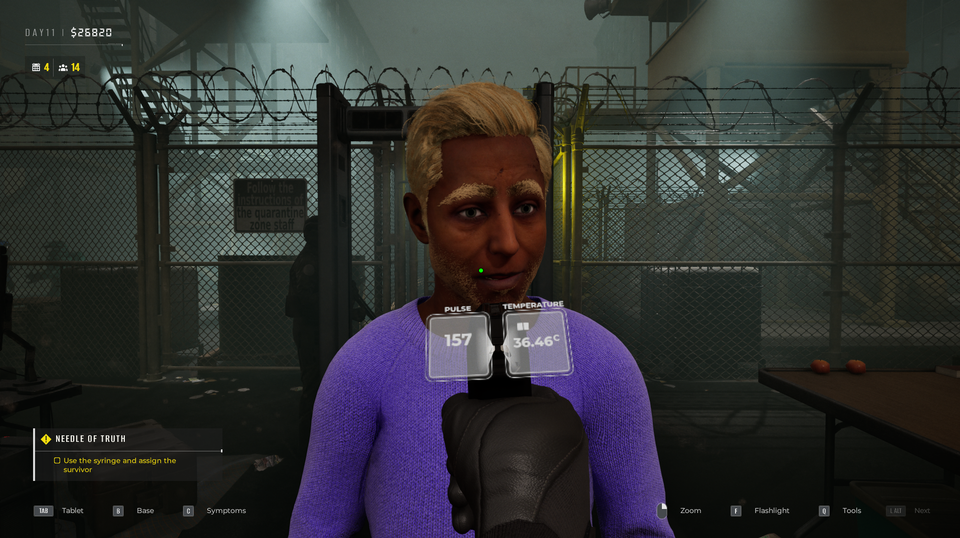
The seed at the heart of this game is the same as Papers, Please: you're manning a checkpoint and deciding who to let in. In this case, it’s for a zombie epidemic, so the checking is of symptoms and luggage rather than paperwork, and it’s all in full 3D, and the act of checking is merely the first step in what turns out to be a lot of different tasks and challenges which feel like they have been steadily layered on top of something that would have been more engaging had it been simpler. Instead, you get a busywork lifesim that’s surprisingly short on character, at least for the handful of hours I played it.
It all begins with triaging each person through the door. Your choices aren’t simply pass or reject; you have to send people to the safety of camp, the quarantine zone or the incinerator. In what turns out to be an early symptom - pun not intended - of the game’s problems, this is a choice with no emotional weight whatsoever. Occasionally you’ll get a fleeting word of thanks or uncertainty as they’re escorted to the killing chamber, but really it’s just a numbers game: torch a healthy survivor and you get a sudden fine, kill an infected one and you get a bonus.
The act of diagnosis is similarly mechanical. You start with just a temperature gun, and you gradually get issued a scanner that can see through clothes, a stethoscope, a reflex-testing hammer and other tools of the trade. If you check off every symptom you’re rewarded, if you skimp on it, seemingly regardless of the accuracy of your diagnosis, you don’t. The job then becomes methodically working through every diagnostic tool and going over every inch of each refugee, like PowerWash Simulator only you’re looking for bite marks instead of the last bit of dirt.
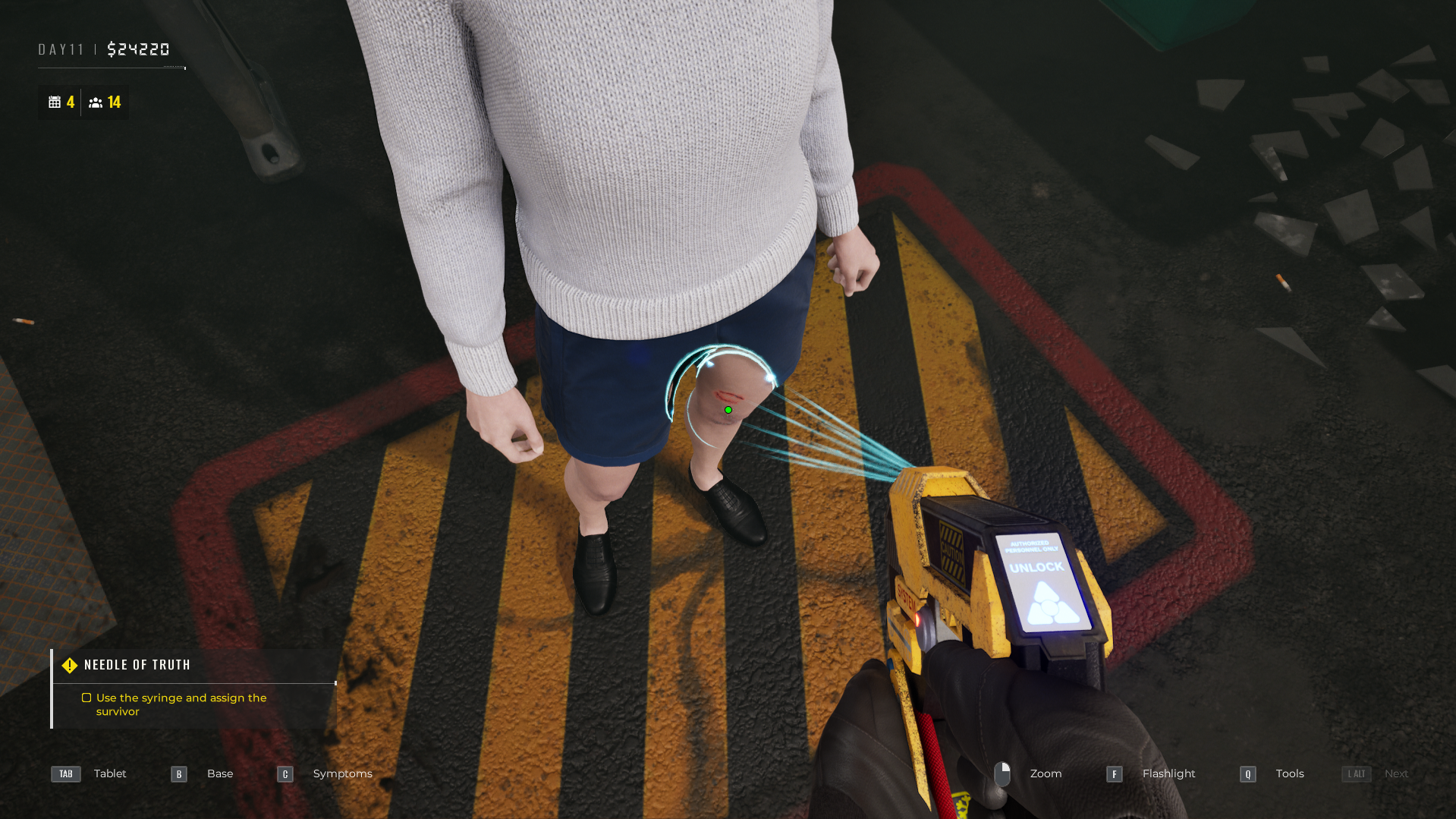
The goal is, of course, correct filing: the obviously infected go straight to the chamber, while the merely peaky can get left in quarantine and the healthy go through to the camp to await the periodic military evacuations which provide the income you need to keep the whole enterprise running. Quarantine space is limited so you need to make judgement calls, and letting wrong ‘uns through causes predictable problems which you discover when you wake up the next morning. Best-case, one of the quarantinees ate the others and you simply fry them, worst-case, somebody ran amok in the camp and you’re suddenly several healthy survivors short of the total you need to have for the next evacuation.
On top of this there’s a management layer, where you have to buy food, medkits and fuel for the generators, and a base-upgrade system to expand capacity of each zone. Which is all well and good, but the only bit of this that really needs to be in 3D is the body inspection, which is perhaps why the game keeps piling on extra tasks.
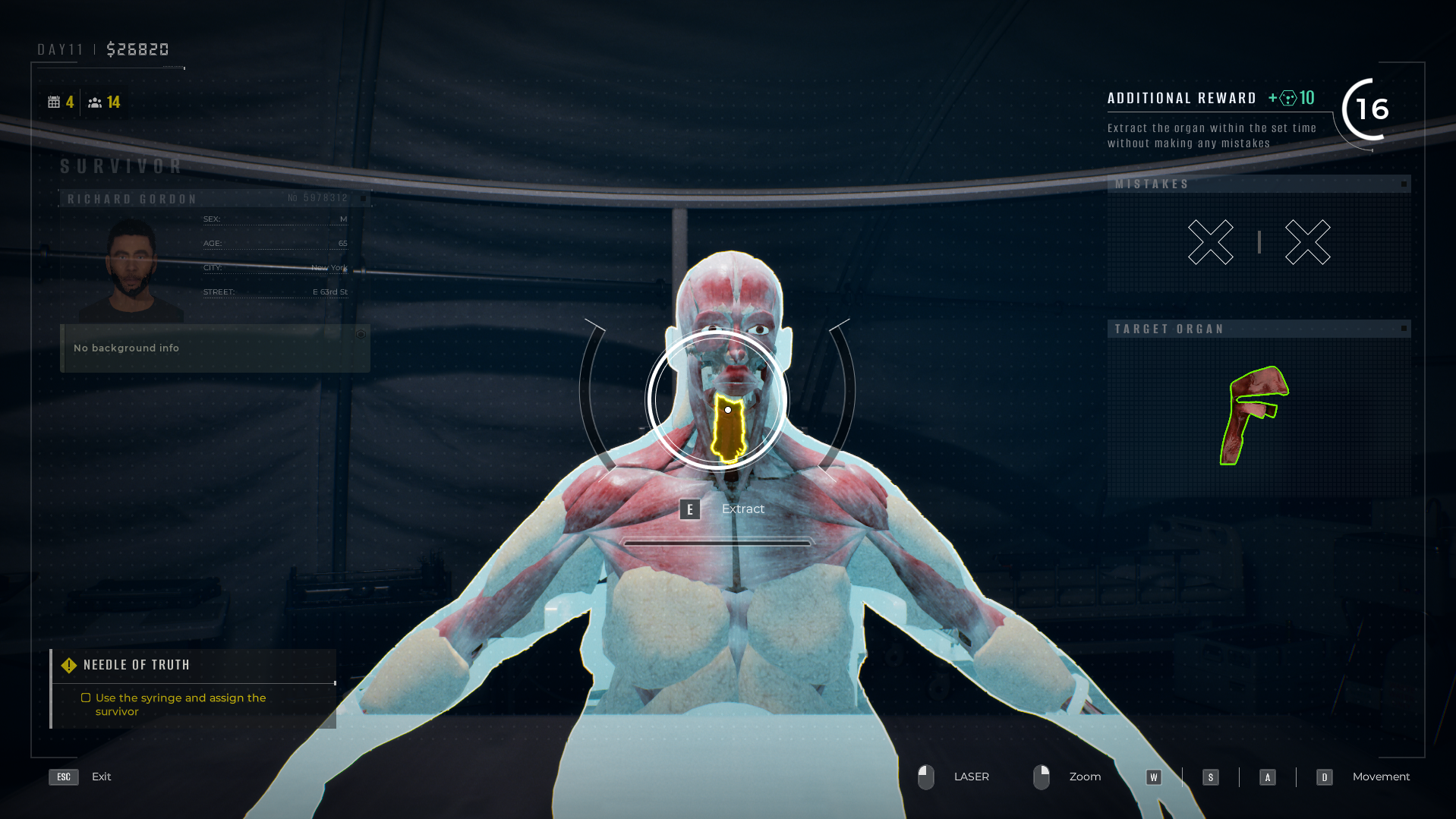
Building a lab turns suspect refugees into a single-use vivisection minigame where you vaporise every organ between you and whatever you need to diagnose the latest symptom (which is then added to your checklist at the gate). You have to manually liquidise the organ and stuff the resulting goo into an analyser, which has a dash of the fiddliness of drug-packing in Schedule 1, but here it’s just a single job that feels like it’s been added for variety. Similarly, once you end up with a caged zombie, you have to feed it once a day by dragging a body bag across the camp from your steadily expanding collection.
On it goes. People start coming in with luggage to be searched, and bulletins give specific people to detain. There’s a periodic wave-attack minigame where you control a drone picking off zombies storming the outpost. There’s a side mission where you have to find a series of graffiti slogans in the camp and interrogate the artist. There are collectibles. None of it’s bad, and none of it’s punishing - the worst outcome is that you run out of survivors and have to restart the current day - but none of it feels substantial either. You’re just accumulating little tasks to grind through, an administrator of the apocalypse.
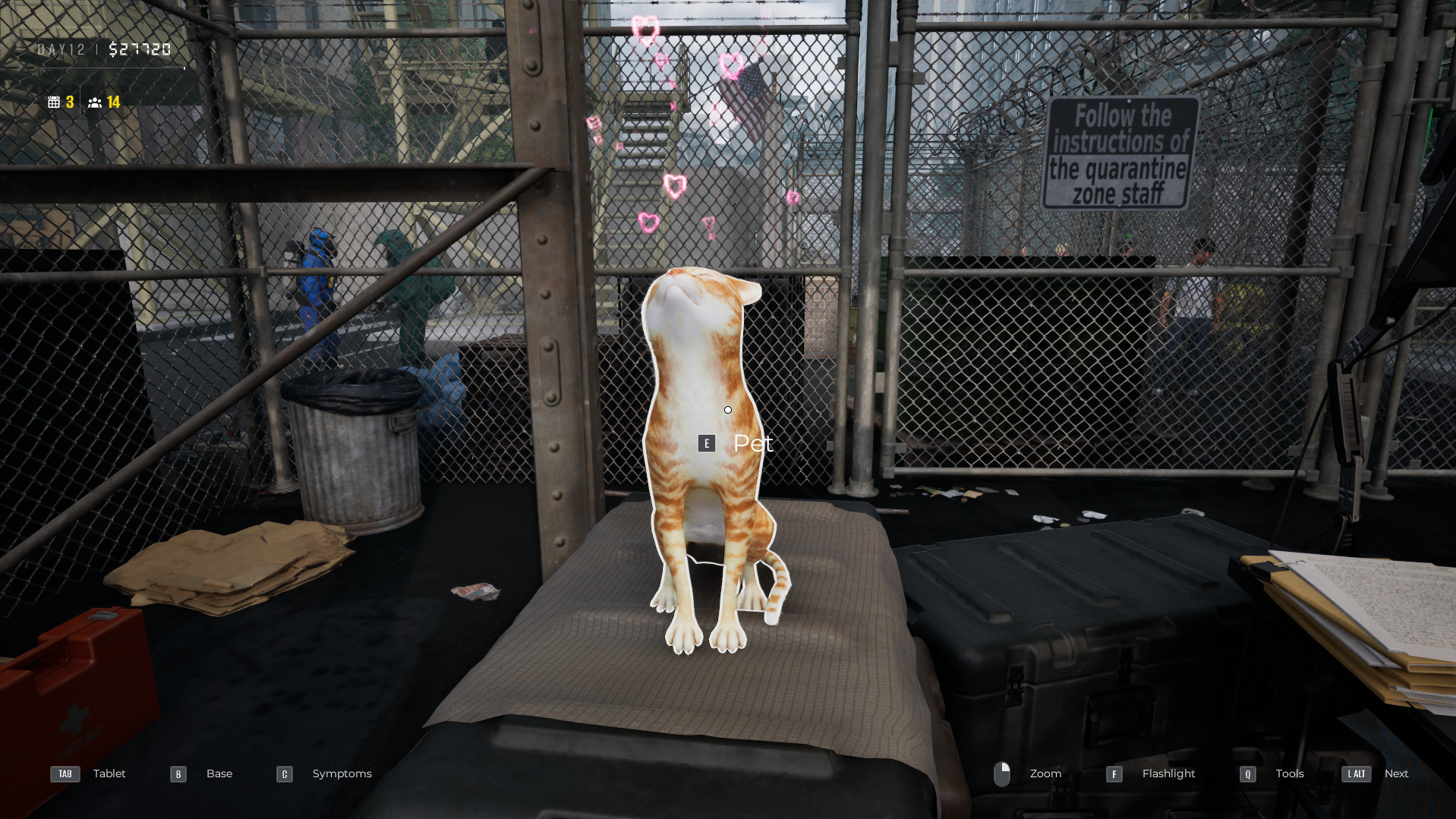
A bit more in the way of world or character development would do a lot to offset this, but the biggest surprise given the setting is how dry it all is. Some people react violently when tapped with a small hammer, and you can respond by striking them unconscious with it, but they get up a few seconds later and you plod on with your diagnosis as before. It's not fair to compare it to Papers Please, which was a small and carefully troubling puzzle while this is a sprawling mass of dopamine-dispensing Stuff To Do, but Lucas Pope's lo-fi brown squiggles did paint a vivid picture of the world outside your booth. This, with a hundred times the resources, doesn't seem interested in trying.
In lieu of personality, there are influencers. A series of refugees are seemingly modelled on YouTubers or Twitch streamers, the luggage of each presumably a witty reference for their fans to pick up on. I couldn’t pick any of them out of a plague pit so they stood out only for having slightly more carefully-finished character models than the regular scrofula Joes, although I suspect they have had a big impact on the game’s success. It was the biggest-selling new release on Steam in January, according to GameDiscoverCo.
Then again, maybe I’m giving them too much credit and it’s just the simulation doing it, care of the same steady dopamine drip that all sims offer. Quarantine Zone has a consistent fiction supporting all the plates it makes you spin, and it adds a commendably varied collection of tasks as you progress, but it never stops feeling like it’s just pulling another distraction out of the hat or starts feeling like any of it matters. I’m sure there are days of playtime here for anybody who can achieve a suitable Zen state, but after four hours I don’t want to sit here and find them.


Comments ()