Fields Of Mistria review

Stuck between a rock and a soft place
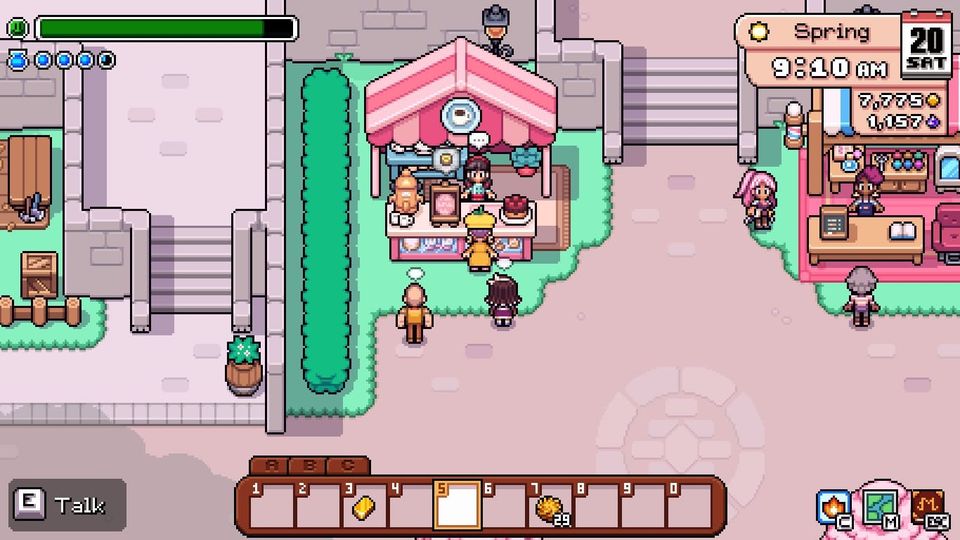
Waiting to talk to the NPC at the pink cake stand, alongside several other customers.
The Saturday market and other events add a nice rhythm to the game.

Fields Of Mistria is a game with almost no friction. When you’re farming crops, your watering can is always full. When you’re catching fish, there’s no minigame but waiting for the bite. If you forage something but don’t have room in your backpack, it will sit where you left it. After not too long, you’ll unlock the lost and found system, meaning on the next Monday it will be whisked away into a big bucket conveniently near your farm for you to collect. 

And, I think because of this, my experience with Mistria is strange. It’s soothing to zone out for an hour and run through several days of wandering around the village and farming, mining, fishing, gifting bits and bobs to NPCs and so on, all working towards new ticks on the game’s absolutely massive checklist. And my checklist is getting full. The museum is overflowing; the mines are reopened down to the depths; my heart levels with the villagers are almost complete. I can’t deny that that feeling of pleasure, while insubstantial, has led to me sinking nearly 70 hours into the game in the last month or so, and I can’t deny enjoying it.
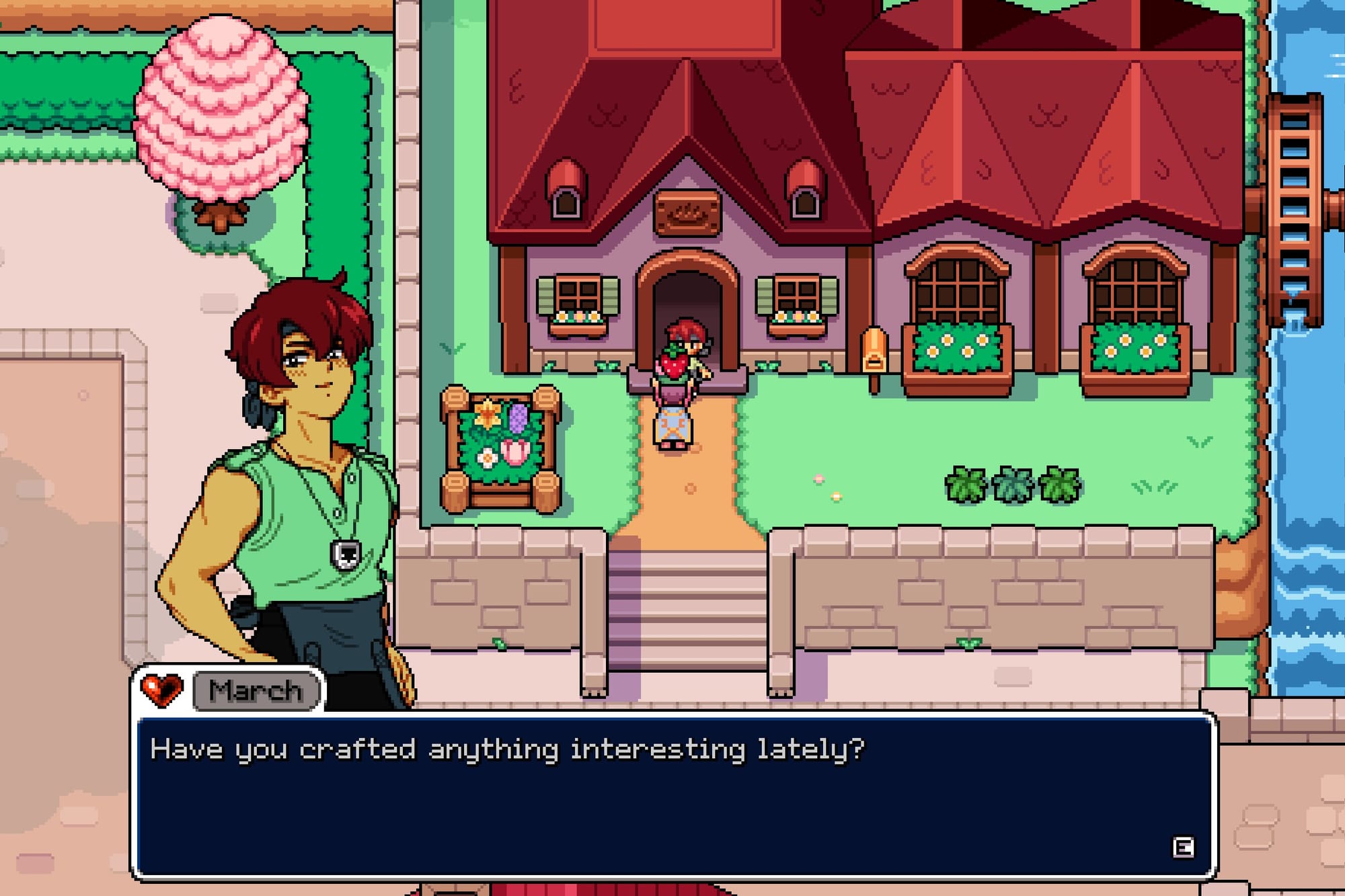
March says, "Have you crafted anything interesting lately?" The player is holding a strawberry over their head.
Like everybody else, I am a March girlie.

But I can say it has also been grating. During the low-tension cycle of the daily tasks, there’s plenty of time for thinking about both the (inherent?) political tensions of the farming simulator and the issues I have with this one in particular (more on both of those later). And yet I keep falling for just one more day. And even when I do decide I want to do something more thoughtful, give me a few hours and I’ll think, damn, breaking a few hundred more rocks with a pickaxe sounds really good right now, actually. 

The promise of the farming simulator is endless growth

When I do come back, as I’m hitting boulders over and over again, my qualms resurface. I’m picking on the mines here because they are by far the most repetitive aspect of the game. As you begin to get to lower levels, you’ll need to unlock them by providing fish, gems, plants, and so on found in the levels you’ve just cleared. And so you can’t progress until you go back through the same levels over and over again until you stumble onto what you need. Add on to this the randomly generated quests which also have townsfolk asking for things you can only find below the surface, you can be drawn into spending an awful lot of time clicking on rocks.

Perhaps unsurprising, then, that blacksmithing was the first skill I maxed out, built from turning the metal I picked up in the mines into ingots. And yet I didn’t have a huge amount of use for those ingots. For example, a watering can made of gold rather than bronze can spray across a wider area, which is very useful, but the fact that the same applies to the insect-catching net doesn’t really mean much when insects are always on one specific square and (with rare exceptions) don’t move quickly or run from you. 

Inside the chicken coop, where chickens mill around.
If you find spending time making your animals happy a chore, you can automate that, too.

And while the variety of insects across Mistria is fun at first, it peters out after you complete that wing of the museum and now are left with little to do with them, besides giving them to the bug-obsessed little kid villager Luc (which is undeniably cute every time) or selling them, which just feels sort of weird. 

The promise of the farming simulator is endless growth. You take from every area of the map: wood from the forest, gems from the mines, fish from the water. Then you build bigger and more expansive ways of taking those things or which showcase your successes: a more powerful axe/pickaxe/fishing rod; a fancier house that can fit more aesthetic furniture in it; a bigger farm for more crops for more money. The natural resources always bounce back and your farm always turns a profit. 

Their personalities walk the line between archetypal and unique

Mistria implies that it might interrogate this underlying theme by casting you as an adventurer responding to a call for help. As the game starts, the town and the surrounding environment are hit by an earthquake, and you’ll be putting the damaged infrastructure back together while sending out shipments of food to harder hit communities elsewhere. But this idea doesn’t really materialise. While you do unlock bits of the town that had been damaged in the quake, there’s never any sense that things would be that much worse off if you didn’t bother. And you can, of course, not bother, if you’d rather address other quests first or instead. Those starving needy stay firmly offscreen, and if you don’t want to engage with the farming mechanics at all, that’s totally up to you. On the other hand, if you just love catching bugs, they’ll pay for as many as you can ship.

One advantage of keeping the focus close is that Mistria is able to build up a cast of villager NPCs that have family relationships, interests, and daily routines that go far beyond what you are doing, even if they do have an overly strong habit of commenting on whatever you most recently donated to the museum. Their personalities walk the line between archetypal and unique, which is a clever way of letting you understand what a character’s deal is through limited interactions while digging deeper in the few bigger scenes.

A UI page showing an almanac of items unlocked via blacksmithing.
Filling out the entire almanac is tempting until you realise you'd spend a lot of time making useless tools.

But I do wish those scenes went further. The events that happen when you reach certain thresholds (raised by talking to them and giving gifts), are often quite spaced out, especially for characters you might not run into as often as others. This can make them less compelling and sometimes disjointed. In one later scene with the witch Juniper, for example, someone asked her what she thought of “the new farmer” when I was already in the winter of my second year in Mistria. At other times, I wanted to be able to interact more, like when Reina was preparing for a cooking contest; I found myself wanting to provide ingredients or suggestions myself, rather than just passively watch my character “help” in a vague sense. 

And yet, while all these criticisms are things I’m actively thinking about while in the game, they don’t truly reflect the actual feeling of playing, which is that vague feel-goodishness that keeps me coming back over and over again. Even having written them all out, and knowing that I could have gone on for longer, I have to be fully honest: the second I finish this sentence and close this draft, I’m going to go back to Mistria and run through at least another three days of watering crops and breaking rocks. So make of that what you will.

Tagged with:
Reviews / Fields Of Mistria
Jay Castello

Jay Castello

Jay Castello is a freelance writer, editor, and podcast host based in Sheffield, UK. If they're not down a research rabbit hole you'll probably find them taking bad photographs near a riverbank or old tree, but you can also try Bluesky.