
Resident Evil Requiem review
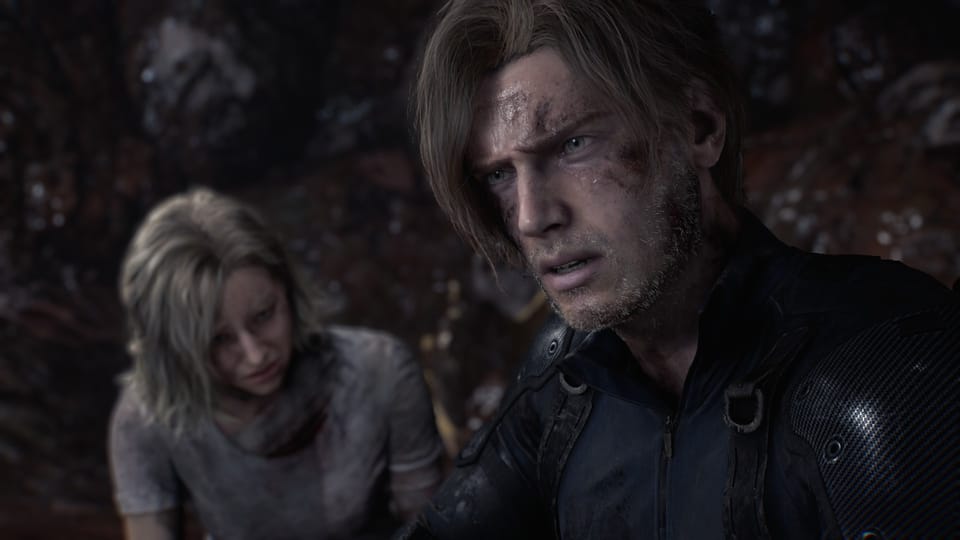
Requiem wants to be all things to all Resident Evildoers. It is one half Victorian freak show and one half shotgun-toting facekicker. It wants to scare you and to psych you up, empower and disempower you with alternating waves of scares and action. It is both third-person Leon sim and first-person Grace 'em up. Yes, you can change the view of either character in the settings but I kept things default, if only to test the game's thesis - that being stuck in a girl's head is scary whereas watching a big man's muscles move is powerful.
Like many a rotting zombie, it starts to fall apart in the bottom half. I had a good time, even if it sometimes felt like playing a videogame through glasses rose-tinted with indecision. This is a Resident Evil that seeks to please everybody, and you could argue it has done so. But there is a feeling like it has achieved this by hiding in the safe room of nostalgia and bursting out every few minutes with the biggest gun in its inventory - a dude who everyone already loves.
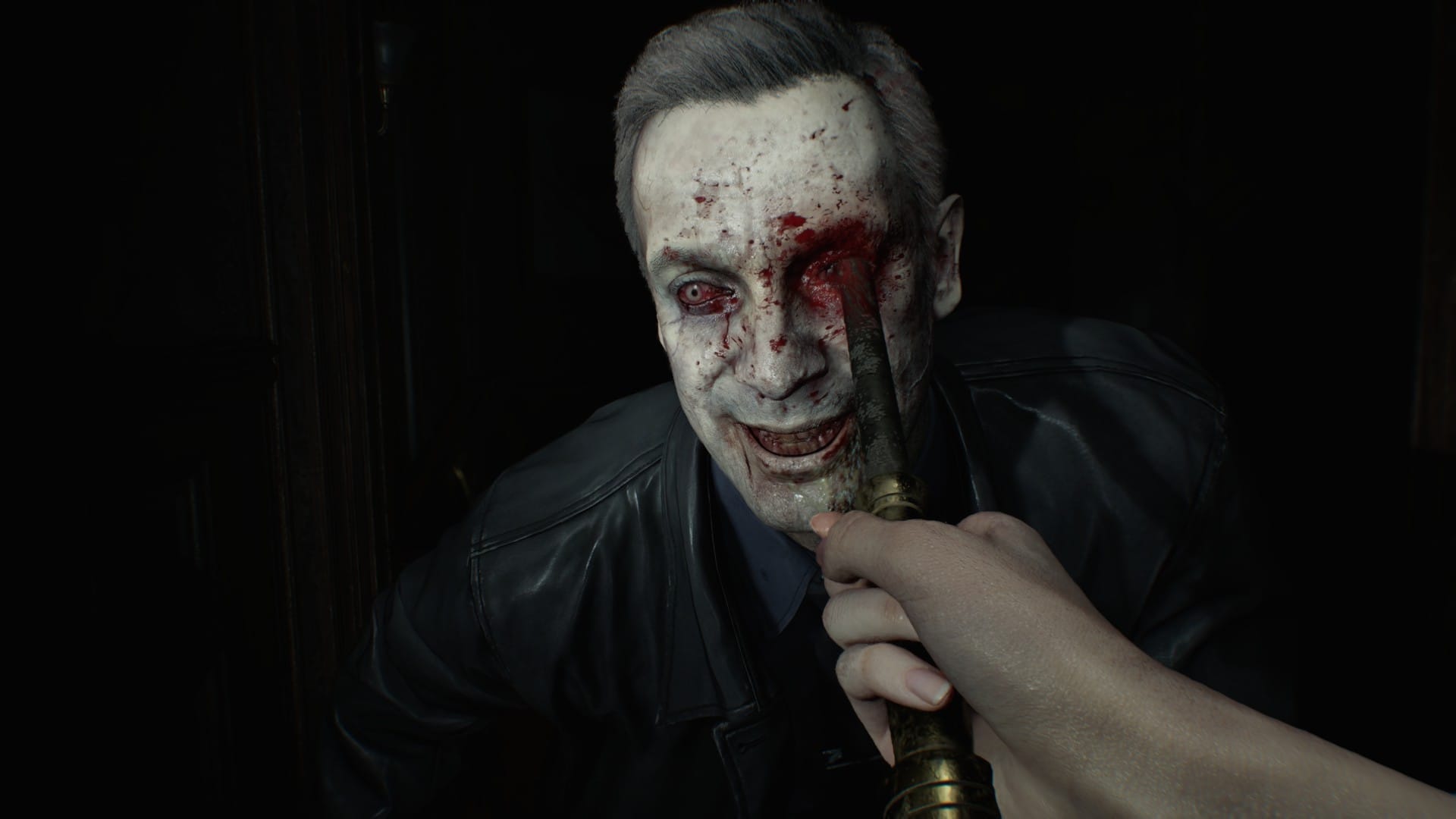
It is a bullet scronging jumpscare romp in the same way as many recent Residents Evils have been, a continuation of the long cracked rat maze formula. You are trapped in a bunch of narrow corridors with bitey obstacles, puzzle-locked doors, and alternate routes. The fleshbeasts who block your path or cause quivering moments of stealth are as varied and nasty as ever.
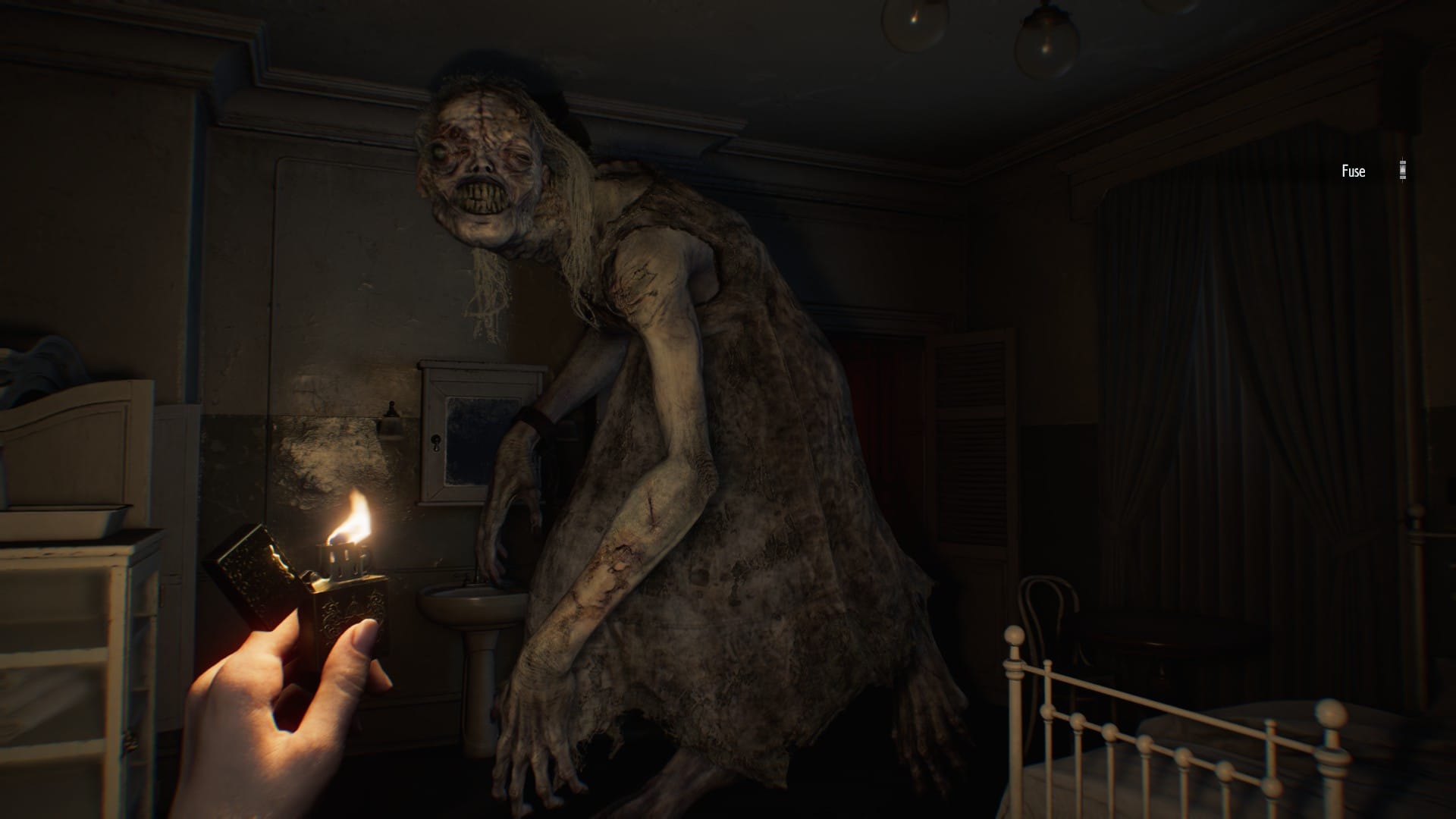
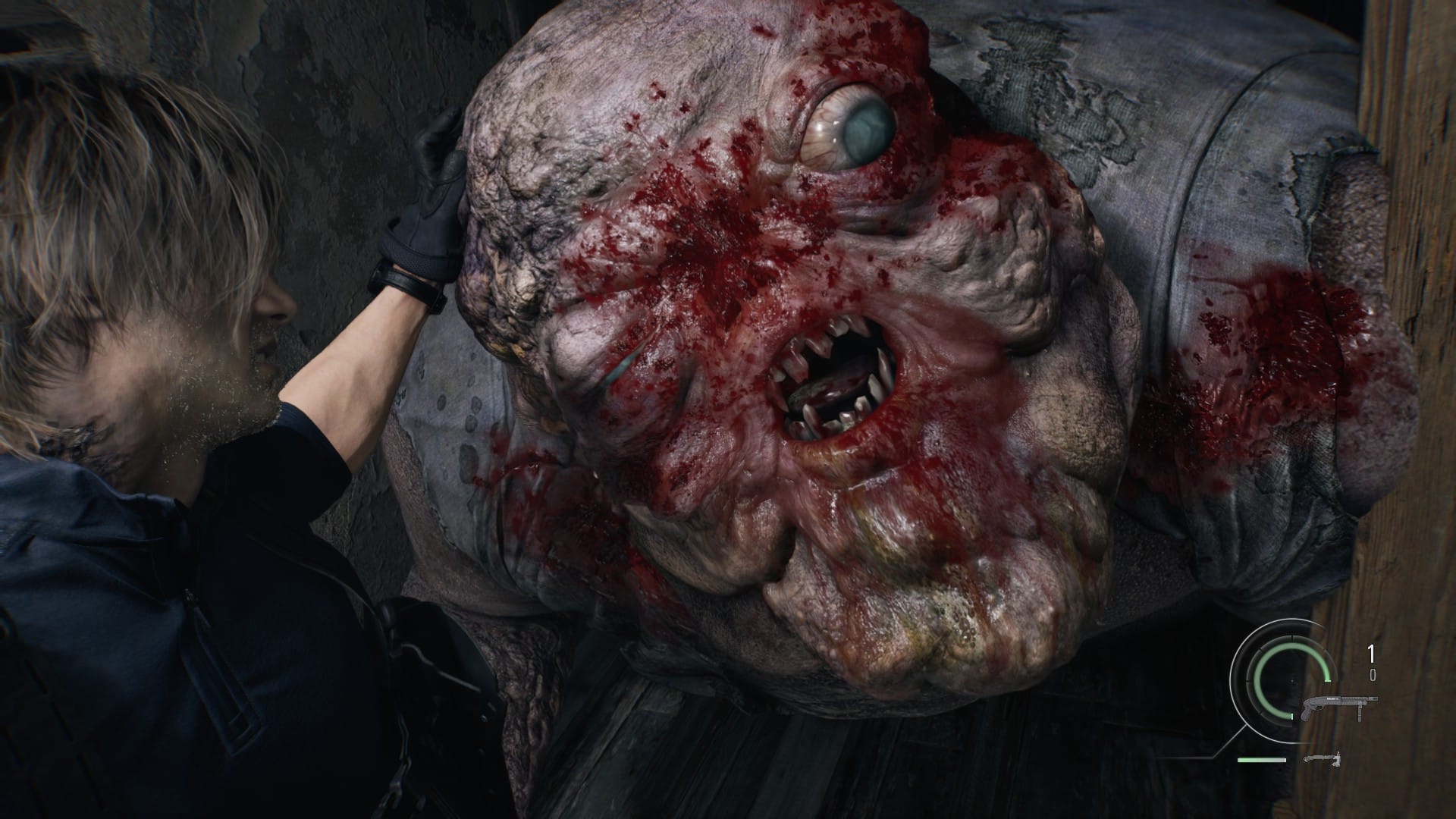
There's a big zombie cook with a butcher's knife, some obese squeezers you absolutely cannot sprint past, and a dog-legged prowling freak known as The Girl. You're not just avoiding Mr X here, but the idea is the same. As before, the predominant recurring experience of a modern Resi is watching a door burst open and saying: "I'll go the long way round".
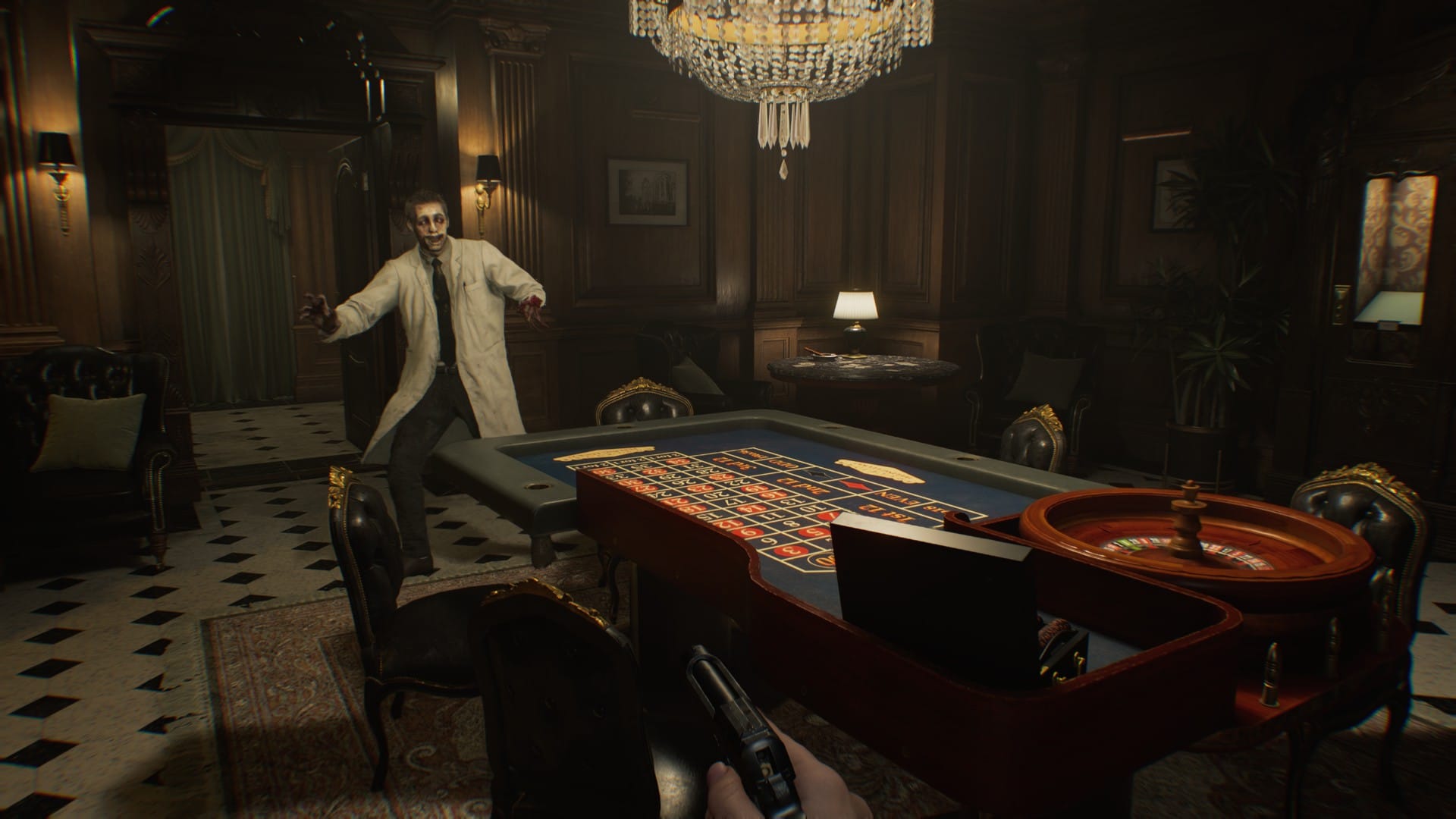
Even the "lesser" zombies are given character with George Romero zombologic - they remember their lives and perform the acts they did in everyday life. A steward obsessively turns off light switches, a maid scrubs maddeningly at pools of blood. My favourite - a zombie hospital patient with a splitting headache - batters anything that makes noise with his IV drip stand. Even if the source of the racket is another zombie patient who sings as she walks around the psych ward. Saves you a few bullets, dunnit.
These foes are the stand-out encounters from the early sections with new gal G-G-G-Grace. For this poor FBI agent in over her head, there are maggots everywhere, and she insistently sticks to the horror hero trope of a person who just can't help but open every fridge and locker and toilet lid to see how rotten and horrible the insides are. Her chapters have setpiece jumpscares, prowling villains that listen for noise, meagre weapons and ammo, and lots of weird keys to find. She is a scared widdle baby who w-w-whimpers her w-w-way through every cinematic, and yet I enjoyed her parts of the game far more than her heroic counterpart.


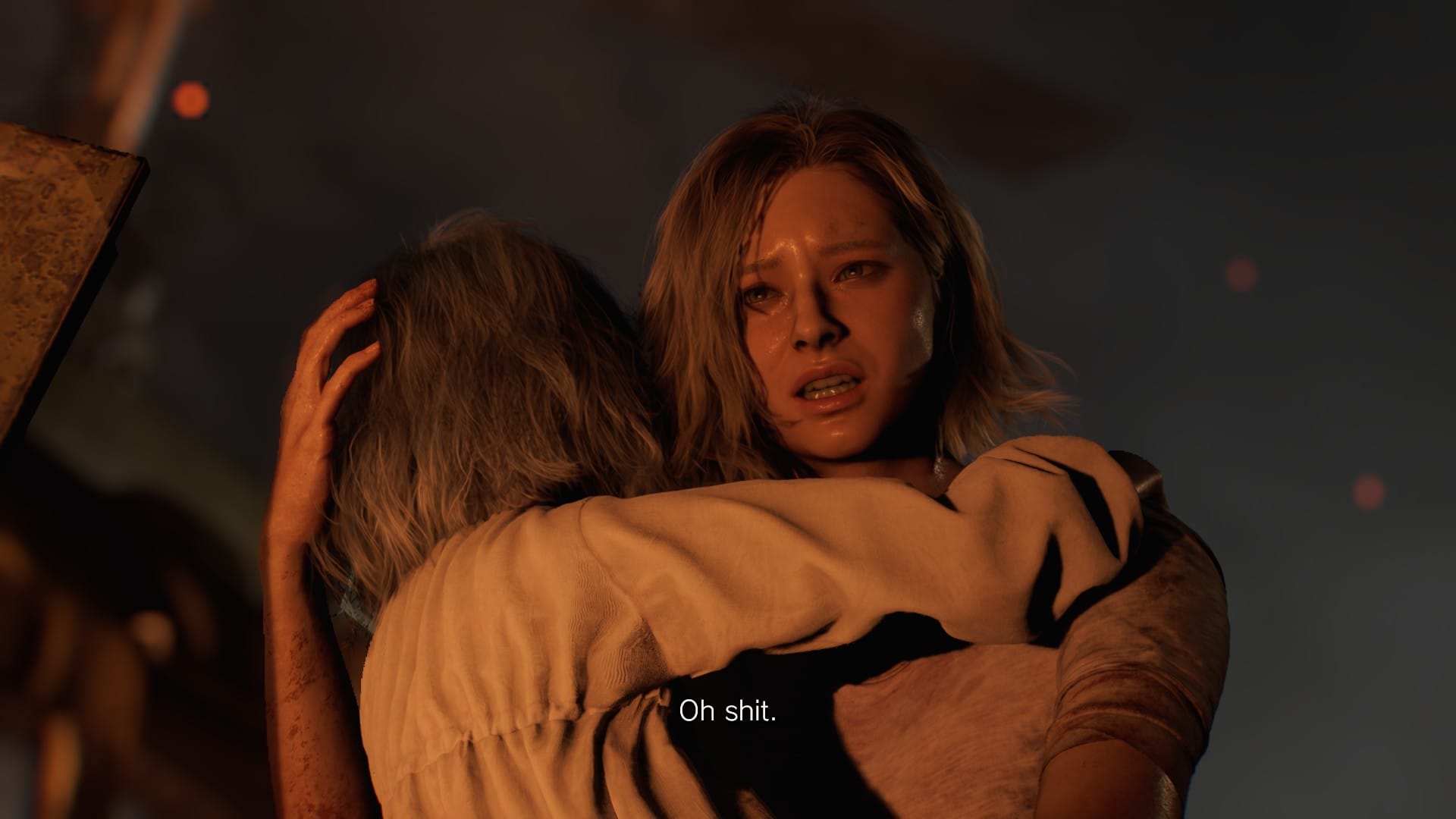
The tempo of Leon's chapters is surgically grafted from the tight fights of Resident Evil 4's recent remake. He blasts and kicks and buries his hatchet literally but not metaphorically into the necks of all comers. The action ramps up from classic chainsaw dodging to weakpoint fracking boss fights, and from missile launching silliness to auto-piloting motorcycle dumbassery. The engine for all this is a black eczema creeping up Leon's neck and hand, threatening to soil his sponsored Hamilton wristwatch, and also end his life. He has the T-virus, and needs to find a cure. That means - yup - we've gotta go back. Many spoilers from this point on.
Requiem, as the name suggests, wants you to remember stuff, and offers a whistlestop tour through the Resident Evil canon. Spencer is here, Umbrella are here, the BSAA are here, Mr X is here, lickers are here, Raccoon City is here, a guy who looks like Wesker is here. All this compounds into a safe piece of B-movie fiction rather than anything transcendent on its own merit. Nostalgia is doing a lot of heavy lifting in today's popular culture, and Requiem offloads much of its emotional weight this way too.
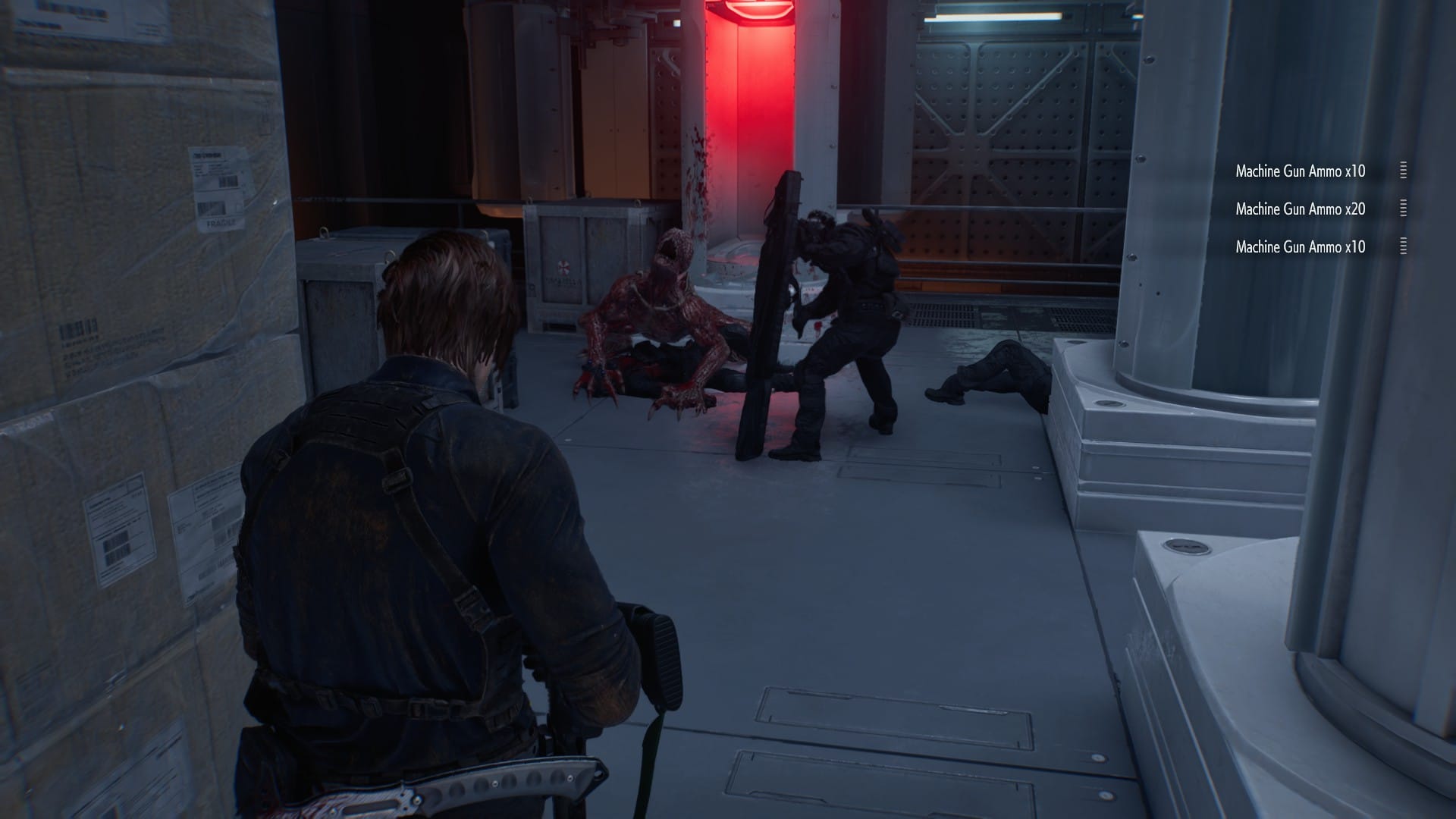
Grace's desire to save blind experiment victim Emily is a rhyming echo of Claire Redfield rescuing Sherry Birkin in Resident Evil 2. Leon steps onto the streets of Raccoon City and back into the police station to the sound of its familiar music. Don't ask why this building was not destroyed in the atomic blast that was supposed to have levelled the place. Don't ask anything actually. Requiem is not interested in making sense, and we can't really fault it for that against the backdrop of Resident Evil as a whole. In Resi "continuity" is just the screen with "continue" or "quit" options that appears when you die.
The expectation seems to be that you won't think, not even a little bit. That you will get goosebumps, that an old familiar fear will rise, that the "I remember this!" sensation will kick in. Except uh, this might have already happened if you played the Resident Evil 2 Remake in 2019. The impact of revisiting R.P.D in its ruined form is muted by a feeling of actually being more confident and reacquainted with this building after having recently been there. It's like Jeremy Kyle emotionally introducing your long-lost sister with party poppers and a dramatic curtain pull, and you're too embarrassed to say, "Um, sorry Jeremy we actually ran into each other a few years ago and hung out all summer."
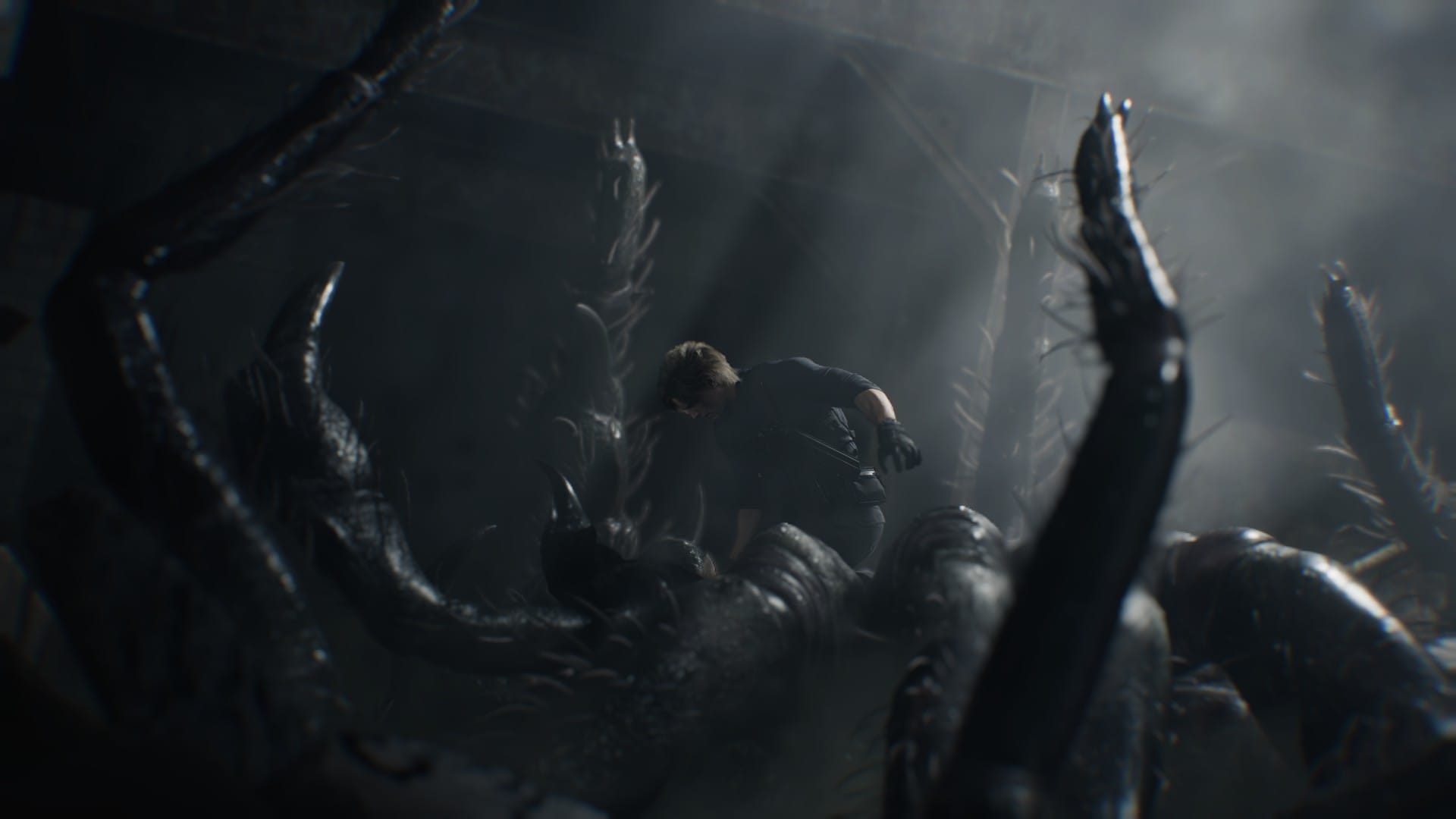
It's also hard for me to view Leon as a hero who has been overly troubled by his formative zombie experience in 1998, but this is an unconvincing wound Requiem's cinematics periodically poke. At one point Leon laments he couldn't do anything to help during that disaster, but he's "here now". But the closest we get to seeing a human reaction from Kennedy is a brief pause in Gun Shop Kendo, where he takes a breath, flashbackingly remembering the father and daughter he met here briefly thirty years ago. Depending on how generous you're feeling toward the game's storytellers, this is either the first glimpse of real trauma in Leon's life - an incident that has affected him far more than we as players ever knew - or it is Capcom desperately scrambling for anything - ANYTHING - that Muscle McJokes might be sad about.
This is a legacy problem. The trouble with making your hero a superstrong quipster who is never affected by anything is that your audience might simply not believe it when he does finally say: "I might be having an emotion". The closest game analogue for old Leon is Old Snake in Metal Gear Solid 4, but Snake's aging and disease takes a far higher ongoing toll over the course of that story. By contrast Leon just gets a bit woozy in the last hour of Requiem, and he rarely enunciates his feelings on the fact that he is decaying from the inside out.
Maybe this is more a personal frustration about Leon as a person. He is, after all, not a touchy-feely guy. He has more in common with the old-school stoic suffering masculinity of Gerard Butler in 300 than any modern male hero. But as such a hero, there is a reluctance to grant the one-liner 80s action man any acknowledgement of weakness, even when that weakness is the crux of the story. Leon is looking for a cure. That means he is afraid of death. Maybe he is afraid of becoming a zombie. But this fear cannot be expressed or examined in any meaningful way, even in a horror game, because to do so would be to deconstruct the macho character he has been assigned. So he just does his usual hero thing, and all the fear is offloaded to Grace, who d-d-d-does her b-b-b-best to become s-s-s-scared enough for both of them. But no matter how frightened she is, Grace is not as cowardly as the must-have-a-happy-ending storytelling decision that undermines her journey.
It's this reluctance, half-heartedness, and commitment to schlock that makes me wince when the game is put under even the slightest pressure of cultural critical analysis. You can absolutely compare Leon's lingering T-virus troubles to the lasting effects of Hiroshima and Nagasaki, but you might have to back that up with a convincing argument. This is an overwhelmingly moronic action horror that doesn't care to explain basic whys and hows, and which doesn't harvest a grain of emotional weight from Leon's terminal illness. Even the most involved fan of the series has only so much benefit of the doubt to give. As has long been the case, the bullets of intellectual literary theory have no effect on Resident Evil. It just gets up and walks away.
Requiem wants to please fans of both predominant styles of Resi that have emerged in recent years. And more than that, it wants to please fans in a nostalgia-driven way, even as it introduces novel horrors and zombies with nostalgic memories all of their own (remember light switches! So cool). It is, I think, a well-made game worth a week's waste-o-time, but it is formulaic in the sense that the puzzle and pew-pew of previous games is fundamentally intact, and also in the sense that Resident Evil 7 + Resident Evil 2 = Resident Evil 9. With this half-and-halfness, why are we surprised that nobody seems able to decide whether it is business as usual or a clean break? For someone who has enjoyed the series since its earliest days, and was there in 1998 when Leon was one-dimensional in an entirely more naive way, it is simply another decent Resident Evil game with laughs both nervous and full. But maybe its makers are right - don't think too deeply about it.




Comments ()