
Swansea from Mouthwashing is the best alcoholic in games
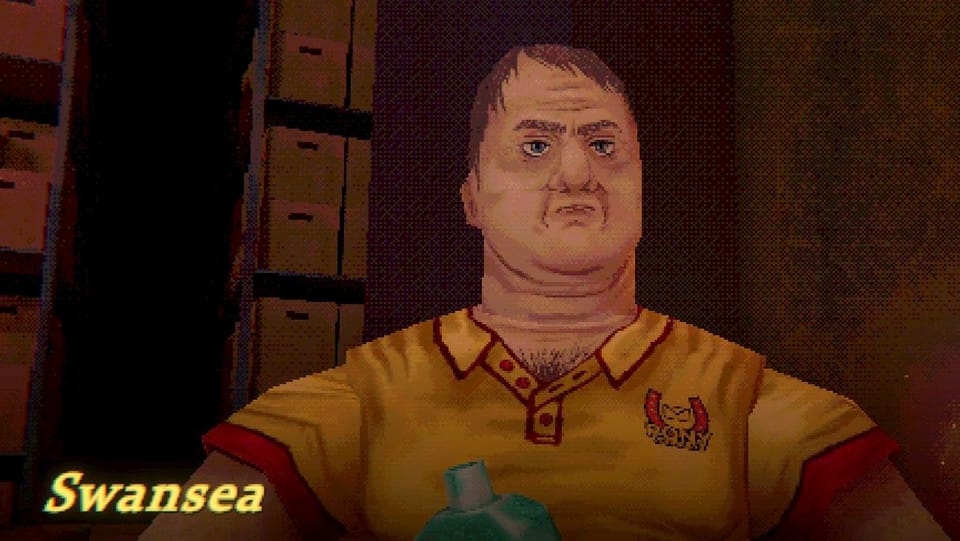
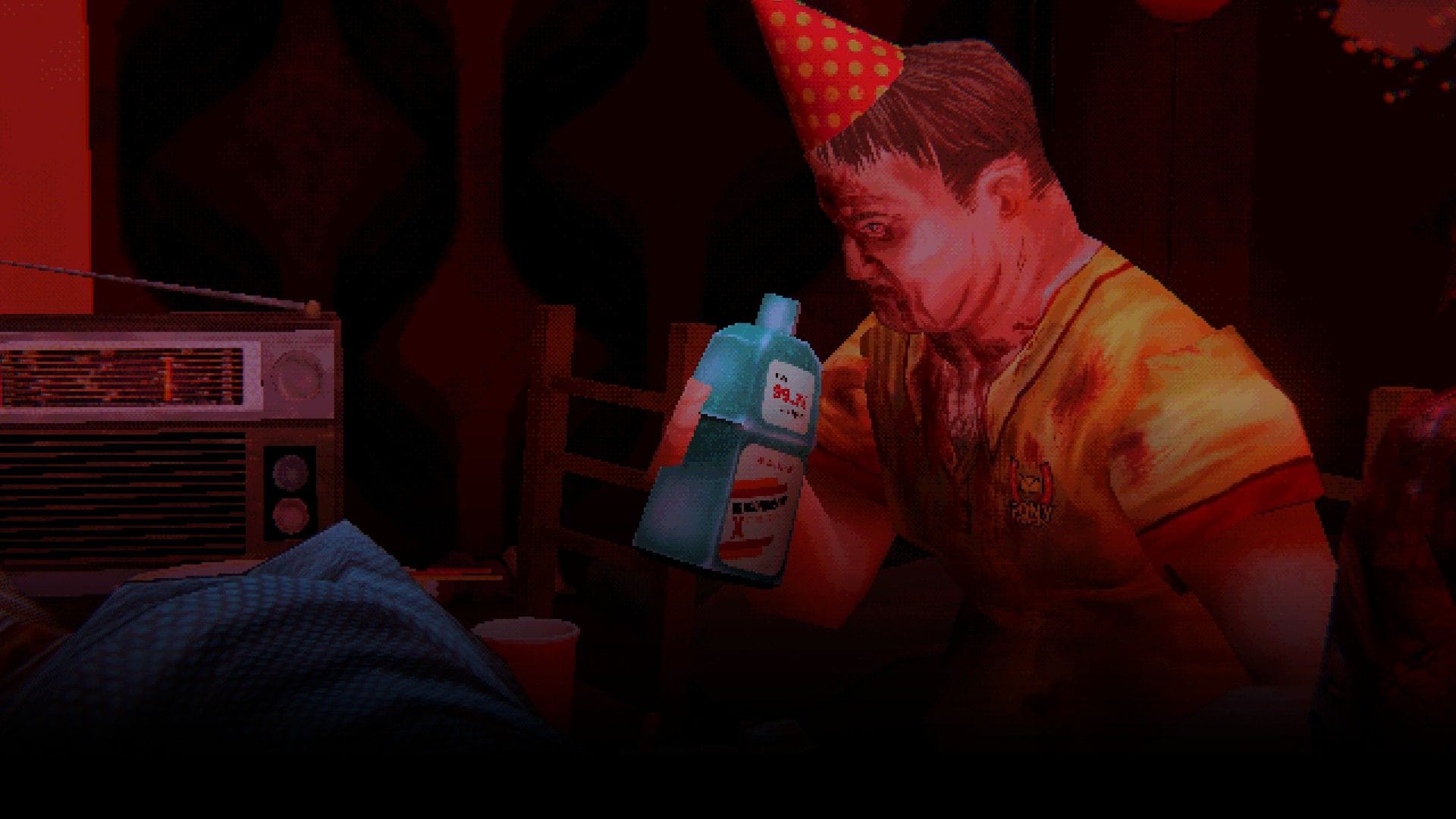
Apologies to all fans of Harry from Disco Elysium, but the best alcoholic in all of videogames is a hamburger-gutted spaceship engineer who spends most of his time looking simply furious. Swansea is the low-poly blue collar spaceship mechanic in sci-fi horror game Mouthwashing. He is drunk for most of the game and even becomes - at one point - a mortal threat to your life.
Yet as all other male members of the ship's crew flail around during disaster with denial, paralysis or naivety, Swansea attains a form of grim enlightenment. He is darkly honest about himself at the very end. It's the cold honesty of his alcoholism that makes him stand out among the crew.
If you don't know Mouthwashing, consider those opening paragraphs my recommendation to go play it. It's one of Jank's best games of the decade for a good reason. It takes two or three hours to play and another two or three weeks to stop thinking about. Longer, clearly, if you're an underemployed games journalist. Spoilers ahead, et cetera.
Let's sum it up for anyone who needs a reminder. You're a crew making a delivery across space. The captain, for unknown reasons, appears to have just crashed the ship into a space rock on purpose. You're stranded with little food and fuck all hope of rescue. Through flashbacks and flashforwards, you play as both captain Curly and co-pilot Jimmy as they live out the ship's final moments before the disaster, mixed with the harsh weeks of survival after the crash.
Soon, the surviving crew decide to open the cargo hold to see if there's any food in there. But all you find are thousands of bottles of minty mouthwash. The good news? It has sugar in it. The bad news - it also contains alcohol.
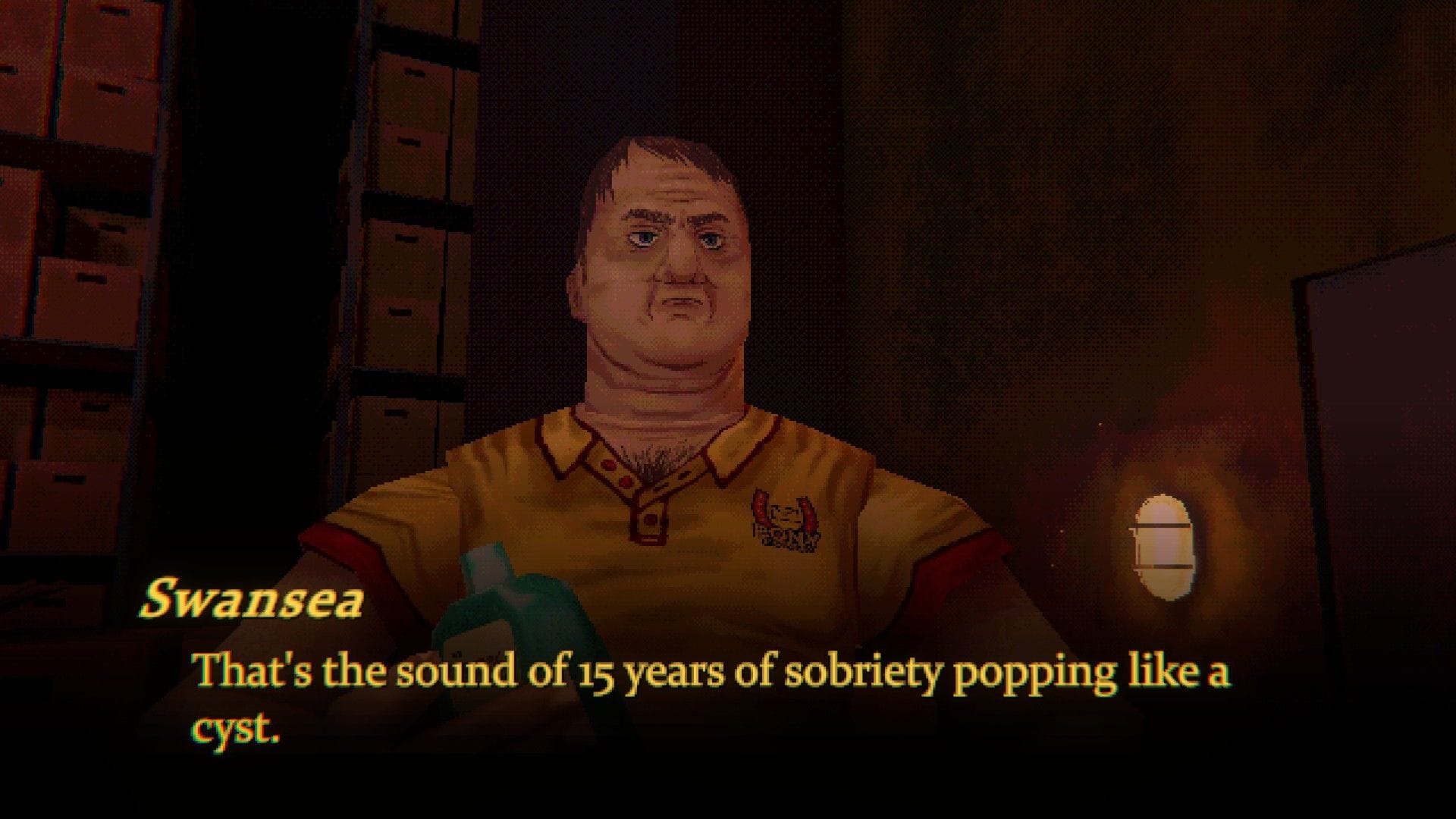
This is where Swansea, until now depicted as a gruff and impatient wrenchman, falls off the wagon we didn't even know he was riding. His reaction to the cargo hold's absurd contents is exactly what you might expect of an alcoholic put in the most stressful and hopeless situation of his life. When your last chance of survival turns out to be exactly what you swore never again to touch, the only cure for the darkly comic horror of this outcome is to embrace it wholesale. He cracks open a bottle and slugs it down.
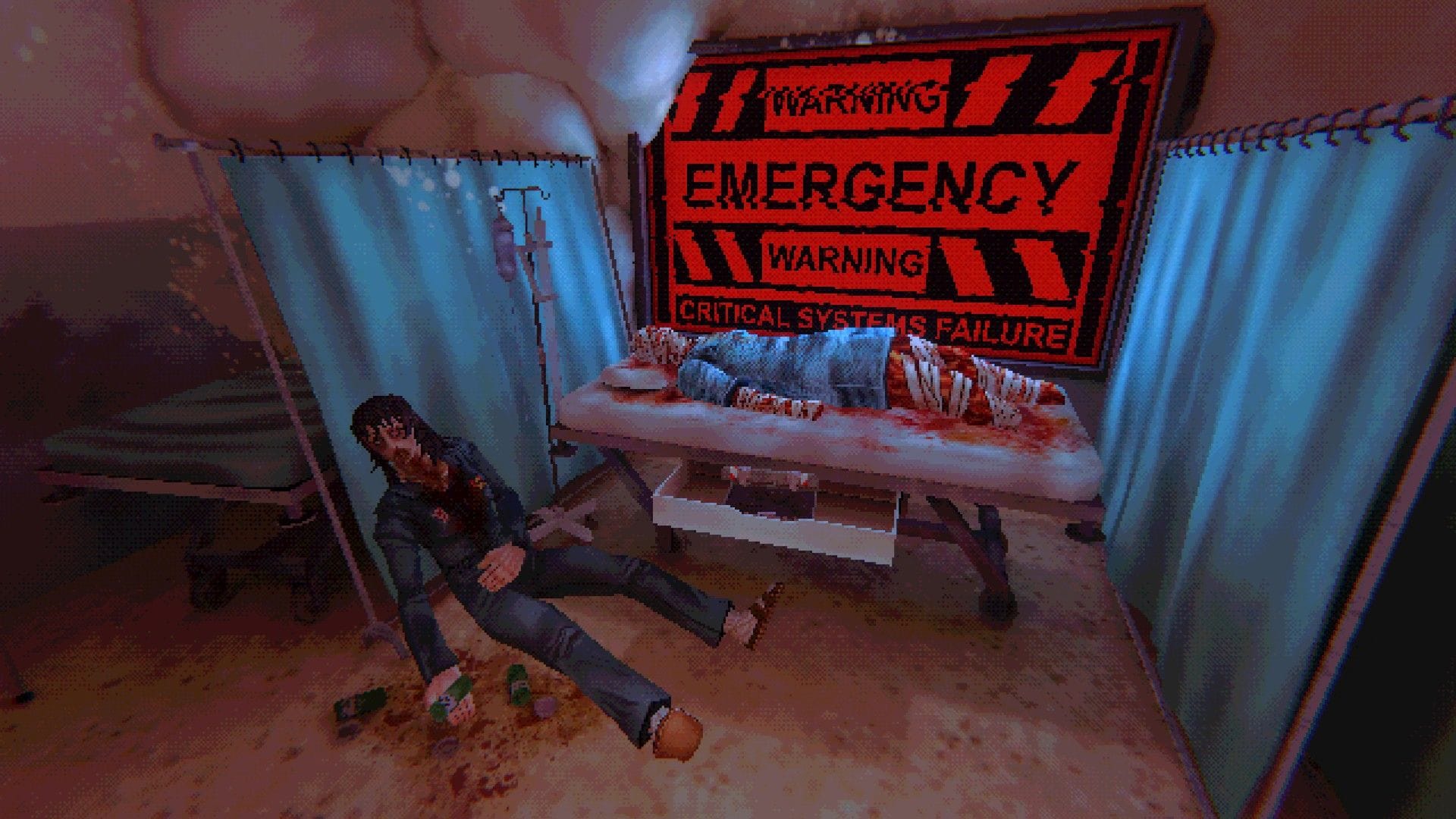
I won't go through the rest of the story beat by beat, except to point out that it is denial which kills the crew of the Tulpar. Jimmy the co-pilot is guilty of the inciting act that precipitates all the catastrophe to come. As I've written before, his rape of crewmate Anya is what ultimately sends the ship spinning into disaster. But denial is what prevents any recovery.
Jimmy denies it so hard he never admits wrongdoing. Captain Curly denies it by minimising the problem and hoping it goes away. Daisuke, the cheerful intern, is too naive to even countenance that such a thing could happen. Even Anya, caught in the worst possible circumstances, is forced into the helpless state of trying to ignore the "dead pixel" of her fate. In the end, she can't, and finds agency the only way she can.
Swansea is an outlier. There's a suggestion that he too learns what has happened and shortly afterwards we see him give into fury. It'd be easy to frame this as the action of a better kind of man. But there is no heroism in Mouthwashing, only acts of desperation, denial, and violence. Nevertheless, Swansea's collapse into rage and his attempt to kill Jimmy is the result of an honest self-embrace that none of the other male characters ever manage to reach. Swansea is the one character on board the ship who does not live in denial, because he already believes from years of shame that man is a monster.
It's in his dialogue, as much as his acts. When Swansea is faced with their awful situation and gets steadily more drunk, he opens his muddy heart with the kind of dark philosophies we soon come to expect from him. He reminds me of Rust from True Detective, embracing a kind of pessimism that skirts the crevices of depression without ever fully leaping in. He cannot live in denial because he has lived so long in the dark.
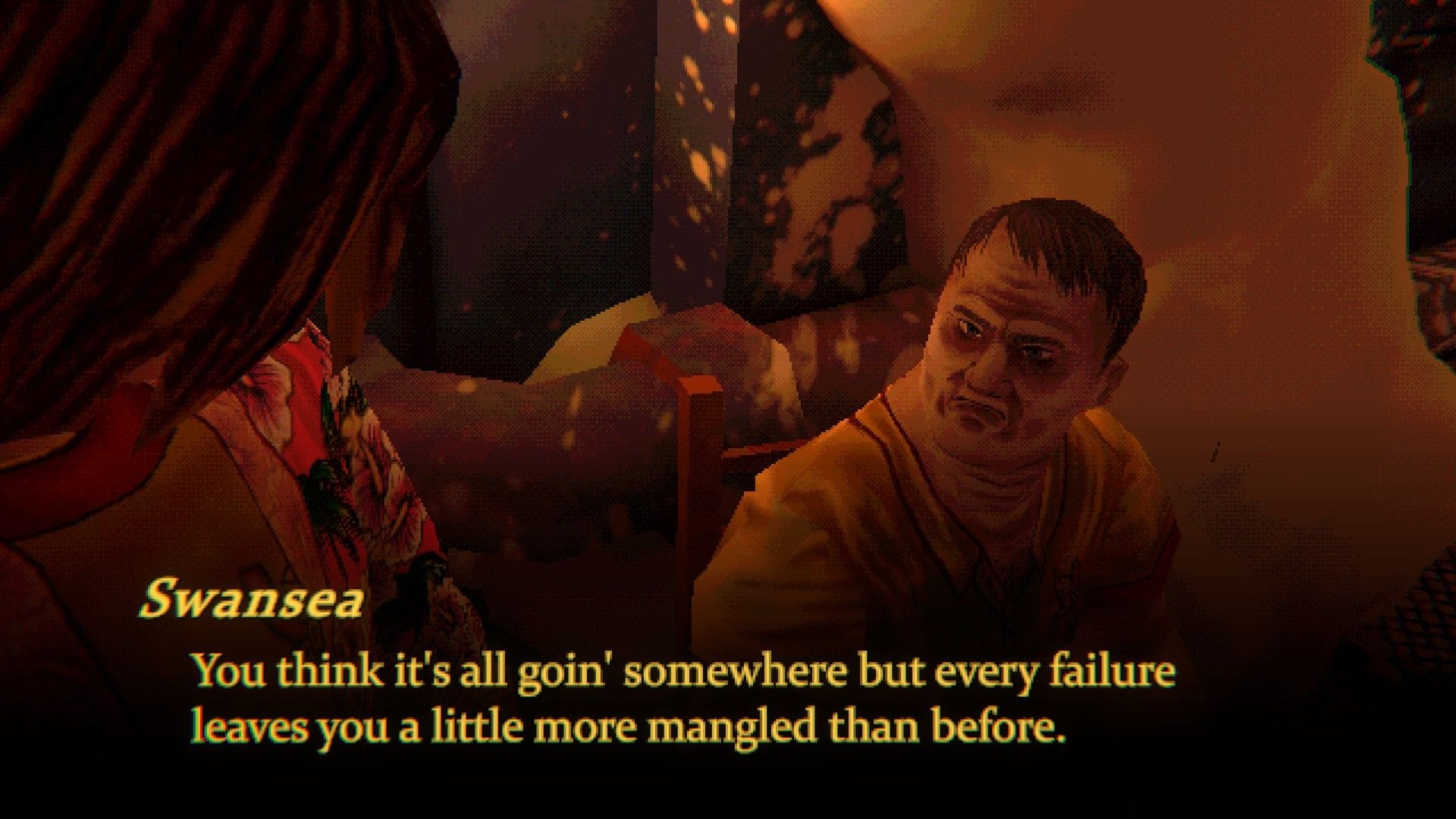
"You think it's all goin' somewhere," he says at one point, "but every failure leaves you a little more mangled than before. Older, uglier, meaner. Smarter in a worse way."
Swansea is a man who cracks. It doesn't matter that he has been dry for 15 years. Nothing in his life until now compares to this shitshow. He cracks when the mouthwash comes out. And he cracks again when Daisuke gets untreatably wounded in a stupid accident, choosing in desperation to bury the axe into his intern's head to put the kid out of his misery. Yet he wields the axe, not drunk, but fully clear-minded in his goal. His desire to kill, far from being an extension of his alcoholism, is depicted as a final return to sobriety. And he acknowledges his act as one of intimate regret, the admission of another failure - he is killing a better, kinder man than himself.
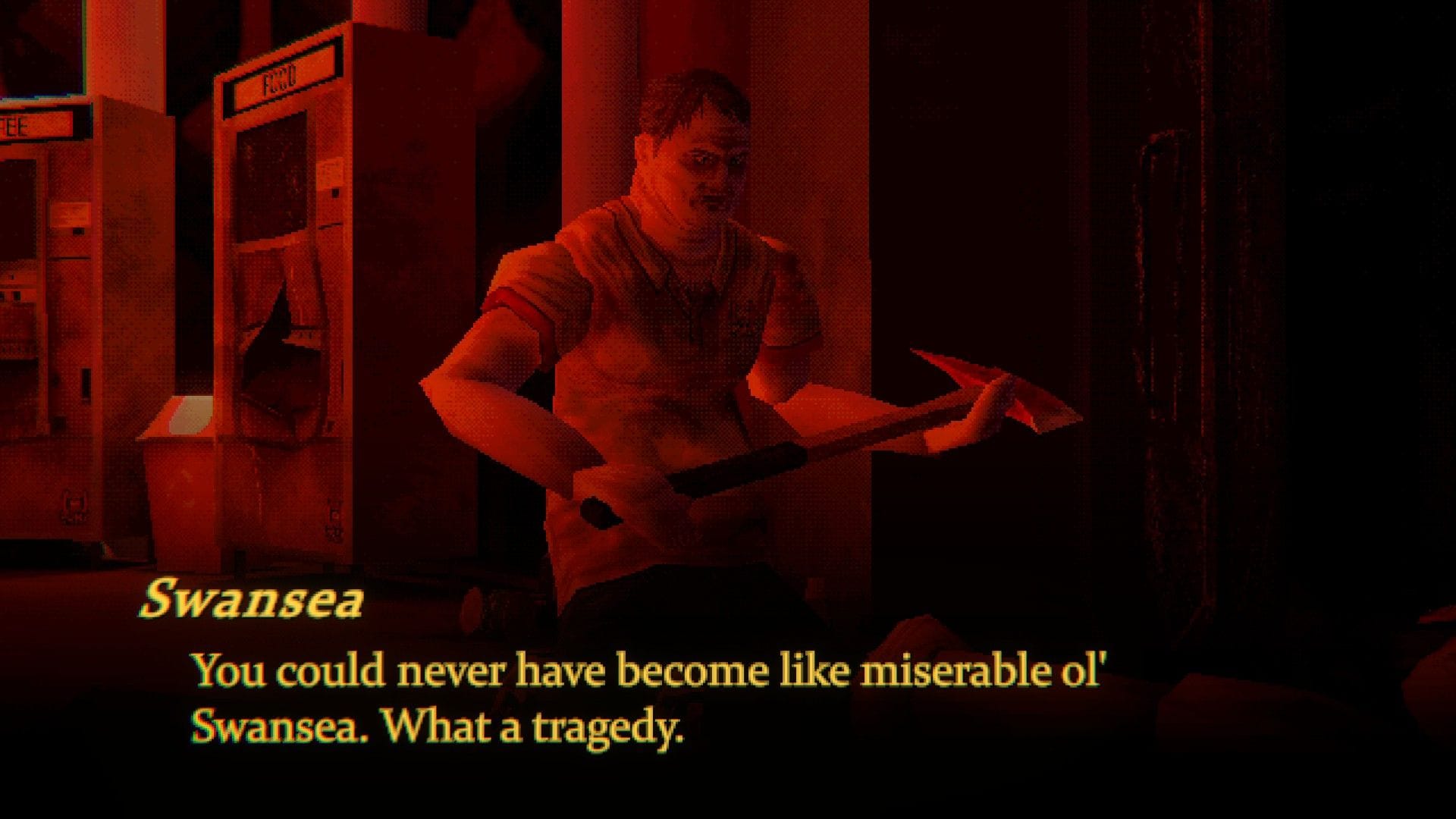
"You could never have become like miserable ol' Swansea," he says. "You coulda taught an old fool like me a lot."
It's this casting off of denial that sets Swansea apart and makes him such a powerful character. When he sits, tied up, facing his own impending death, he does so with a clarity, honesty, and brutal candidness that only a very specific flow-state-triggering amount of alcoholic mouthwash can possibly induce. He knows who and what he is. He is "takin' inventory".
Depictions of alcoholics in media often focus on the emotion of shame, the self-loathing, the anxiety that fuels the addiction. But Mouthwashing examines the opposite: the freedom, the relief, the manic highs and happiness that - we must admit if we are truthful alcoholics - also exist within our reach at any moment. And that we may spend years pretending didn't happen.
Swansea represents a desperate and - crucially - honest part of the alcoholic's inner voice. Deep inside, we know it causes heartache and ill health, but part of us still longs for that self-destruction, the loose oblivion and liberty from tension and worry that comes with booze in the bloodstream.
As you can maybe tell, this is personal. So forgive me a small aside. In my own past, I wouldn't say I "struggled" with drink. I would say I made a naive pact with drink. I bargained that so long as I only drank after work, from 6pm or so, that I would be okay. It didn't matter that I drank alone. It didn't matter that I drank "only" three to five cans each session, and did so approximately five days out of every week.
All that mattered was that I did my job well. I wasn't like that. I kept the rent coming and my professional life on track and all that was really wrong with me was a feeling of nausea every single morning - which could be anything, right? Who doesn't feel like shit when they wake up?
But there is only so much denial an honest pisshead can endure. At some point, the worm of reality slithers in and you know you've got a problem. For me, that understanding lay buried inside for years. I refused to acknowledge it, I tried not to think about it. I was afraid of becoming one of those boring dry bastards. I didn't want to give up the crutch I had leaned on all my adult life, the superpower substance that allowed me to talk to strangers or speak my mind without fear. That wet worm of truth only slithered to the surface one random night in 2018 when I watched a documentary about four alcoholics on a whim. For Swansea it came as the glow of a street light - "500 Gigawatts of the power of God."
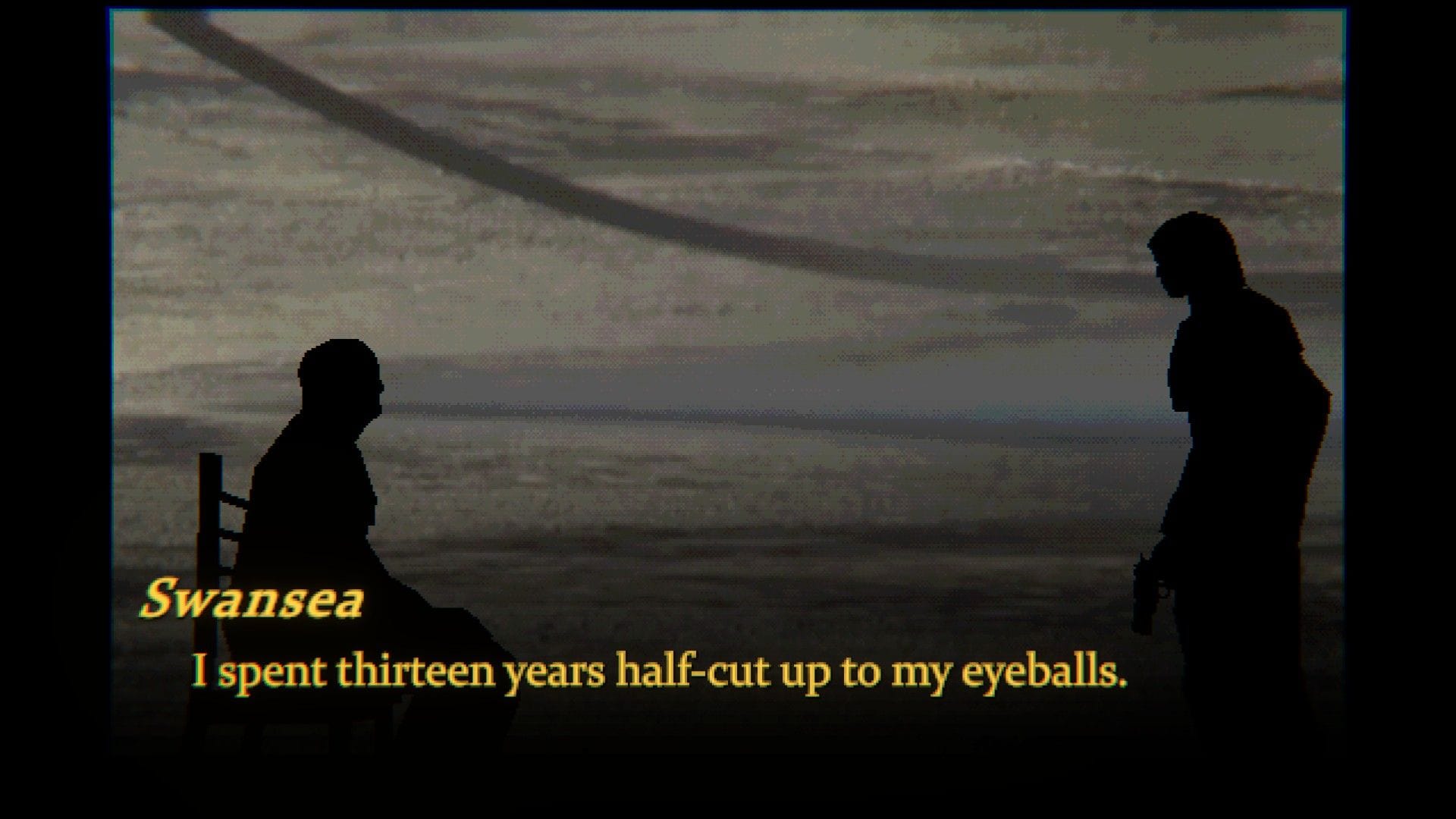
To overcome addiction you have to first admit you're an addict. This admission means shooting down the mental gymnast of your brain like a sick pigeon who has been in the air far too long. Addicts are intimate with denial, and a practiced alco will see the truth of themselves clearly even through a plastic bottle of minty fresh mouthwash. This is what makes Swansea the loudest voice that confronts Jimmy. For the deluded co-pilot, the engineer is the most aggressive threat, the most dangerous man to leave alive. Swansea represents a radical form of self-knowing that Jimmy cannot allow to exist.
I'm not giving unhealthy drinkers permission to pour a rum 'n' coke in celebration of honest drunkery, don't do that. I'm only admiring the strength of a character like Swansea, who will not conform to Phil Mitchell stereotypes but who exists as his own fearfully honest worst enemy, and takes ultimate ownership of all his "wasted" days, defiantly reframing them as a happy peak from which he never recovered. He can do this at the same time as expressing regret about his failure to protect Daisuke, and his disgust at Jimmy for being unable or unwilling to look his own crimes in the eye.
This is why I'm still writing about Mouthwashing more than a year after its appearance (it's also why I nominated Swansea as my "sponsor" in our special wellness-themed episode of Total Playtime). Most games struggle just to deliver a single strong character. Mouthwashing is a monumental showoff, launching five intricately conceived and doomed persons into space upon the same banjaxed vessel. Out of them all, Swansea is my favourite. He knows how bad things have got, and he won't lie about it, to himself or anyone else.





Comments ()