
The Archives of Trevosa are a good place to spend a few hours
The number of games is now so high, and the usefulness of search tools so low, that it’s no longer possible to conduct casual historical research. Any attempt to track the genesis of any given genre will yield only a breezy AI summary of a YouTube video on the topic that will on closer inspection have been created by somebody with an unsettling interest in phrenology, or a series of insipid best-of articles crafted exclusively to chase the final dregs of search traffic, grimly reproducing the same tired list of titles while reciting Key Search Terms like acolytes completing their rituals even as the meteorite breaks through the upper atmosphere.
I am therefore forced to rely on my own very limited experience and say that Her Story pioneered the current trend in deduction games, and The Return of the Obra Dinn set the high water mark. I nevertheless cherish The Roottrees Are Dead, which opted for a clumsy 1990s desktop as its means of discovery, a method I would still consider perfect for the form: a mix of conceptually omniscient but practically limited that’s entirely period-correct.
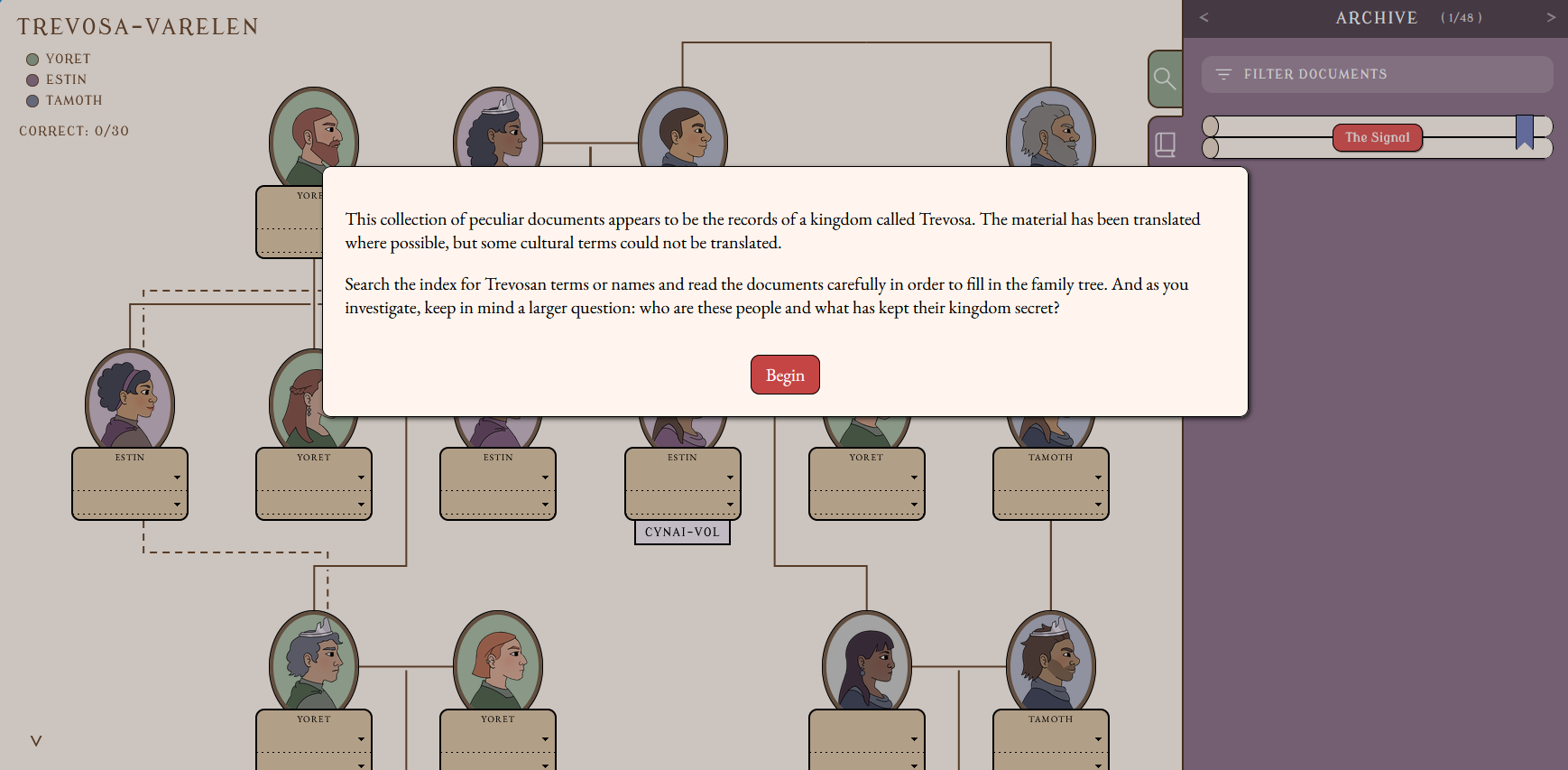
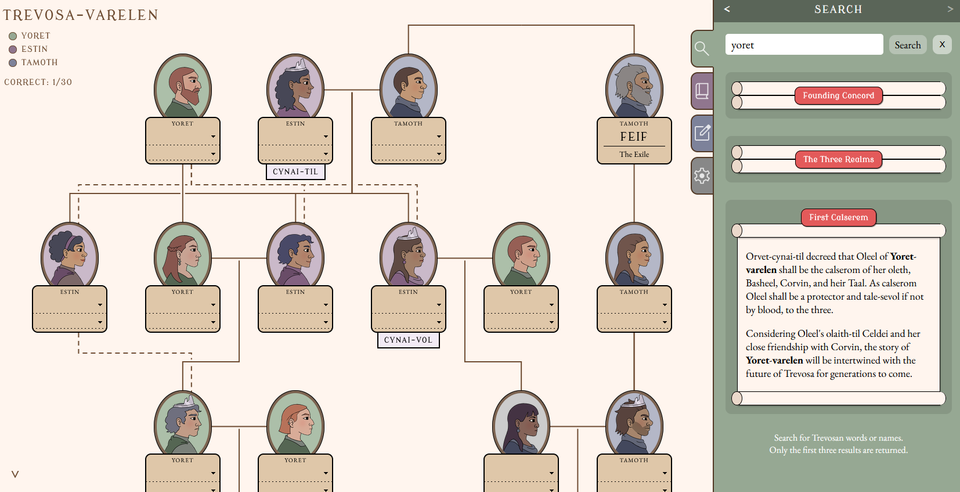
Now there is The Archives of Trevosa, which was apparently born of a game jam and now has a proper Steam publishing deal, although it remains entirely free to play on Itch. Like Roottrees, the goal is to fill out a multigenerational family tree, although in this case the tree itself is already present and you have to assign the name and title to each.
These may be ascertained by picking through sundry historical records like speeches, notes, and courtly proclamations, and searching the names or Trevosan phrases found within. It’s a medieval version of Roottree’s 90s internet, basically, with the chief deviation being the aforementioned phrases that require a stretch of dogged determination to translate. Eventually I was able to work out the terms for “daughter,” “father” and “wedding,” which enabled me to plug the gaps left by just searching the names.
Like Obra Dinn, getting three entries right locks them in, a feature which I found myself abusing by A/B testing some of the titles I was less sure of until they clicked in, but the colour-coded headshots showing each family lineage made things fairly easy and it was a soothing deductive distraction that accidentally soaked up three hours of my life.
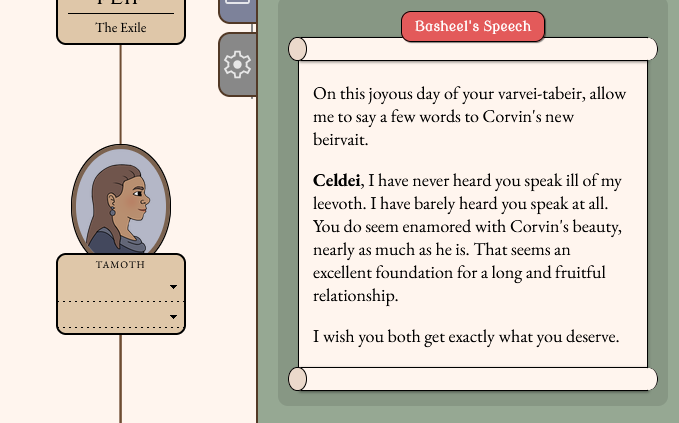
I hope the Steam version expands on this, unless it’s planning on pocket-money pricing. It’s a little bit too simple, and there’s room to add a lot more in the way of narrative justification and narrative to uncover. Ruling dynasties are always a boiling mass of scandal, adultery and gossip, inconsistently recorded in surviving documentation; burying some juicer threads in a more plausible interface – even if it’s just “you can only get three files from the library at once” – would scale this up nicely.
I am uncomfortably aware that I’m just experiencing, and requesting more of, a game that is functionally a reproduction of another, which is not the act of the discerning critic. But that’s how genres are born, isn’t it, and at least I’m politely requesting More Games Like Obra Dinn rather than slopping out an article with that as the headline.



Comments ()