
The Reviewer's Guide To Game Reviewers
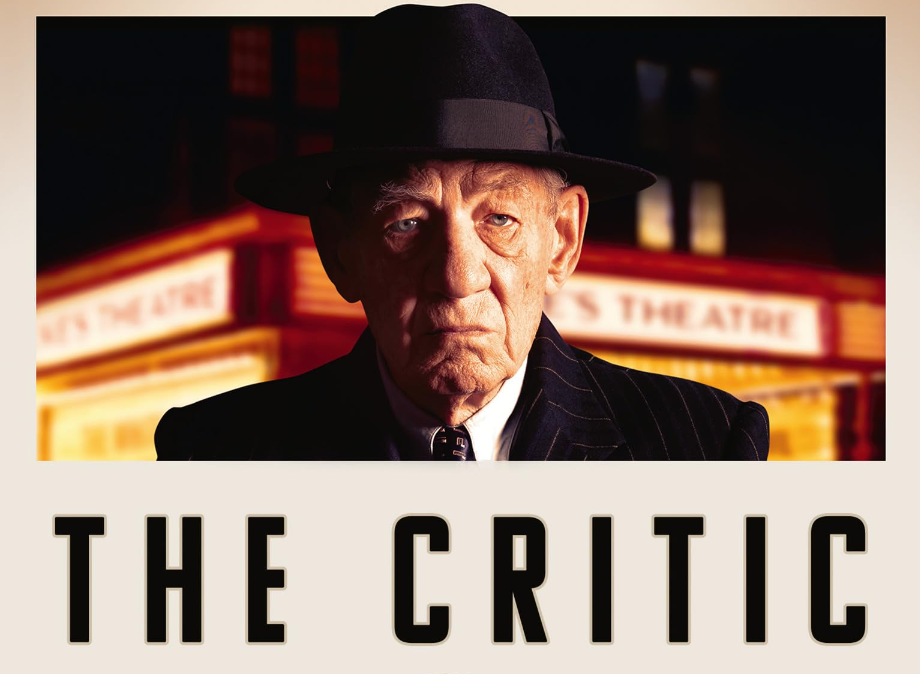
This week Larian boss Swen Vincke, a man never short of an opinion, donned the cursed sash of Twitter Main Character with the suggestion that games critics should be subject to their own Metactritic-style judgement, just to see how they like it.
“It’s easy to destroy things, it’s a lot harder to build them," he wrote on X, a platform I’m not going to link to because I don’t want to expose you to all the horrifying footage it contains. "The best critics understand this. Even when they’re being critical, they do their best not to be hurtful.”

“Sometimes I think it'd be a good idea for critics to be scored, Metacritic-style, based on how others evaluate their criticism. I like to imagine it would encourage a bit more restraint. The harsh words do real damage. You shouldn't have to grow callus on your soul just because you want to publish something.” He subsequently deleted much of the thread, correctly stating it was being taken out of context, although Edwin has preserved it over on RPS.
The idea was roundly slated for overlooking the fact that publishing anything, for any audience, opens one up to criticism, and that is as true for writing about videogames as it is about making them. I suspect that game devs feel the sting more acutely because their products take years to create and the barbs are rarer and more painful; those who create #content on the internet get their death threats daily rather than aligned to a release calendar. I agree with Vincke’s assertion that reviews should not take aim at developers personally, but the fatal error was, as ever, to post on social media in general and Twitter specifically.
Still, too late now. Let us engage with this at face value: how should we review game critics? Allow us to propose a reviewer’s guide of the sort that used to grace the reviews intro page in the magazines of old, by which game reviews are elevated from a mere personal opinion to the rigorously defined metrics of science.
Objectivity (score out of 10)
Table stakes: how close is the reviewer to the game, developer or publisher? Score from 1-10, where 1 is “directly employed by firm associated with game’s creation” and 10 is “never attends industry events, ignores PRs, only receives review code via dead letter box”.
Capability (score out of 10)
Score from 1 (somehow holds controller incorrectly; dies repeatedly in tutorials) to 10 (tediously hyper-competent to the degree that nobody in their professional or personal circles will play games with them any more).
Wordplay (score out of 10)
Are they rolling out a mind-numbing collection of cliches that makes ChatGPT look like Shakespeare, or crafting transcendental wordplay that makes even hardened reaction-video YouTubers break down in tears? Score 10 for anything that gets cited in the New Yorker, and 0 for anything that directly quotes the PR campaign.
Pretension (score out of 10)
Are they drawing comparisons to TikTok trends and Bluey, or Japanese cinema or French literature? Any reviewer that submits their review as beat poetry receives a 10 out of 10, in lieu of a savage beating.
Gratuitous self-insertion (score out of 10)
Score 0 for total absence of personal insight and use of third-person throughout, and steadily more for extended asides about their garden, family or upbringing. Note that top marks should only be granted when the first-person insights routinely bear absolutely no direct relevance to the game or the review.
Credulousness (score out of 10)
10 out of 10 for parroting the “core gameplay pillars” cited throughout the PR campaign, or pronouncing themselves amazed that anybody could even think of making a game that uses cel-shaded graphics. 5 out of 10 for at least referencing obvious shortcomings, and 0 for correctly identifying the individual features that were cut in the QA stage.
Visuals (score out of 10)
They judge the games for it, so it’s only fair. Are we talking anime PFP or nicely shot photograph? Is that camera HD? Is there a ringlight? Does their Vtuber avatar or background image show signs of poorly obscured watermarks? Note that ostentatious props, like bow-ties or top-hats, can still be marked down as cringe.
Sponsor integration (score out of 10)
In text, are the Logitech-provided headphones clumsily praised during the description of the game’s audio, or discreetly mentioned in the conclusion? In video, is it a jump cut to Hello Fresh plug clearly filmed months earlier with a different haircut, or merely an artfully placed coffee mug on their desk or Displate poster in the background? Rank your critic accordingly, with an automatic 0 for somebody wearing merch for the game they’re reviewing.
Music (score out of 10)
Look, you can’t do this without rating music or everybody will think we aren’t taking games reviewers seriously.





Comments ()