
Three game devs climb a mountain
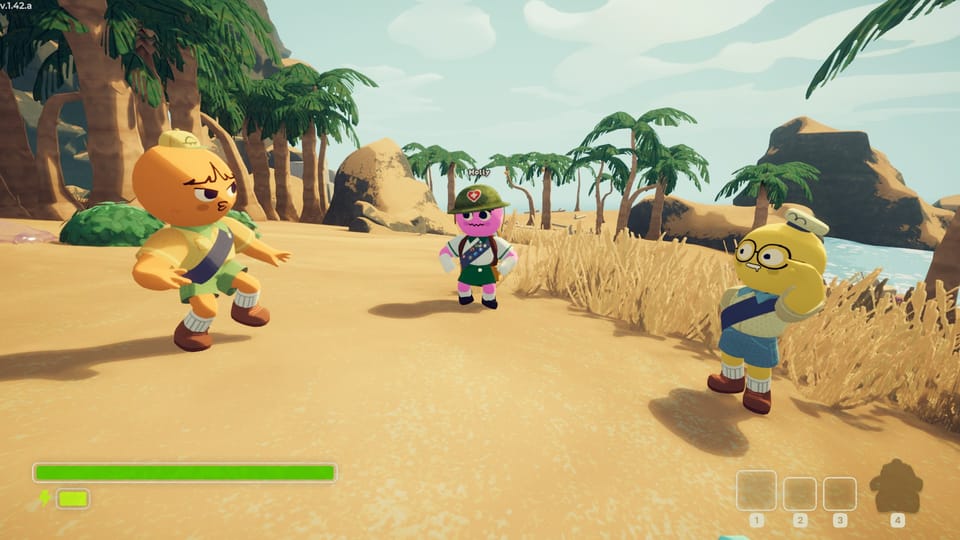
"So, I assume the task is to climb that giant peak up there."
I look at the mountain and tell Bennett Foddy he is correct. The creator of Getting Over It and co-developer of Baby Steps has agreed to my unusual journalistic request. He must conquer a mountain in co-op climbing game Peak and answer my questions while doing it. And he won't be ascending alone. With us on the beach at the foot of this mountain are two other hardened developers of climbing games. Holly Jencka, lead developer of urban clambering sim White Knuckle. And Emeric Thoa, creative director of sci-fi alpine sim Cairn. They are currently rummaging through suitcases and collecting coconuts. I don't say it out loud but I have a strong feeling none of them will survive.
After messing about on the beach for a few minutes, I tell the trio they're "on their own". I'll be following, but mostly hanging back and asking questions. I want to see how three developers of climbing games will manage when faced with a mountain not of their own making. Maybe we'll uncover gems of game design wisdom along the way. Maybe we'll just plummet to our doom.
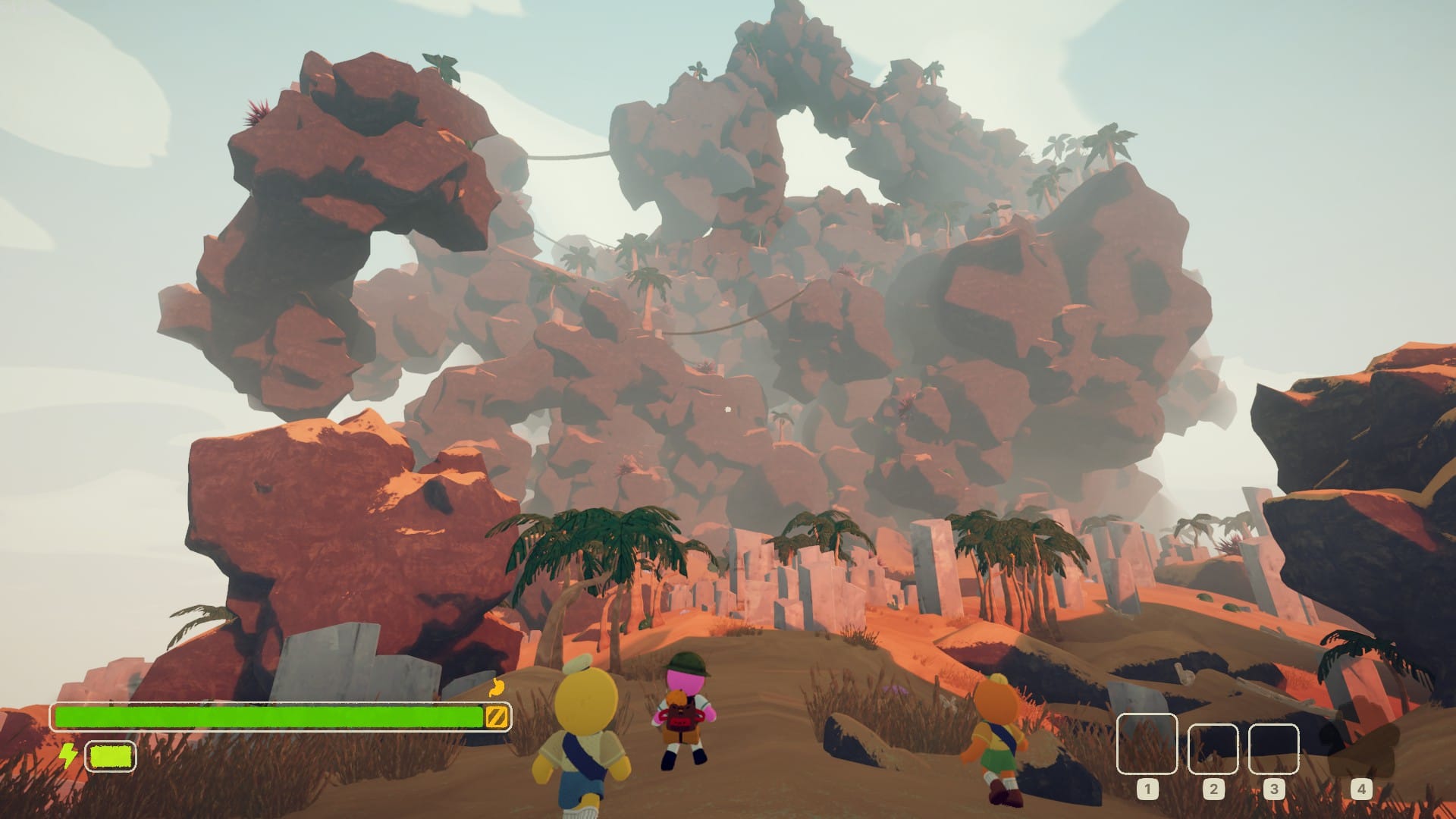
"I mean, you just go towards the big tall thing," says Holly, instantly establishing herself as the expedition's pointwoman and racing off uphill. The beauty of any mountain in videogames, she says, is that your objective becomes big, obvious, self-explanatory.
"I mean, just like in real life, right? You see a mountain, this obstacle in your way. And knowing that you can surmount it, that you can get to the top, is an alluring prospect, right? It seems very natural to be like: 'Oh, I see I see a tall thing. I want to get to the top of that.'"
"It gives you the scope of what you're about to do immediately," says Bennett, as we leap between basalt columns in an effort to get off the beach. "You at least have a sense of how big of a task you're about to take on."
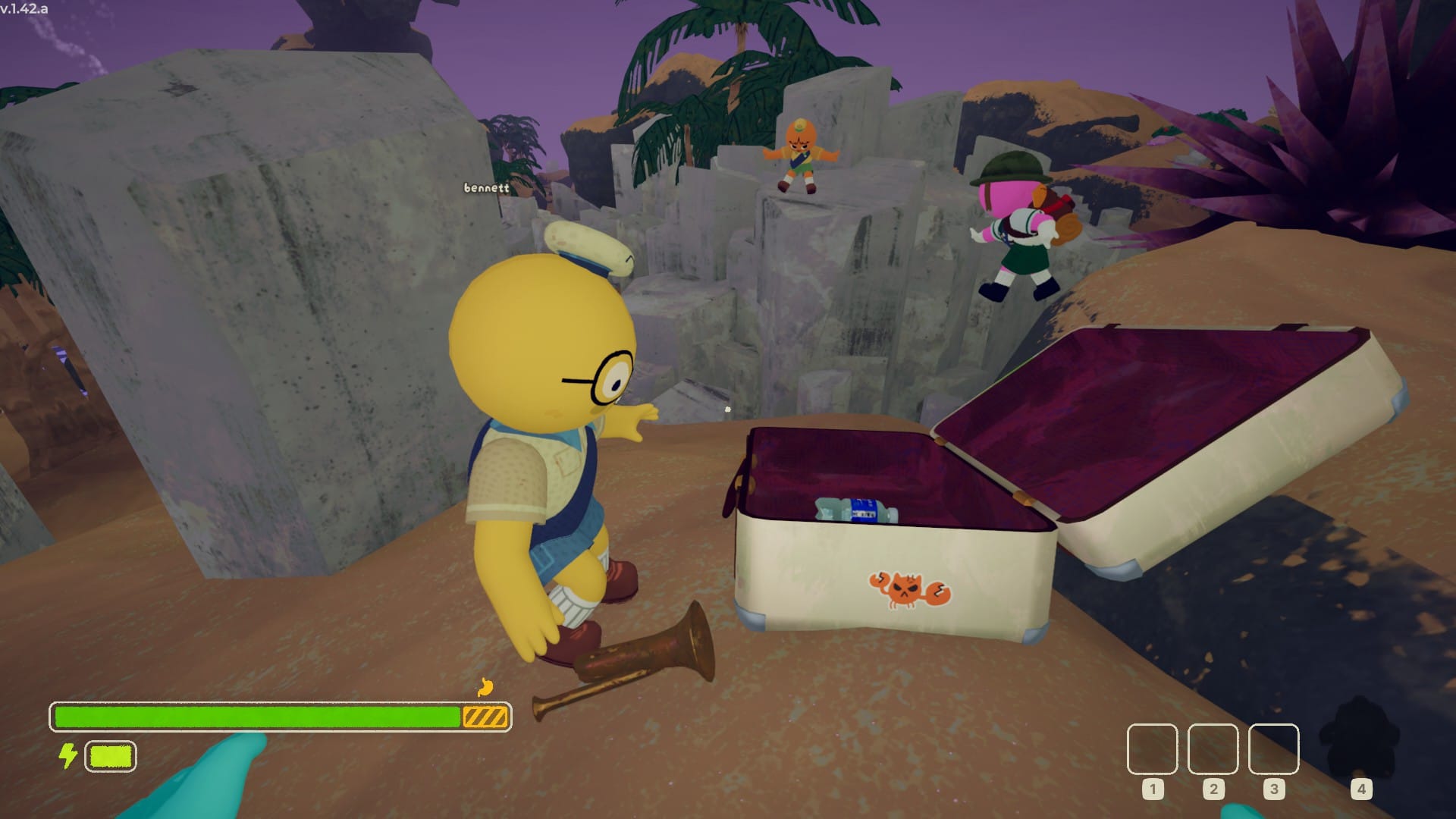
On the next plateau, Bennett finds a suitcase - one of Peak's scattered treasure troves of useable items and food - and starts rummaging through it. Emeric is still clambering over the stone columns as he chats. He says a simple climbing game avoids any disconnection you can feel with a character in story-driven games.
"As opposed to, for example, you're playing this character and his daughter has been killed and you have to avenge yourself," he says, "but it's not really your daughter, so you don't really care. Here, you just have to climb the mountain and so does the character. It resonates more to me."
As Emeric speaks, Bennett is overtaken by curiosity at what he's found. He fires a rope harpoon into an outcrop of the mountain straight above us. The rope hangs there, uselessly, far out of reach. Everyone looks at it for a moment and moves on. I'm sure we'll be fine without it.
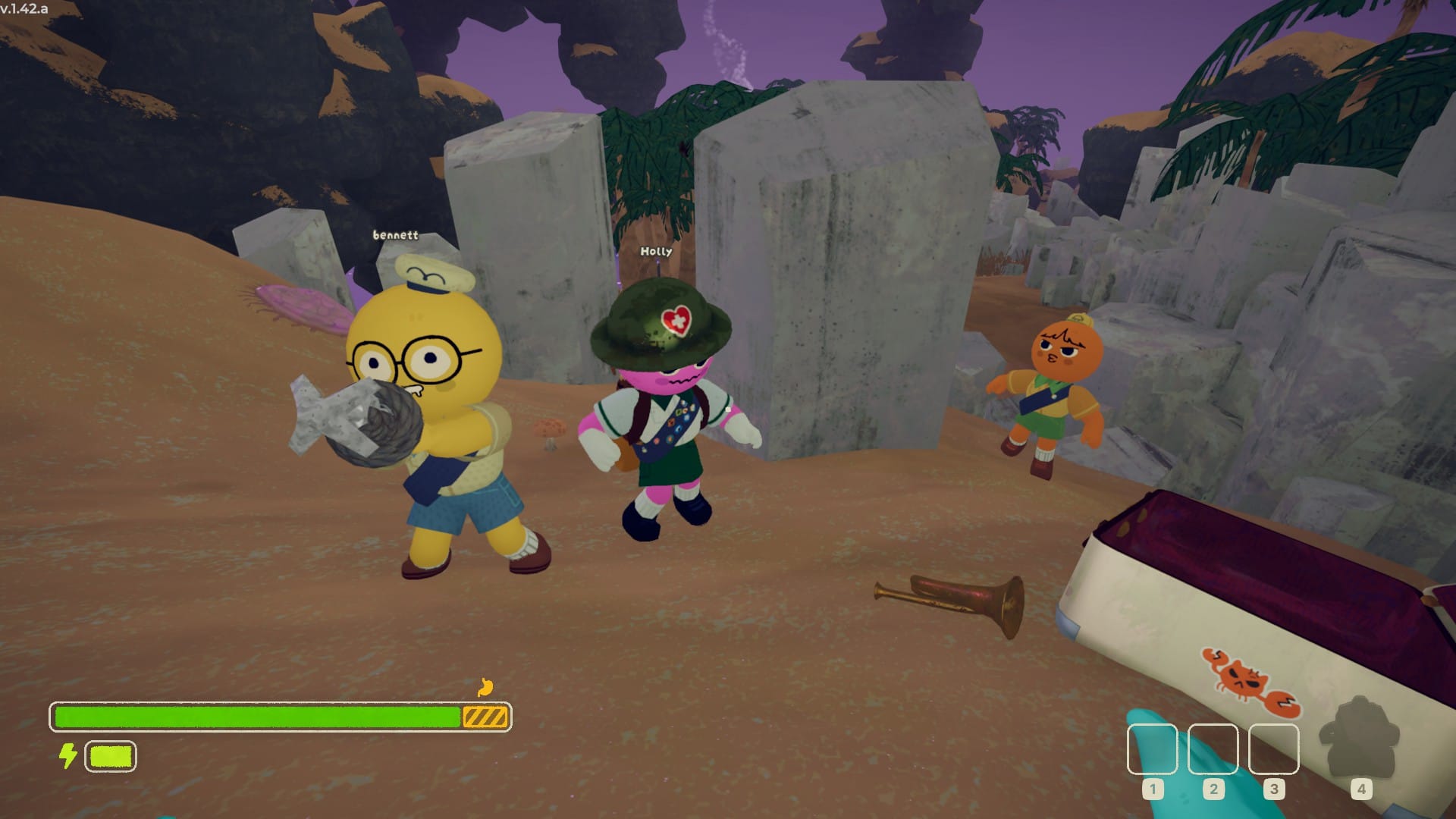
"There's a thing that I really love," says Bennett, "which is that moment when you're some of the way up a mountain in these games - or I guess in real life or on a hike - where you look back at what you did and you can see the full visual record of how much work you did, just by looking downhill. You can feel a little impressed at yourself... just for a second. And you get that for free. Like, I already am getting it in this game just looking downhill."
I look back over the progress the group has made. We are a mere third of the way up the baby mountain of the game's first area. Night has already fallen on the island. Bennett is not wrong - progress is clear and immediate in Peak. So why does part of me worry this little vista is not enough? Why am I still anxious we won't reach the tip of even our first challenge?
Oh, it's probably the cloud of icy fog rising from below that'll freeze my interview subjects to death if they don't climb quick enough.
We're posting a new part of this series every day until the gang reach the second summit or die horribly, whichever comes first. Here's part two. Subscribe for reminders, or like, just remember to come back.

Comments ()