Three game devs climb a mountain - part 4
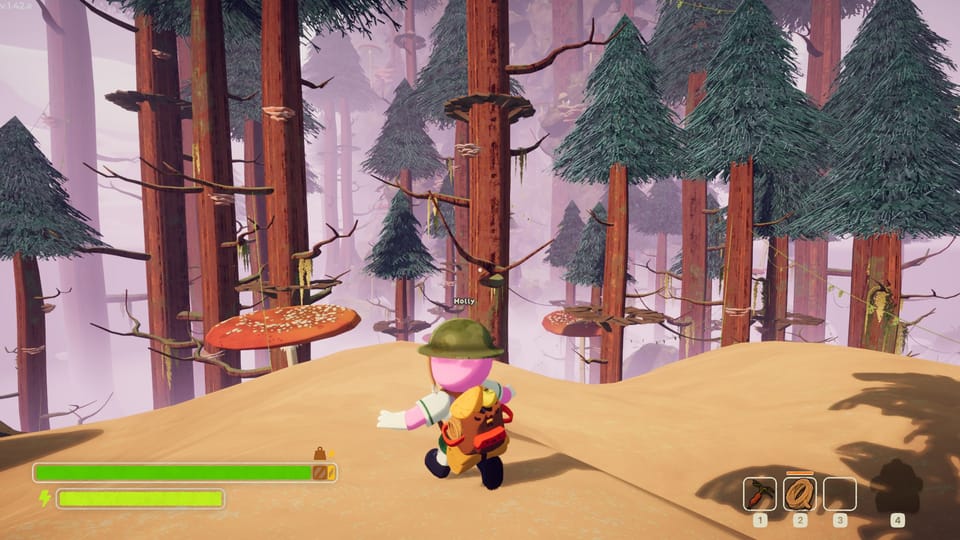
We finally reach the summit of the first mountain. Holly Jencka, Emeric Thoa and I gather by the fire as Bennett Foddy talks about random generation and orthodox versus unorthodox game design. You can tell this man is a professor. I feel like I am getting a university class for less than the thousands of pounds of debt it would otherwise cost. I forcefeed him a roast marshmallow but he keeps talking.
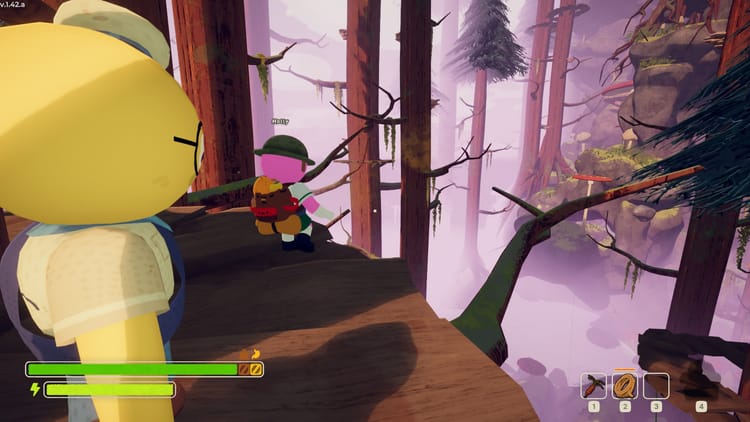
Meanwhile, Holly charges towards the Roots. This is Peak's newest biome, a dense forest of spiders, poisonous mushrooms, exploding spore pods, and other fungal threats. I follow dutifully, asking more questions as random gusts of wind whip through the canopy.
New to this series? Click here
The geometry and layout of every island in Peak is procedurally generated, which means some might be wildly more tough than others. Again, this devotion to randomness is something the three developers haven't necessarily pursued.
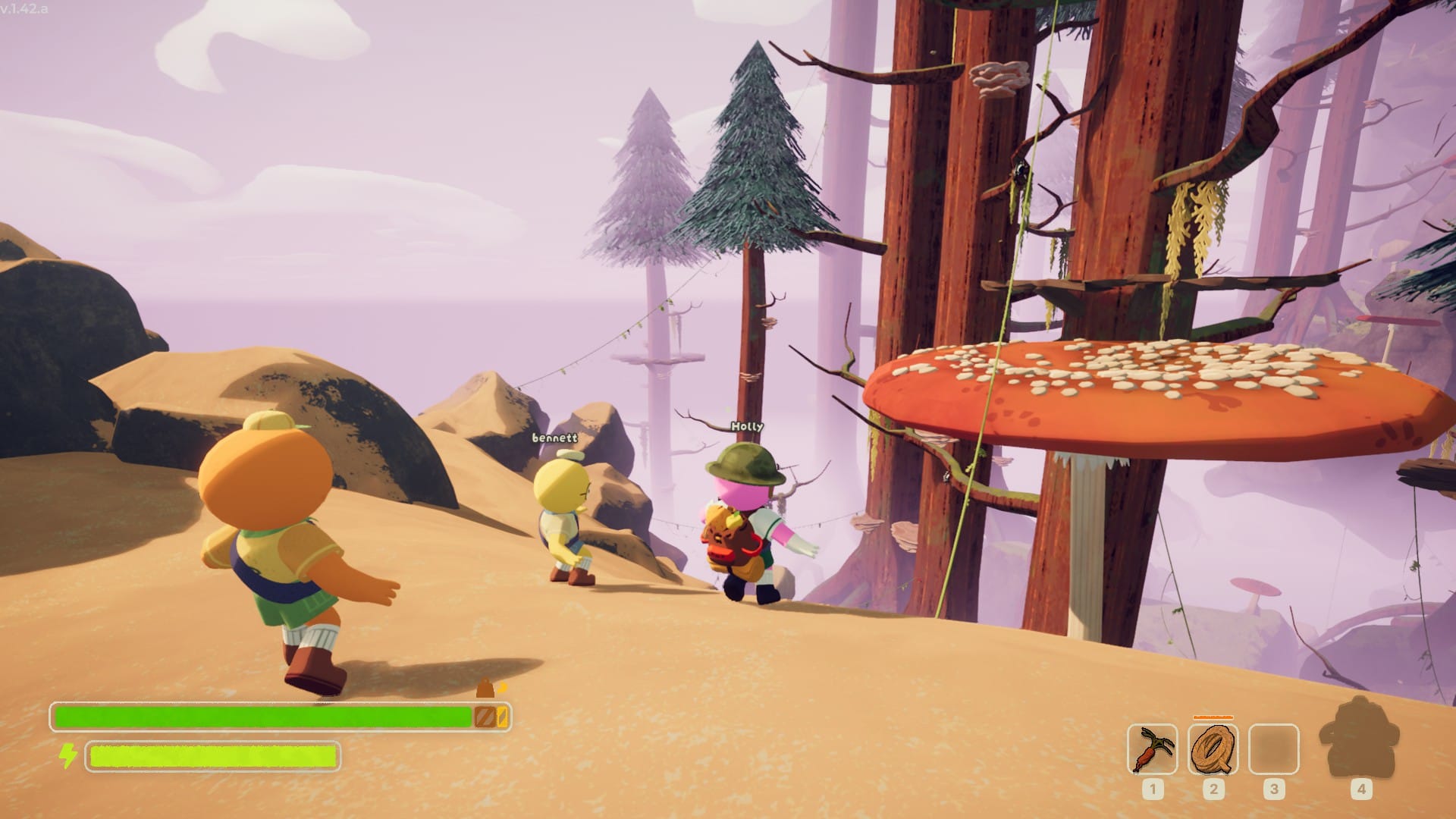
"When we started [with White Knuckle]," says Holly, "we considered: do we want to do fully procedural level generation? But it is really quite difficult. People think procedural generation is an easy way out, and it's not because you have to do so much to make it feel good to play... If you overtune it, it gets boring. And if you undertune it, it can be impossible.
"So with [Peak]... you can end up in impossible situations. But they give you enough tools to kind of get out of it. Whereas White Knuck--"
A spider grabs Holly. It cocoons her in a web and pulls her up a tree. Panic sets in. We hear the clattering of a keyboard being spammed, and the words "oh god" and "oh no". The web breaks and she falls free, mercifully landing on a safe platform, avoiding the huge drop to the forest floor.
"Yeah, that absolutely destroyed my train of thought," she says. "I don't know if coming up here was the right call, gang."
A huge gust of wind blows all the developers off the platform. I look down and ask who has survived.
"We're all right," says Holly.
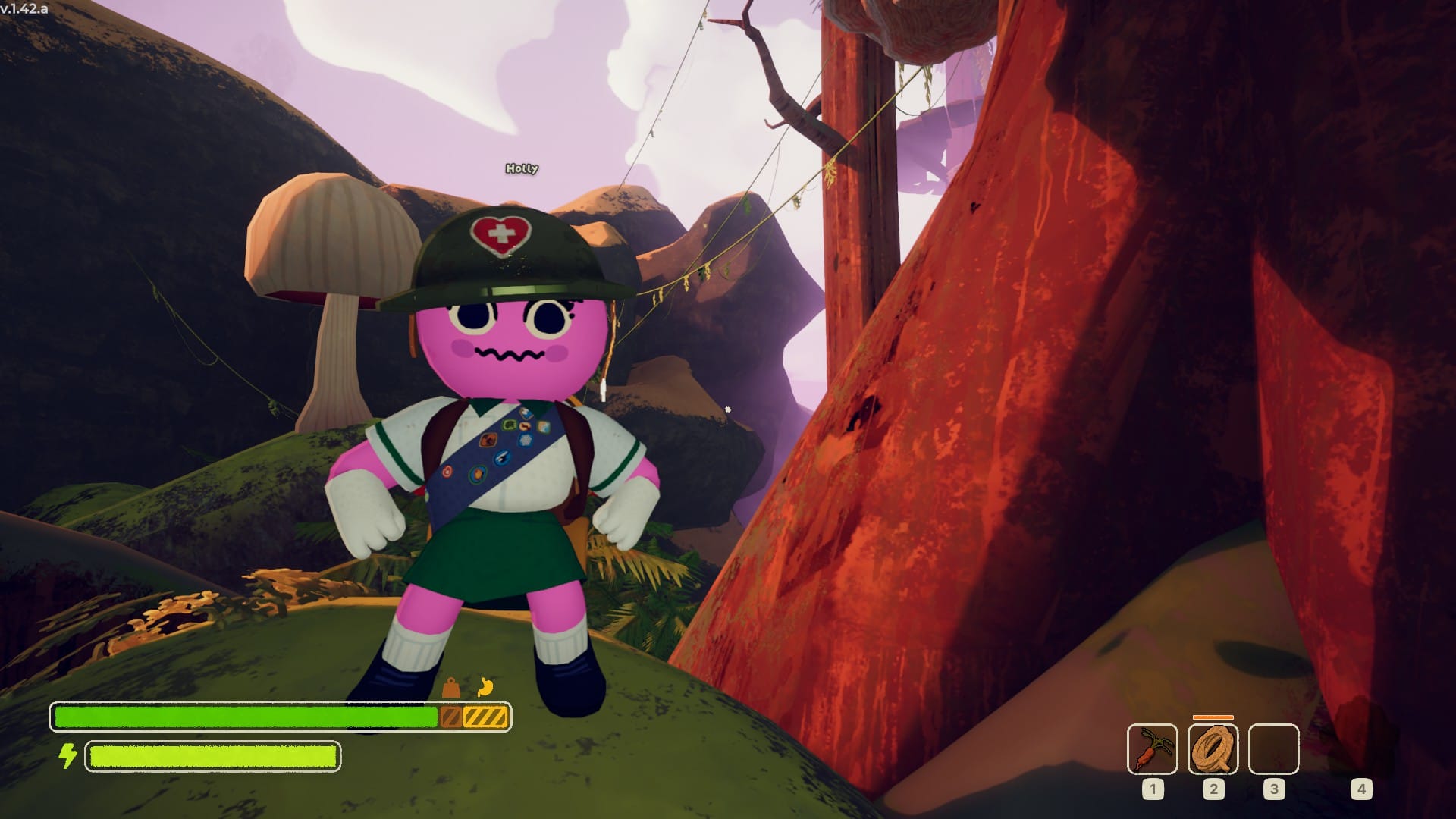
You can grab onto surfaces if you fall in Peak, and slide down safely. So even if you're very low on stamina, you can often avoid a disastrous fall. But now the expedition is at the bottom of the forest, and it's a long way back up.
"I think maybe we scout it on the ground until we find a better way up," says Holly.
I slide down to join them. The resulting journey is a stuttering trek of aborted rock climbs, more gale-force blusters, and many run-ins with biological landmines that erupt in toxic mist. If the gang wants to survive, they're going to need to get a move on. Many climbing games do not wait around for the player to relax. Whether it's with the rising ice fog here in Peak, hunger and thirst in Cairn, or the lethal liquid of White Knuckle, there is often some kind of pressure on the player to go up - or else.
"For Baby Steps," notes Bennett, "it's the only one of these three games that doesn't try to force people up. And the reason was, we were trying to bring out this particular type of play where somebody would find a particular rock that they were interested in, and then would spend like six hours just trying to climb this one rock. It's a different flavour, but it was something that we observed in the playtesters, and we wanted to maximize it.
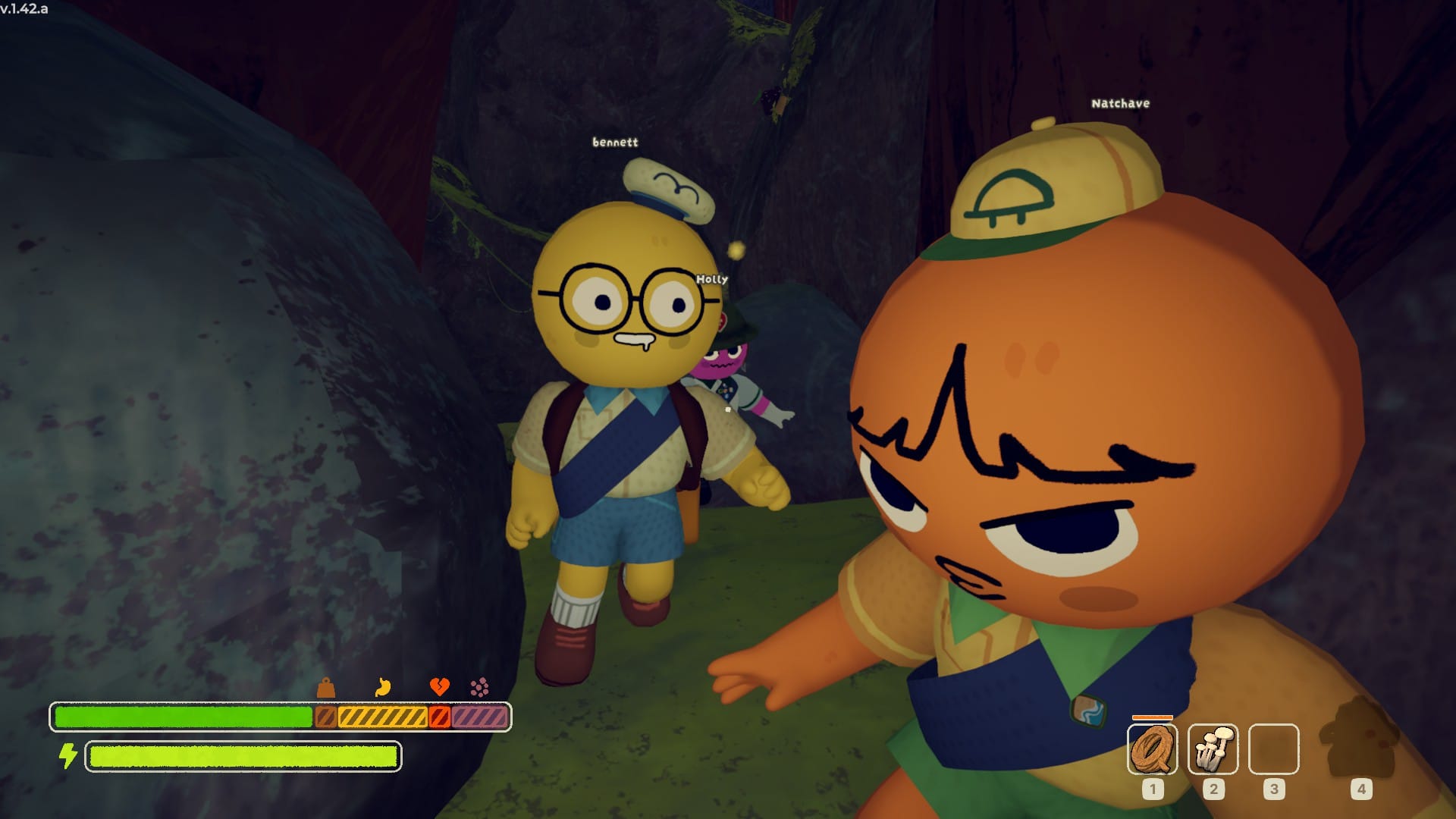
"I guess as a designer, if I have to cop to having a kind of weird designery fetish, it's uh, you know, getting people stuck doing something they didn't think they were going to get stuck doing, you know, that they didn't think they would like, and then they find themselves spending like 6 hours climbing this one rock. I don't know. To me that's a feeling of success as a designer that I am always sort of after. Does that make sense?"
It makes perfect sense, I say. I look around, and realise that Holly and Emeric are both missing.
It's not over yet. Part five is right here.

Comments ()