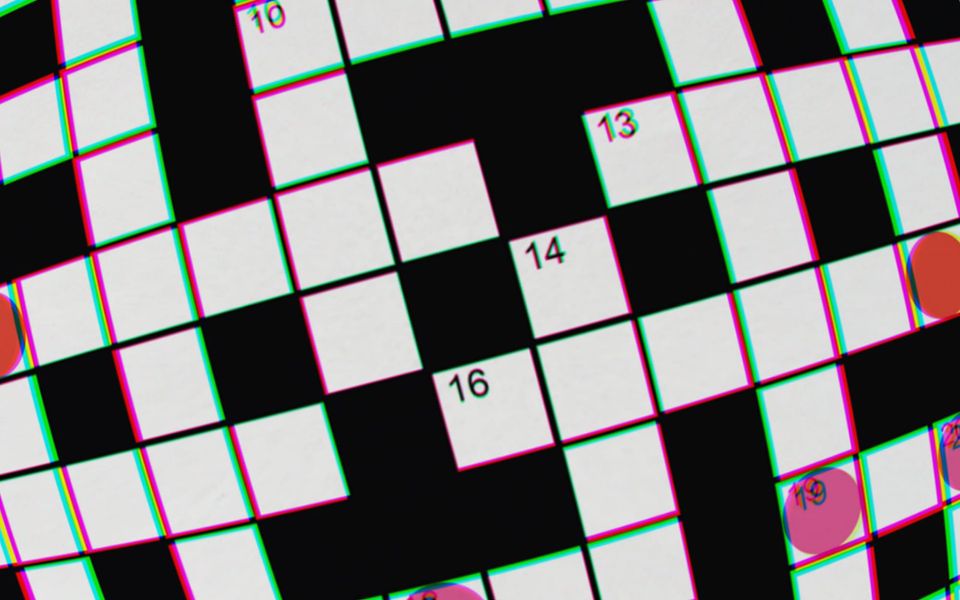
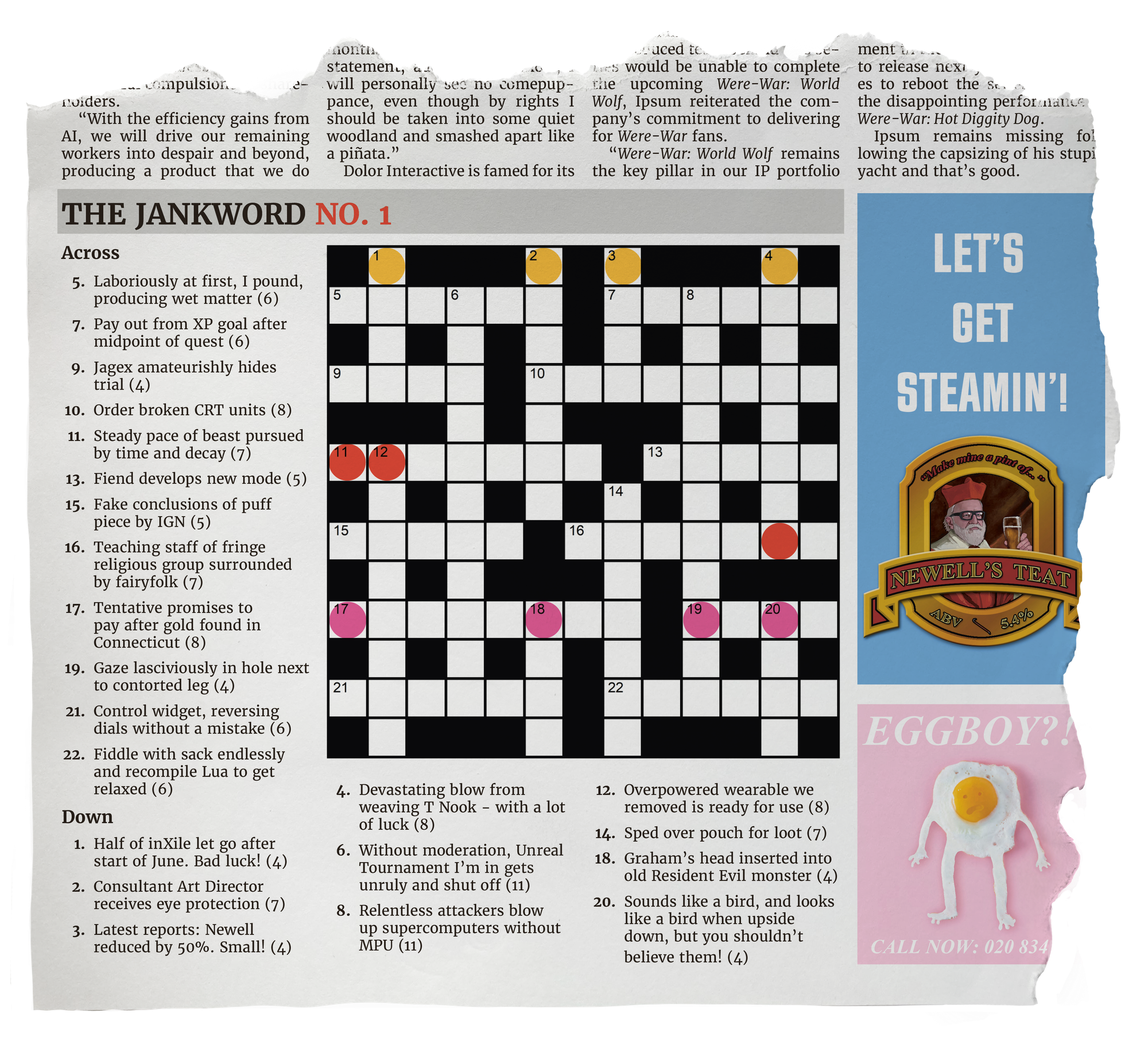
Memorial in Alberta, shortly going awry within yurt I own partly (8)
I'm so sorry. I've done it again.
Feedback on the inaugural Jank cryptic crossword spanned the full range from profound irritation (derogatory) to profound irritation (complimentary), and that's about as good as you can expect from what is, undoubtedly, the most smug of all puzzles. I assume not too many people cancelled their subscriptions, however, as the benevolent creatures who run this ostensibly PC gaming site have commissioned more. It's possible they just see it as a public good that I be kept indoors.
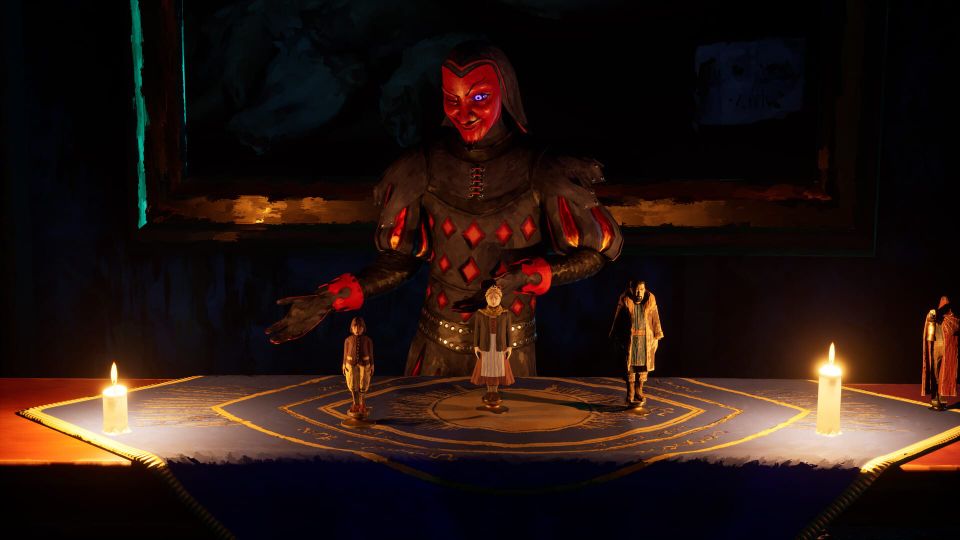
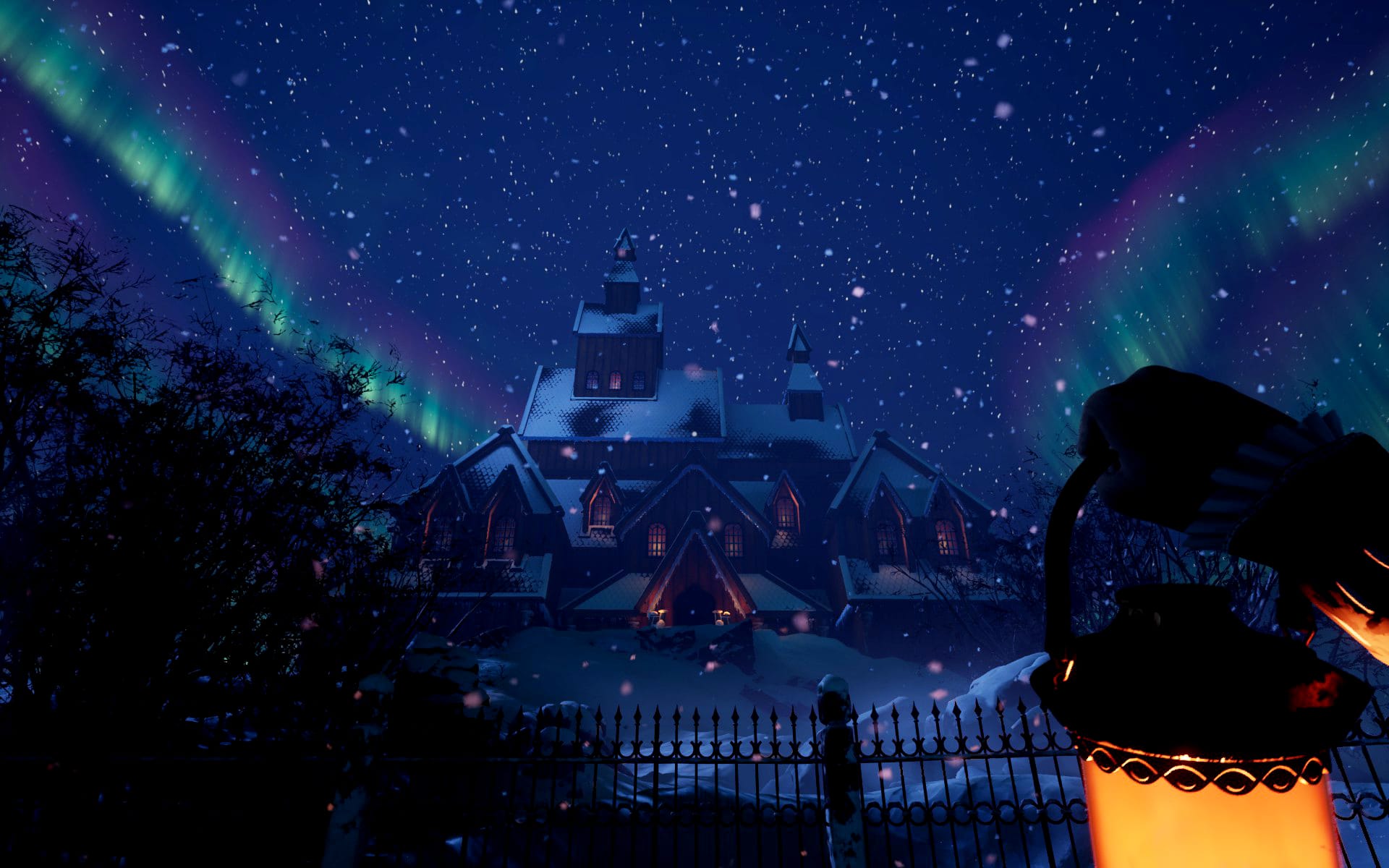
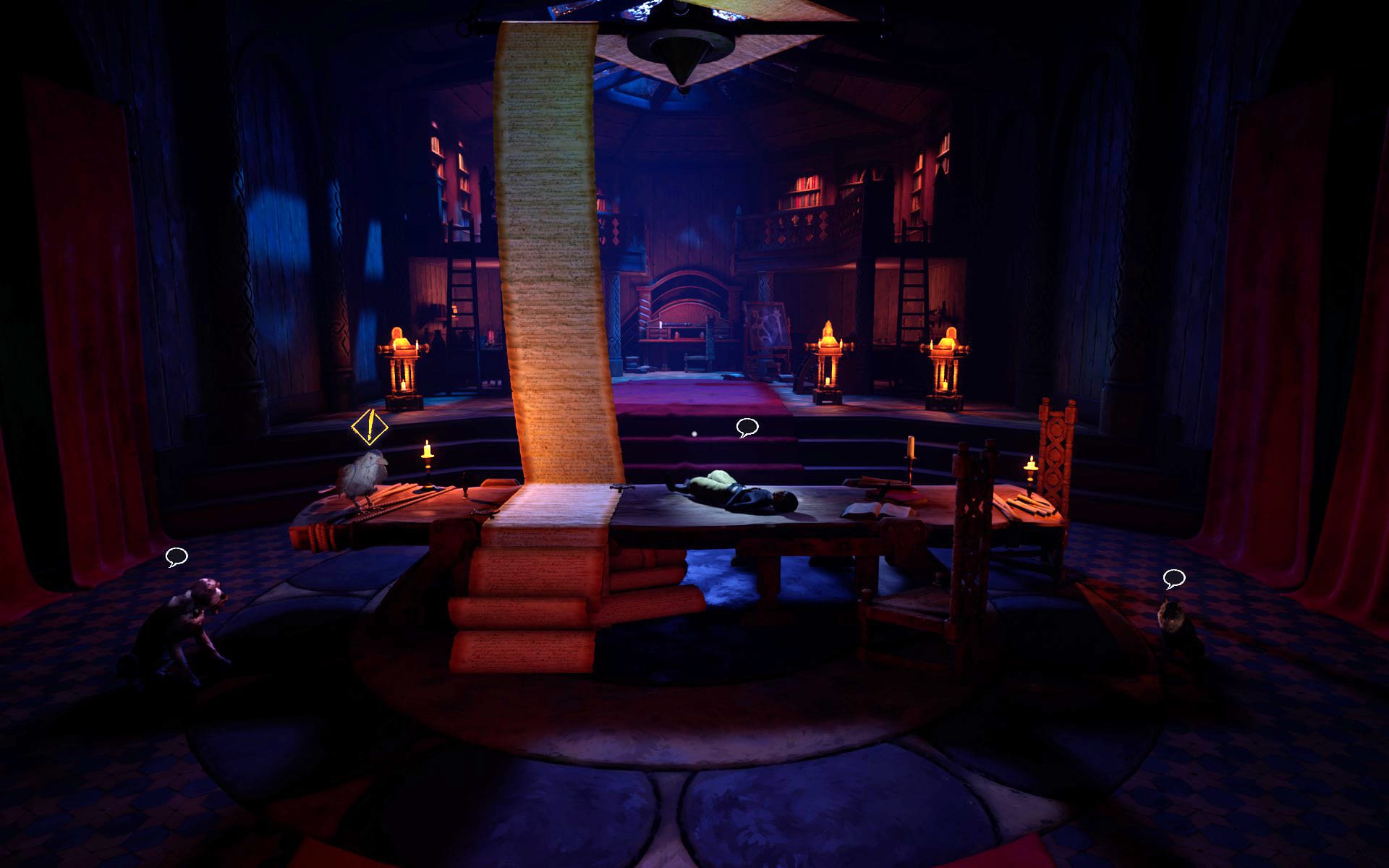
God does not play dice, but the Devil is a big fan of Slay the Spire. Or at least this devil is—a smirk-masked harlequin with one glowing, violet eye and a voice like honeyed hemlock. He has ensnared the soul of your mentor, a 17th-century Danish lawyer, themselves once an apprentice to the infamously doomed Dr Faust (and, as it transpires, a powerful witch). But upon her death, the devil has not received his due. Your mentor has cunningly bound the fate of her soul in reams of metaphysical legalese, ensnaring several generations of her surviving family who have been used, unwittingly, as sin-eaters. It is your job to venture to an isolated mansion in the distant north, whence your mentor's brood has been banished, and play a thorny and demanding deck-building game against a variety of hellspawn—a proxy for wrangling over the spiritual fine-print—hoping to free the family from an infernal fate, wrest your mentor's soul from the demonic One-Eye's grasp, and, perhaps, earn that which she has bequeathed you.
Yet, what is this inheritance you are owed? And how welcome?
This sort of glib summation doesn't do justice to how genuinely sinister and even profound this game actually is. Much of it written in unsparingly period-accurate English that is as playful and dense as the literature of that time, crammed with allusion and double-meanings. I have to admit, as a former medievalist and writer of pseudo-historical early-modern occult fiction, The Killing Stone aims squarely for the bulbous, flashing weak-spot on my exposed arse. I am pathetically bedazzled by the audacity and ambition here, but, exhaustingly clever though this is, I don't think it's simply an exercise in self-regard: the game, appropriately enough, has soul.
If the 17th-century idiom is too much, you can toggle a more modern language version, though I think you lose some of the colour.
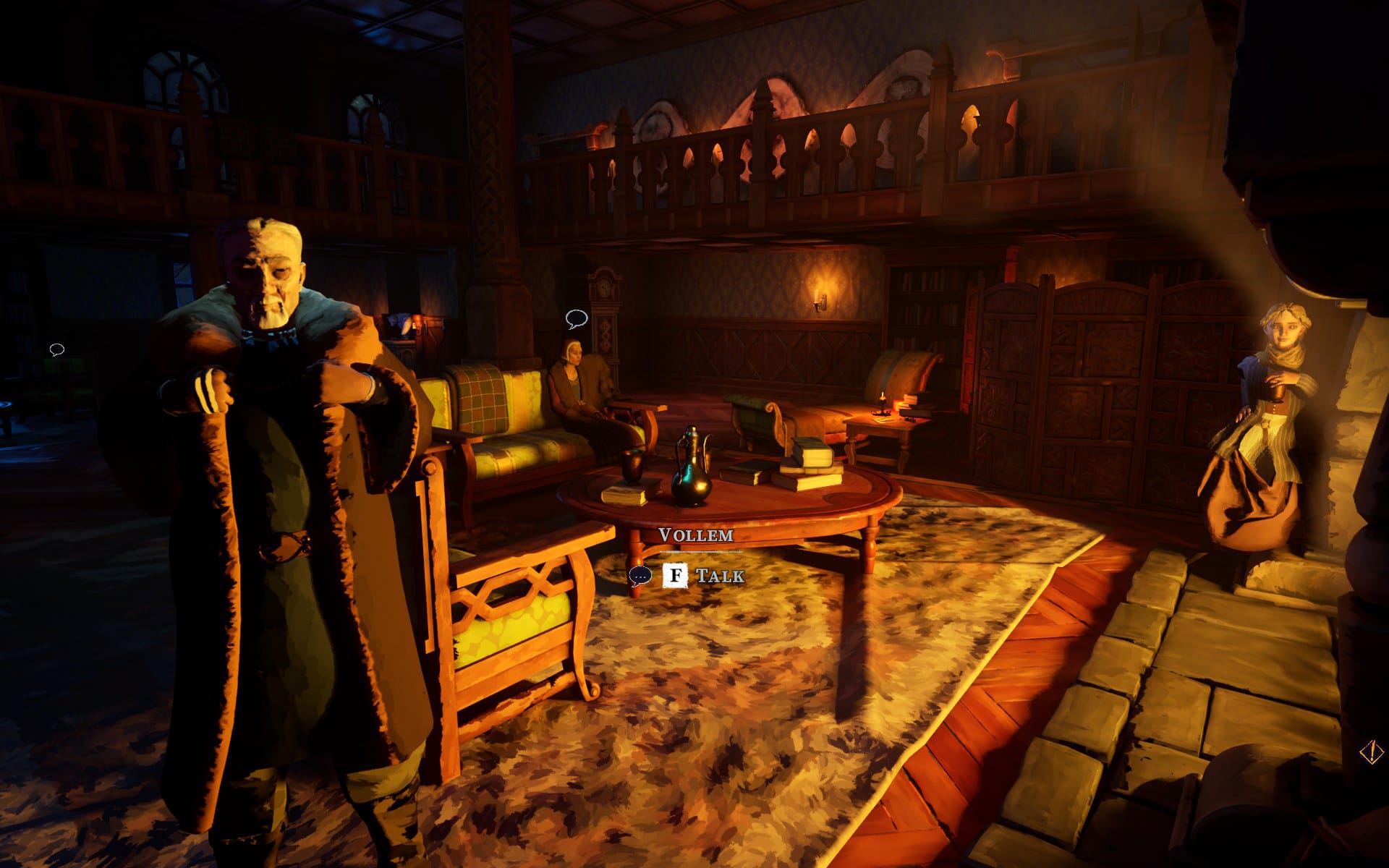
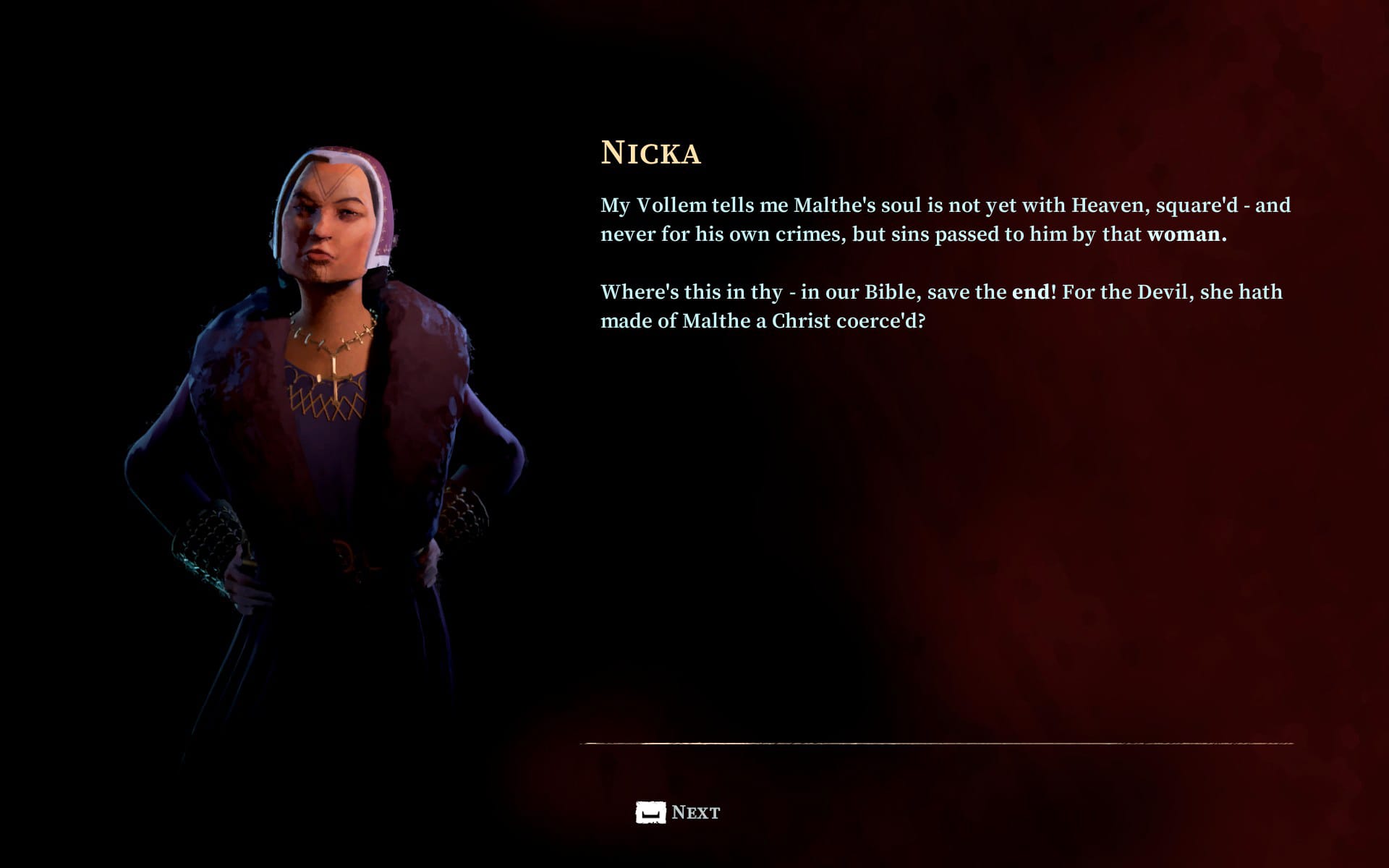
Between card battles, you are free to explore the mansion in first-person, and your dialogues with its benighted inhabitants paint them with complexity and sympathy. These poor saps do not necessarily share your mentor's witchy ways, but have nevertheless been condemned by them twice: first by the God-fearing folk of Denmark, and by their grandmatron herself in a much more grievous way.
Cryptic crosswords are one of my favourite things in this entire world. They are also, I accept, total bullshit. Each clue is not merely a riddle, but (usually) a series of coded instructions on how to assemble the answer from fragments of words within the clue itself, synonyms, anagrams or abbreviations—much of which cannot be intuited, but only known, often drawing on conventions established in previous centuries, by vicars or retired sergeant majors, sometimes about things that no longer exist. Cricketing abbreviations feature very heavily. Allusions to political figures who died in 1967. Military and ecumenical shorthand. To the uninitiated, this is extraordinarily annoying. You are right to be annoyed.
However! Imbibe enough of these awful things, and you begin to speak the language, reading multiple layers of meaning into the clues and holding alternative interpretations in a superposition until some combination of them unlocks the entirety, and an answer emerges. The pleasure is immense.
Are they PC games? Sure, if you're reading this on your PC. To whit, here is the first Jank cryptic crossword, or Jankword, that I am optimistically calling "No. 1". Advice on how to solve such a thing follows below.
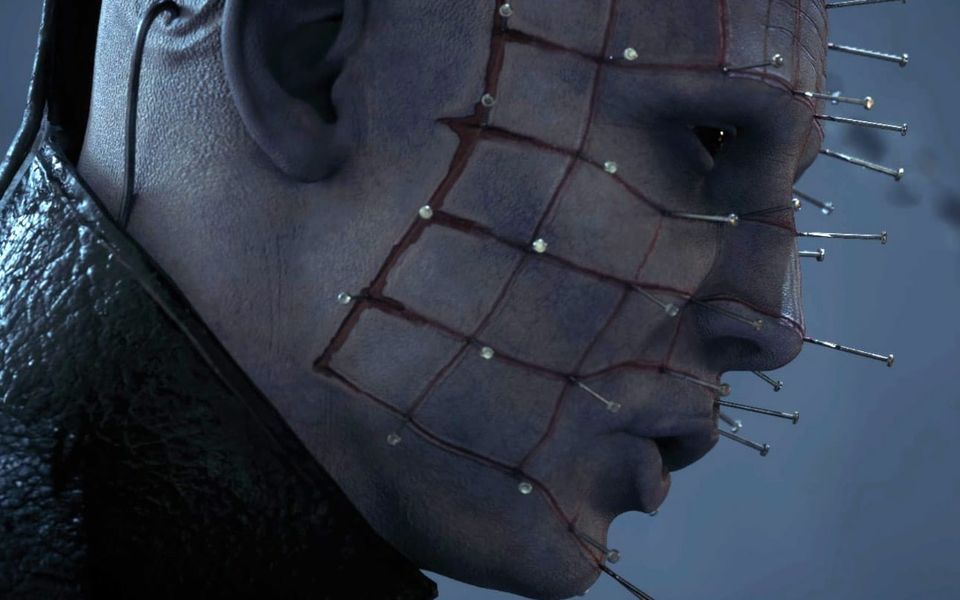
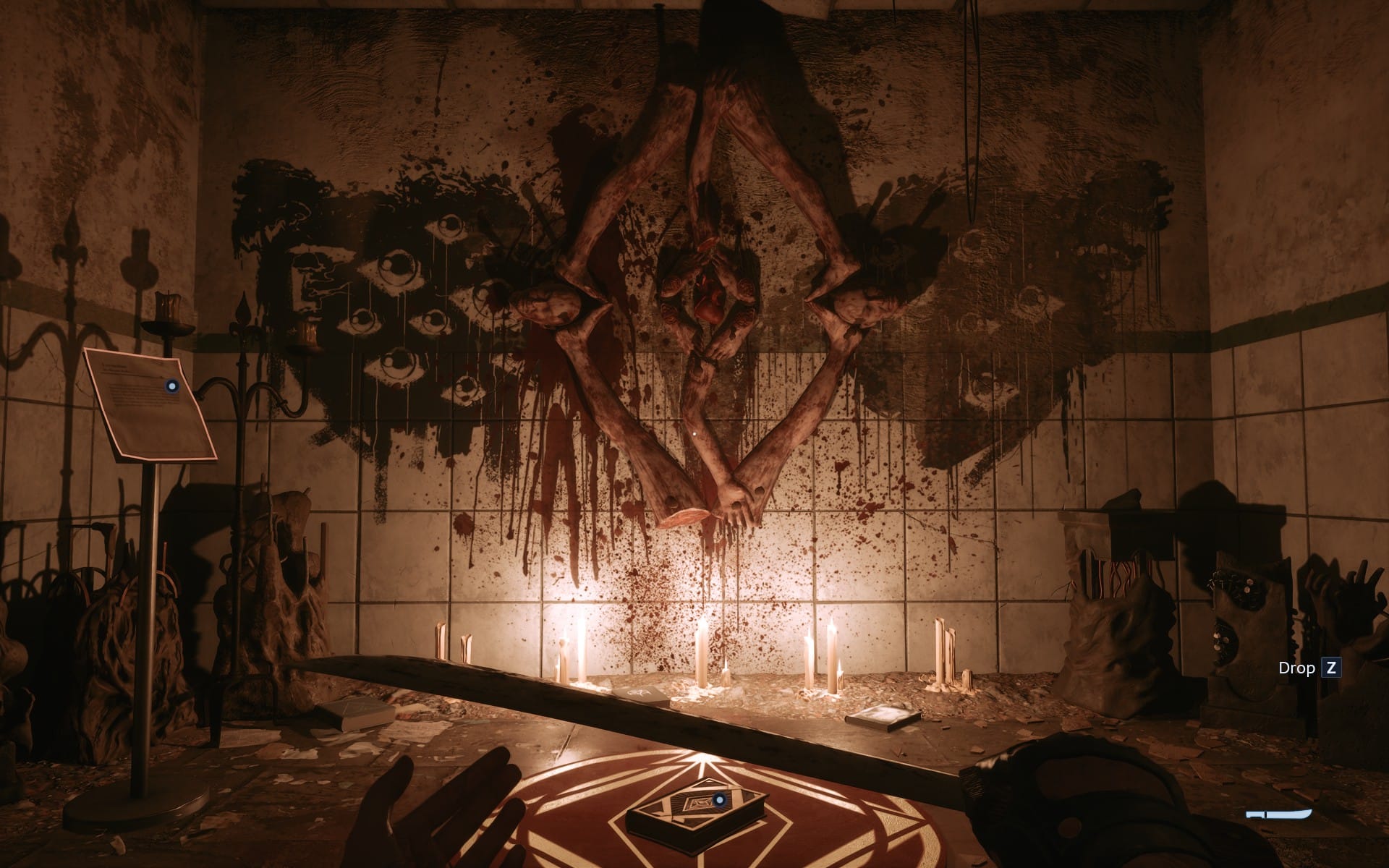
No one could accuse Hellraiser: Revival of being shy of its subject matter: it opens with a BDSM session in full swing, in-your-face nudity and protagonist Aidan receiving an impromptu nipple piercing. But there are to be no happy endings here, thanks to the deployment of a magic box as a sex aid which, slaked on the carnal bloodletting of the participants, summons gimp-demons from the pain dimension who offer Aidan's sensation-seeking girlfriend the ultimate petite mort — a much bigger mort — and tear her to pieces with hooks.
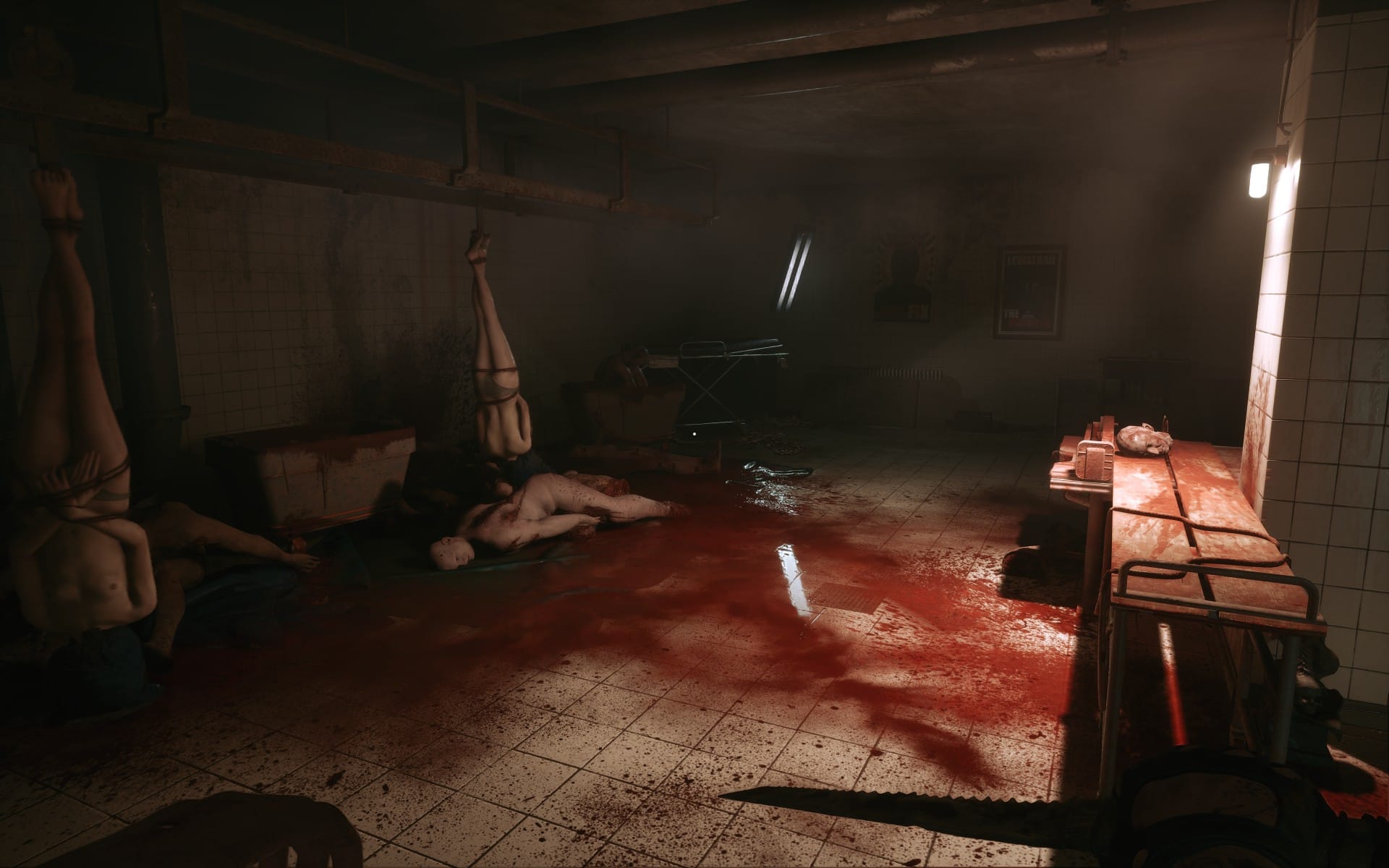
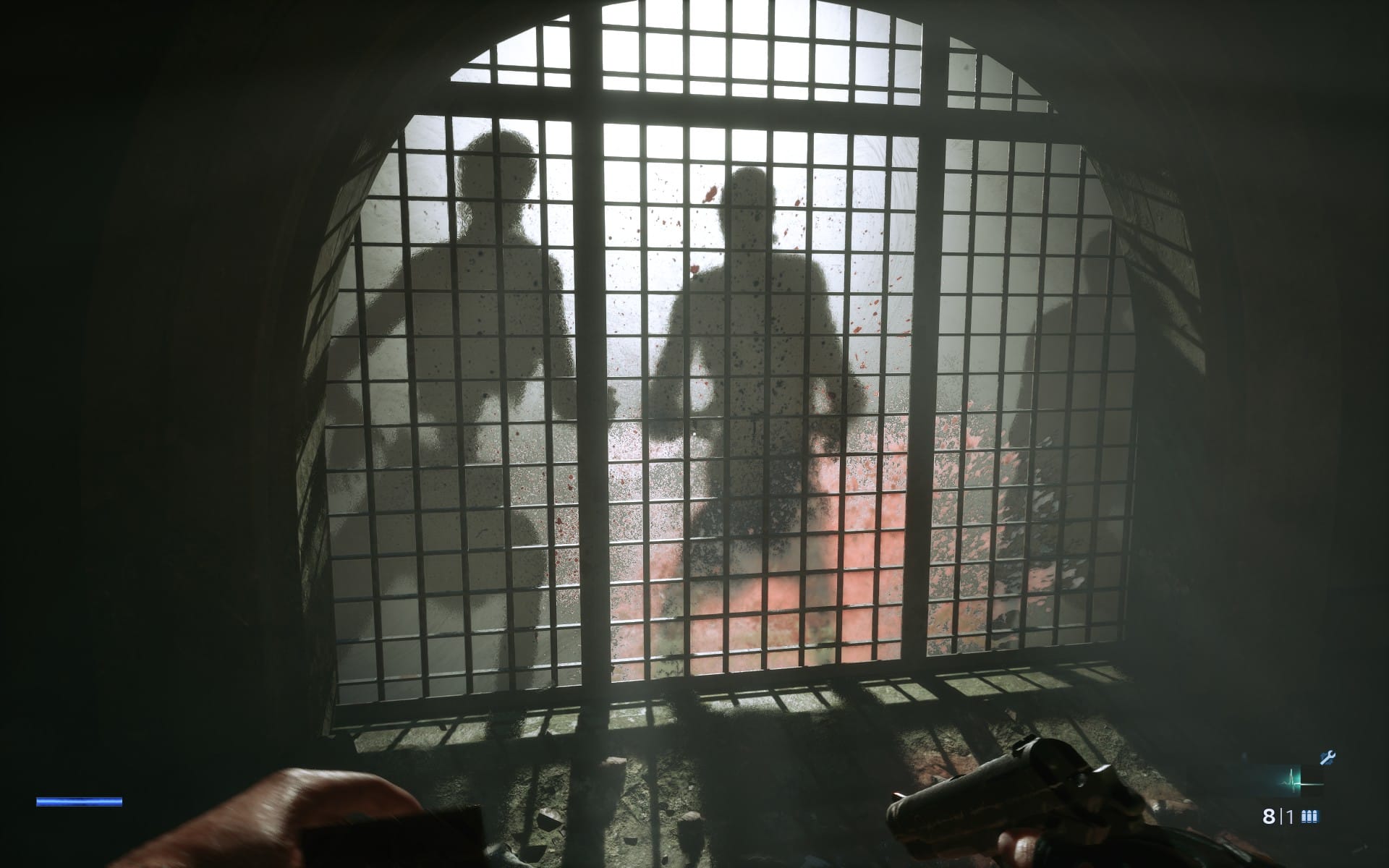
Things do not get less sleazy or gratuitous from there, as shellshocked boyf is promptly abducted by sex cultists, taken to a dungeon beneath a bondage club, and tortured in a way which, despite his penchant for nipple piercing, he does not enjoy. Escaping this predicament, he underscores the necessity of consent by murdering approximately 30,000 cultists, who fill not just the club but a manor, multiple graveyards, bunker complex and sausage factory, hindering their demented plot to "ascend" by way of numerous human sacrifices and grisly experiments.
The sheer quantity of chunked human meat—to which you enthusiastically contribute—ends up leaving you a bit numb.
Along the way, Aidan makes a pact with the Cenobites, the otherworldly horndogs who eviscerated his girlfriend, in the hopes of resurrecting her on Earth, and dies a wearying number of times during insta-fail time-sensitive puzzles. Sometimes, both the reload and the death involve cutscenes, proving the developers' QA department to be sicker perverts than any of the rubber-clad painpigs in the game itself. They probably have to hose the place down with Lysol after every milestone.
In a box somewhere, I have a polaroid of Cliff Bleszinski pretending to chainsaw off my head. It's a memento from a trip to Epic Games which I'd won in a fan-art competition by drawing a giant frog-monster. This trip, and the early hands-on I had with the very first Gears of War, formed the basis of a preview that turned into a 20-year-long incarceration within the games industry. I wouldn't say this makes me a superfan, but I can't help but look at E-Day—a prequel to or perhaps a tentative reboot of a series that so neatly maps onto what I unconvincingly call my career—with a mixture of rare nostalgia and crushing mortal dread. If only I could be rebooted too.
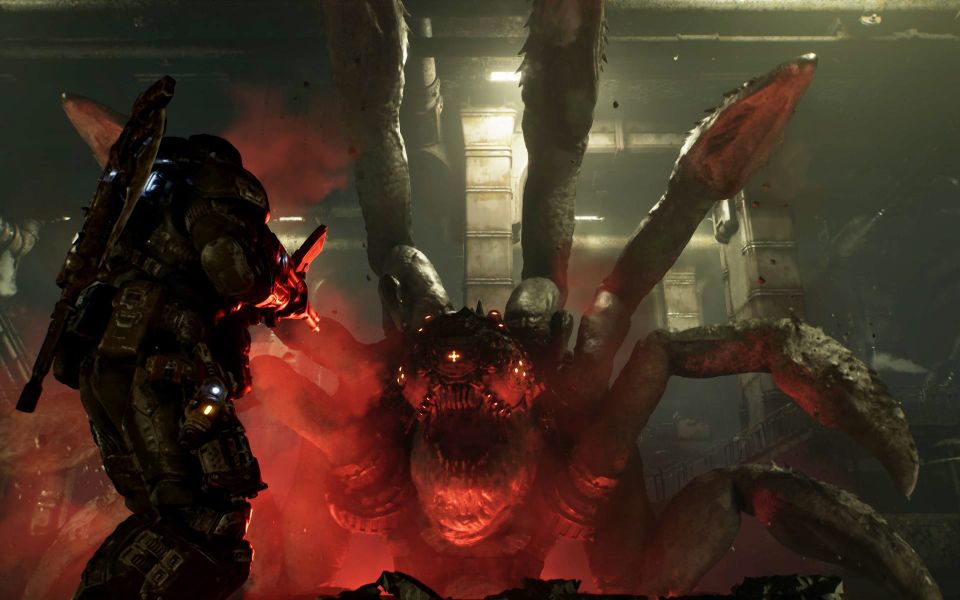
At least I can now get answers to the many questions that have tormented my every moment since 2006: How did hardbitten jarhead protagonist Marcus Fenix get that scar on his ultra-wide chin? Which Archimedean genius invented the chainsaw-gun? And, primarily, what were the events of "Emergence Day", when the Locust—a league of hideous subterranean creatures—first popped out of their burrows to wreak planetwide horror upon humanity? If these were questions that you had never really been tempted to ask, then no matter: this game serves as both a fresh introduction and the most potent distillation of its cover-shooter core to date. So pure indeed, that E-Day does not believe it needs any other sort of distraction across the course of its 20 hour-long campaign. To the combat designers' credit, it's almost true.
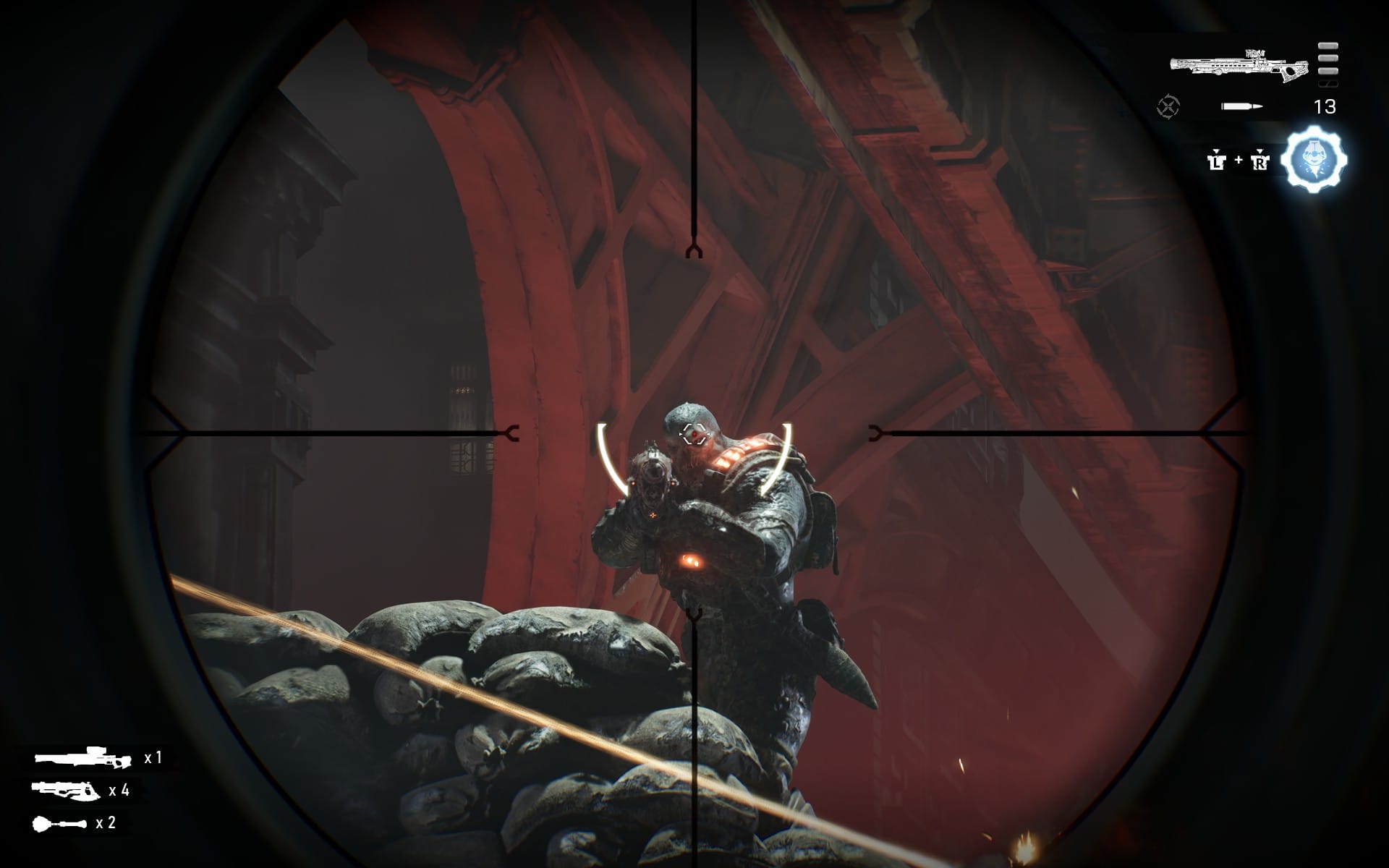
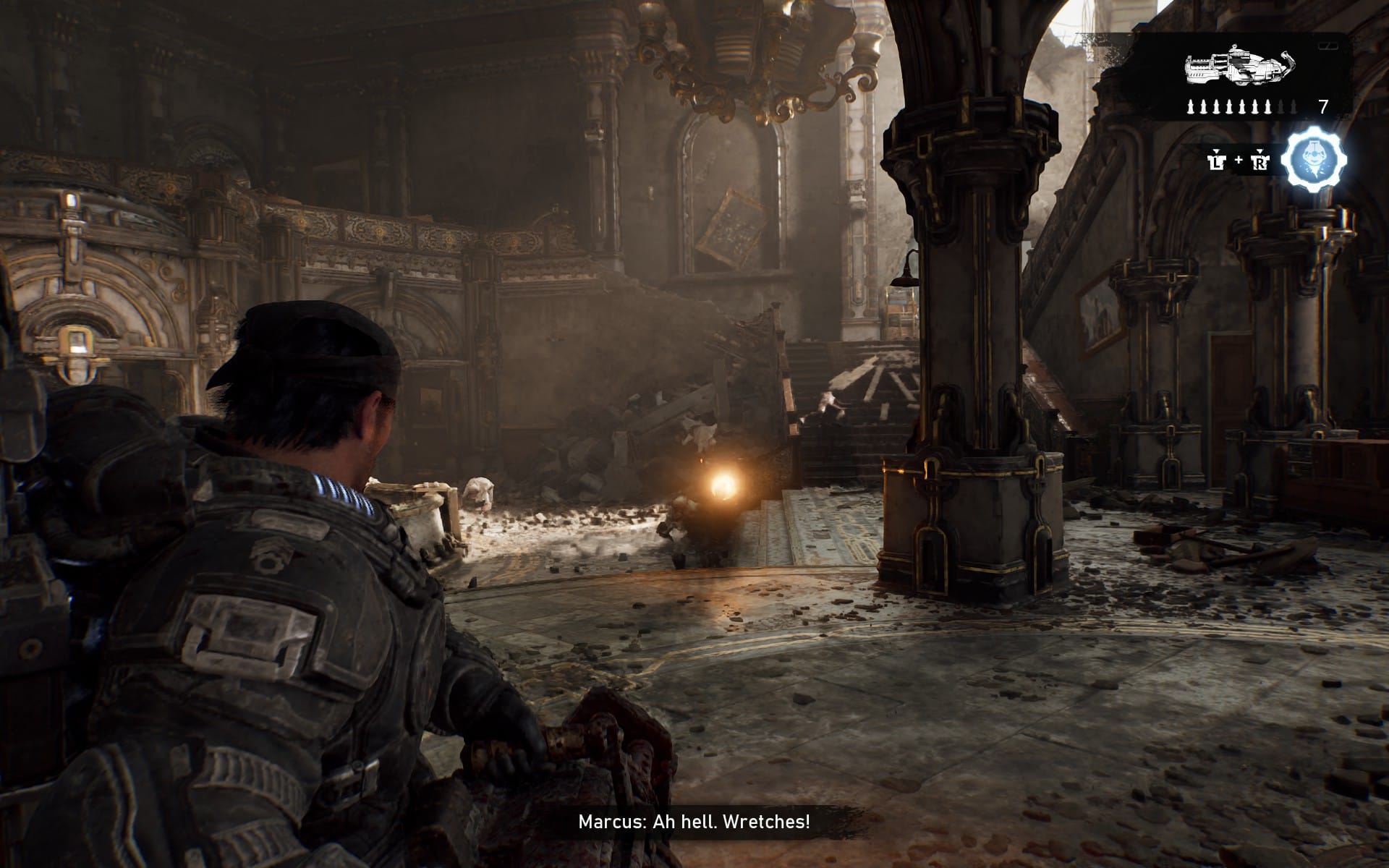
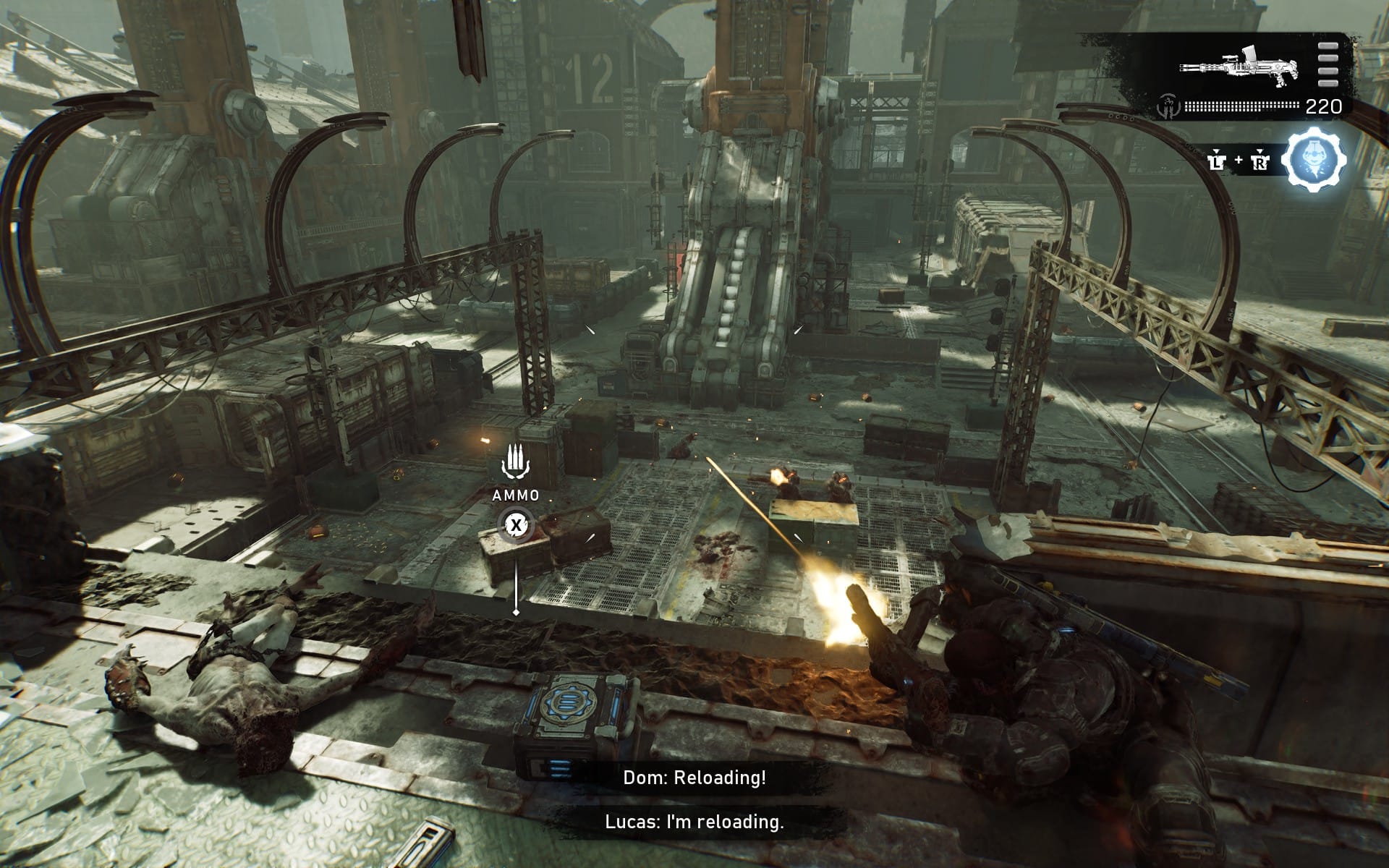
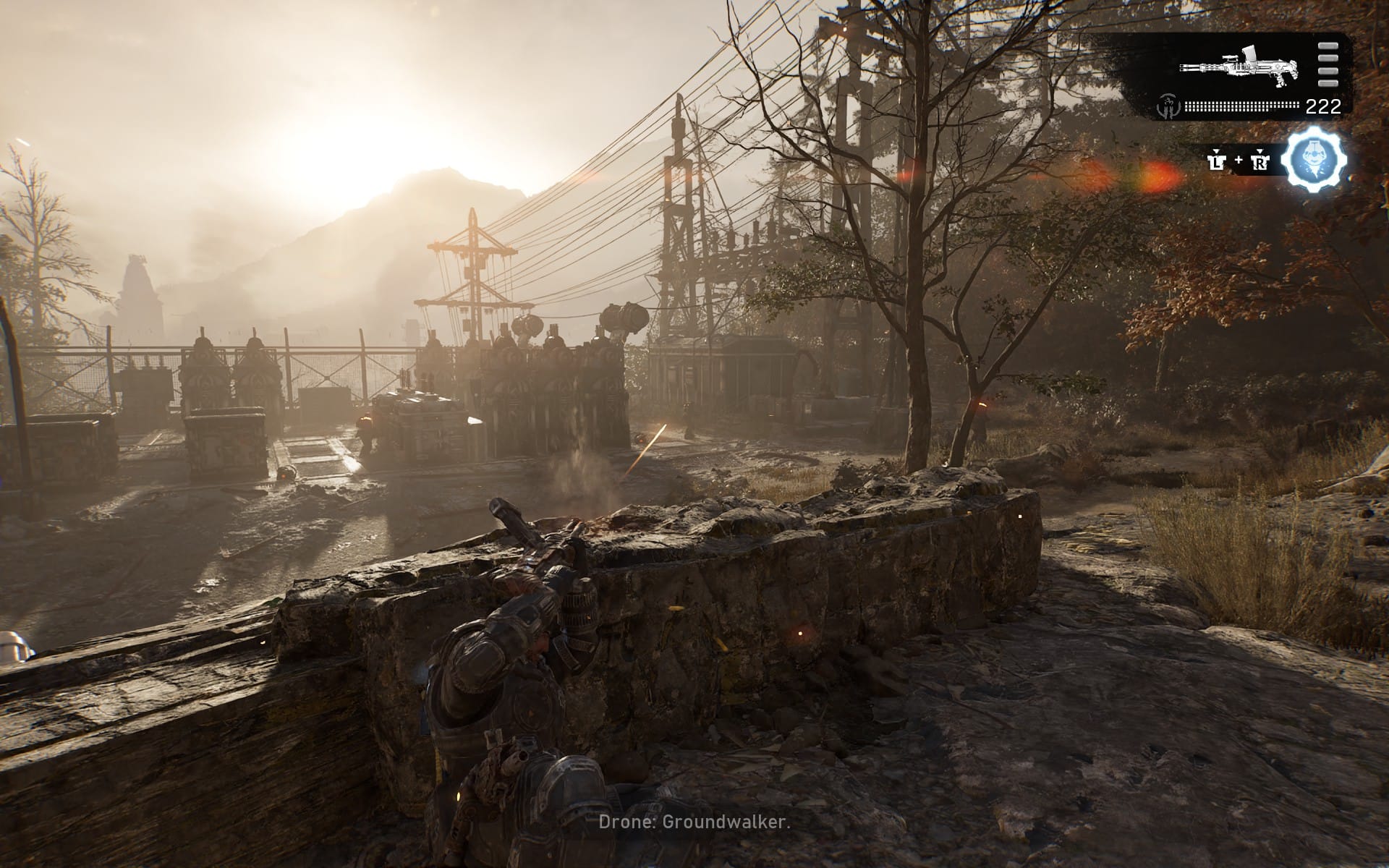
E-Day is a handsome game, but it's quite difficult to take a good representative picture of its combat: most of the time you are hunkered down behind a low wall.
Amid the ubiquity of cover-shooters that followed Gears' release, and because of the game's own wilfully obnoxious, frattish tone, it's easy to forget or overlook what made—and now makes again—Gears' tactical combat so clever, taut and tactile. Beneath the gleeful head-stomping, chainsaw-revving bloodshed is a game about quick thinking, positioning and coordination, with players forced to adapt their defensive formation to counter the increasing pressure and changing threat of their foe; or to break an intractable deadlock with suppression, distraction and flanking.
On a certain kind of dull, wet day, my dull, wet brain craves a particular sort of comfort: to burrow into the plush, numbing blanket of a middle-to-lowbrow thirdperson action-adventure. Blockbuster brawling, a light bit of puzzling, and an enviably sunny island idyll backdrop is all I ask. A little bit Uncharted, largely unchallenging and entirely unrepentant.
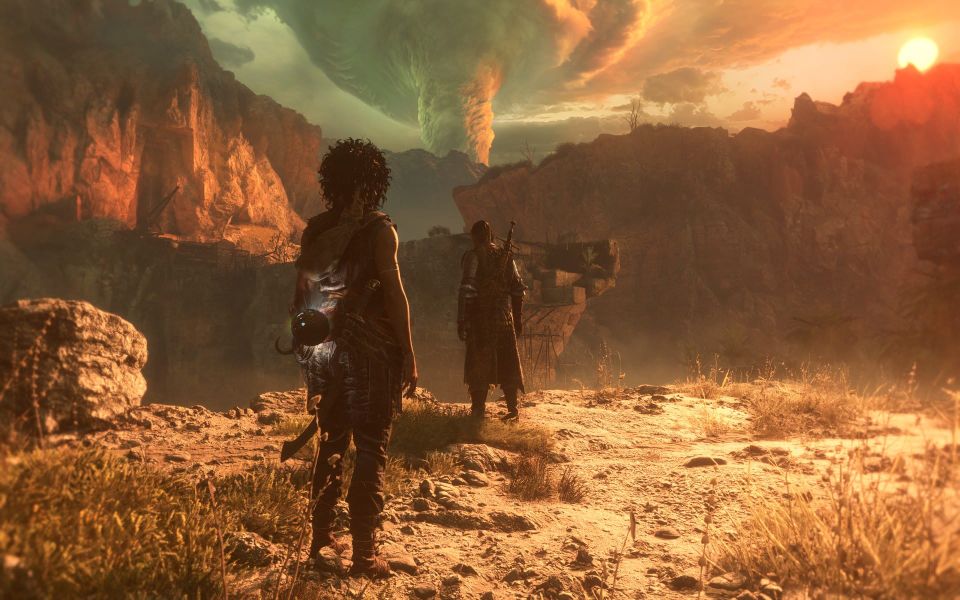
From a cursory glance at the trailers, Resonance: A Plague Tale Legacy presented as exactly this—at least to a fool, such as myself, who had not at that point played the previous, enthusiastically grim Plague Tale games, to which Resonance is a prequel. It is also a departure from their relentless filth and pestilence: a breezier action spectacle that hews closer to mainstream conformity, composed of the popcorn action-adventure staples I crave. There is brawling, puzzling and, yes, a stunning island idyll to explore. But then, just under half-way in, it abruptly decides it isn't content to coast on genre expectations and introduces a novel and horrifying element, a bit of systems-first enemy design that is so unguessably strange that I can't bring myself to spoil it in this review.