Knytt remains a classic
TVTropes is a malicious force in storytelling, but it occasionally puts a name to something it's useful to name. I like "Flanderization", which is a fun word to say, and the process by which a character, often in a sitcom, becomes a parody of themselves. Named after The Simpsons' Ned Flanders, who warps across seasons from a relatively normal, albeit improbably perfect figure of envy for slothful oaf Homer, into an absurd Christian fundamentalist whose niceness is a pathological disorder.
I find this word useful because I think the same process happens to videogames. Brendy's "self-playing games" can be understood as being at the extreme end of the process: parodies of the entire medium of videogames, mimicking the structure of upgrades and progress in order to deliver dopamine without the fullness of complexity of their original genres.
But Knytt, originally released in 2006, represents an earlier stage of much the same process. Knytt is Flanderized Mario.
This article is free to read, but only thanks to those who subscribe to Jank. Want to support more writing about PC games of the past, present and future?
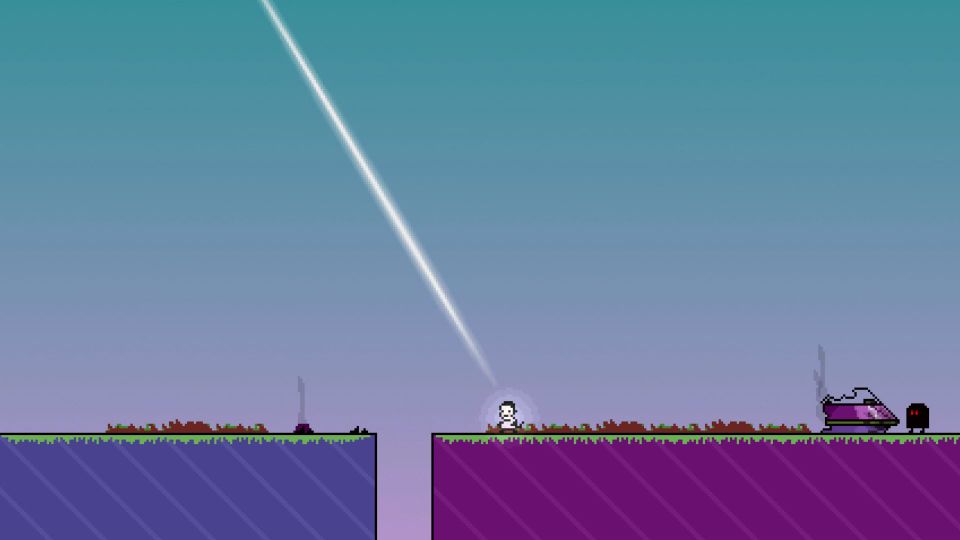
In a brief opening cutscene, the nameless and speechless protagonist of Knytt is kidnapped from his homeworld by a UFO, which promptly crashlands on another world. The player sets out across that world screen-by-screen to gather the scattered ship parts.
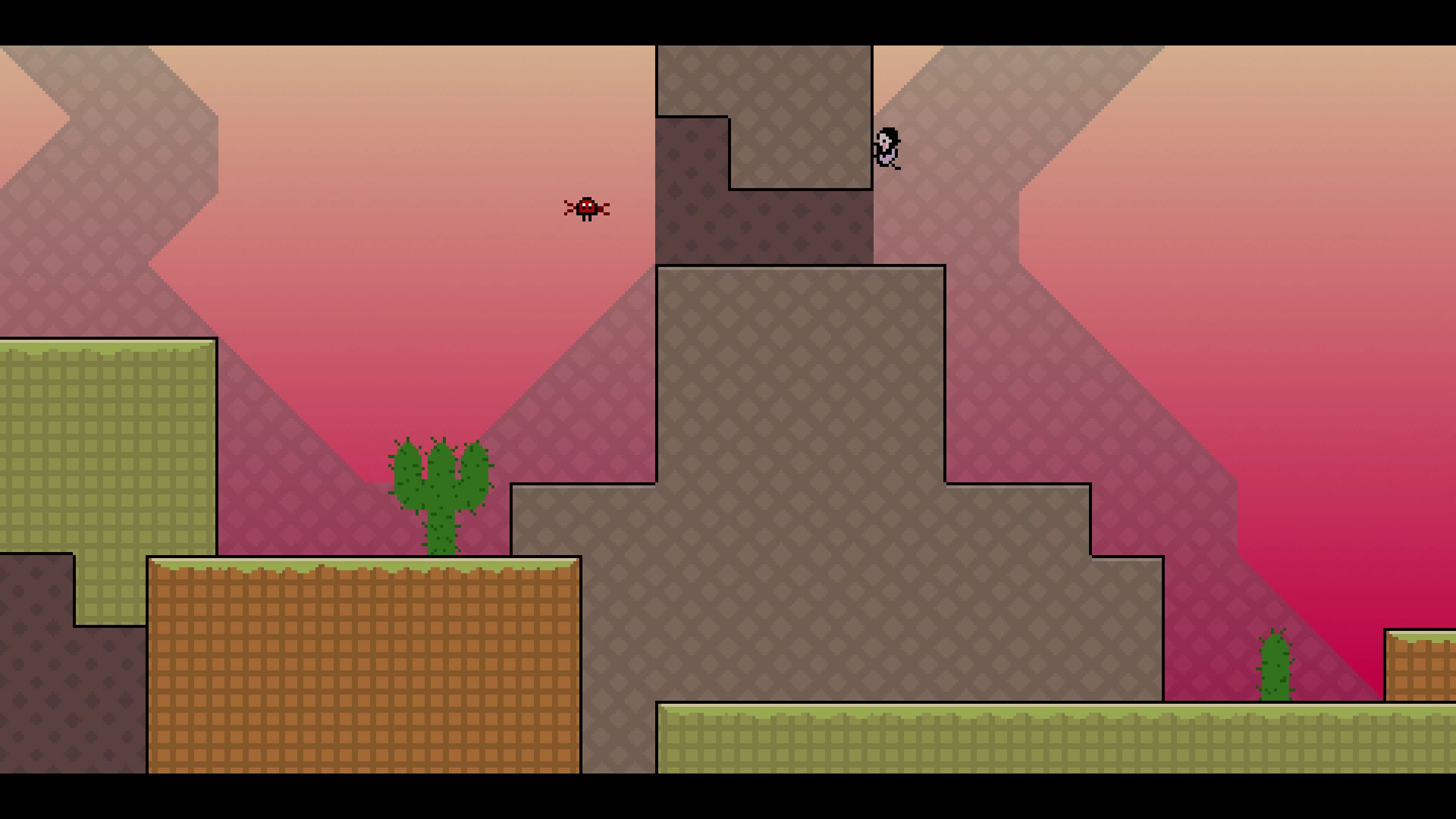
There's no combat in Knytt. No enemy heads to jump upon or bosses to grab by the tail, very little failure of any kind, no characters to talk to or powerups or coins. It strips back the platformer to the pure sensation of progress, much as Vampire Survivors does for shmups and RPGs. You walk, climb and jump through each screen, never precisely knowing where you're going, but never reaching a barrier or needing to stop to think, either. It's not self-playing, but there is a button you can press that gives you an arrow to the next nearest object.
Despite this near-frictionless design, Knytt doesn't feel like junk food, because it hasn't boiled its genre down with the goal of jacking you up with dopamine. Its intentions are more authentic.
Knytt was a sensation upon its freeware release, in part because it showed how few elements a game needed in order to create a specific feeling in players. No footstep sound has ever done more for a game than the barefooted pitter-patter of Knytt's protagonist padding across each screen. Add in lo-fi music and a handful of docile creatures dotted around its large, contiguous space, and the feeling of playing Knytt is of being alone, stranded, curious. It's far from a sugar rush.
Two decades of new platform games, many directly inspired by Knytt, could reasonably have been expected to have created a more sophisticated audience, one immune to an old Multimedia Fusion game's simple charms, but Knytt is exactly as effective at creating those feelings today as it ever was.
Last month, a small team released Knytt Classic, a "pixel perfect" remaster that modernises the original game just enough to add controller support, bigger screen resolutions, and speedrunning tools. It's still free.
I started Knytt Classic on the Steam Deck for what I assumed would be a brief, nostalgic visit while I waited for my oven to heat up. An hour later, I had finished Knytt from beginning to end and my dinner remained uncooked on the kitchen counter.
The 2000s freeware scene, and the early indie scene that followed it, were filled with exactly this kind of boil-it-down design. Genres shed decades of complexity and cruft thanks to designers who had grown up playing them and innately understood their appeal, or who were forced to cut everything unnecessary by a lack of resources. Sometimes new genres were born in the process. Tower defence games are Flanderized strategy games. Most Roguelikes and all roguelites are Flanderized dungeon crawlers. Peggle is a Flanderized first-person shooter.
Alright, maybe I'm stretching this idea further than it can bear. I'm comparing this to the process that happens to sitcom characters, but it's really not so different than what happens in every artistic medium. In pop music, musical ideas are shamelessly stolen and refined in service of their fundamental pleasure. Meaning and personal resonance are often lost in this process, and rockist critics will tell you that this is a loss of authenticity which means it no longer qualifies as "real" music.
Brendy isn't wrong when he laments that loss of meaning when he calls for death to self-playing games, and our medium needs critics with aesthetic principles they're willing to fight for. I admire him for it, and share at least some of his criticisms. The problem is that I was always more of a poptimist. I can't deny the pleasure I get from every one of these Flanderized videogames, and I don't believe in guilty pleasures. Vampire Survivors is a pop song that's great to dance to.
Or maybe you could call me a jumptimist. Knytt is the platformer boiled down to just a handful of its core pleasures, not a pop song but a frictionless, lofi, viral midwest emo TikTok of a game, and worthy of the "Classic" added to the title of its re-release.


Comments ()