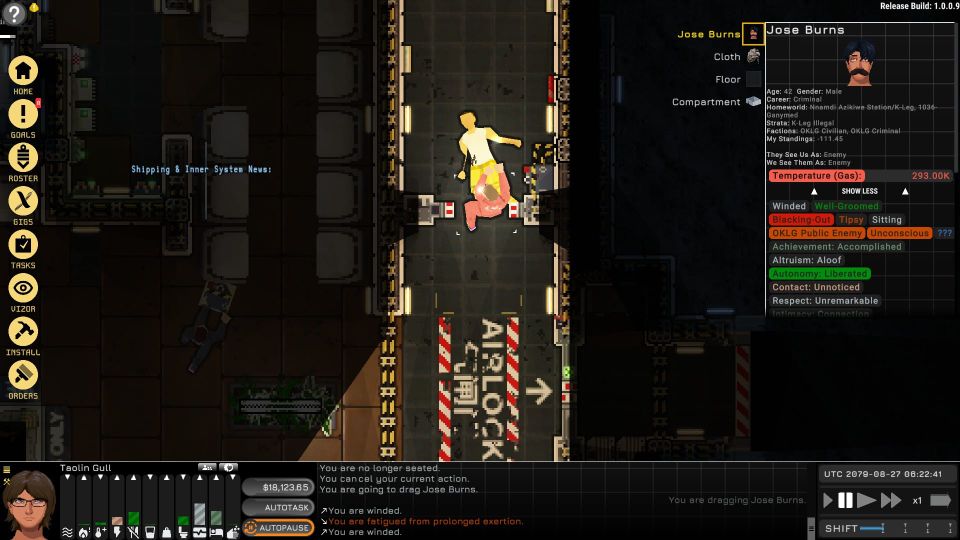
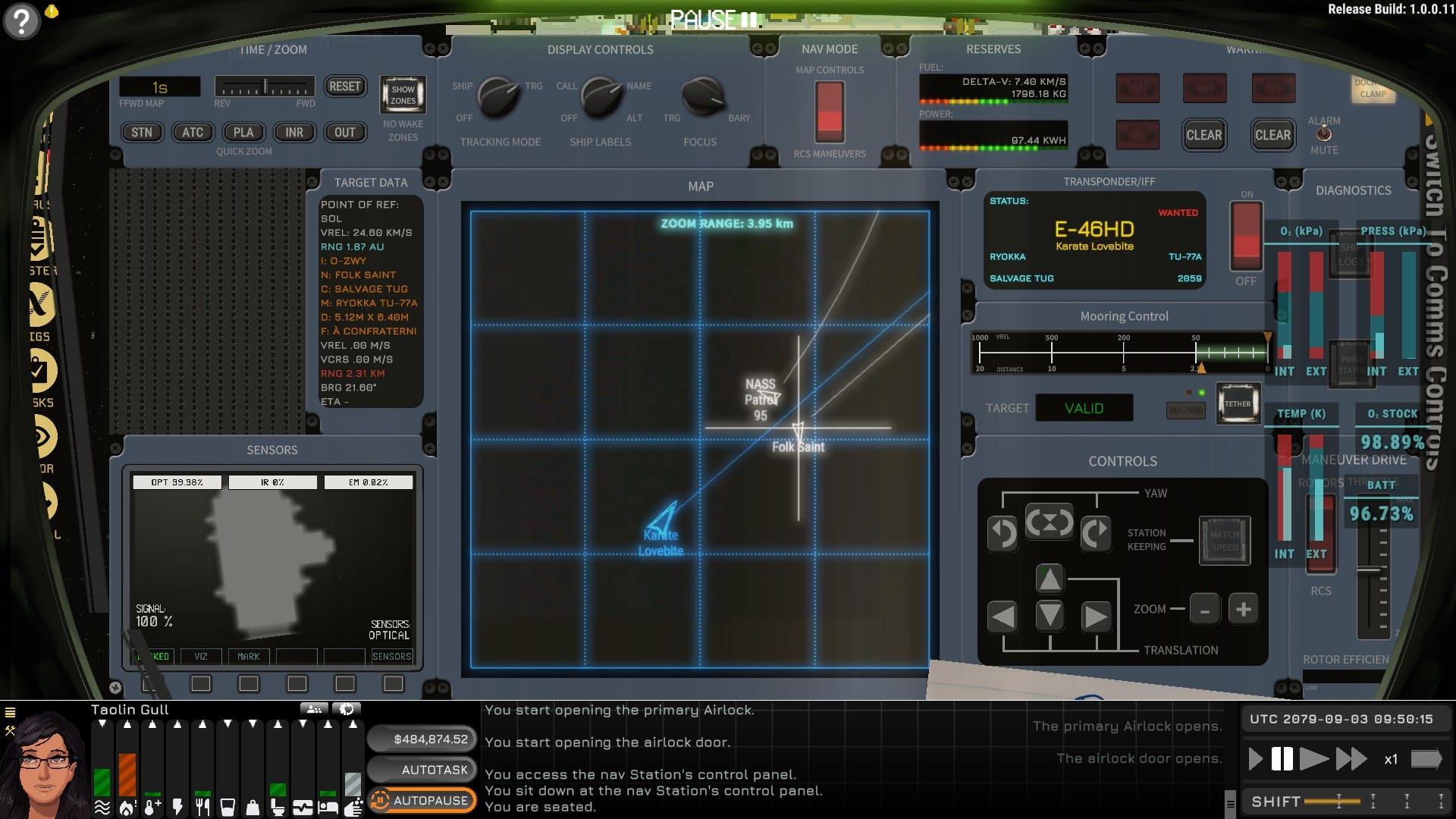
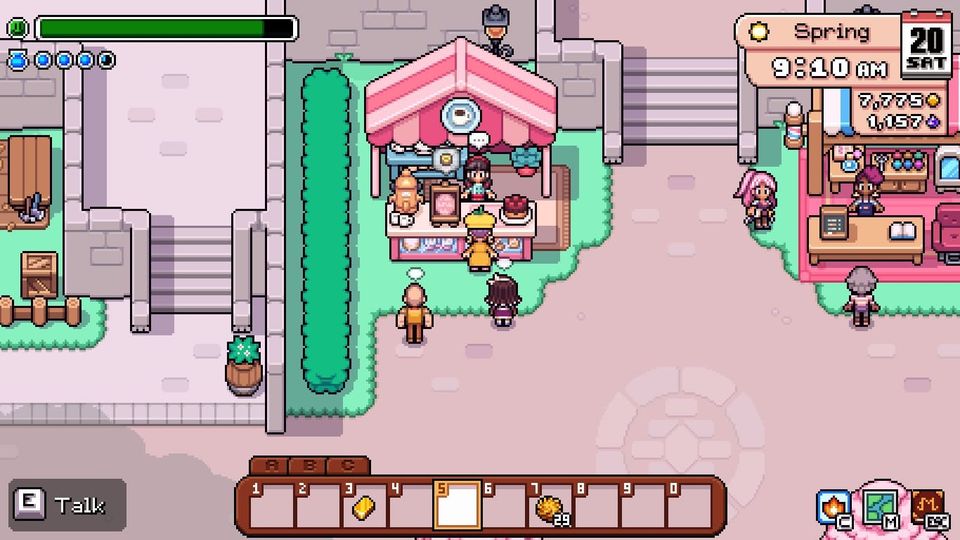
"Ostranauts, Graham, is I think a very Jank-y kind of game", I said, very differently to that and before I needed to fit it into an intro. This came from dabbling with much earlier versions, and from knowing that Graham loved Neo Scavenger, Blue Bottle Games's earlier survival game about undignified scrabbling and lusting after carrier bags. And that Brendy is a space boy, and Jonty touches cars. Throw in my love of salvage and you get a game about bumbling around space in a ship assembled by hand, one reclaimed component at a time. You get Ostranauts.
You also get lowercase jank. Lots of it. "Bordering on a professional dilemma" kind of jank. There is so much going wrong with this game that I'm unsure if this will be a recommendation or an SOS.
Incoming transmission, sir! It says "neeeeeooooooww".
It is a project game. I have a goal, and I see other possibilities on the way to meeting that goal. Some of those are incorporated into the project, others distract me and become the day's entertainment before I try again tomorrow. Others still become another project and oh my god what day is it. What year?
You cannot reload in Sprawl Zero. Instead, you mindwarp a fallen gun straight to your hand, unload all the bullets into a cyborg guard, then javelin the hollowed weapon at his colleague's skull. You then brainsnatch that victim's rifle into your fingers while it's still falling from his dead hands, and you do it all again.
For the first half hour of this retro blastathon, I habitually hammered the R key after loosing a few bullets. It did nothing. Body memory will not help you here, even if your head memory is summoning visions of the 2000s sci-fi shooters this dusty megacity is inspired by. You will navigate blocky levels full of secrets while lobbing empty pistols into the faces of your enemies and tossing back grenades. The gag presents itself. This is literally a throwback shooter.
You are a cybernetic killfiend of the Junta, the city's ruling force. A terrorist group are doing terrorism, and worse! They're being preachy about it. It's your job to bleed 'em out and silence their cultish leader, Silas. I say "your job" but it's clear from the protagonist's robotic recitations ("Memory is the phantom. Autonomy is the flaw.") that you are a pre-programmed, captive killing instrument doing the dirty work of your shadowy, fash overseers. Not that your cult foes are clean-cut goodies. Better just keep murdering until the plot twists happen.
It is technically a prequel to a wall-running FPS called Sprawl from a few years ago. I sensed a few nods to that story but they have gone completely over my head.
Yes, 2000s shooters may be the soul, but the body is all Doom 2016. It is a rhythmic, flowing shooter that demands the player keep pace. Enemies are nippy and move around arenas with cowardly self-preservation, making movement more important than cover. The combat rhythm is a dance on repeat: pick up, shoot, punch, dash - not forgetting to use your abilities to mix things up. You telepathically pluck up gas cannisters and chuck them at dudes, and you earn your health back by remembering to use bullet-time every so often, which generates glowy green healing drops.
Most importantly, the lack of ammo forces you to snap up and try out every gun, even those you don't like so much. Dropped weapons are coloured according to rarity, so you can easily teleyoink a rare purple pistol and ignore the everyday grey guns. But sometimes you have to improvise and use whatever's grabbable in a heartbeat.
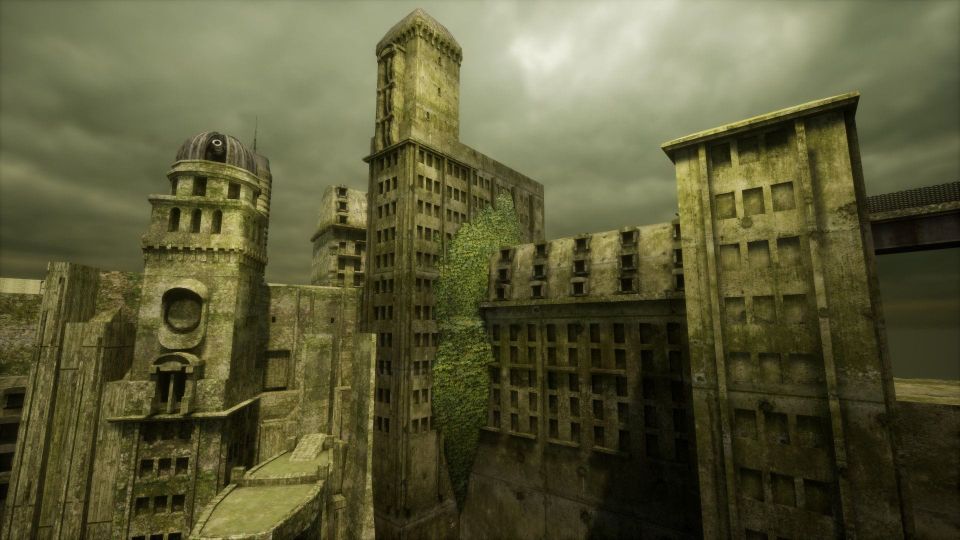
The environment design is smoggy, brutalist, and devoid of nature. Between this and Vholume, it is a great time for concrete futurehells.
I commend this as an act of despotic game design. The developers are forcing you to eat your vegetables because - as it turns out - some vegetables are delicious and you will feel better having digested all your grenade launchers. In 2001 some hardwired troglodytes moaned about Halo only letting you carry two guns at any time, but this was the most interesting change in mainstream shooter design for a decade. Sprawl Zero pushes that logic a little further and builds a whole game around it. It makes one big combat decision and commits. For that alone, it is worth playing.
Dawn Walker? I thought you said his name was Coen?!
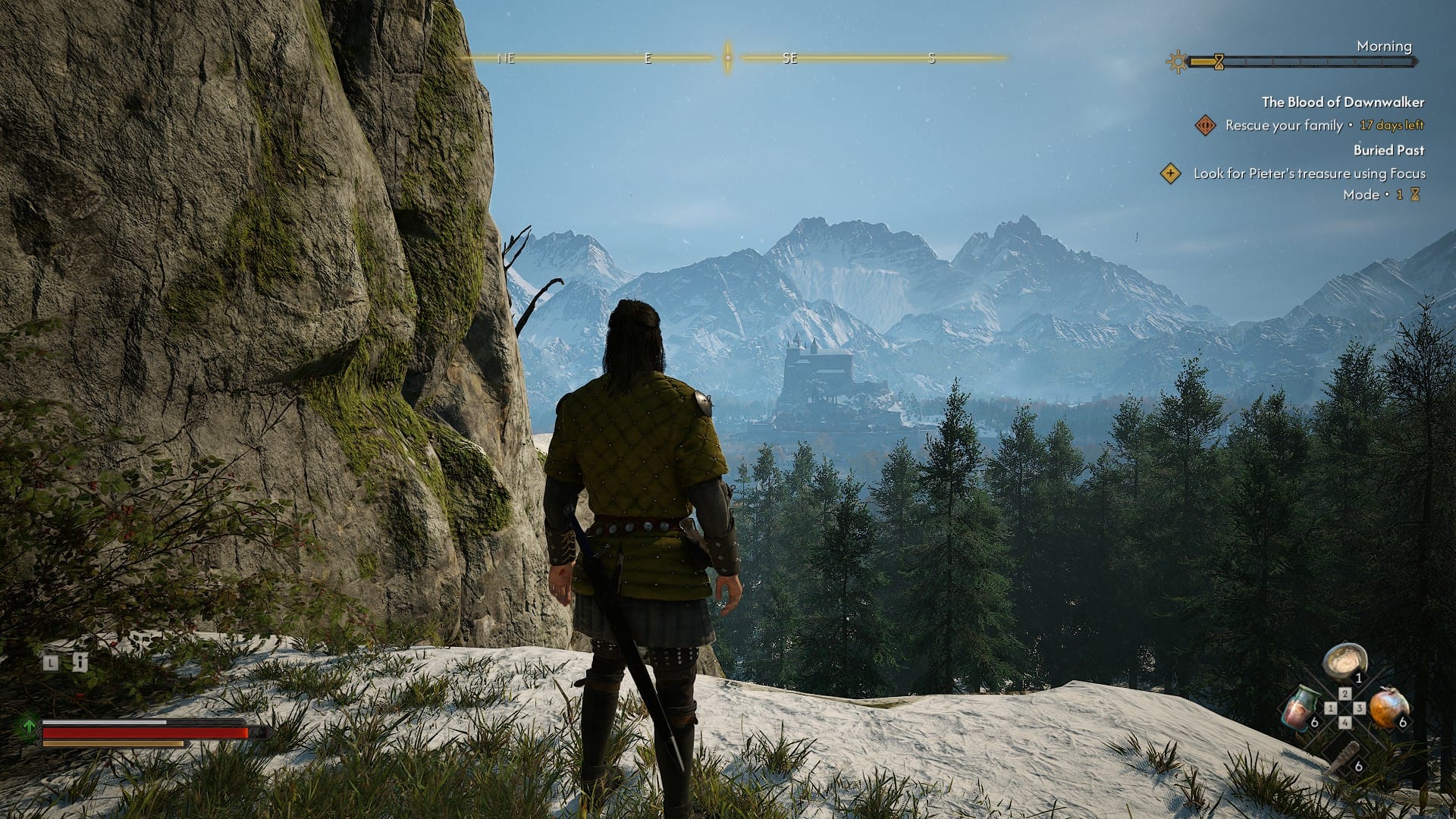
Two weeks ago, the vampire that rules over Coen of Laslea's valley torched his village, captured his family, and cursed Coen to an eternity of blood thirst. This evening, Coen is standing on a mountain pass, getting pelted with rocks by large, jeering goat people. "Baah", they taunt. "Baaah-ha-ha".
Coen isn't happy about this, but he can't do a thing. This is because I've decided the goat people are my friends, so I keep choosing pacifist dialogue options despite three opportunities - and constant encouragement from my companion - to kill them all.
I'm having one of a handful of asterisk-free excellent times thus far in The Blood Of Dawnwalker. Mostly because the game has finally offered up a crumb of that good, good whimsy after submerging me in fifteen hours of muck, pestilence, viscera, laborious combat, torture, 'excellent artisanal' epic trousers, and despair.
See that castle? You can go bowling with it.
There are sweetly sombre vistas and scenes of chilling folk horror lurking in this cursed valley; awe and terror dancing around the maypole together. There are fascinating hints at a history of forbidden magic, and uncomfortably tangible tales of oppression tolerated through paralysing fear of the alternative. Before Brencis came, cruel boyars ran unchecked, and the black death ran rife. Now, every week at mass, his vampire court drink from the people, and share their blood in return. The plague is gone. The boyars were hanged. Newborns are the "strongest they've ever been". Vampire tyranny is one thing, but vampire populism? What a hook.
There is all that, plus some of the best violin scraping and the absolute best gnarled bog trees ever committed to Unreal Engine. But there's also such constant, droning misery and aimless sadism-as-set-dressing that Dawnwalker often devolves into a four Yorkshireman-esque pissing contest with itself. "It smells of rot and blood here," Coen groans as he enters a cave. Yes, Coen. I know, I know. It's rot and blood all the way down.
A good parkour game is a gauntlet of faith. You follow the flow of a city designed by some invisible hand: paving stones tilted at angles suggestive of a left turn, a warm light inviting you into a distant doorway, some plank of corrugated scrap extended toward an unseen edge. You are chasing a breadcrumb trail, except you don't always know what's crumb and what's dirt. Over and over, you leap without looking. Sometimes that means you die. But, when it's done right, you feel like you are predicting the future mere milliseconds ahead of time.
The best levels of Vholume make me feel like a clairvoyant with springs for legs. The worst feel like a brief test of my faith, nothing more. The protagonist of this wall-running platformer will often wheeze as if they're running out of breath. At the end of one run, I realised I had been holding my own lungs for the two full minutes it took me to hit the dark doorway that marks the finish line. This game is such a rush, it will deprive you of oxygen.
I started Sandustry on a whim at 8:15pm on a Friday evening. I was still playing at 2am. I went to bed, woke up at 9am, and immediately started playing again. It's rare that a game gets its claws into me like this. It's even rarer that I feel good about it.
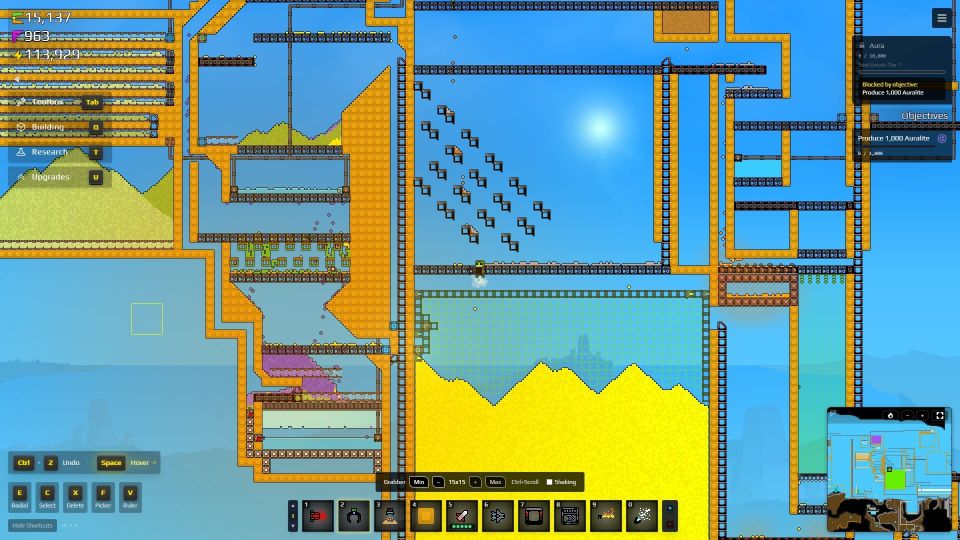
Sandustry, now in Early Access, is a factory builder with a great hook: every pixel is physically simulated. Think Noita, but instead of a deadly roguelike, you're laying down conveyor belts and sorters to gradually process all the natural resources of an alien world. Factorio but with gravity. Satisfactory but I'm satisfied.
I used to think I had a complicated relationship with 'busywork games', the kind that give you a todo list of simple (and sometimes prima facie tedious) tasks, and invite you to decide whether the experience is a flow or fugue state. I love some of those games (Pokémon Pokopia, Turnip Boy) and flee almost instantly from the seeming pointlessness of others. I now think my relationship is very simple: some todo lists feel worthwhile and others do not, and it's a matter of design as to which is which. In other words, it is the games that are good or bad, not me.
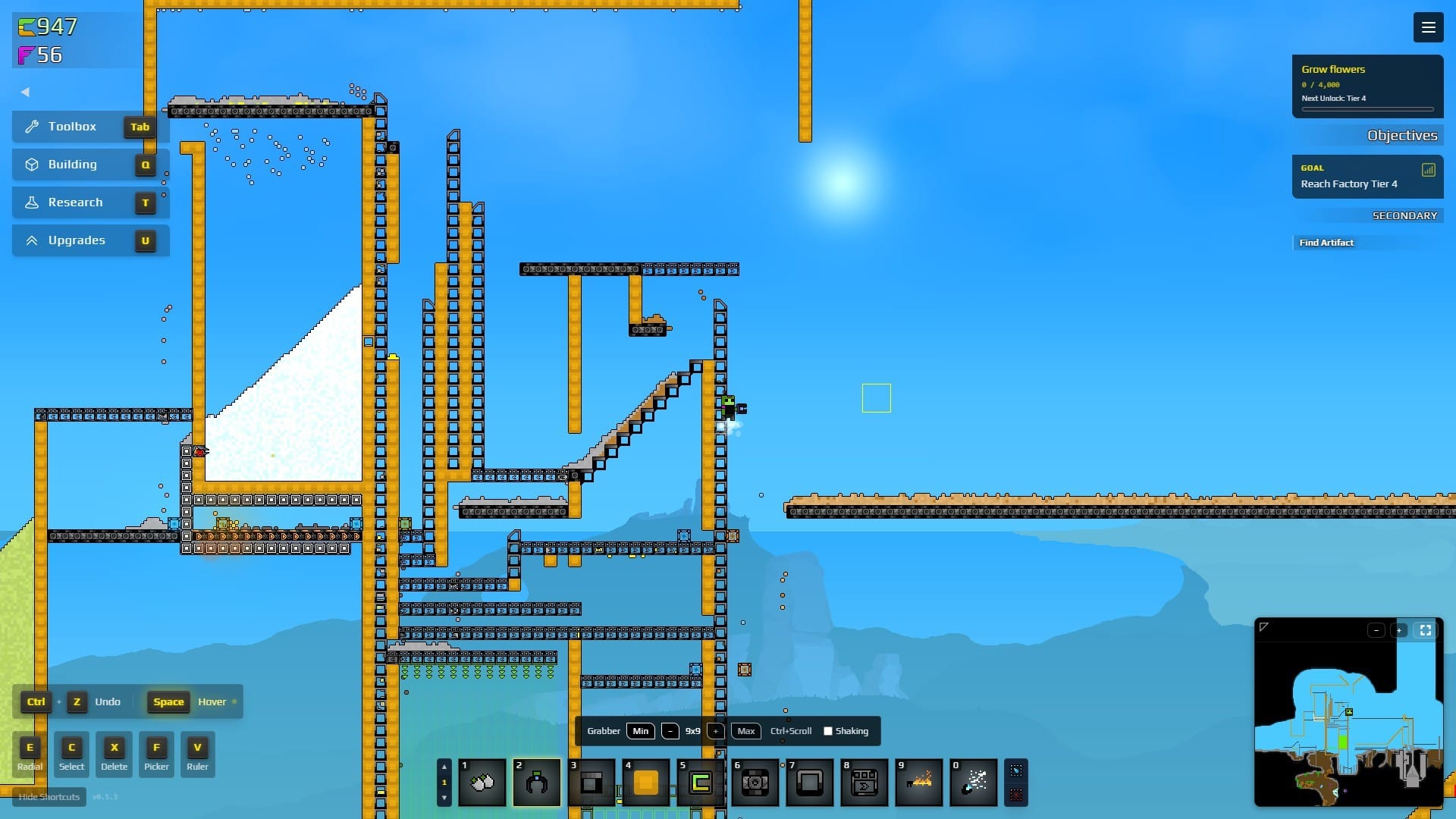
This factory was hell but I was proud of it anyway.
Too often factory builders feel like they're putting artificial obstacles in my path and daring me to work hard enough to render the inconveniences moot. That power curve can feel good, but more often than not it feels too much like the bad kind of wasting time. I don't want to cup water for ten hours to earn a bucket.
Fields Of Mistria is a game with almost no friction. When you’re farming crops, your watering can is always full. When you’re catching fish, there’s no minigame but waiting for the bite. If you forage something but don’t have room in your backpack, it will sit where you left it. After not too long, you’ll unlock the lost and found system, meaning on the next Monday it will be whisked away into a big bucket conveniently near your farm for you to collect.
And, I think because of this, my experience with Mistria is strange. It’s soothing to zone out for an hour and run through several days of wandering around the village and farming, mining, fishing, gifting bits and bobs to NPCs and so on, all working towards new ticks on the game’s absolutely massive checklist. And my checklist is getting full. The museum is overflowing; the mines are reopened down to the depths; my heart levels with the villagers are almost complete. I can’t deny that that feeling of pleasure, while insubstantial, has led to me sinking nearly 70 hours into the game in the last month or so, and I can’t deny enjoying it.
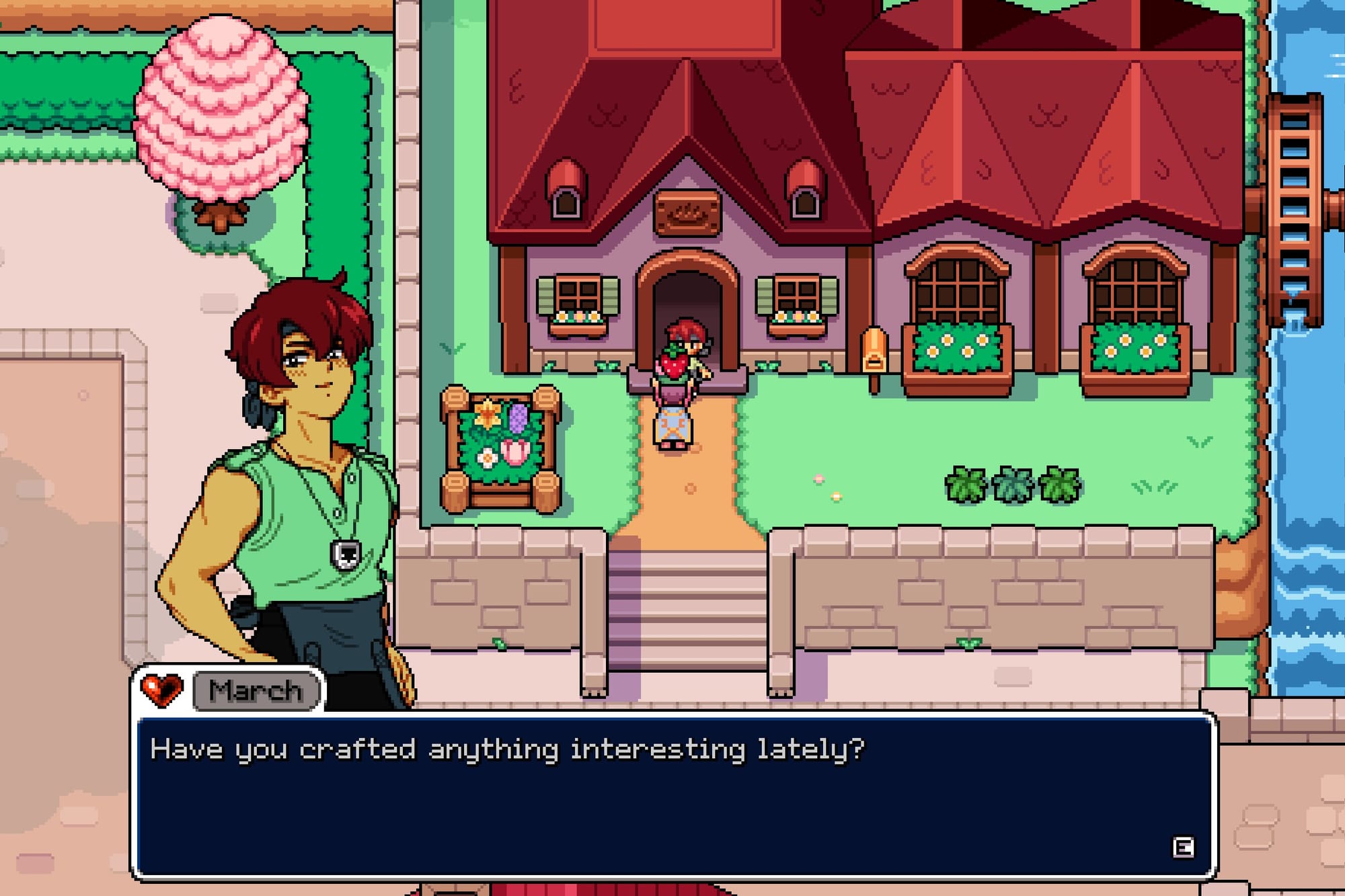
Like everybody else, I am a March girlie.
But I can say it has also been grating. During the low-tension cycle of the daily tasks, there’s plenty of time for thinking about both the (inherent?) political tensions of the farming simulator and the issues I have with this one in particular (more on both of those later). And yet I keep falling for just one more day. And even when I do decide I want to do something more thoughtful, give me a few hours and I’ll think, damn, breaking a few hundred more rocks with a pickaxe sounds really good right now, actually.
At its best, Emuurom leads you to make new discoveries several times per minute. You are exploring a world, screen-by-screen, with nothing but a scanner you can point at the flora and fauna. Scan a cloud? It rains. The rain falls on a flower? It blooms. Scan a bird? It flies left to right. Scan a different bird? It shrieks. The shriek touches a flower? It splits into seeds. What do the seeds do? You'll discover that soon enough, with a little playful experimentation, and then discover another thing and another thing. Playing Emuurom is like being parachuted into the middle of Moominland without Tove Jansson's prose to guide you and so each new creature and interaction is yours to piece together.
That's Emuurom's surface layer, and it's a joy. It's where I live. Many people will try to convince you that this puzzle-platformer's greatness lies in the cleverness beneath that surface, however. Its developer has spent eight years constructing layer upon layer of secrets which reveal themselves only via perseverance and effort. Emuurom contains, for example, a unique language to translate. That's the kind of worldbuilding that makes a certain kind of person immediately excited, and it's a transparently impressive act of design. For me, a dummy, such depths are both admirable and off-putting, and so I am here to tell you that Emuurom is something much more than clever. It's fun.
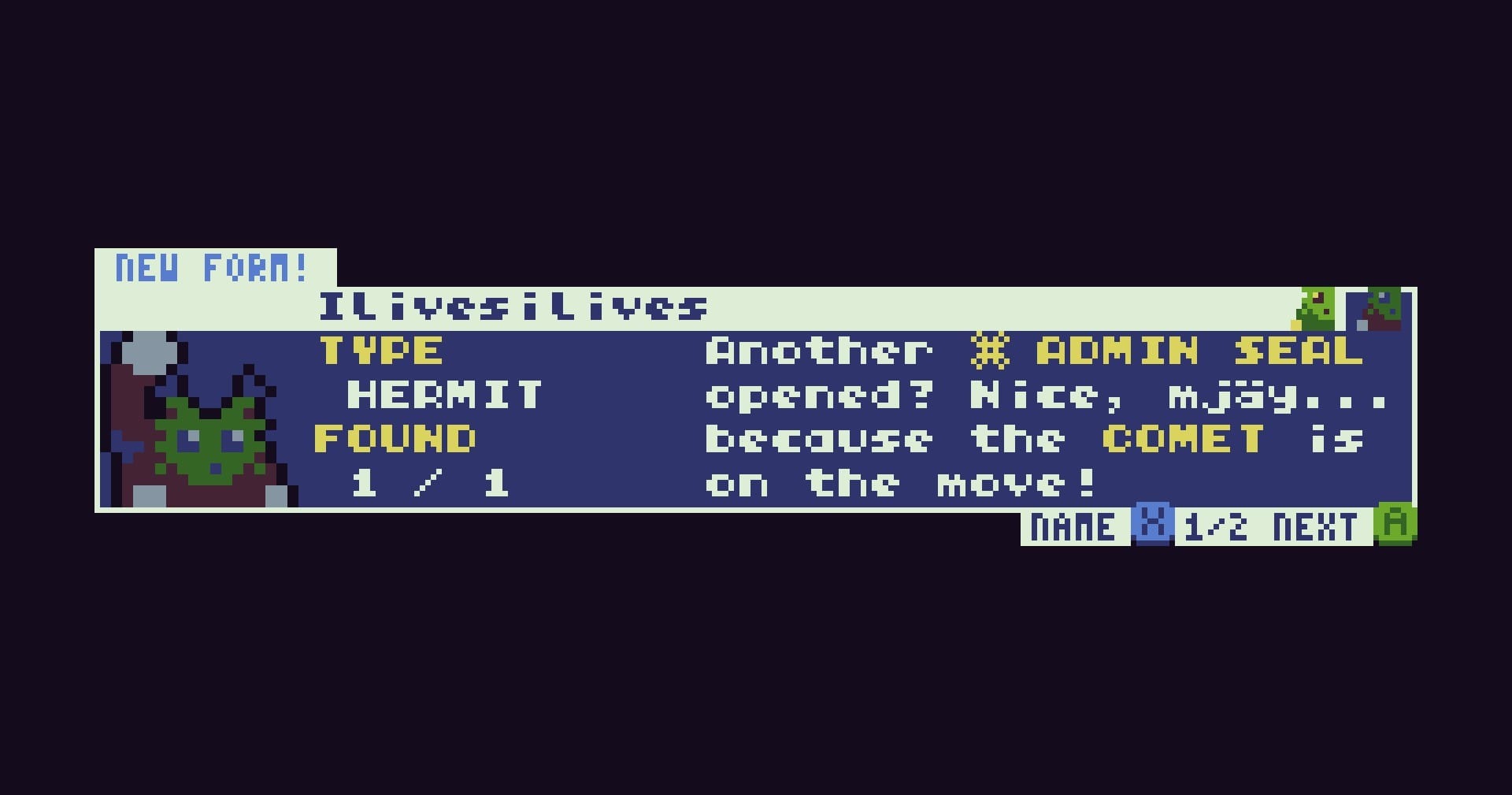
There's a pronunciation guide for every weird lil' guy's name.
Jumping on things and scanning them are the only modes of interaction here. Emuurom has no combat and your character, sent to this planet like a data upload, has no health bar and cannot die. Instead, the creatures that populate this planet either passively let you shove them around, move along fixed paths, or shove you back when prompted. One area has dolphin-like creatures that leap out of the water when you scan them, for example, so you scan them when they're beneath you and they shove you to a platform that's higher than you can jump.
I'm giving away that discovery for free because Emuurom is full of them, and you will intuit much of what you must do to progress without much conscious thought. The trick is to just keep scanning everything, old or new, and to trust that the game will reveal itself to you, at least until you reach its endgame. These reveals are delivered in part via written descriptions of the creatures and plants you encounter, each of which have names, behaviours, and occasionally short snippets of dialogue. They build up a picture of a world that is playfully alien and silly, when the pixels and puzzles might otherwise have been austere.
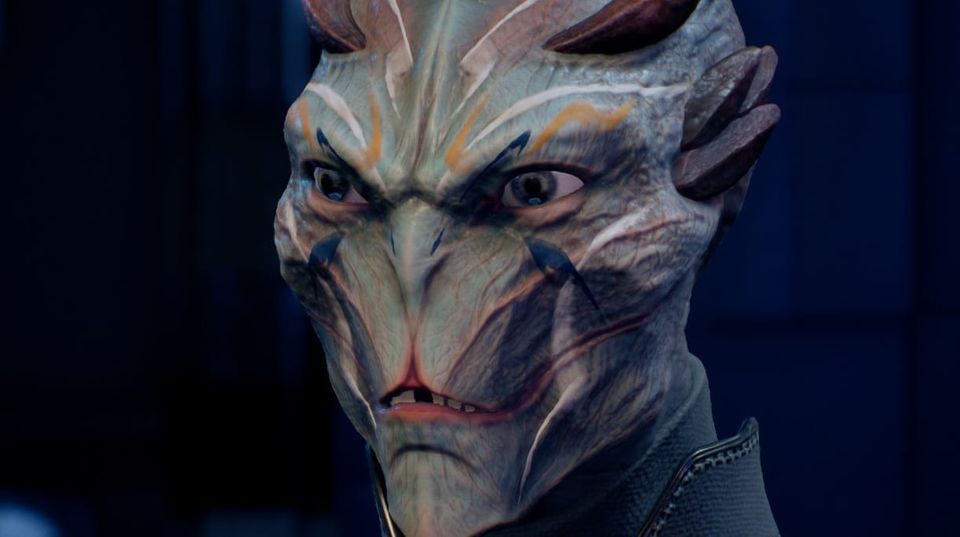
Why bother filing the serial numbers off a beloved sci-fi property when you can simply use the file to scratch on your signature and call it a day? To be fair to ZeroSpace, not everything here is a knock-off of Mass Effect - quite a lot of it also pilfers from StarCraft. For instance, it has good ol' boy flamethrower marines that would definitely call Mass Effect a "space opry" if they ever said anything that wasn't a pun about setting people on fire.
Mostly I just wish I'd known sooner that you can do this. No one can stop you, apparently! ZeroSpace has basically Matriarch Benezia in it. The not-Krogan are here too, except they're also sort of the Cabal from Destiny. It's all up for grabs! I hope you're as excited for Nic Reuben's Denis Villeneuve's Frank Herbert's Dune Part 3 as I am. ZeroSpace is shameless, shonky, and wince-inducingly pricey for how early access it currently is.
And I sort of love it.
I sort of love it because, while transparently making a clumsy smash and grab for other, better works, ZeroSpace doesn't