
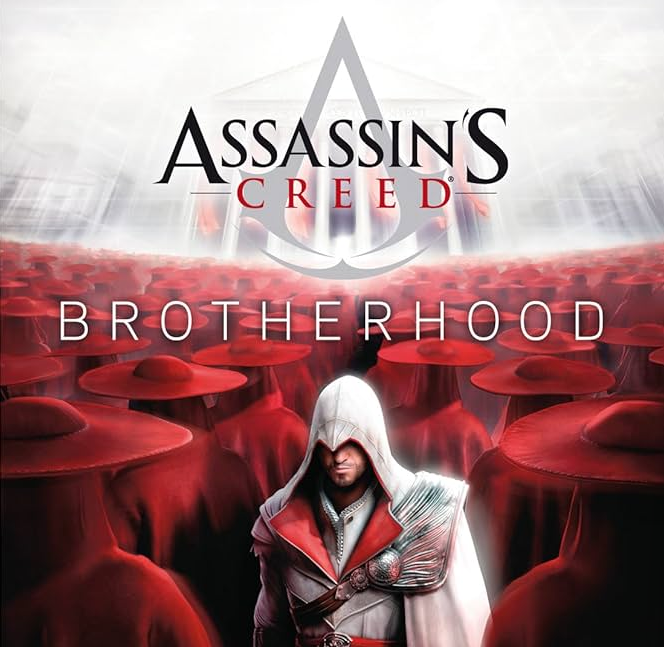
The Assassin's Creed Brotherhood novel doesn't understand how books work
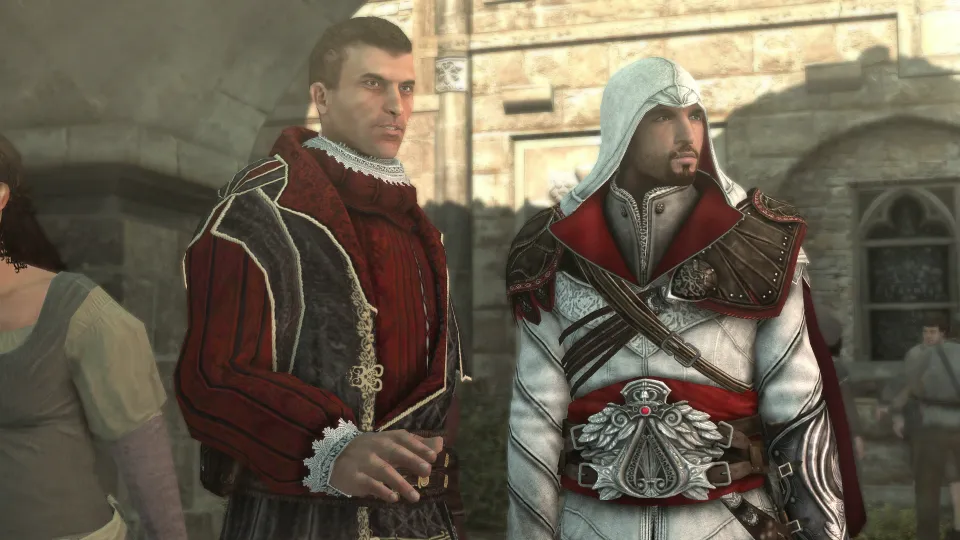
Total Playtime is a Patreon-supported podcast about videogames, hosted by Alice Bell, Jon Hicks, Brendan Caldwell and Nate Crowley. Jank has partnered with them to bring their premium episodes to our paying subscribers, and we’re also surfacing entries of Text Adventure, their video game book club.
This was the first book in the Text Adventure series, chosen according to the rigorous selection criteria of “what books do I own already,” and having completed the first season I am confident it is the worst. Its almost mesmerising awfulness is derived from a baffling commitment to including the entire plot of the game, which means it has to cram in five years of Ezio’s rebuilding the Guild of Assassins along with significant chunks of Rome. Nothing is excised, everything is present, including the clumsily staged tutorial VO.
This is comically antithetical to good storytelling: quite apart from the fact there’s enough plot here to support a five-part series, key parts of the narrative machinery are missing entirely. Characters are introduced and then murdered immediately, people take time out from plot beats to recount stealth mechanics and it’s studded with huge gaps in the chronology that the game never filled.
When you’re playing, borrowing the language of cinema, this can work. A cutscene ends on a clear forward-looking statement, the camera dips to black and then returns to a scene showing the task completed. The written word requires a more delicate transition that this book does not attempt, leading to things like Ezio’s delicate aristocratic sister becoming a murderous brothel madam in the space of a three-paragraph chapter that offers neither explanation or introspection. It just happens, and the story moves on.
No effort is made to fill in the blanks and knit things together more effectively, presumably because that wordcount must be saved to describe side missions and the mechanics of recruiting people to repair the city. It's like having the story narrated by a ten-year-old who knows the game off by heart and is just reciting it from memory, and I can only assume the writer - who does actually have a half-decent CV - was given the script, two weeks, and a directive not to change anything.
This sense that it was cranked out in the same room, and under the same pressure, as a sweating QA team staring down a certification deadline is enhanced by the section where a cutscene was very obviously cut last-minute, resulting in a scene that’s not in the game in which Leonardo da Vinci is simultaneously present and absent before the chapter ends mid-sentence. Hinting at the production crisis that presumably prompted this is the closest the book gets to subtext in its 500-plus pages.
Additions to the game script are rare and suggest more about the writer than the character: asides ruminating on the ineffable nature of the feminine psyche feel more like somebody working through a run of bad Tinder matches than capturing the spirit of an ageing Renaissance lethario. Meanwhile exposition of papal history, Ubisoft-brand stealth mechanics and the Animus ancestral-memory mechanic that props up the entire Assassin’s Creed universe are rattled off by side characters with the delicacy of a legalese voiceover on a TV spot for painkillers.
It’s a shining example of how narrative in games should be handled differently to narrative in fiction, demonstrated by its complete disdain for the conventions of the latter. A baffling creation and resolutely not worth reading, so I heartily recommend you listen to myself, Nate, Alice and Brendy - in his first appearance on the podcast - suffer through it instead. Or just play the game, of course.


Comments ()