The spirit of tower defence Flash games is alive in the 120,000 orcs I just killed
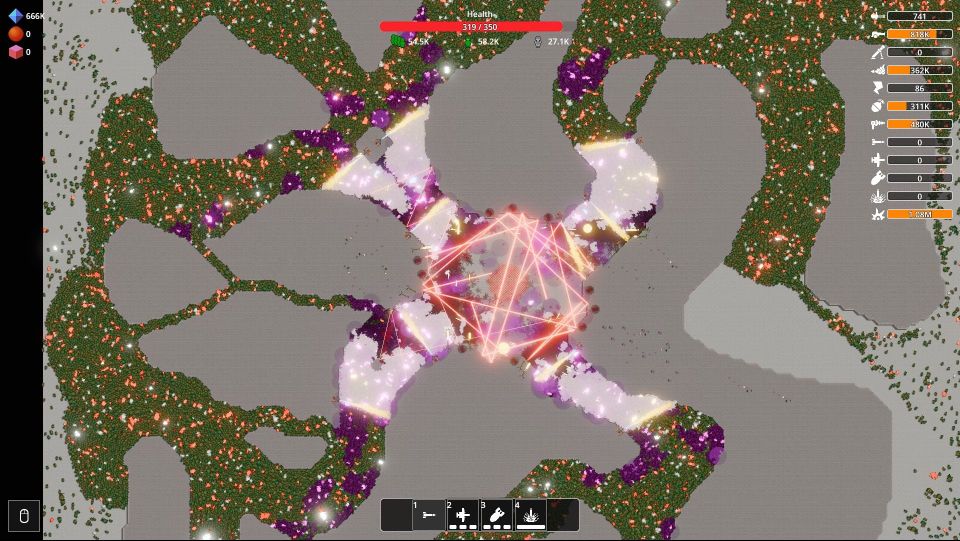
Hello to all fans of watching sand hypnotically pass through the bottleneck of an hourglass, I come to you with a gift. Sir, We Have An Orc Problem is a snacky kill 'em all about fending off a flood of little green murderers with lasers, flamethrowers, and cannons. There are so many of the wee freaks that they move like the particles of a physics-based fluid. It is pleasing to look at even before you find the choke points of each level and blast each small pillager into bloodbits with a mortar barrage.
It's cheap, it's chewable, and it reminds me, in the best possible way, of a compulsive Flash game that would have swept over every PC in my secondary school like a greasy, green plague of wicked idleness. Please, look at these runny GIFs and tell me you are not intrigued.
It is classic tower defence in many ways. You place turrets 'n' Tesla coils and try to stem the flow of attackers before they cross a threshold and slurp up all your health. You get extra abilities to help out in a pinch. You can call in an airplane strafing run. You get a big orbital cryo beam to freeze the orcflood momentarily in place. You can drop a nuke and watch as the orcs quickly refill the radioactive space left by the blast in less than a second.
It took me 11 luxuriating and unrushed hours to finish the game's 12 levels, which range from simple canyons with obvious strategic killzones to Rorschach-like labyrinths, and one playful Pachinko-inspired gorge.
It's not doing anything especially brazen with the genre, and in some ways its simplicity and traditionalism is its greatest strength. It is kind of ugly and unrefined, but this hardly matters, because it knows how a tower defender's brain is wired. It doesn't need a flashy art style to compel you to remove all guns and try a new setup. And despite each individual orc sprite looking like a hastily scribbled pixel poo, the real visual strength is in the crowd. The liquid movement of the horde is enough to make me rub my hands together like a lab rat who is about to get a snack, and it is matched by the satisfying firework display that occurs when you have set up your deathtraps to annihilate all-comers.
I sometimes like to think that I am better than the psi-hooks game designers shuck into my brainmeat, and that I cannot be driven to play things compulsively. Not me, surely, not after everything I have seen. Your little game-making tricks won't work on me. But I went back and replayed each level of this simple-ass tower defence game just to get all the bonus achievements. I never do this. Sir, it is I who have the orc problem.
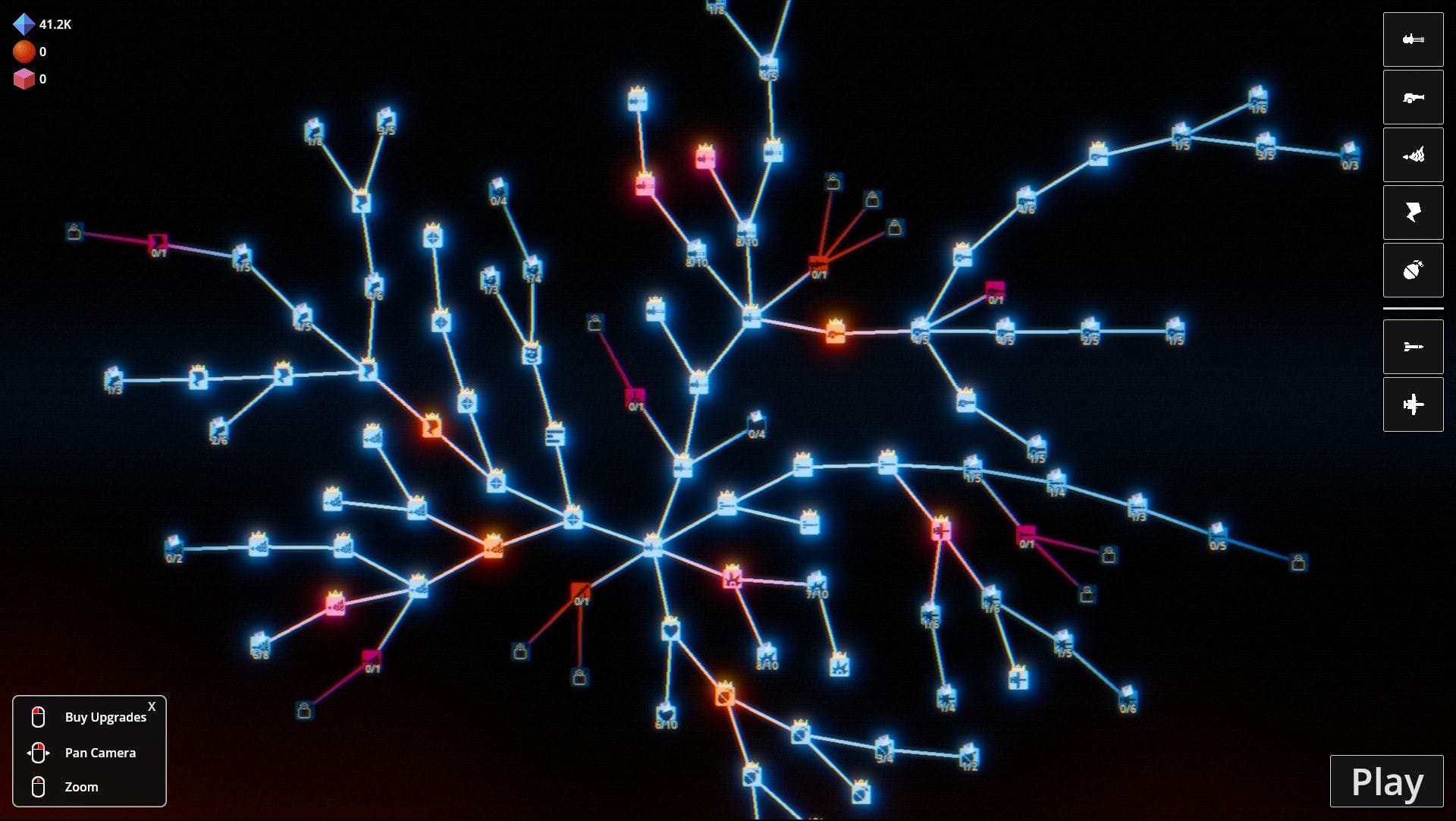
Part of that might have something to do with the piecemeal "incremental" skill tree that essentially forces replays and creates a slow, if artificial, sense of progression. Ah, you lost to the flood this time, but you survived a little longer. Maybe with an extra machine gun to place, a new grenade launcher ability, and a 5% increase to some bullshit-or-other, you'll scrape by with a few chunks of health next time. This is long-proven game design jiggery-pokery, a classic way to solve a game's pacing with careful numbers-go-up thresholds.
I don't usually like it. I stack incremental games in a pile close to idle games, even if I recognise the vital differences that make the former more forgivable than the latter for their habit-forming gimmicks. Any time I see a tree like the one in this game, it strikes me as similar to Ubisoft's "rational" game design formulae, insofar as it is there to artificially drag out an experience that could be more compact if you just cut the itty-bitty upgrades and stuck to unlocks that add new abilities. But this is tower defence, and steadily flowing upgrades are the norm, so I suppose why not use an incremental skill tree to do this. I can get over it when the meat of the game - plopping down lil turrets and watching dudes go splat - is good enough by itself.
If you're looking for more complex analogues, there are plenty. It is not as deep as the Creeper World series, less refined than They Are Billions, much rougher than Diplomacy Is Not An Option, and closer in its DNA to every throwaway tower defence game that graced mobile phones from the dawn of the Google Play store.
But its heart is pure Flash. It is approachable to anyone with an idle mouse and half an hour to waste. It belongs on a scummy website that steals Flash games from other, better websites, next to the stick-figure flinging of Defend Your Castle or the poor balloon-limbed victim of Interactive Buddy. I mean all this in an unreservedly complimentary way. I would play Sir, We Have An Orc Problem on the computers in the university library and get kicked out for wasting student resources.
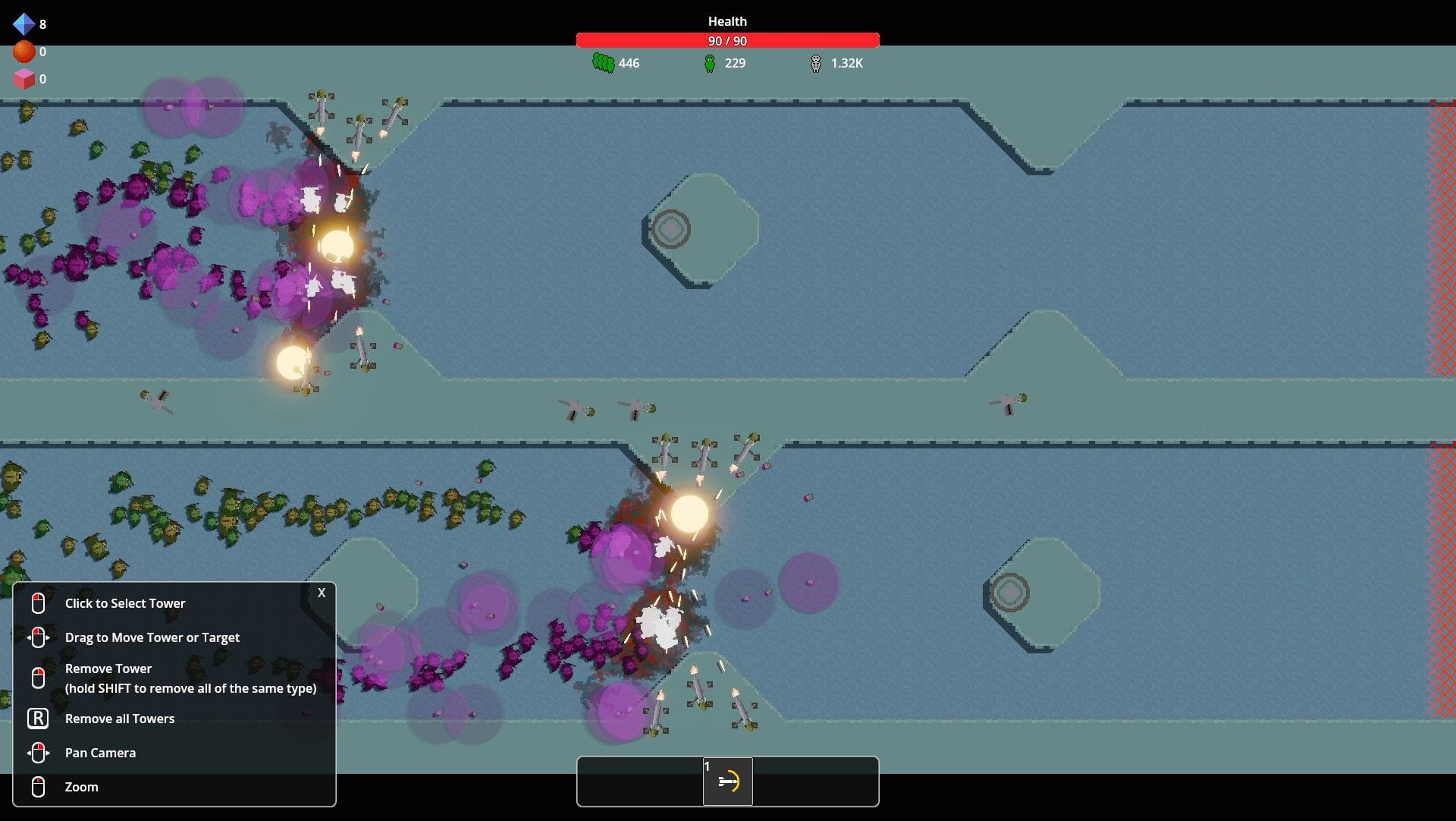
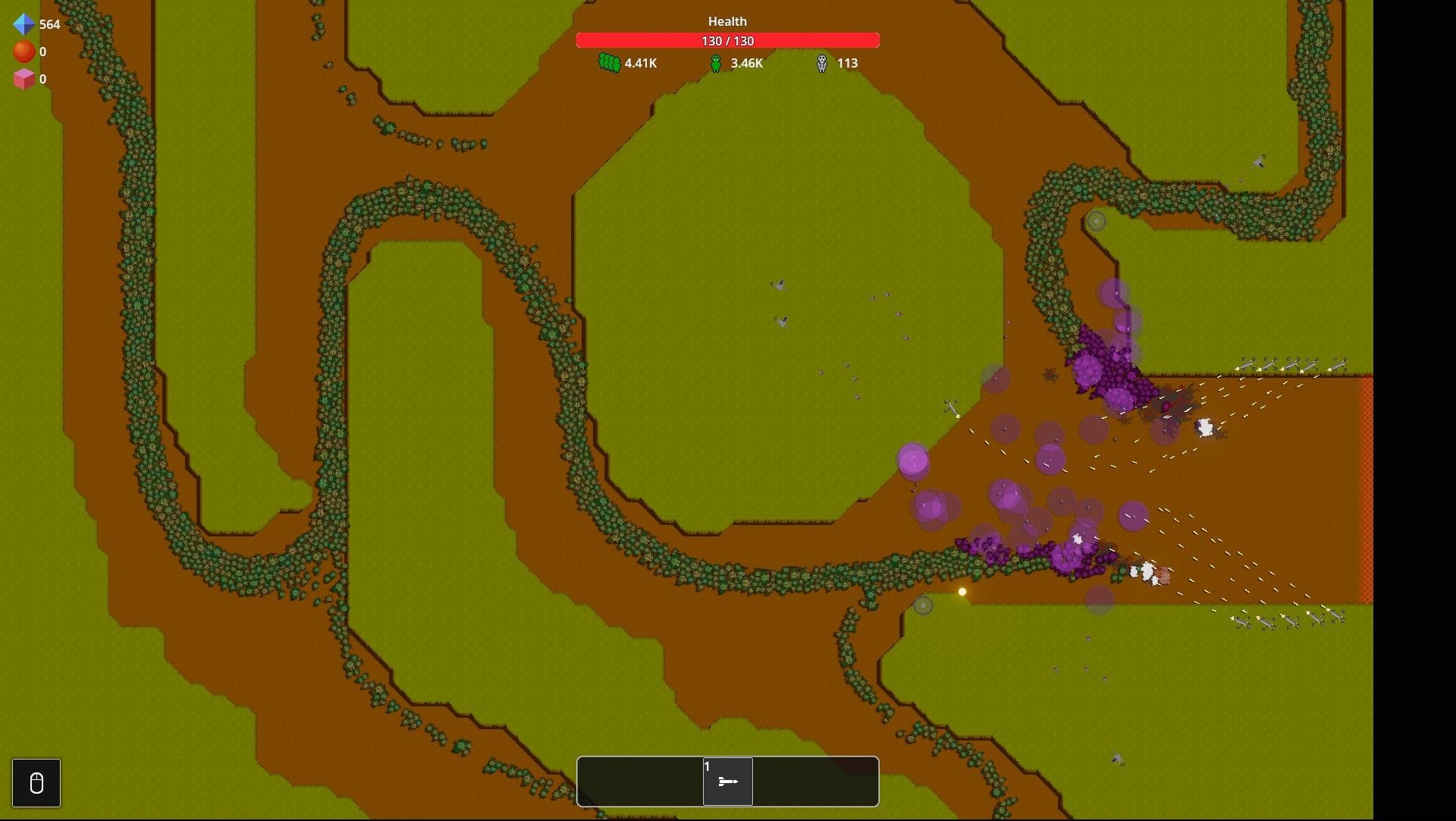
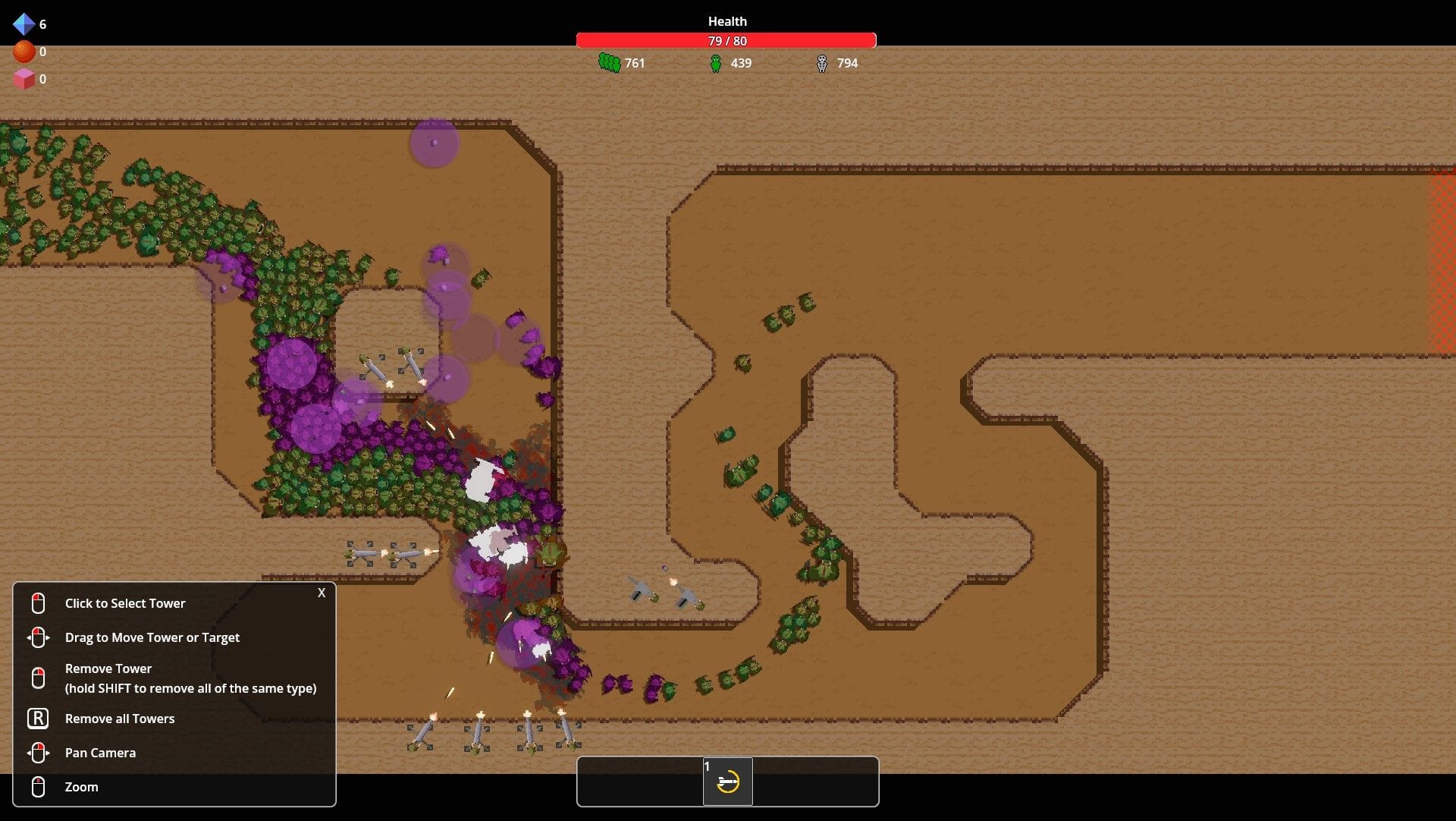
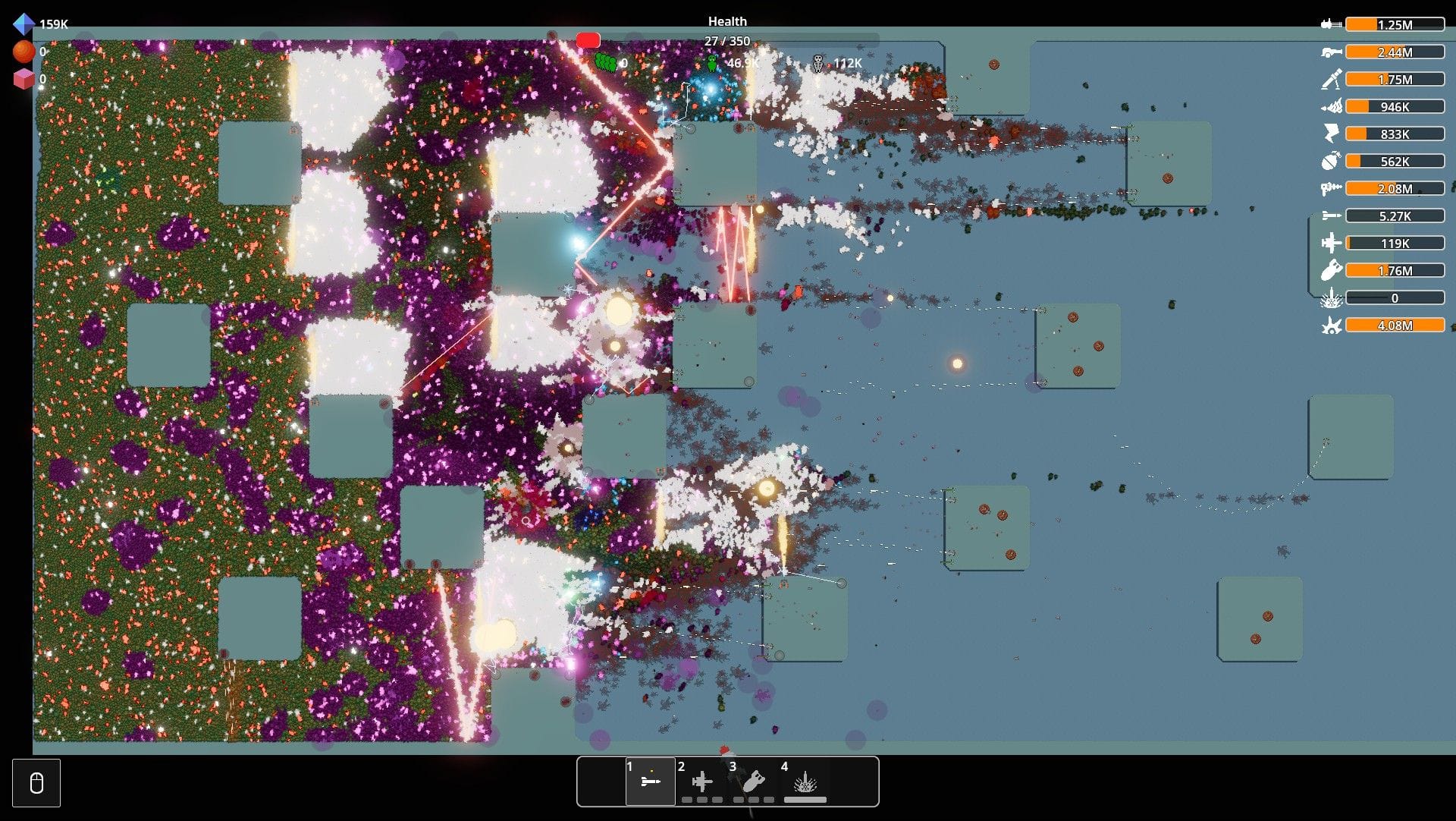
Early levels are often quite small and zoomed-in corridors or canyons, but later ones cover big, increasingly abstract spaces.
It is also excellent value for money compared to other recent virtual enjoyments. As a lover of Bungie's original Halo, I picked up the much-hypified remake last week. I played 37 minutes of it and then went to have a sad sit down in the shower. The grainy blur, limited controller options, and needlessly stretched cinematics killed all my curiosity by the time I'd finished the first level. Everyone except the man in the motorbike helmet had a bad case of Unrealface and it depressed me. I had vague plans to write about Xborx's expensive rehash, but by the end of my ablutions I decided not to produce further opinions to feed to the opinions machine which is currently digesting - let me see - 800 billion opinions.
Instead, I spent the week murdering grassy-coloured dudes with tusks in a scroll-too-fast-and-you'll-miss-it tower defender with shonky programmer art. You may say: "Brendan, please, these two games are not comparable, you are not making sense." But I am only talking in the cold, hard, statistically objective sense of fun-had-per-second, which can easily be measured in murders. That is to say, I killed more living things in one level of Sir Orcs than Master Chief will kill in a single lifetime.
Is this a bargain? Yes. Let us calculate this using some creative mathematics. At 645,600 murders in total, we arrive at an average 58,690 extrajudicial orc killings per hour. We are ending lives here at a rate of 978 Tolkienoids per minute. The game costs £9. That is 716 homicides per penny. And all this is assuming you play each level only once. Now, I'm not an economist, but the conclusion seems clear: if the developer of this game creates, say, one or two DLC packs, they will one day have enough money to buy Microsoft. I believe I am correct.
The downside (and this is always one of the best "downsides" any game can have) is that the green grunt massacre is over too soon. I'd easily munch my way through a dozen more abstract battlefields or twisty ice kingdoms. I'm desperate for this to have a level editor. It would just make sense. The Steam Workshop is as close as we can get to Ebaumsworld in 2026.



Comments ()