
What are you running for?
There is a loop of behaviour I get into when I see a game being highly praised by my peers. I try the game, I don't like it, I stew with annoyance, I see more praise, I decide I must be doing something wrong, I try it again, I still don't like it. I write a blast of vaporous thoughts about why I don't like it, but I'm only half-convinced by my own screed, and I see more people enthusing about the game. I think: this can't be right, I am missing something, I am not giving this its fair shake, a proper evaluation, I am playing it wrong, I must commit to it somehow, I must roleplay, or I must get deeper, it will reveal itself soon, surely. I play again, and I still don't like it.
This annoys me because I feel locked out of enjoying, even with great effort, something that others enjoy with no effort at all. This is a silly emotion, but a persistent one. I want to like the videogame. Why can't I just like it? Yes, I am talking about Marathon.
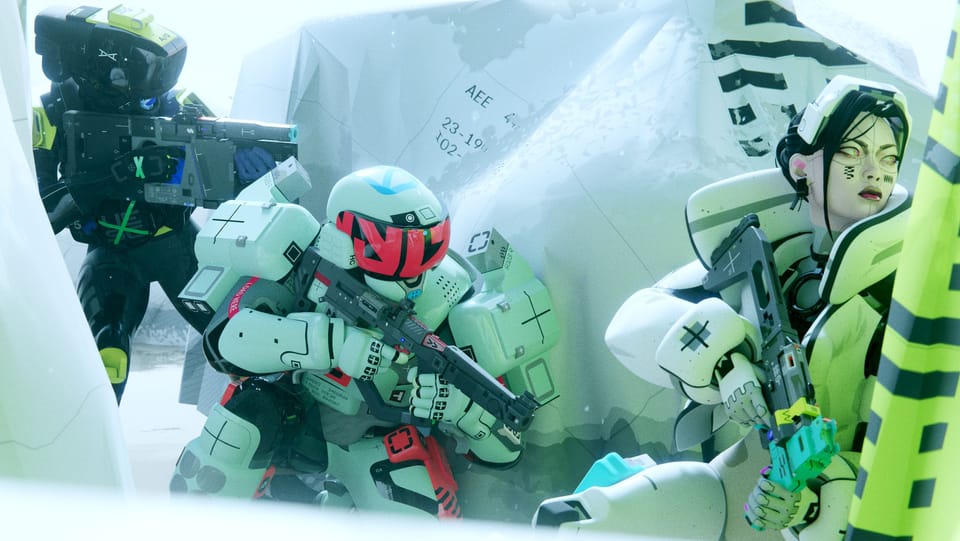
Some praise it as a tense and fatal teamfight generator, while others enjoy that you can play solo sneaksily. But most of the positive takes on Bungie's new FPS effectively come down to "it's an extraction shooter!" I've played it for a few hours and can confirm this. It IS an extraction shooter. But I have a hard time seeing what is exceptional about it aside from an esoteric art style based on layers of iconography that look like a London advertising firm sponsored a WipeOut hovercraft.
Something I have seen praised a lot is that the game offers various corpo-backed quests as a more interesting incentive to enter the murderfields than loot gathering alone. But then you discover these quests are stuff like "kill 10 enemies" or "pick up that do-hickey" or "press the button over there". The type of gun homework that has been in shooters since sweaty matches of Call Of Duty: Modern Warfare. That the presence of fetchquestery in Marathon is eliciting such wows and cools is sort of baffling. As if ticking off a to-do list to get coins and bullets is somehow more meaningful than getting loot for the sake of more loot.
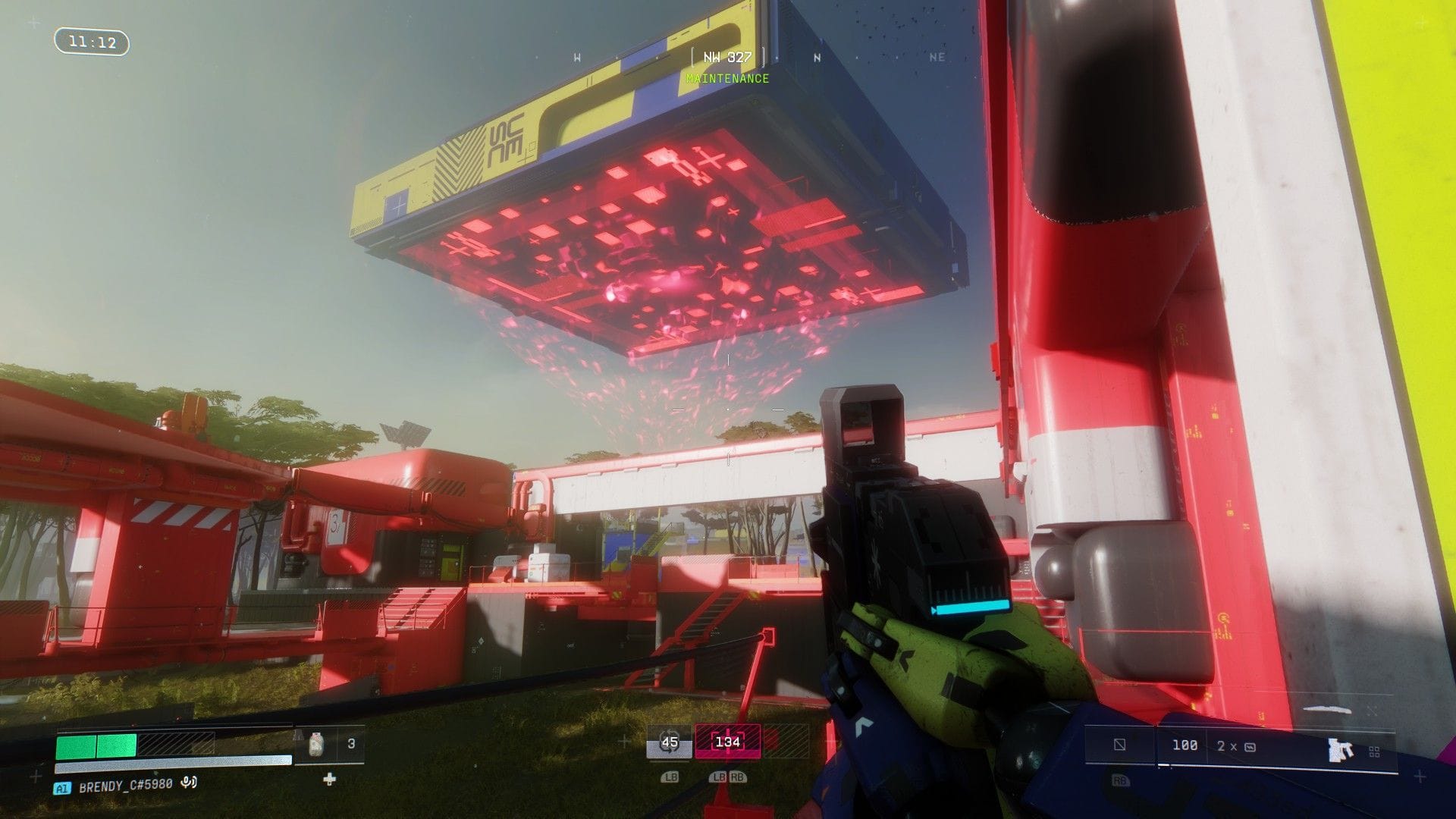
Marathon annoys me, I guess is what I'm saying, and the response to Marathon annoys me. Mostly because I'm getting FOMO even as I dislike it, a deep envy of all the gleeful firearm phreaks trotting about having a good time because their brains are wired differently, the happy bastards. I can't do it. Marathon does not seem to offer any more motivation to me than the last extractoblaster, Arc Raiders, which was equally beloved and equally slathered in transparent meta-progression live service vom. Upgrade your chicken, you'll need to collect three lemons. No, I don't know why, and nobody does. Do your homework, clickrat, and stop expecting anything meaningful from big budget games.
Part of my annoyance comes from feeling like I am going mad alone. I feel like people don't really acknowledge why they like these games. Like we are commonly incapable of explaining what it is about the rat wheel that soothes our soul. Games like this are distractions, and distraction is an increasingly valuable necessity in a world that bombards us with stressors and terrors from every angle. The adrenaline offered by a close shave in Tarkov can feel to our bodies like we have taken action, that we have done something, that this buzz, this combat high, is the same as having gone for a big run or swum successfully away from a shark. When in reality all we have done is made a small bet on our own virtual life.
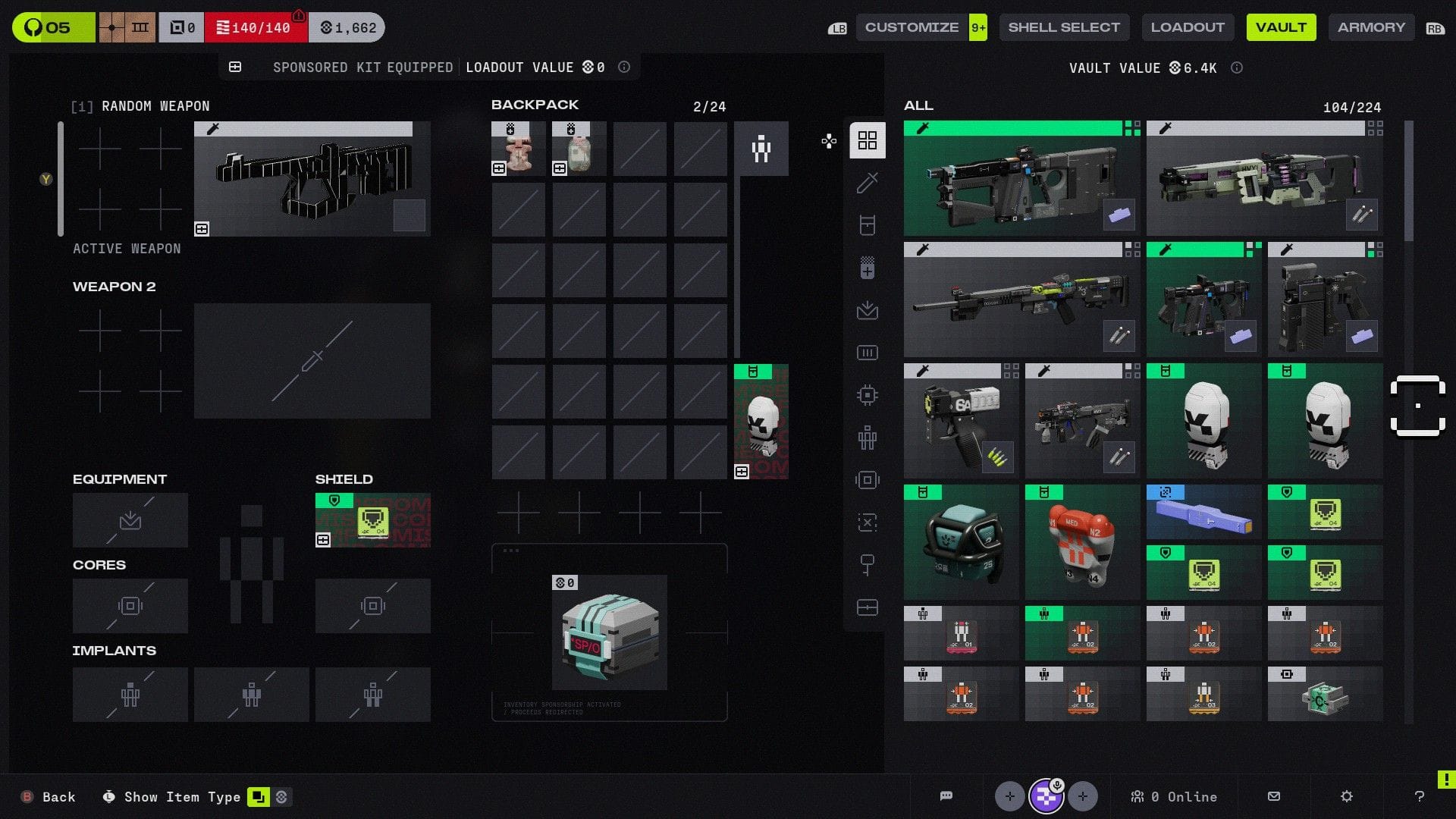
That makes cyber-treadmills like Marathon powerful aids in forgetting what is bothering us, but it doesn't provide meaning in and of itself, which is what I want from playable art (even the dumb shooty kind). The activity of booting, looting, and shooting can feel swell, but you don't get into something like Marathon because it provides you with any lasting sense of purpose. You get into it because you crave those shaking hands of victory, that glandular fizz, or you have become hooked on its skill tree, its dopamine-releasing tickboxes. Or you just get into it because your friends are into it, which, I mean, fair enough. That at least provides meaning, if only by proxy.
(I don't mean to be so judgemental. I also play games to distract myself. I am deep in a Slay The Spire 2 phase, and every run ends in bloody death. Slay The Spire 2 is unforgiving, in a very different way to Marathon. But at least its final encounters do not fuck with my brain chemistry in quite so drastic a way - a mental realm which I am more and more wary of disrupting.)
So I am annoyed about Marathon because I am afraid of its buzz. And I am further annoyed about the praise it gets, buzz or not, because I don't think it does anything interesting beyond looking like an epileptic's worst nightmare entirely on purpose. It is an extraction shooter that obeys every norm of the genre, with the added norms of other genres like the hero shooter. Its changes to the formula (smaller maps, long skill cooldowns, no safe pockets) are noticeable mainly to genre fanatics, and practically invisible when you step back to examine your run-by-run actions. You are still gambling a loadout for a better loadout.
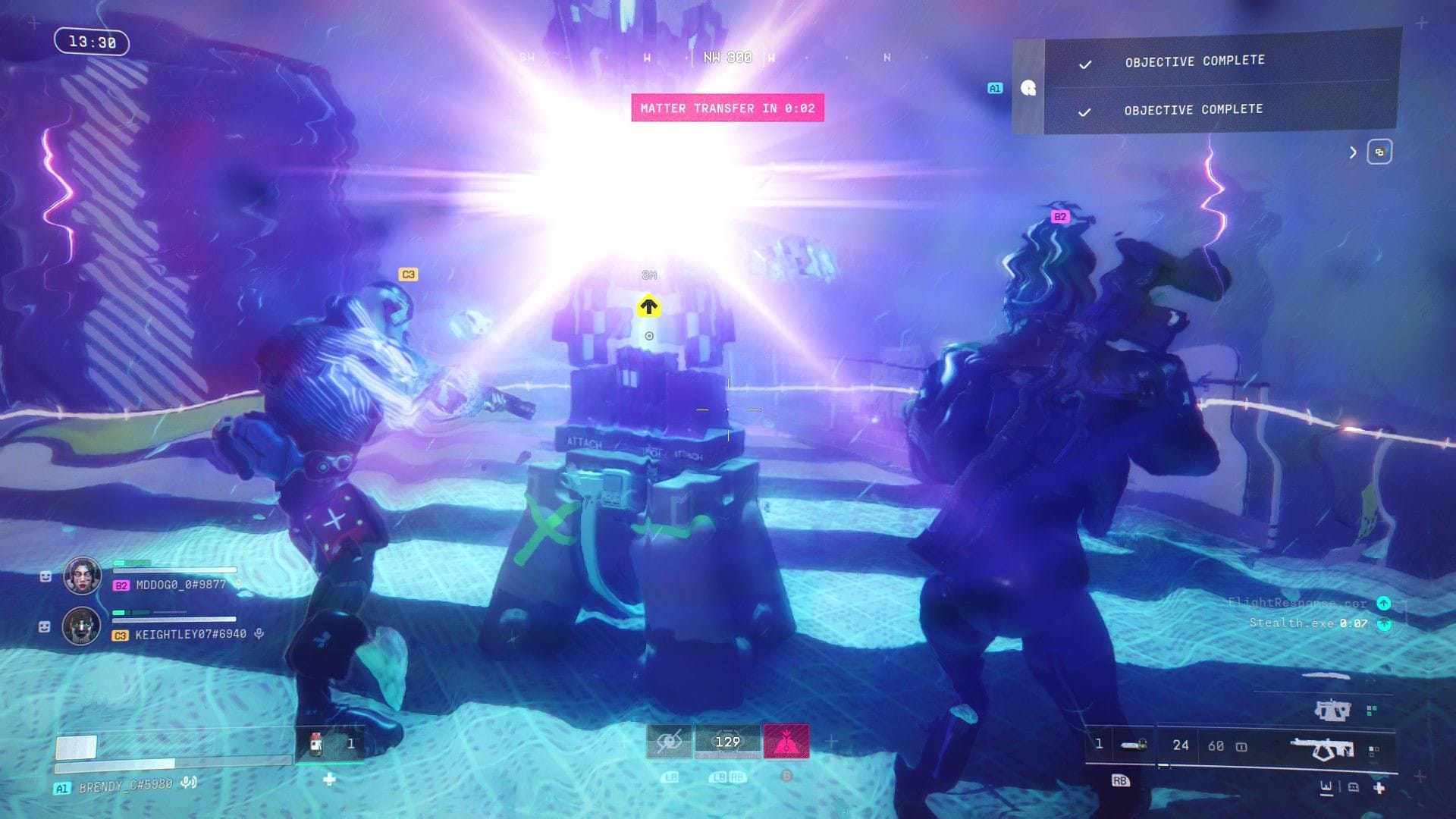
If you've never played an extract 'em up, the game may blow your mind. If you are a connoisseur of them, it might intrigue you with its subtleties. But if you have frowned at every extraction shooter you've ever tried, chances are this will just be another sadface. It is honed, professional, and familiar. Its only major differentiation so far - an extra-hard endgame level - is to be completed in the style of a Destiny 2 raid, which doesn't offer much to anyone without a full weekend to set aside to devote to such an undertaking.
I feel vexed that the technical and artistic skill of Bungie has once again been put to work on levels exclusively for those with the time to spend 12 hours playing through a single mission. The feudal hierarchy of fandom continues to be an intentional strategy of Bungie; only those who swear most fealty get the best food at the feast. Meanwhile, the only experience normal players will get of this level is via hollering streamers caught up in their final moment of victory, or final moment of exhausted relief, it is hard to tell which.
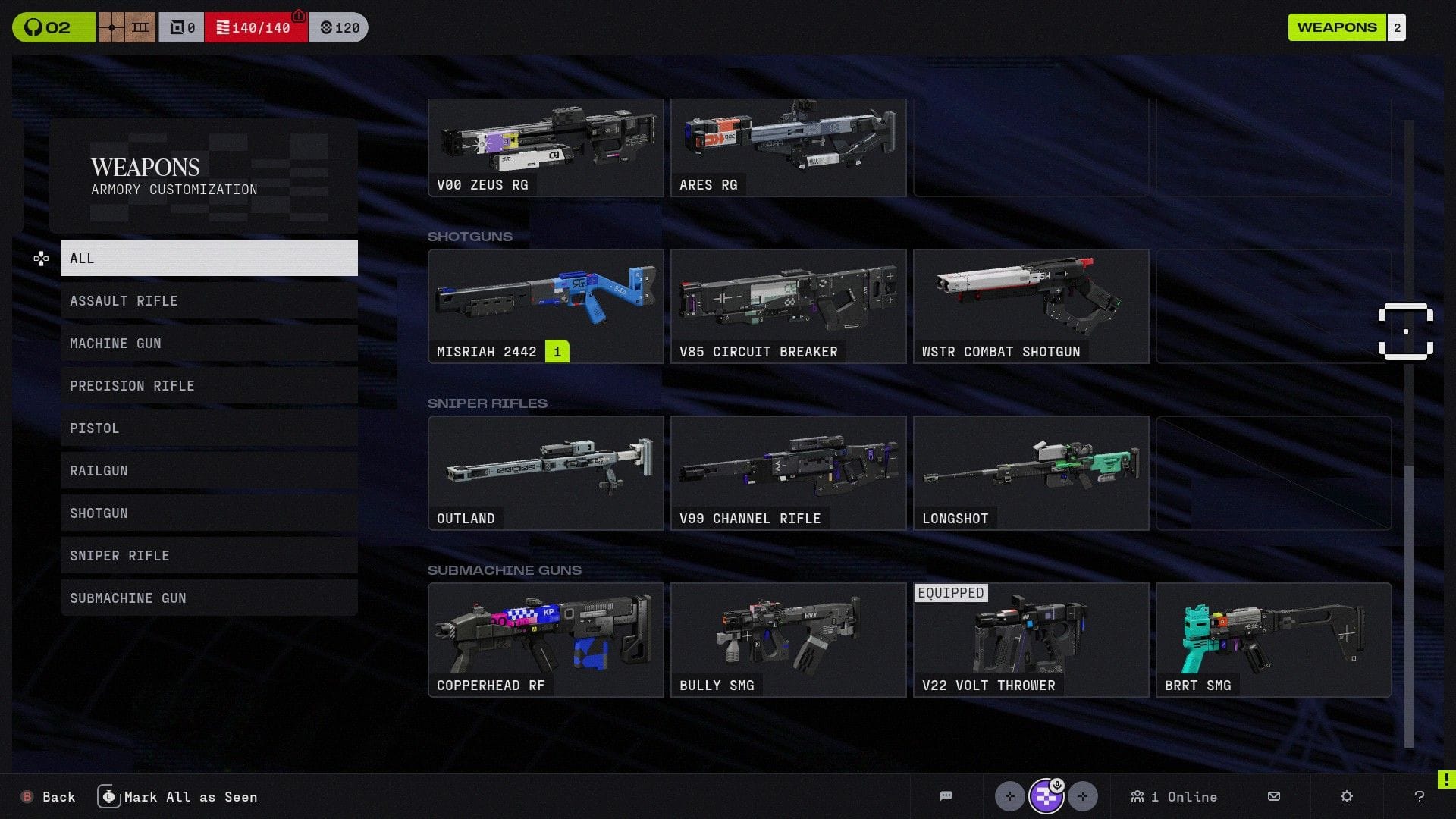
It is maybe unfair to expect Bungie, of all people, to deliver us from the everlasting reign of the rat wheel shooter. Destiny 2 was also a Skinner Box, yet even it was disguised with set pieces, NPC pals, an MMO hometown, speeder bikes, varied level designs and campaigns that were constantly replaced (for better or worse). Its guns were not all cuboid. For all its MMO fluff, it at least felt like a game where you could do a slightly different thing each night - a few story missions, some looty sidequesting, a bossy dungeon, a raid (eesh). You could play through the campaign and forget all about it for as many years as it remained in existence.
By contrast, Marathon is the gun-squirreling rat wheel of Destiny refined down to a single type of PvP play - the in 'n' out extractogambler. Like every similar game before it, much of the chemical whomp of a run comes in the final minute or two, when you have pressed the big, attention-alerting button that says: "I am trying to escape, please come and kill me." I can't deny the spike in heart rate, or the real-world-dissolving tension of this moment. But I can say it exists in every other game like it, and since I find this standoff moment more interesting in games where kill-on-sight is not an expectation but a 50-50 coin flip, this moment can only ever be as compelling to me now as it was when I first saw it ten years ago in the Division's Dark Zone, where it was an interesting surprise, an extra multiplayer mode with strange and compelling wrinkles all of its own.
Going into the Dark Zone felt like a rabid holiday into multiplayer territory. You could dip in to get high level gear you would use to help complete the rest of the regular game. It was a gamble given purpose, even if that purpose was only to finish another looter shooter. Which just highlights another reason I can't buy into Bungie's latest hamster ball. Marathons are typically lauded for the feeling of pride and accomplishment when you complete them. This Marathon doesn't have a finish line.
Arc Raiders at least encouraged an element of social tension, with all its DayZ-esque yelps of "friendly!" and carebear roleplayers balancing out the trigger happy murderfiends. And even this was an overhyped remixing of Tarkov's vanilla fundamentals. Few extraction shooters have mined the social potential of human-on-human run-ins with any leftfield design choices. It's easier, for Bungie, to make Tarkov in space with Apex Legends characters, a process of game combinating that feels like it was done in a soulless conference room on a wet November day, a pitch deck full of screenshots of Hunt: Showdown with a robot's head sadly photoshopped onto one of the swamp cowboys.
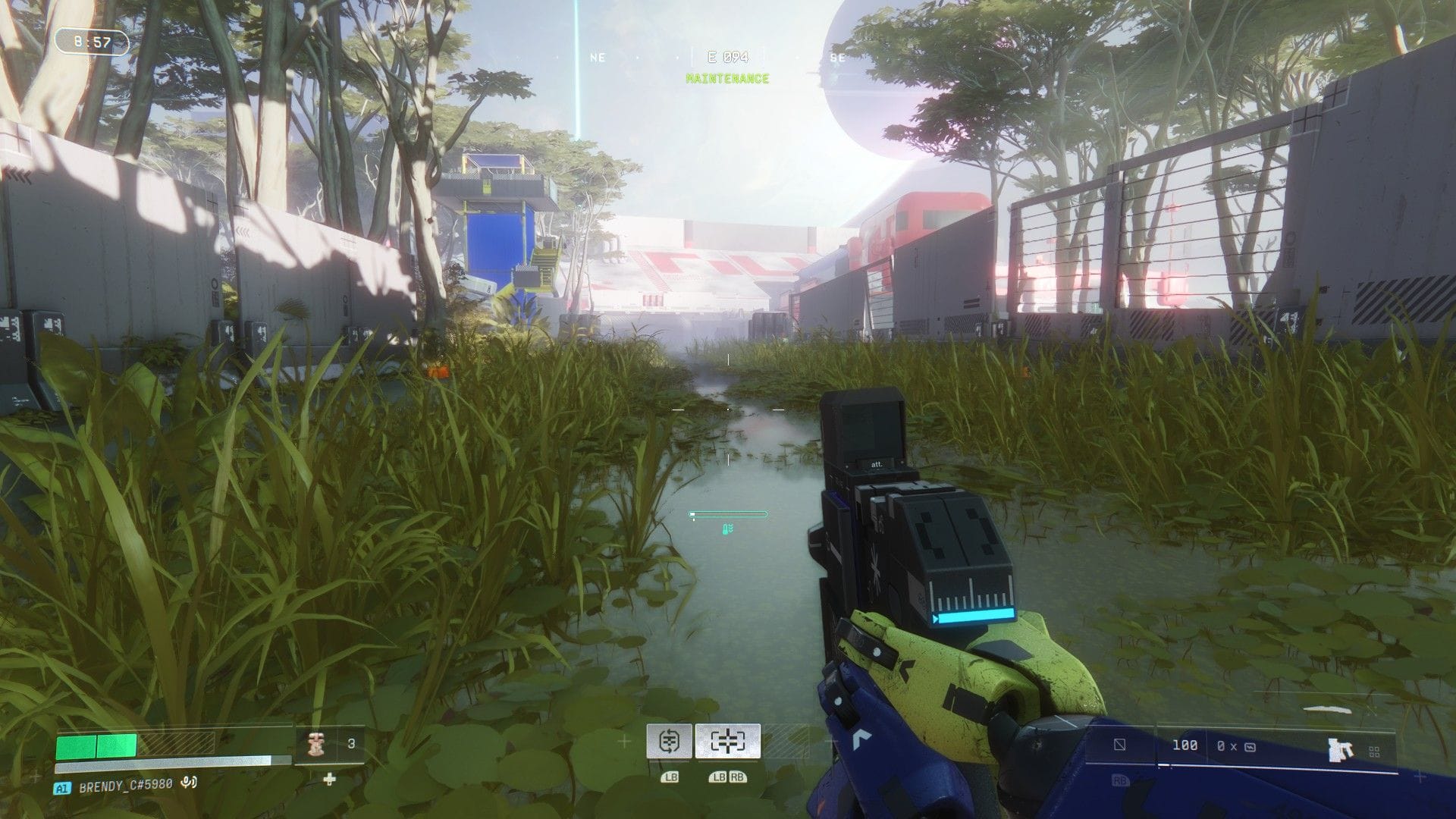
And then there is that aesthetic, which is increasingly being labelled a typographical Marmite - "you'll either love it or hate it". The thing is, I don't love it, but I could grow to love it, if only I were given a sufficiently interesting narrative reason to do so. Lore screeds in a codex are not a reason. Item descriptions do not provide a level of videogame storytelling that can carry the weight of such an aesthetic, and the blinky-bloopy advertising videos that unlock along the way are not making me any more invested, as I sit there passively watching, offering nothing of myself toward this tale empty of stakes or personalities. This is worldbuilding. This is vibe. A vibe is not a story.
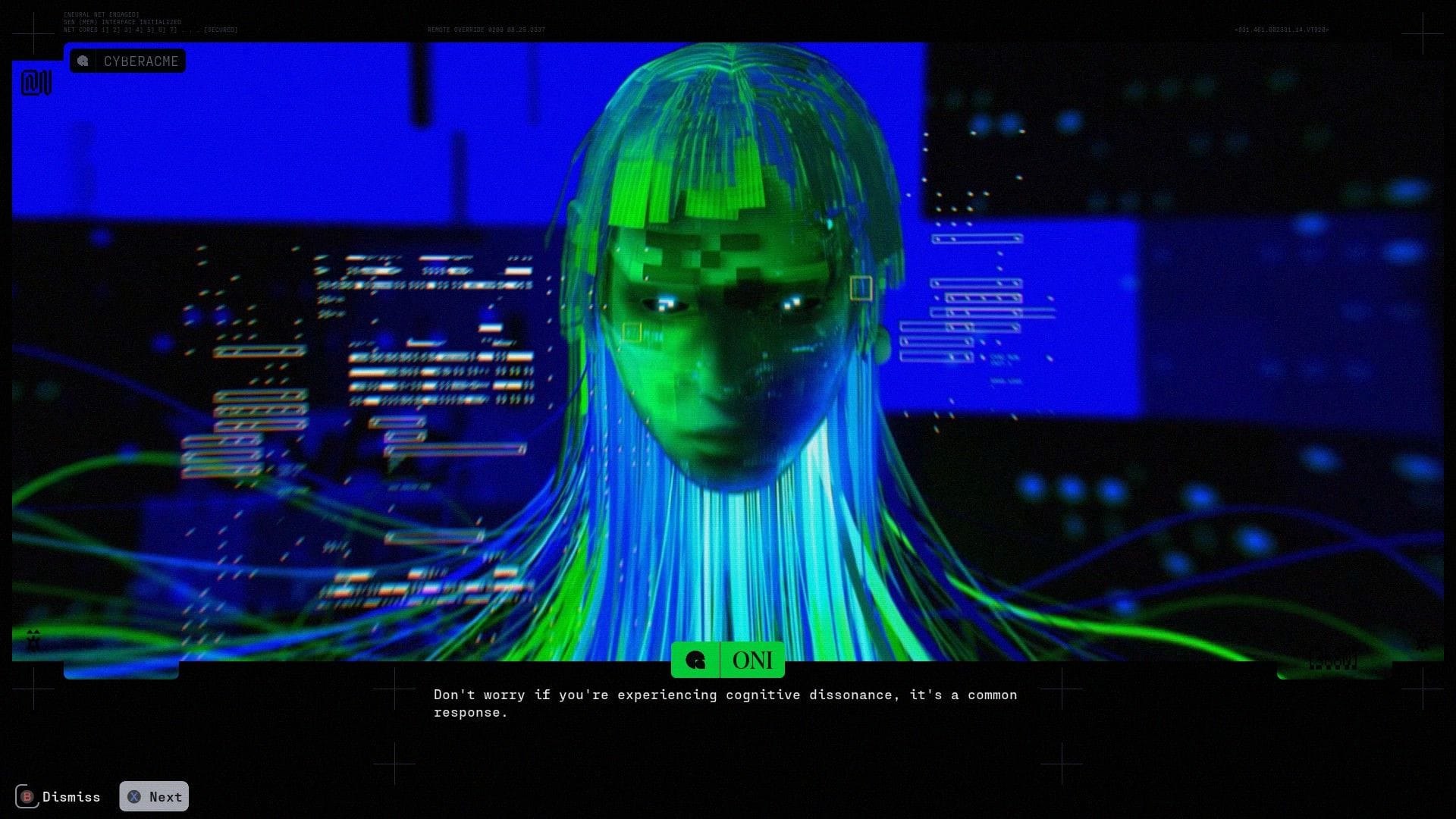
I realise I am firmly into "I just wish this were a different game" territory. But Marathon is further proof that Bungie's business priorities have long ruled over the studio's creative functions with the despotic un-wisdom of the market. As many have already lamented, this art style, sound design, and technical craft would have done wonders for a single player shooter campaign. But you cannot MoNeTiZe that, so nobody makes those anymore. The robotic presence who guides you through Marathon's opening missions, Oni, says to you at one point that some amount of cognitive dissonance is normal in your field of work as a corporate-sponsored killer for hire. It is also normal to experience it, Oni, in games that present themselves as a commentary on capitalism yet are also made to maximise earnout from cosmetics and season passes and confusing pseudocurrencies.
I cannot like Marathon, as much as I want to, because I live with a curse that means I start to lose interest as soon as I see the quiet treadmill labelled with a sticker that says "player retention". The very thing that most designers are taught is necessary to keep players hanging around - the loot loop, the increasing meters, the rank-go-up - is the exact thing I want to walk away from.
All games have a shelf life, an amount of time I or any player will pay attention to it. In a singleplayer shooter the hard limit of that attentional lifecycle is a blessing. But multiplayer live service games like Marathon refuse to accept their own mortality. Instead they try to infinitely hack your brain using their systems of progression as a payload, with the grasping hand and jingling lights of a slot machine, a means of extracting your attention in an artificial way for as long as such an udder can be milked. If you think drawing parallels to gambling is a bit hand-wringy, consider that Marathon's ranked mode uses the explicit language of gambling to explain its rules. You make a "gear ante". You choose between "low stakes" and "high stakes" matchmaking pools. You gather "tag chips" that cash out at the moment of exfiltration.
Thus, the headline. What are you running for? What is the actual motivation offered by Marathon? Be honest. Is it the game that is keeping you here? Whether that is the verbs of the game: running, shooting, diving, reloading, saving friends, attacking rivals, emoting to strangers. Or the story of the game: the characters, plot, world. Or is it the tables of loot, obfuscated and elaborate, getting X so you can get Y, so you can get Z? Is it the fact that with every run you have a flutter?
Of course, it's probably everything together. And I too like a scratchcard now and then. But don't fool yourself that this game is revolutionising a genre when it is simply going double-or-nothing on the simple psychological and adrenal hacks that defines said genre.
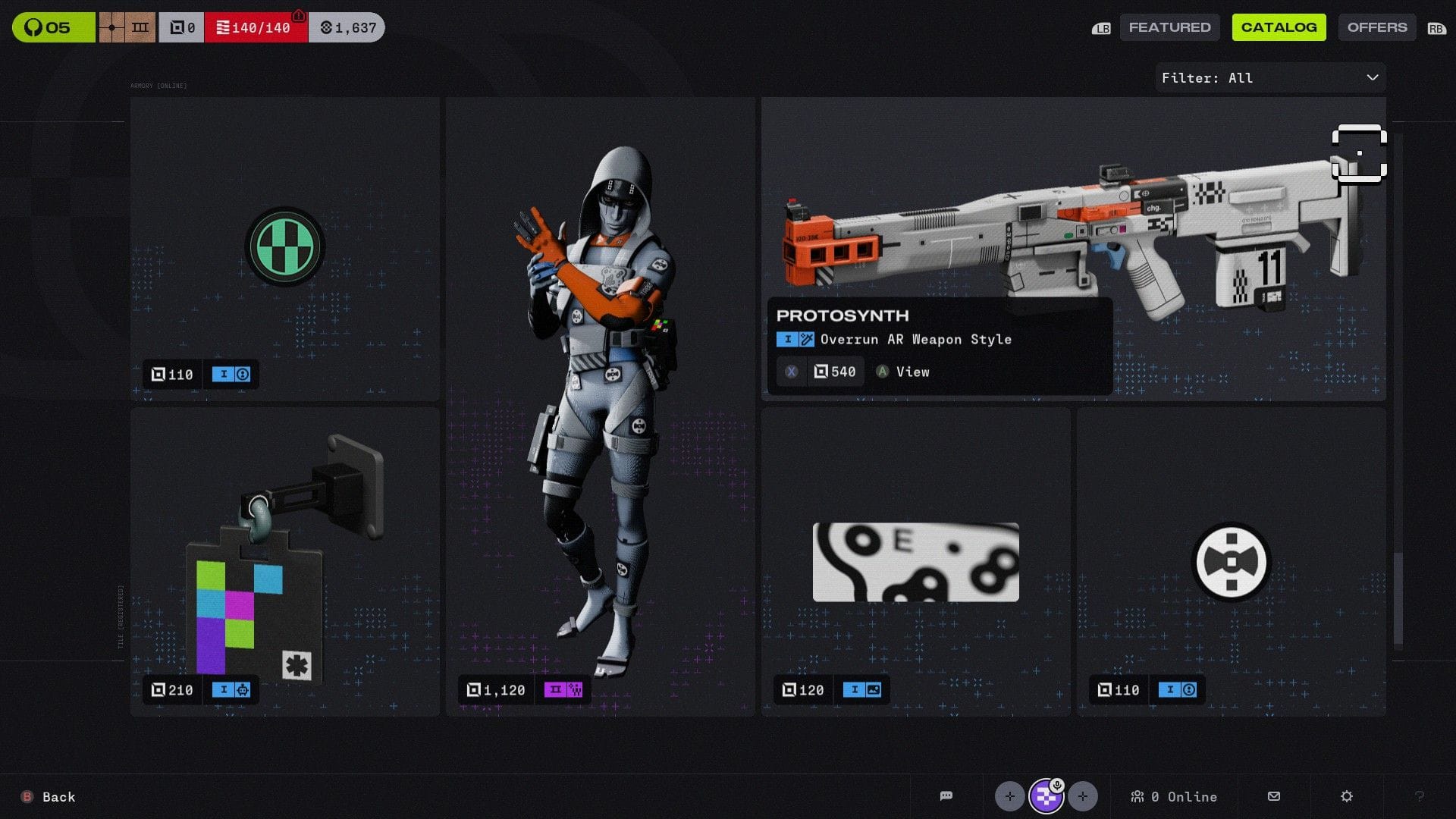
That's why it falls apart for me. I find the forces within Marathon's menus and gun homework emotionally at odds with how I like to play games. I like having characters who feel real, not like cashiers with a robot voice. I like a story with soul, change, and momentum, not a collection of lore documents rendered in green text as an Easter eggy nod to the studio's previous games, made when storytelling was given more than lip service. I like a sense of downtime after a hard battle. Not a cheapened moment of rest polluted by systems of drawn-out numberwanging, in which you show your work to teacher and add one more negligible pip to your skill tree, a bump to your stamina bar you absolutely will not notice.
Games are best when they are out there, in the button presses and exploring the land, in the space through which you move and fight, and the wee fictional people you meet along the way. But much of what is built to motivate players in games like Marathon keeps your mind trapped in here, in the flickering boxes of a user interface made to mimic a friendly face. In Arc Raiders, it is a chicken. In Marathon, it is a static picture of a woman with wires for a neck.
So I guess this article is one giant complaint about Marathon specifically, which remains a decently made shooter perfectly positioned to be popular for a to-be-determined number of months or years, but also a broader lament about games as a service, the technofeudalist tendrils wiggling further and further into our art form. A sadness that the visible craft of big budget first-person shooters - the enemy encounter design, the gunplay, the level layouts, the sound effects - has been hyperfocused on yet another monetizable merry-go-round, and not something more meaningful, lasting, or memorable. A good rat wheel is still a rat wheel, no matter how many cool barcodes you print on it.





Comments ()