Zero Parades: For Dead Spies review
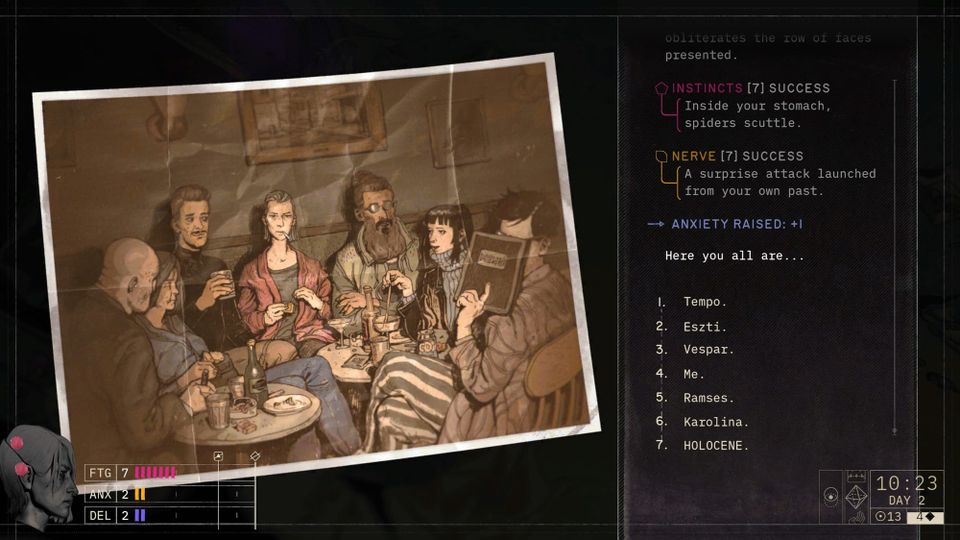
At the bazaar, the citizens of Portofiro rummage through bootleg tapes from La Luz, a techno-fascist empire under a cultural blockade that prohibits the genuine article. Everywhere, conspiratorial lips whisper that La Luz's leader is the latest in a long line of copies. With each duplicate, his essence gradually thins.
I take notes and try not to get snagged on easy metaphors for a game that has far too much of its own vitality to ever feel ersatz, but never quite shakes the sense of being an imprint. I'm halfway through a second run now, and I still couldn't tell you whether the metaphor is deliberate or not. Much of Zero Parades is good enough that it deserves to be written about on its own terms, free of the ugliness and controversy that have hung over studio ZA/UM's leadership since shortly after the release of Disco Elysium.
In other words, Zero Parades deserves to be written about by someone who has never heard of studio ZA/UM, and has never played Disco Elysium. What I'm basically saying here is that they should have made a kart racer instead. Incredibly selfish not to, in retrospect.
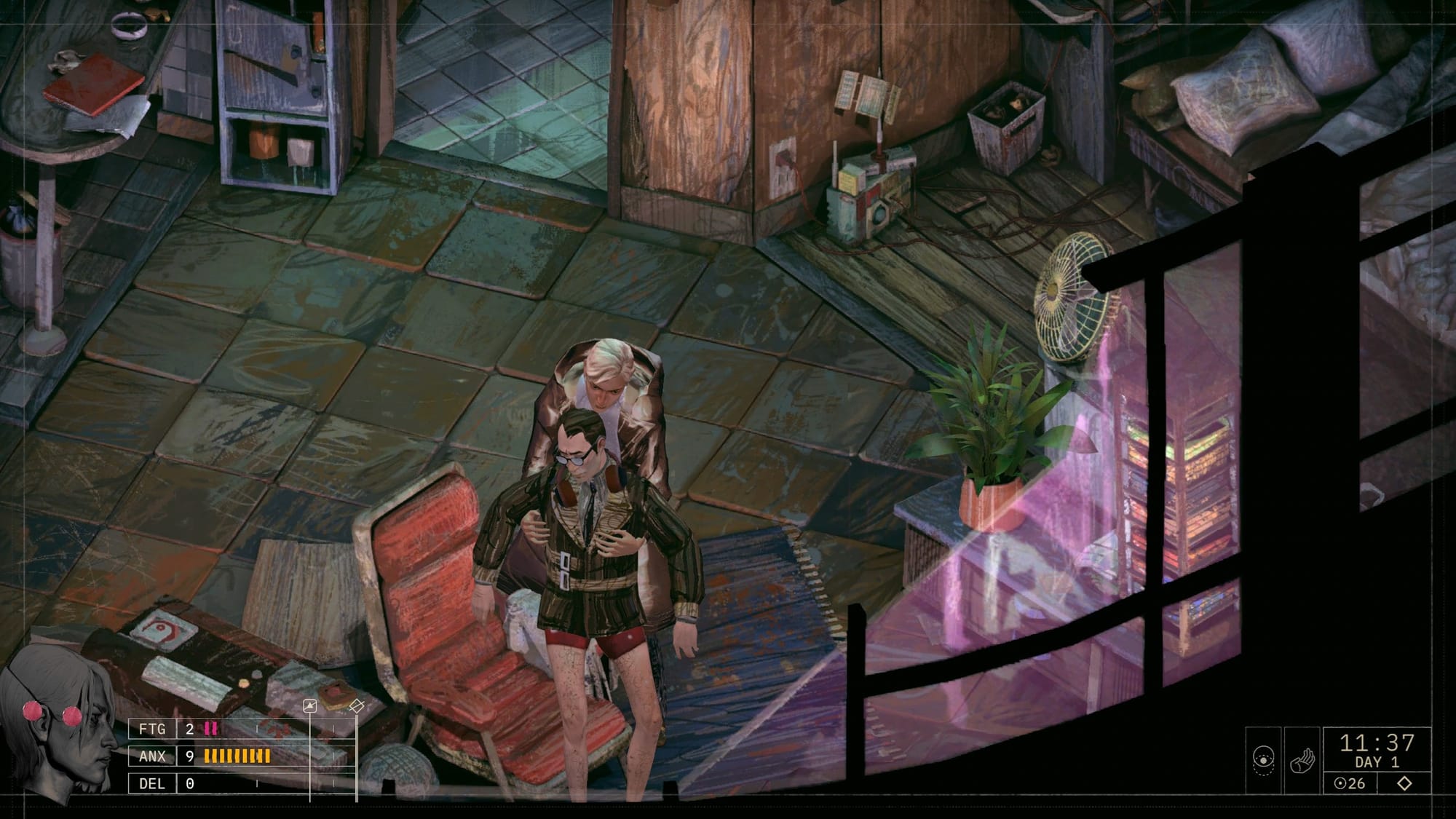
Zero Parades deserves that, but it shoots its own toes off with the starting pistol. When you boot up the game, go to the settings, find the option named 'voiceover', and select 'characters only'. Do that, or spend the game having protagonist Cascade's thoughts read to you by a new actor doing the nasal cockney Harry Du Bois limbic system voice, but with the cadence of a lethargic HMRC phone operator.
What I'm mostly saying is that I feel OK comparing this game to Disco Elysium, because it invites it in the first few minutes.
She looks like a model and thinks like a poet but speaks like Homer Simpson
Disco had a novel's worth of text, Zero Parades has nearly as much, but feels more like a beautiful aphorism. Witty and tight, slicker and plottier. Everything you liked about Disco's writing is here, aside from the sense that someone needed it to exist in the world with their entire body. It is often hilarious, full of fascinating and poignant worldbuilding and tragic circumstance, but it has little of Disco's messy, easy strangeness or meandering melancholia. It is sleeker, sexier, more self-consciously dangerous. It is outsider art made from the foyer, safe from the rain.
Disco was at the very least sceptical of cop shit - Zero Parades fucking loves spy shit. Hershel Wilks aka Cascade is an operant for a communist megastate called the superbloc, pulled back into the field for a mysterious assignment, following a purgatorial half-decade spent behind desks after an equally mysterious but convincingly monumental fuck-up. She's prone to bouts of dissociation, expressed through a gradually unearthed memories and skill checks to pass the psychic barriers between her and her own history.
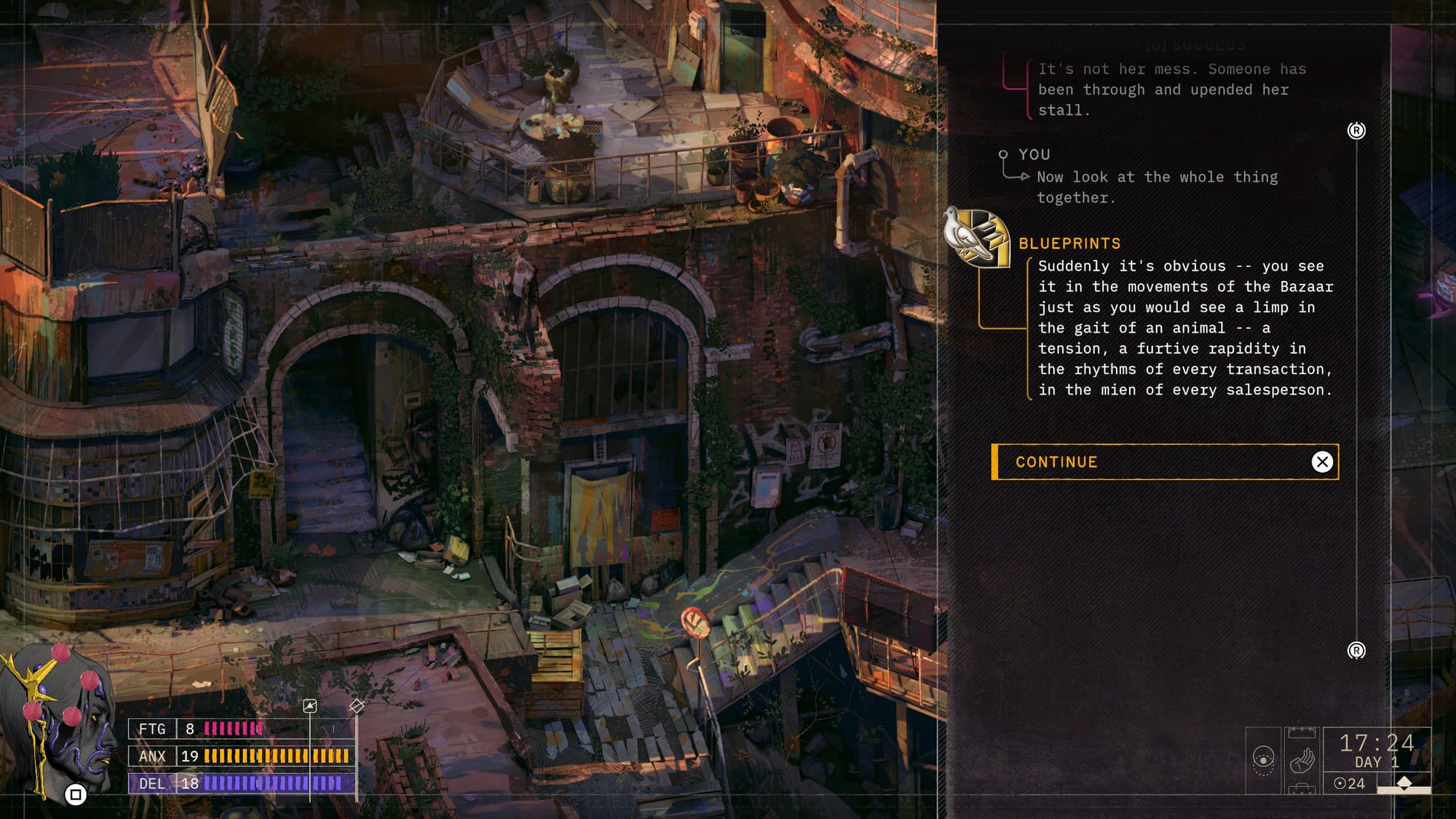
She looks like a model and thinks like a poet but speaks like Homer Simpson. I never did get a sense of her as a complete character, but I suppose that's the dissociation. I often picked the most neutral or practical dialogue options because everything else on offer felt so pointlessly cruel or self-sabotaging-but-not-in-a-fun-way or winkingly, wankingly esoteric. Everything you might not have liked about Disco's writing is here, too.
Perhaps this is because Zero Parades never quite extends the same empathy or curiosity to its heroine that it has for the rest of its characters or the world they inhabit. Disco Elysium's praxis extended to perhaps fishing a second cigarette out of your jacket for the loser next to you while you sat sapped of serotonin on a grey pier at the end of political history, and so was occasionally criticised for nihilism or defeatism or a kind of South Park-ish spray n' pray satire that targeted workers' unions and phrenologist bouncers with the same absurdist crosshairs. Ultimately, I found it hopeful. It seemed to love its ailing town, to see people for the well-meaning sacks of contradictions and mistakes they mostly are. The only version of Harry it judged harshly was one who left the place more alienated than he found it.
I feel awful, but I need the money to buy a gun.
Zero Parades has even keener insight, or at least more time, for its characters and the spaces they move through. Even its lowliest dickhead contains multitudes. Petre is an ageing hipster forced into flogging Luzian bootlegs to make ends meet, who organises tapes into 'hated subgenres' labelled things like 'hairdresser music' and 'songs for pederasts', and who eulogises dead formats and rages against Luzian cultural imports to anyone who'll listen. He's insufferable, but it's clear Portofiro needs people like Petre to preserve its memory. A few feet away, children watch anime laced with techno-fascist messaging. Portofiran cartoons, they tell Cascade, are old and cheap and boring.
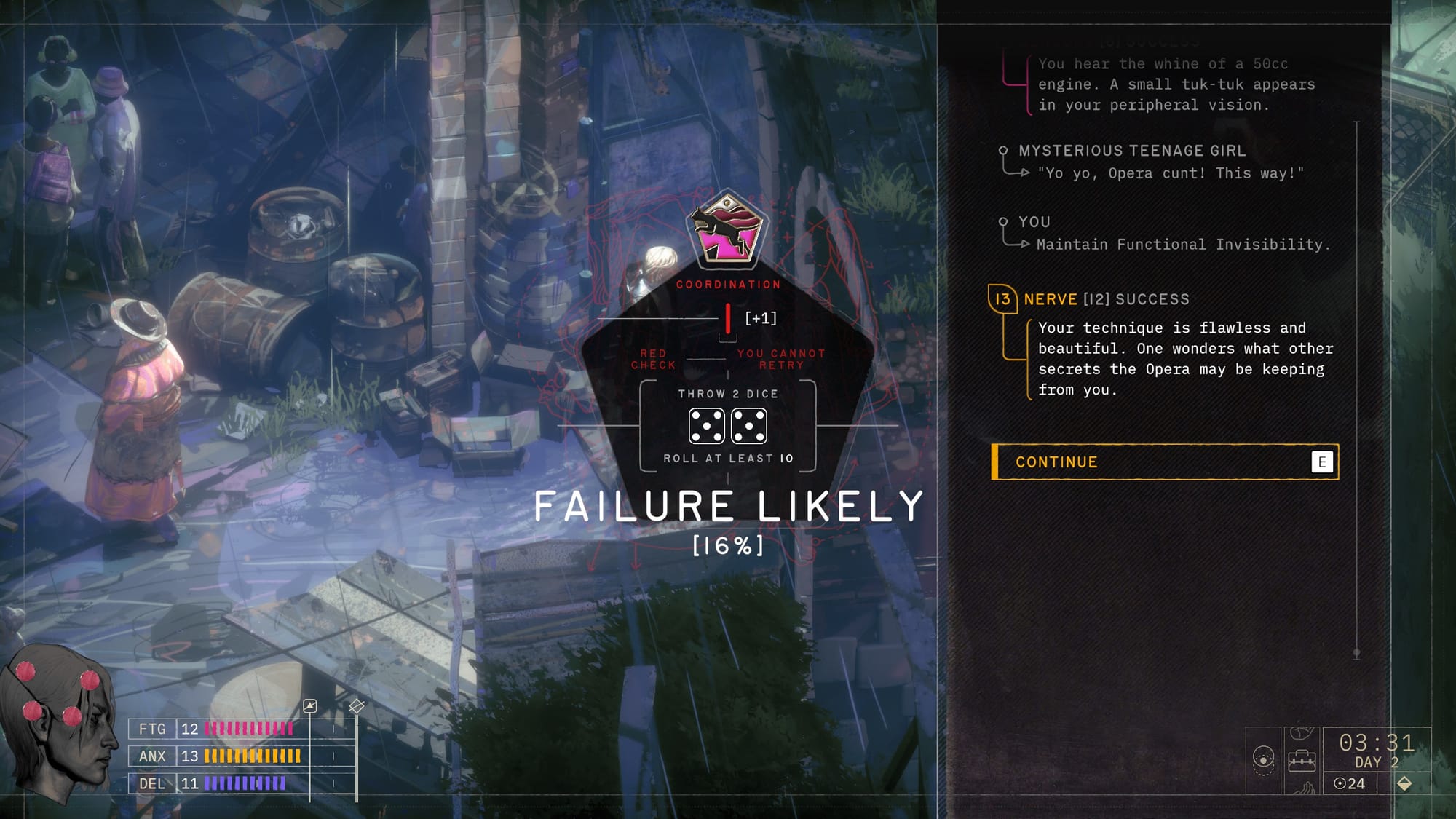
(You can find branded cups from the show about the town. At some point, ZA/UM's merch shop Atelier will probably try to sell you these cups for forty thousand pounds each, although the wearable paper bag you find later might be more their speed.)
Vivid portraits of psychic decay and mundane tenderness abound. Near a disused silo, a woman scavenges copper, her mind broken and young children abandoned after she was convinced by an Alex Jones-like show host that they, like the rest of the 'reality trap', were illusory. She tells me about the human-dolphin hybrids that live in the silo. I bring her copper and she throws handfuls of cash she insists is worthless at me. I feel awful, but I need the money to buy a gun.
I wonder why every takeaway container I find contains uneaten fried shrimp, and then remember that this is a port. A Luzian pop star tells me about a death rite from her home that involves covering mirrors so the souls of the departed don't get trapped in the glass. I break my codename once, and only once, to tell an aspiring therapist who works the city's 24 hour sex line my real name. Even the characters that exist only in the echoes of Cascade's memories are so fascinating that I want desperately to meet them.
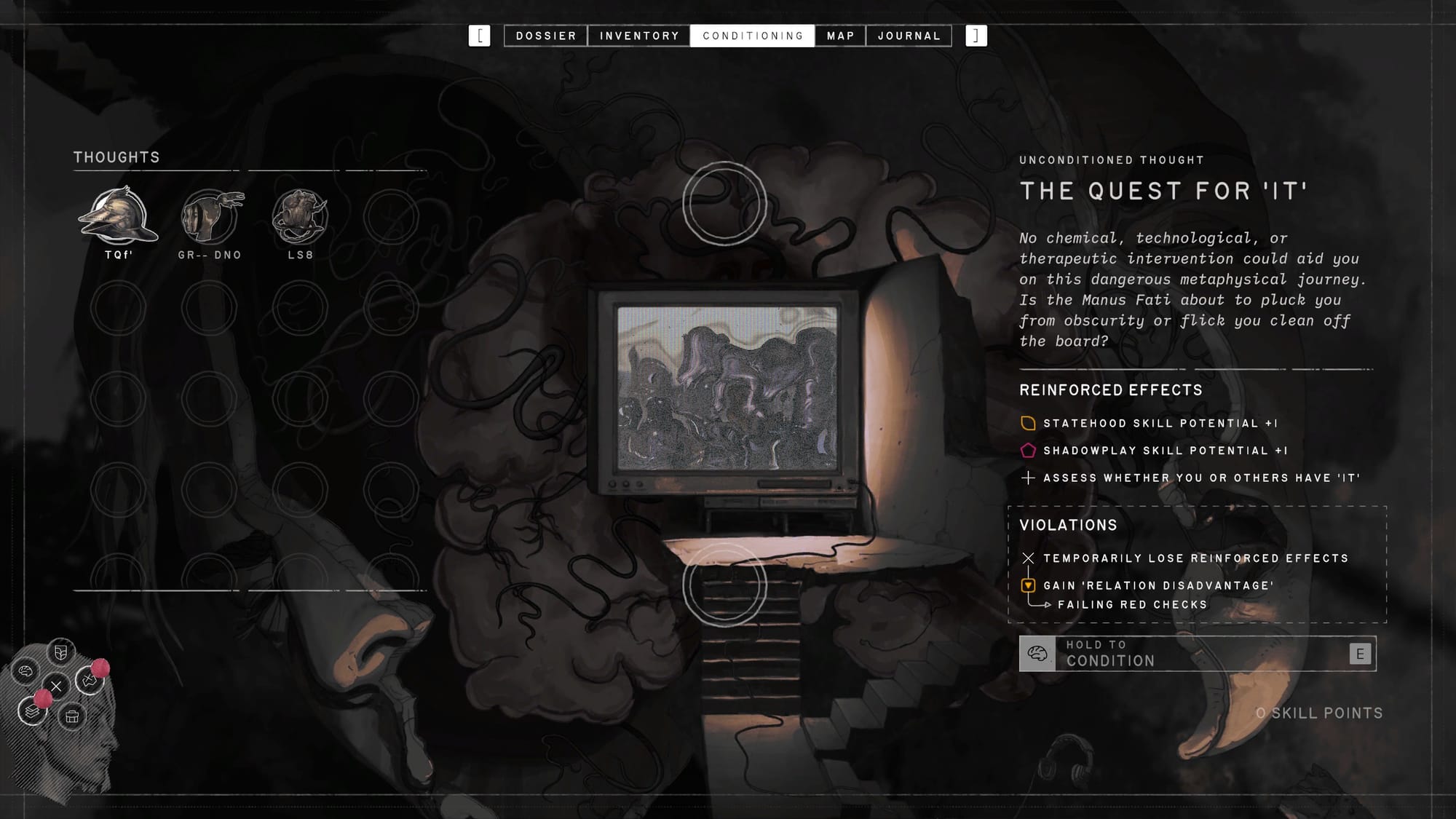
Zero Parades loves language, eagerly and playfully. A photo taken with your should-be-clandestine network is "an utterly inexplicable fit of camaraderie". A drunk, prostrate bank executive is a "crumpled paper airplane of a man". A techno-fascist vibrator is named "pre-breeder 6zr". Bathroom graffiti features "surreally hirsute cocks". I find a DIY gun manual by a man named J.W Wang who uses his own name as a synonym for killing. I internalise a thought called 'The Wang Way' and from then on Cascade does the same. Much and more of Zero Parades' overall tone occupies the polarity between Cascade's default spy-speak for death, 'zeroed out', and her newfound love for the word 'wanged'.
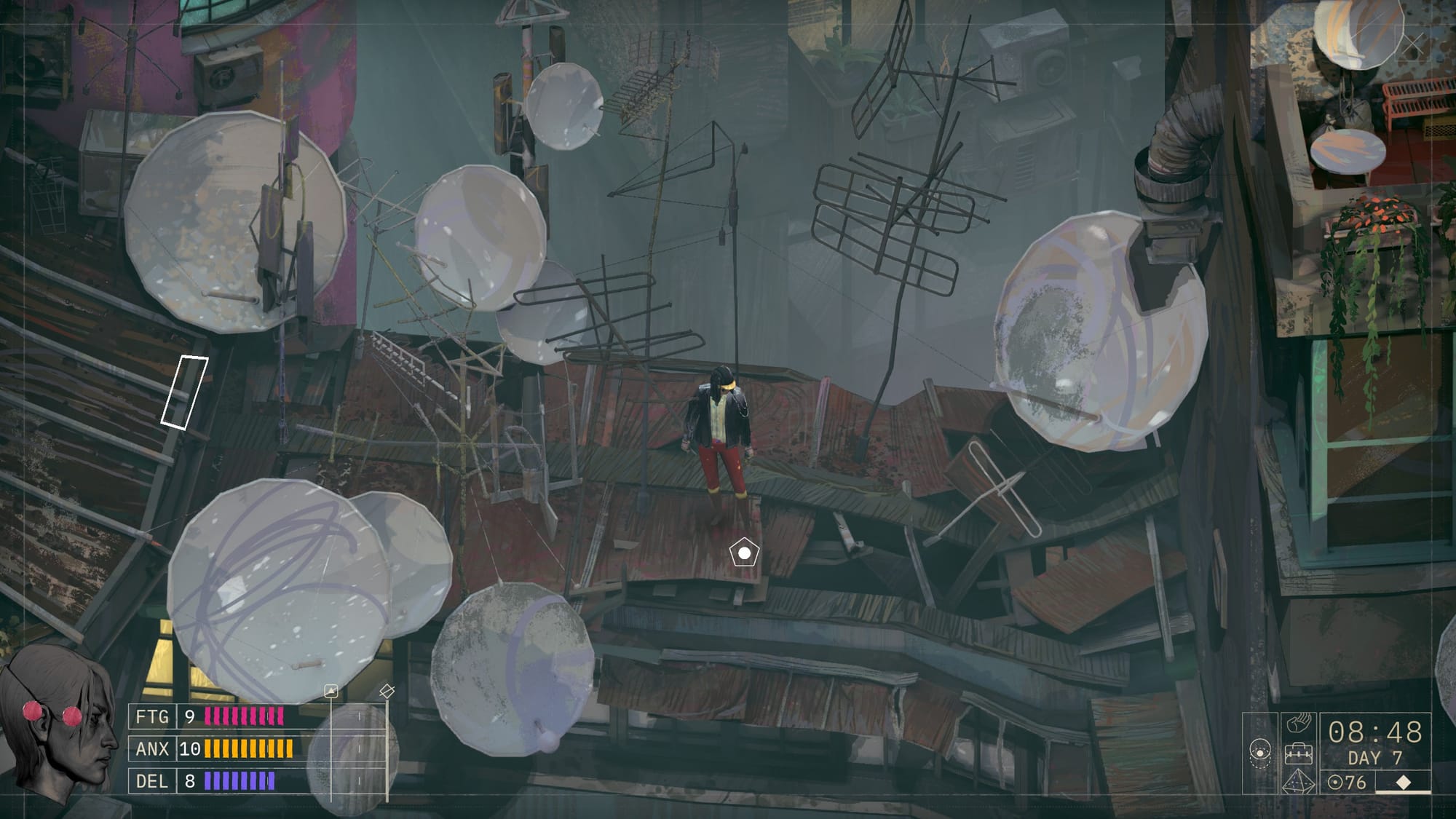
Thoughts like The Wang Way offer benefits and restrictions. If Cascade expresses any sort of regret while The Wang Way is active, she'll violate the thought and suffer a skill check malus. There are 20 to discover in total. Like many of the objects you'll find, they act like tiny pocket universes, each with its own set of choices. They lend the world roleplaying texture that gradually fades elsewhere as you end up with such an extensive wardrobe of stat buffing clothes that any sense of playing a specific version of Cascade gradually melts into soup. Shoring this up is a robust adventure game spent sprinting across Portofiro, sniffing out and snipping and reconnecting wires as you build your proverbial bomb and learn where and when to place it.
Cascade's character sheet is split across twelve abilities. That's three groups of four, roughly corresponding to mind, body, and spirit - or intelligence, strength, and charisma. Her raw physical strength is characterised by a stat named "doppelgäng". When I said Zero Parades invited comparison to Disco Elysium, that stray umlaut was a major culprit. In Disco, the umlaut was a joke about the latent fascist tendencies lurking in one of Harry's physical stats. In Zero Parades, it's a joke about how a sheep saying shit like "why are we here? The gäng doesn't huddle in dungeons. The gäng doesn't fuck with dark fantasy" is funny (it is funny). Faded imprints, and all that.
Every time Cascade recruited a member of her old crew for the game's finale, and I felt like I was sentencing them to a fate worse than death, I found a little more joy and comfort in the gäng's goofy, fuck-it-we-ball pronouncements. Zero Parades best moments are all about dumb heroism in the face of looming tragedy; all about utterly inexplicable fits of camaraderie. Cascade, like ZA/UM, cannot shed a history tainted by fuckery and betrayal. There is still something indelible and unique here that a hundred fading copies could not wash out.


Comments ()