
Brendan Caldwell

Brendan Caldwell

Brendan is a critic and games journalist with 15 years experience, and writer on a few indie games which he is honour-bound never to talk about on Jank.

Three game devs climb a mountain - part 7

Ain't no mountain tall enough (except this one)

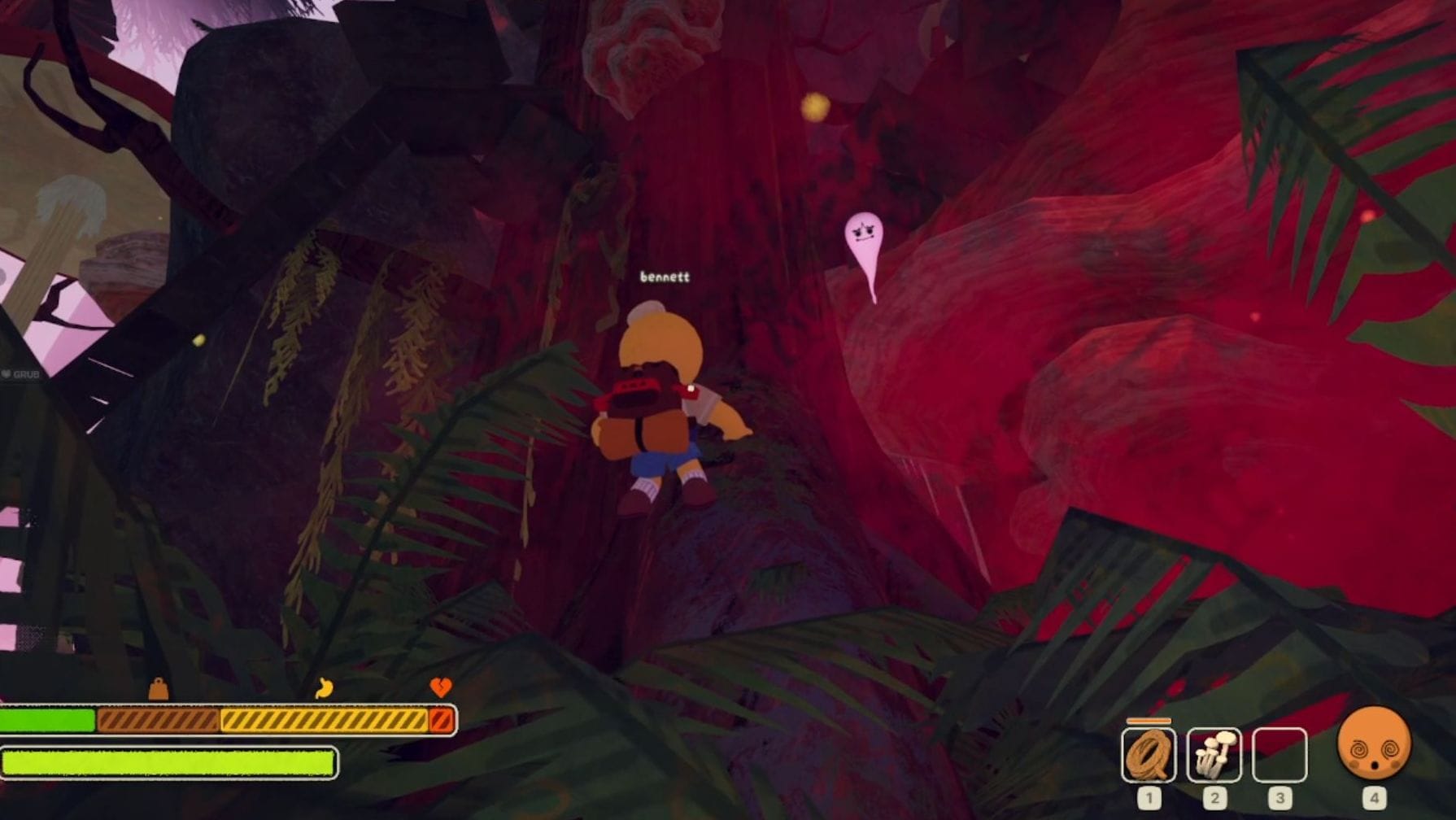
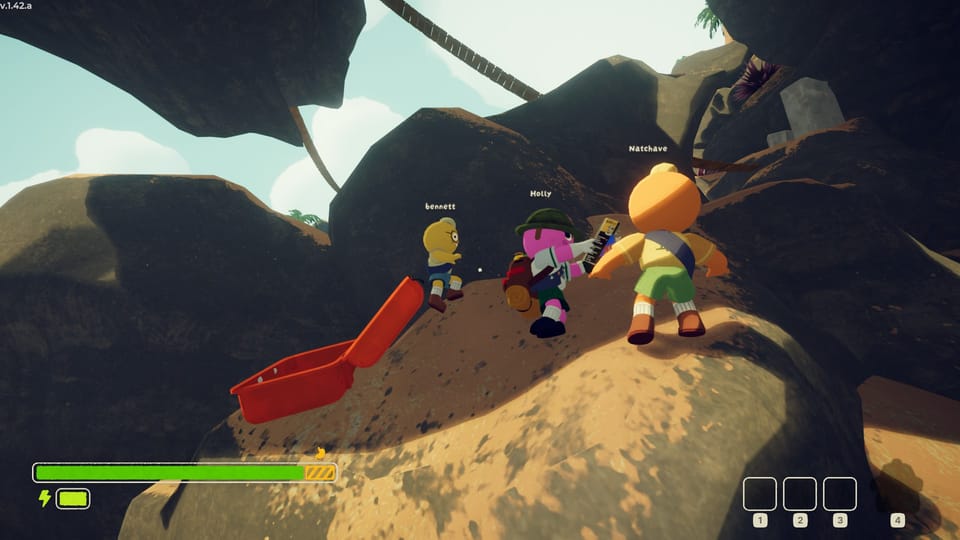
I wait around at the bottom of a tree for Bennett Foddy to scramble up the bark, desperately looking over my shoulder for undead threats. I would like the game designer and noted moral philosopher to climb quickly and offer me a hand from the platform above. But he has circled back to a question I asked some time ago about resource management.

"For Baby Steps," he says, climbing painfully slow, "at some point we must have decided we didn't want resource use, but I don't know why. I think partly it's because we got so allergic to implementing UI... and that makes it really hard to have resources."

Bennett climbs a tree as Holly's ghost watches on.
Okay, no, yes, of course, but also: climb faster please.

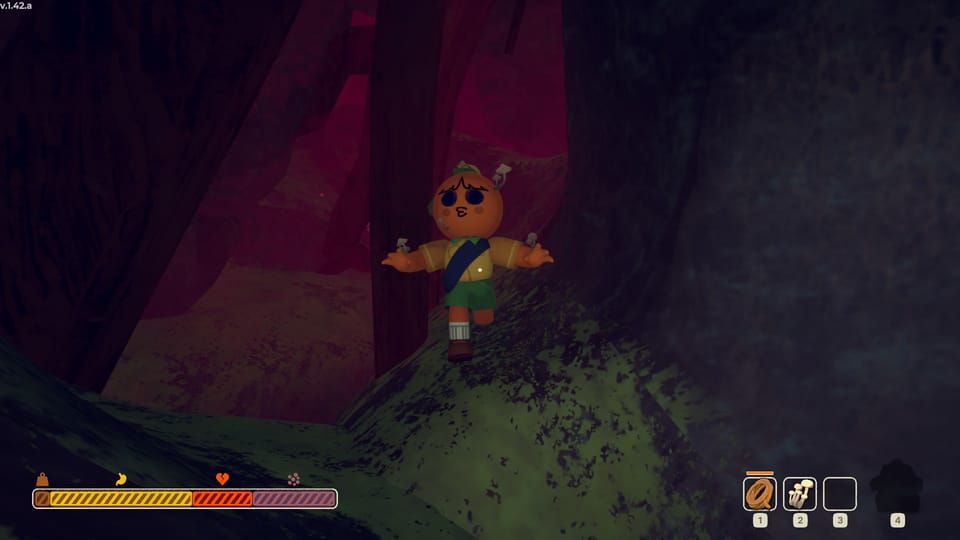
Bennett runs out of stamina and falls from the tree. He is lightly hurt. I hear zombie noises nearby. I put down the heavy, unconscious body of Emeric Thoa for a moment (I'm sure he'll be okay) and try to climb the tree myself.

Beneath me Foddy continues to talk about user interfaces and how they can get in the
Hey! Listen! Here's why games use 'nag lines'

Sick of characters pestering you to "go this way"? This is why it happens

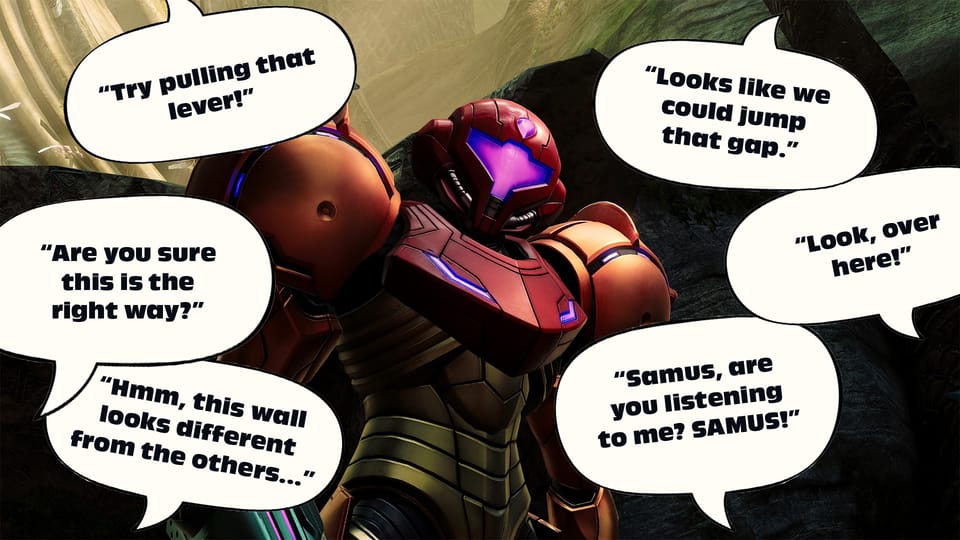
A few months ago Metroid Prime 4 was shown to press, and caused a small, localised stink in the chattosphere. We don't care much about Nintendo games at Jank, and I have no emotional stake in Metroid (Samus is the Ninty equivalent of John Halo - an extremely boring person vacuum-packed in fancy metal) but I do enjoy divining the stinklines that emanated from the first-person shoot 'n' splore, and the complaints by folks who got hands-on time with it.

The odour was familiar: a sidekick character would verbally needle you about performing the next correct action. "Samus, there's something interesting over there," a sidekick called Myles will say if the player strays too far in one direction. "Are you sure we don't need to use that?" Somebody in the resulting shiteswirl of social media discourse called this a "nag line". A succinct moniker for a trend that has existed in games for a long time without being given a name.

Nag lines are common enough, you'll know one when you hear it. Spend ten seconds inspecting a cool-looking prop while an NPC waits by a door, and they might say: "This way, McBloke, we've got a war to win!

Three game devs climb a mountain - part 6

Cannon Foddy

"This is a thing that roguelikes and climbing games have together," says Bennett Foddy, completely unfazed by how close to death we are. "Which is that you carry the things that go badly for you. You carry them forward into your run, right?

"There's that thing that roguelike designers talk about. About how a roguelike can be 'flexible' or 'inflexible'. If it's flexible, it means that you can always turn it around to your favor and do your preferred strategy. And if it's inflexible, you have to roll with whatever happens in the randomness. And this one feels like we have to go with whatever happens, right? But I think that's maybe typical of climbing games."

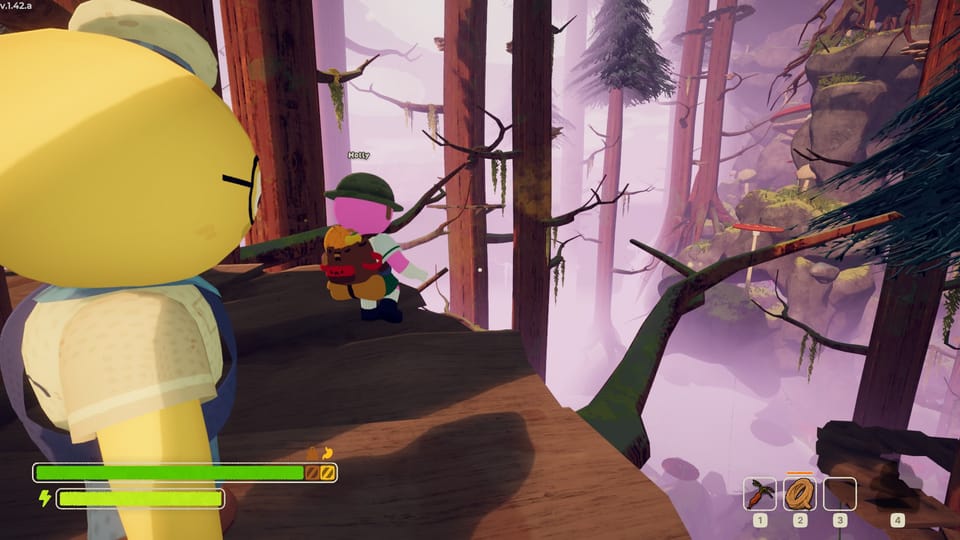
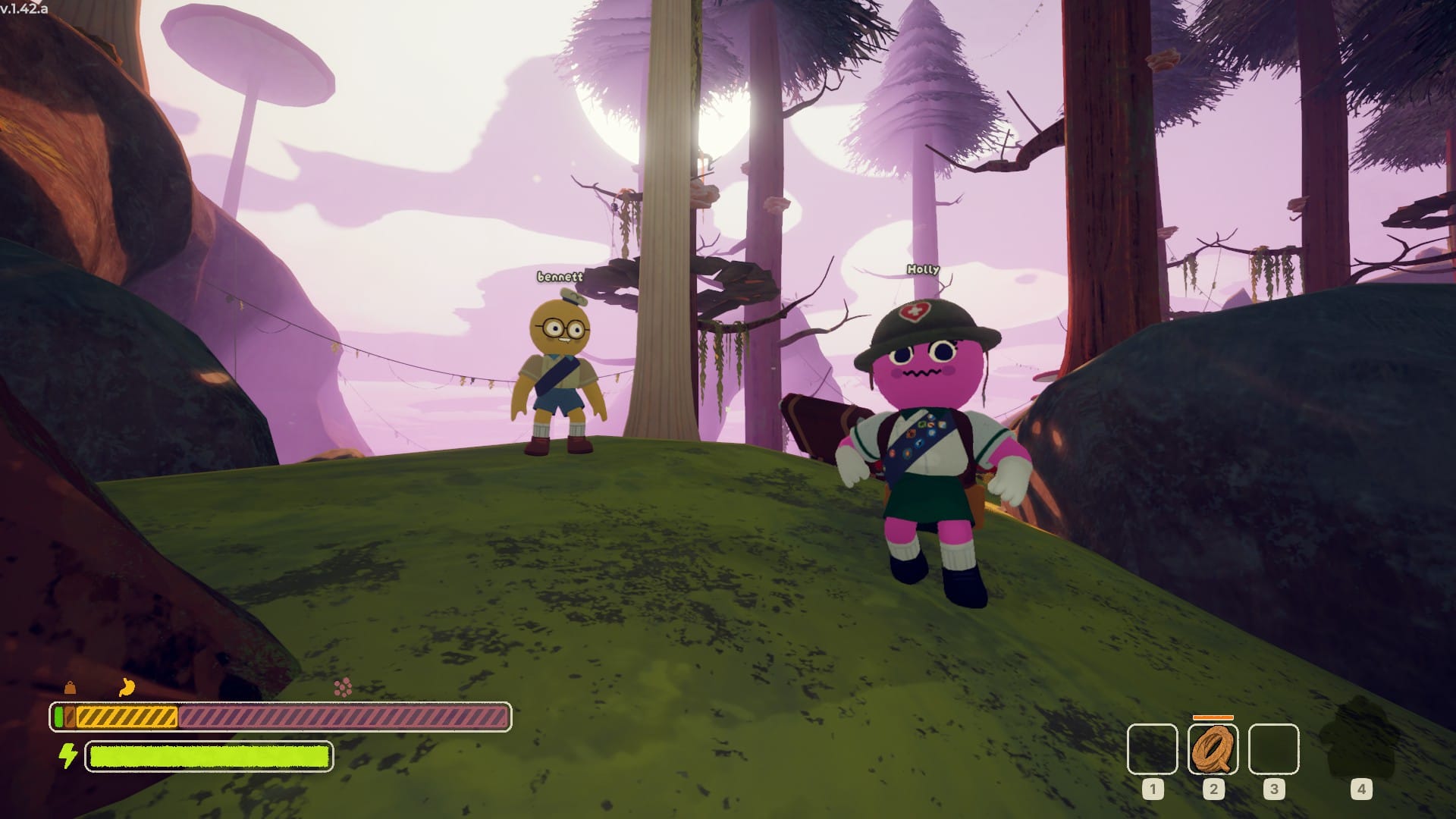
What has happened is that we are all exhausted, poisoned, starving, and injured. I don't know how "flexible" or "inflexible" the others feel, but I do not feel particularly well-treated by the game's dice rolls. Holly stops us on the next ridge.

"I have an item," she says. "I don't quite know what it does. It's called Pandora's lunchbox."

There is a ripple of sound

Three game devs climb a mountain - part 5

Getting to the root of the problem

Bennett Foddy thinks his friends might be dead. We call down to the forest floor from atop a mossy boulder and wait to see if either of our co-op climbing buddies respond.

"Yeah, sorry guys," we hear Emeric Thoa speak up. "I was being rescued by Holly because I died or fell or passed out. I don't know... I was witnessing the whole thing from my dead body."

Missed some of this series? Click here

Emeric is not dead, thankfully. But he is badly ill. Spore blasts and falls have taken their toll on his big-headed orange body, reducing his stamina meter a lot. This is where Peak's many items and gizmos may come in handy. Bandages will heal wounds, for example, while others might help with ascending unscaleable walls, such as the small circus cannon Holly Jencka has quietly stashed in her backpack. It's a familiar concept to these bleeding, aching game designers: resource management.

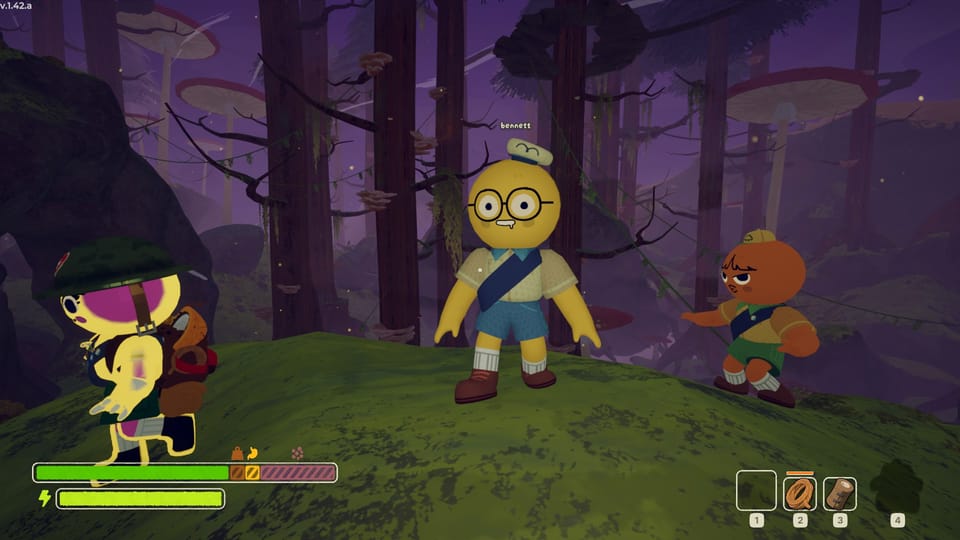
Holly and Bennett wander around on the mossy rocks, with Emeric out of sight.
If you take a moment to look at my health/stamina bar you will notice maybe things are not going so well.

"There is a little bit of that in Cairn," says Emeric,

Sword Of The Sea's watery allegory is no great Journey

You can't rewild the desert when you're busy wiping out

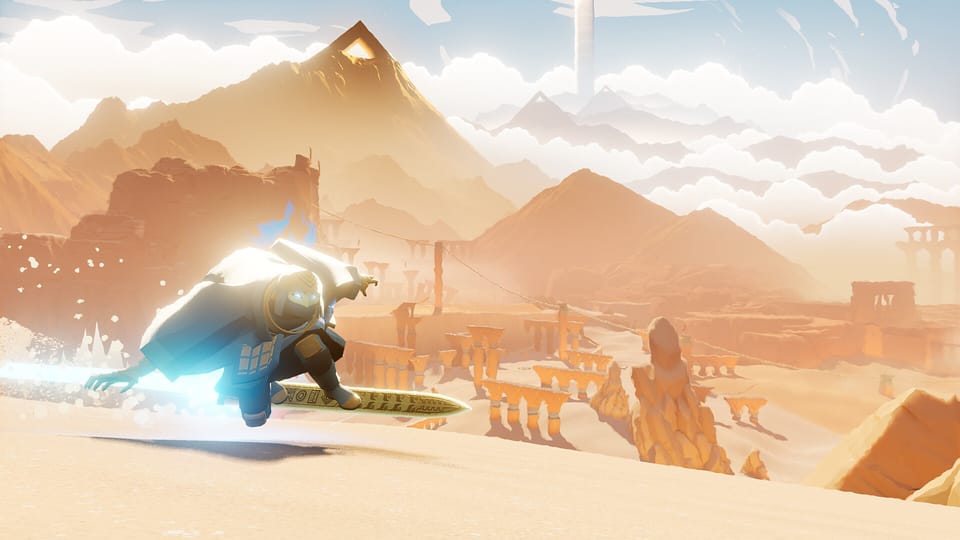
A popular stereotype of surfers is that they're attractive airheads. A fit waverider doesn't have time for big thoughts, beyond explaining that the moon is, like, totally in league with the whales, man. This is a lame stereotype, and yet a helpful image when it comes to explaining how I feel about dashing surf 'em up Sword Of The Sea. (We don't mind reviewing 5-month old games here at Jank). This game is beautiful, toned, ripped, fashionable, athletic, and it has a great ear for music. It also has the conversational skills of a post-huff stoner, and its visual similarity to Journey only invites an unflattering comparison.

The game itself is an approachable ride. You swoop along in smooth arcs and can leap into the air, double-jumping for extra trick time, cruising through ultimately linear sandy levels that coax you toward lanterns and bells that turn sand into seawater and unlock the way to the next area. It only lasts about 3 hours too, meaning it can glide in and out of your life with unobnoxious merit. If you've got a subscription service that includes the game, there are worse ways to spend an evening.

Told you it looks good.

Three game devs climb a mountain - part 4

"I don't know if coming up here was the right call, gang."

We finally reach the summit of the first mountain. Holly Jencka, Emeric Thoa and I gather by the fire as Bennett Foddy talks about random generation and orthodox versus unorthodox game design. You can tell this man is a professor. I feel like I am getting a university class for less than the thousands of pounds of debt it would otherwise cost. I forcefeed him a roast marshmallow but he keeps talking. 

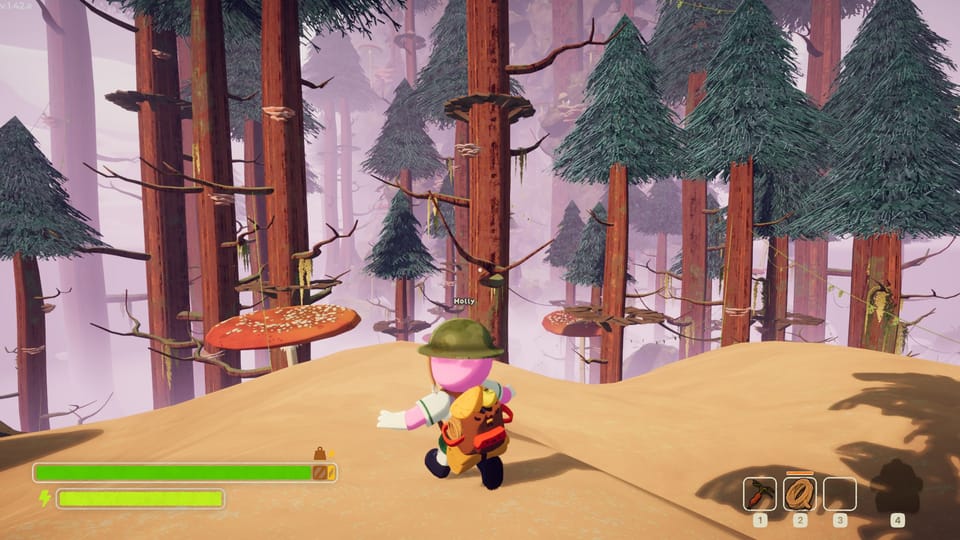
Meanwhile, Holly charges towards the Roots. This is Peak's newest biome, a dense forest of spiders, poisonous mushrooms, exploding spore pods, and other fungal threats. I follow dutifully, asking more questions as random gusts of wind whip through the canopy.

New to this series? Click here

The geometry and layout of every island in Peak is procedurally generated, which means some might be wildly more tough than others. Again, this devotion to randomness is something the three developers haven't necessarily pursued.

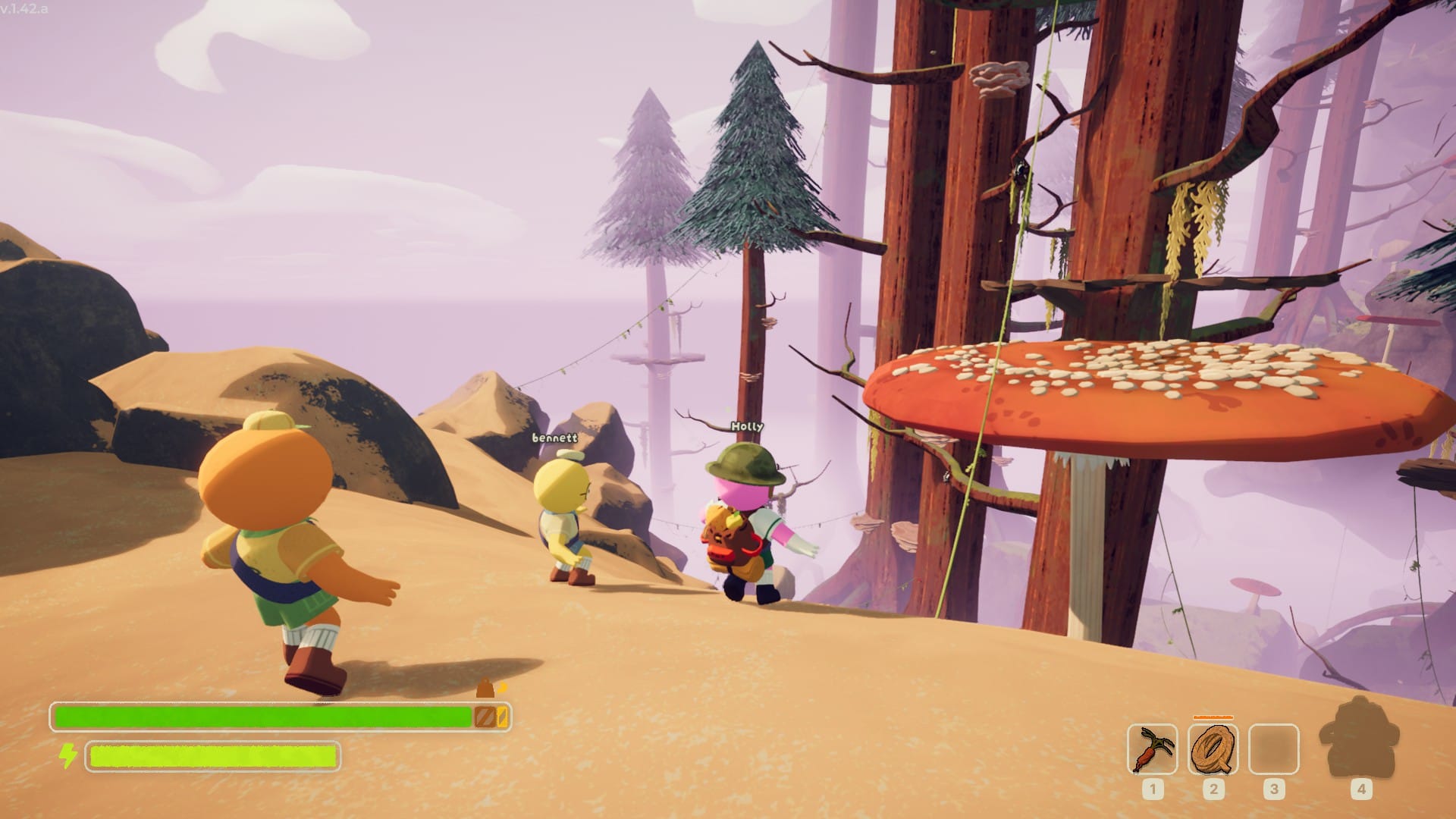
The three Peak players look toward a giant toadstool and a green vine that will get them across to it.
Just a simple vine rope to the next mushroom. Simple.

"When we started [with White Knuckle]," says Holly, "we considered: do we want to do fully procedural level generation? But it is really quite difficult. People think

Three game devs climb a mountain - part 3

They still haven't eaten each other, at least

Holly Jencka stuffs girl scout cookies into Bennett Foddy's mouth. She turns and marches on, looking at a rickety-looking rope bridge ahead of us.

"Okay," she says. "We should only do this bridge one at a time... because they have a tendency of collapsing."

We make it over one by one. If we'd tried crossing all at once the bridge would possibly give way under the combined weight of our cartoonishly large heads. It's good to have Holly here, someone who has played Peak more than the rest of us. But this kind of high-stakes multiplayer camaraderie, sometimes lovingly referred to as "friendslop", isn't actually a factor in the games created by these developers. They all make single player stuff. That means their own games feel quite different.

Missed previous entries? Click here

"That sense of isolation adds a lot to the somber mood I think a lot of climbing games have," says Holly. "This game, you don't really feel it, because you're goofing off with three other people but... I think any of the games all of us have made you get this melancholy at points, as you look out over everything

Why I don't worry about AI game critics

It is because they would be idiots

AI can't do my job. It's annoying I even have to say it (for many of you, I probably don't, but let's get into it for those at the back). There's a huge amount of valid worry about AI and the ways it's replacing human work in our industry. It has hit the voice acting in extraction shooter Arc Raiders, and the textures in whatever the fuck inZOI is. One report showed that 1 in 5 new games on Steam use generative AI. A worrying trend whether you're an artist, actor, or programmer.

In games media, though, we haven't seen as much explicit uptake. The tech is wreaking havoc in other ways, but there are few who'll admit to actually using it to write reviews or news pieces. This might be a case of some writers hiding their use out of shame (it's proven to make you look incompetent and lazy) but I doubt it. I think a lot of us, having made careers out of analysing an endless flow of games, movies, books, and music, just understand a simple, reassuring truth: humans like human art.

An AI cannot review a game because an AI cannot play a game. And