
Blueprints is dead, and so is my unfinished game about cats
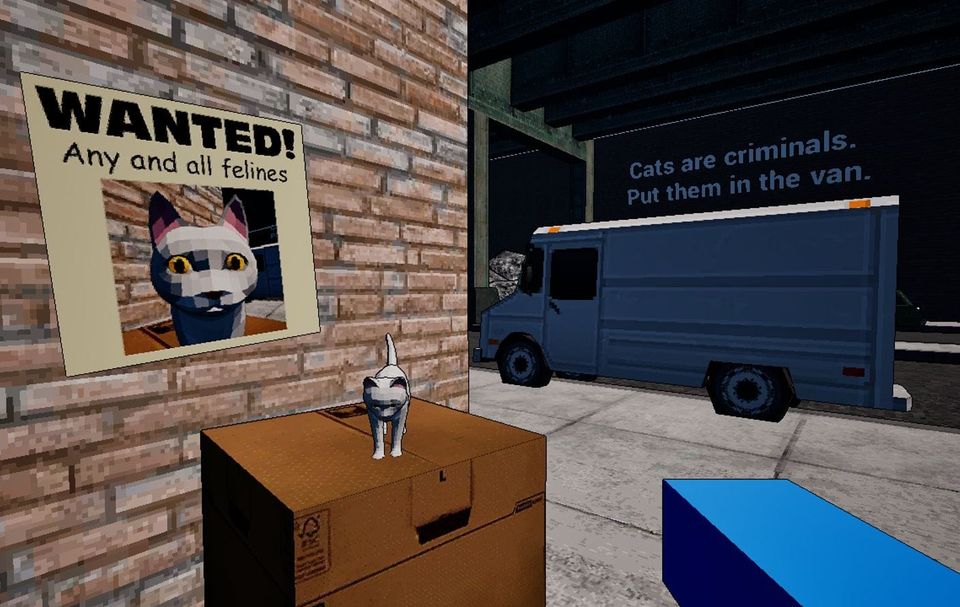
Coding is hard. Show me lines of C# and I will curl into a ball and weep. I have tried many times to learn a programming language and every time I only get as far as learning about arrays before my entire neocortex dribbles out of my nose like a rejected milkshake. But that was not the case with Blueprints. Unreal Engine's visual scripting noodles let you sorta-code entire game systems using dinky little wires and pleasing flow charts. Finally, I can make the game I have always dreamt of: a broken walking sim about collecting bodega cats that will get two downloads on Itch.io.
Except now all my grand dreams are being swept away. Unreal Engine is retiring the relatively accessible Blueprints in favour of a bizarre, vaguely culty coding language called "Verse" that Epic is calling a "system for building metaverse experiences." Still going on about the metaverse, I see. Fantastic.
To understand the minor upheaval that is going on in the world of Unreal developers, you need only hear about the most recent State Of Unreal address, in which the company showed off plans for Unreal Engine 6. The decisions announced in this showcase have long-term ramifications for you as a player, even if you don't dabble in game dev yourself. So strap in for a digestible summation of the self-inflicted pile-up.
The biggest headlines for this event came from the inevitable pivot to AI. They showed Claude running in Unreal Engine, where it dazzled the crowd by doing interior decoration in an underwhelming sitting room with all the enthusiasm and skill of a Premier Inn manager who is quietly quitting. But it wasn't only the gunge of degenerative intelligence that worried users of Unreal's shapes and sunlight machine. It was also all the other good stuff the engine is planning to throw away to make room for it.
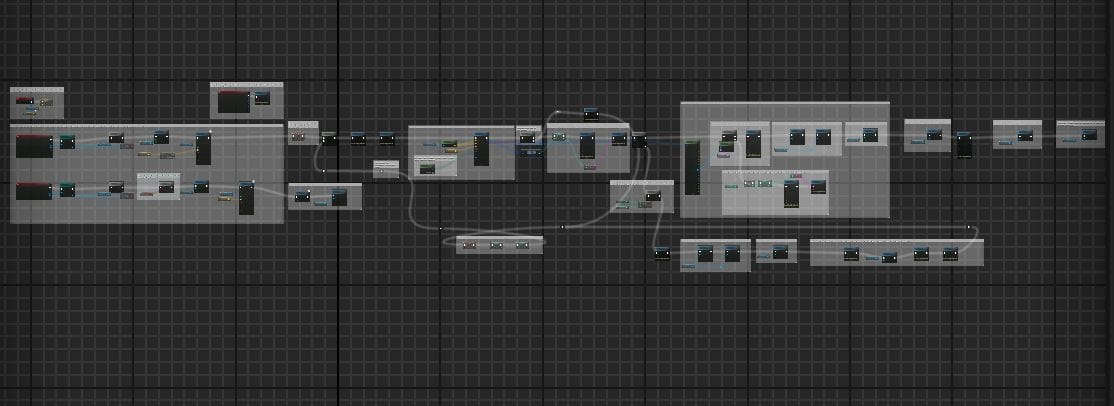
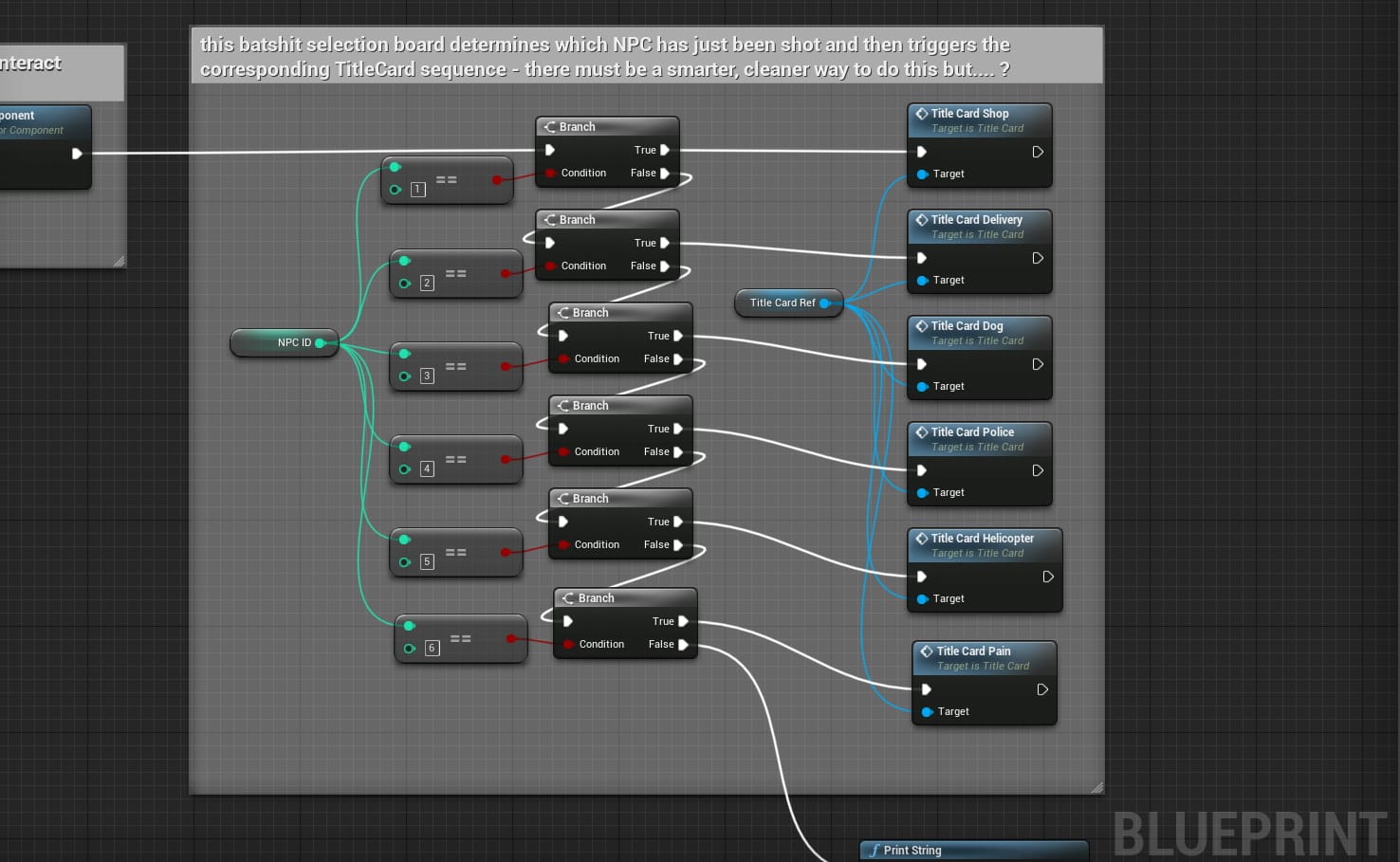
Namely, Blueprints. If you haven't toyed about in Unreal Engine these are essentially a simplified way to program your game. For example, in my shit cat game, I want to have an arm that I can thrust out and grab boxes of breakfast cereal with. So I muddle about in Blueprints, I attach this donkwotsit to that bunglegizmo, I trail this little virtual wire from here to there, and I watch roughly three dozen Matt Aspland tutorial videos to understand what the fuck any of it means. Hey presto. It works. Bashy sticky arm.
I am simplifying the learning process a lot. But my belief stands: Blueprints is cool. It is not a feature for true coders. They will just code in the C++ that burps and gurgles under the hood of Unreal. But it's not a Fisher Price educational gimmick for kids learning to code either. It's an in-between tool for all the morons like me who can only follow logic if it is presented as a shiny diagram in bright colours. The developers of Clair Obscur: Expedition 33 used it, or so I have read. It lies in a pleasing realm somewhere between accessible and baffling, with the feeling sometimes of playing a game itself. It's like muddling through a Zachtronics puzzle, or a particularly ambitious Factorio playthrough. It is the only way I was ever going to make my trash game about cats who live in a bodega with a secret door behind a freezer in the back.
"Regardless of whether you personally are into it, Blueprint has been an absolutely colossal win for the industry," says level designer Joe Wintergreen in a blog post that is so scathing towards Epic it may as well be written on industrial grade sandpaper. "It’s kicked off countless careers, introduced countless people to programming, constituted the majority of code in countless games, and empowered countless people to contribute to game dev (and other industries) in ways they never could have otherwise. It opened so many doors for so many people, and Epic now want to weld them shut again."
Epic is abandoning this feature in a shuck at the side of the road. Which is a hyperbolic way of saying Unreal Engine 6 will phase it out. You can still use it in old versions of the Engine UE4 and UE5, but all of the development resources committed to improving and building the next engine will largely ignore it in favour of Verse, the new coding lingo for Unreal that even programmers think is a surreal jest.
According to Epic's documentation: "Verse is a multi-paradigm programming language developed by Epic Games, drawing from functional, logic, and imperative traditions to create a coherent system for building metaverse experiences."
Cool, I guess. Will I be able to use Verse to program a shopping basket to powerfully jettison a dozen cans of baked beans into the face of a badly sketched tiger shopkeeper when the player presses a button, as I have done in my awful never-to-be-completed bodega game? In theory, perhaps. In practice, fuck off. I'm not learning a whole new language. I like my dirty logic spaghetti. Do you think I have time to reprogram the entire herd of low poly cats I bought on the asset store from some guy whose entire job appears to be making felines for hobbyist weirdoes? I don't!
I will not pretend to understand exactly why Verse feels so instinctively useless to those who can read the maddening runes of code. For that you can consult other, codier blogs. But I do know one thing: it absolutely smacks of Trying To Make Fetch Happen. Why would I learn this wealthy man's pet language when innumerable more suitable game programming languages already exist? Even if I didn't already prefer visual scripting with Blueprints, why wouldn't I choose to code in any established language with clearer learning resources, and with years of documentation and support? Verse is the Esperanto of coding languages. It is not getting a Duolingo course.
So why are Epic doing this? The true answer is "I don't fucken know". However as a pundit I must provide possible rationale for absurd business decisions. This seemed to come at the end of the State Of Unreal show, when Epic head Tim Sweeney dripped onto the stage and basically conceded that the company's biggest Baba Yaga was a dark future in which children play Roblox instead of Fortnite (isn't this the dark present?). Enlightened readers will know that both are terrible "games", yet both have an outsized effect on the culture of games as a creative industry. Yet Roblox for all its muck, has the edge when it comes to giving children creative tools to make their own minigames.
Fortnite has been jonesing to compete in this, which is maybe why Verse first appeared in that game's editing tools. It is trying, maybe, to git 'em while they're young, like cigarettes and Roblox. Last year, the company asked young Fortnite fans who use UEFN (Fortnite's level editing and creation tools) whether they'd like their visual scripting gizmos to have nodes and flow lines (like Blueprints) or be built in blocks of words (like educational coding language Scratch). It felt like a loaded question.
"Scratch is a visual interface created for kids," wrote Unreal teacher Zach Hunter (better known as Unreal Sensei) in a post at the time. "It was made to introduce them to coding without having to worry about syntax errors. It is not meant to be used in full production. Meanwhile node based interfaces have a proven track record in the 3D industry and is standard.
"Honestly it is surprising that Epic Games would even consider Scratch as an alternative to Blueprints. The only difference with this compared to coding in Verse is that it is slightly easier to read. In contrast, using nodes is a completely different, more visual way of thinking about programming. If Visual Verse ends up resembling Scratch, there’s little reason to use it at all - you might as well just write the code directly."
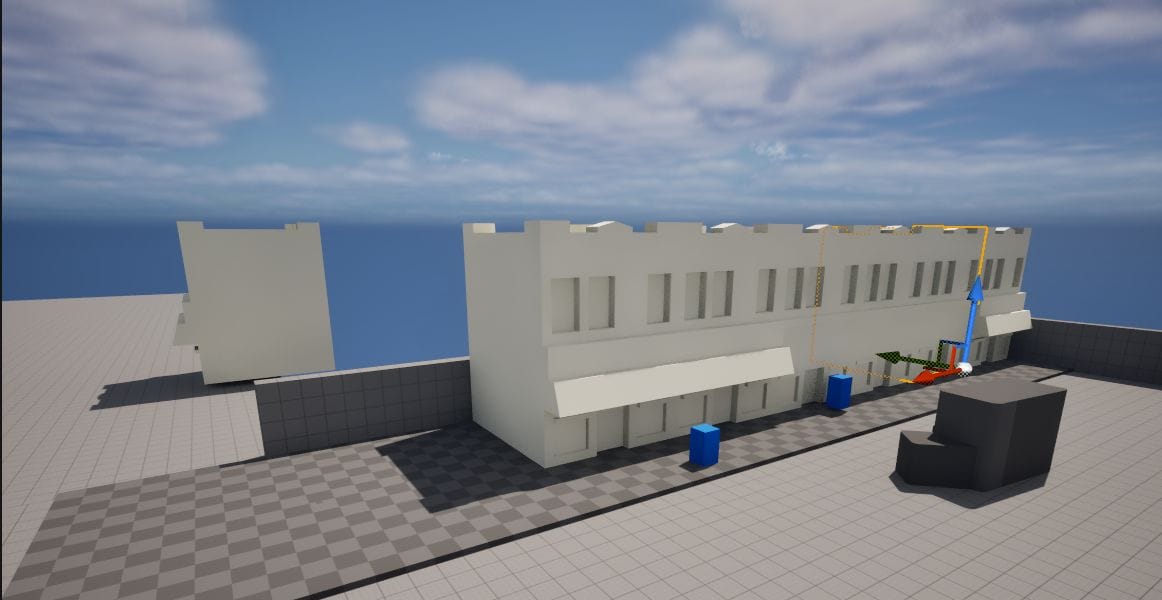
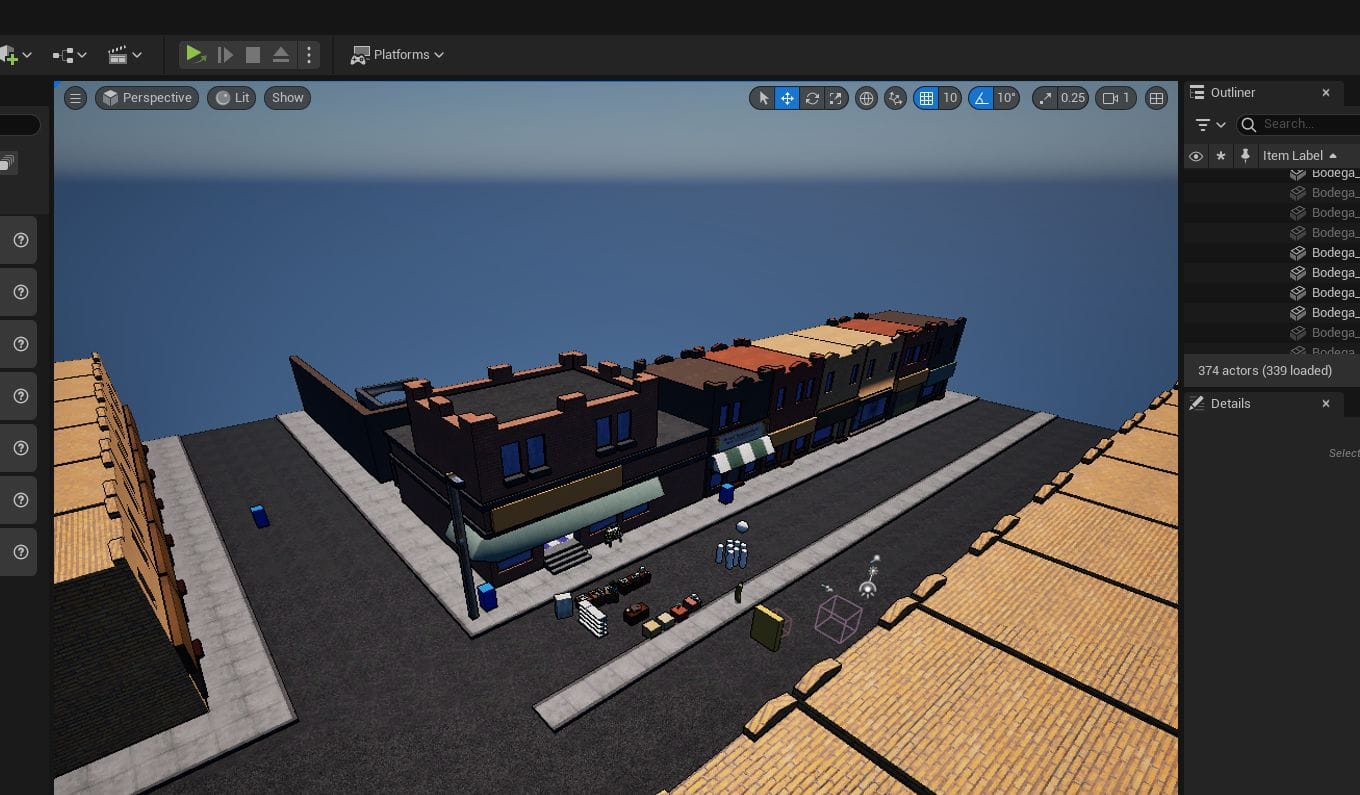
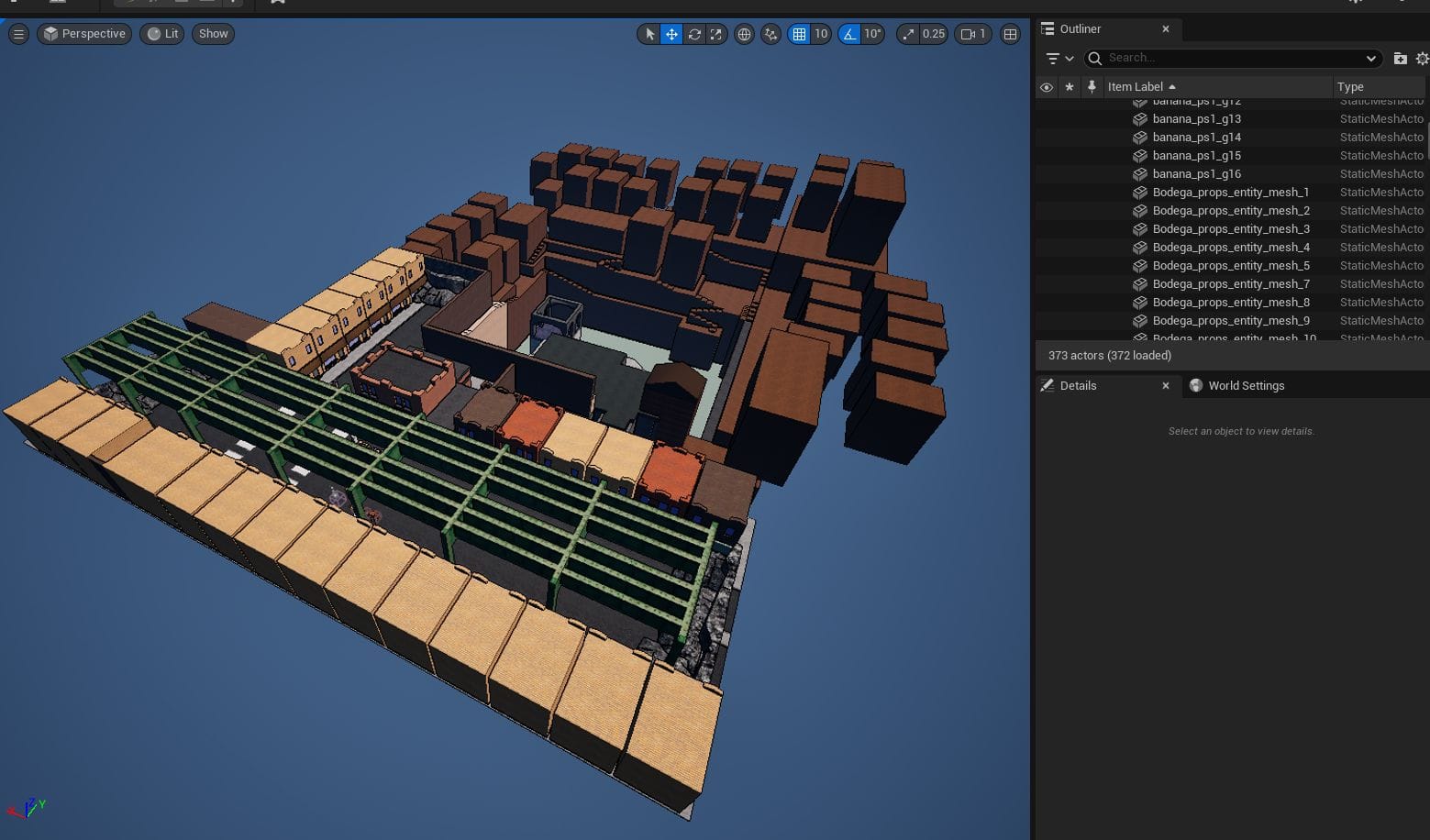
The map of the bodega game slowly coming together. Making the materials and textures work the way I wanted also required fiddling about in Blueprint node graphs.
Epic don't seem to think so. And now the toxins swirling in Fortnite are making their way slowly to the rest of Unreal's body. What originally seemed to be a misguided attempt to capture the attention of children who are so into Fortnite that they want to modify it, has wormed its way into plans for Unreal proper, a game engine used by many adults with no interest in llamas or buses. While there's always an argument that kids are the engineers of the future, and should be catered for, the counter-argument is that you don't let your children design the engine that goes into your car.
"The UEFN demographic is mostly teenagers," says Hunter. "This group should not determine the future for all Unreal developers because they are not game developers."
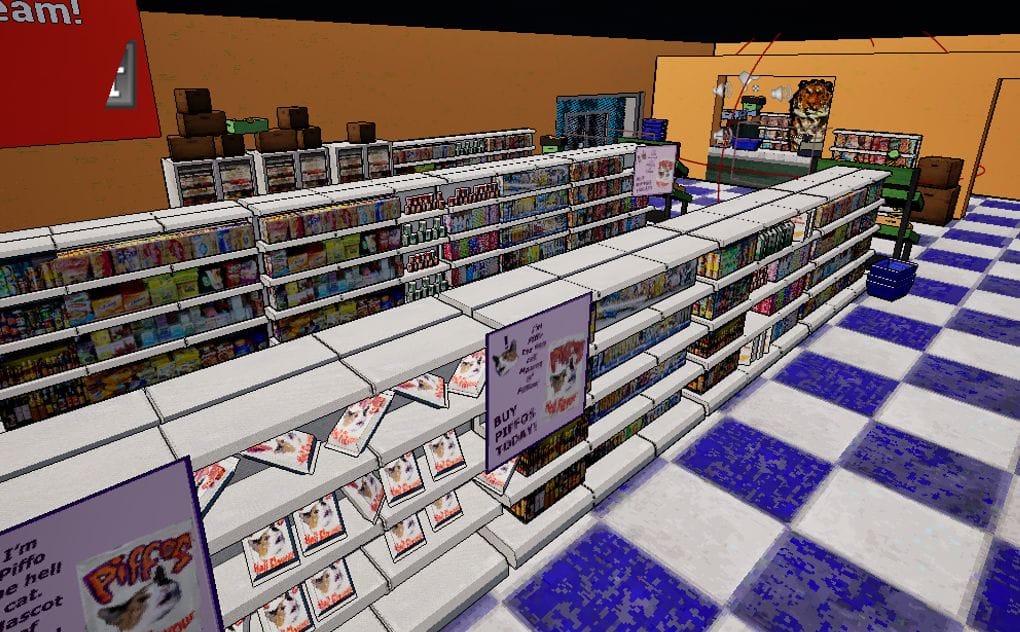
It's true. Epic should not listen to children. They should listen to me, the creator of a masterfully abandoned corner shop stocked with many bags of a fictional crisp called Piffos, which come in one flavour: hell. It is only when you buy a pack of Piffos at the counter that the secret freezer door opens, revealing that underneath the bodega is another different sort of bodega. I made all this using Blueprints, and was going to call the game "Bodega Bodega".
But don't accept only the words of naysayers like Wintergreen, Hunter and prominent cat programmers like myself when it comes to questioning the direction of Unreal. In a scene that feels like the last aristocrat leaving London circa 1666, longtime programmer Sjoerd De Jong, aka 'Hourences', a coder who has been working with the engine since Unreal 1, is leaving the company. This could simply mean: "Wow I'm tired, it's been 27 years". Or it could mean: "I think everything is about to go on fire and catch the plague at the same time."
The good news is that you can still work with Blueprints, so long as you never upgrade to UE6 and just hang out in previous versions, as Wintergreen recommends. But Verse nevertheless raises uncertainty about whether or not it's useful for new developers to learn Blueprints at all, for fear of being "left behind". If you want the lighting and asset streaming and shader magic of the newest Unreal Engine, it looks like you will have to accept Verse. Or you can just happily stay where you know things work? In the face of FOMO and uncertainty, I would rather be able to understand what I'm noodlecoding than to force myself into picking up the AI-brained Sweeneyisms of a shifty little lingo that nobody cares about. My cats deserve only the best spaghetti. Or they would, if I could be arsed to finish them.




Comments ()