
Jank Mail: Let's scroll
I would like to say that I’m back, but I’m actually away again, as part of what has accidentally turned into the most travel-intensive year of my life. I am doing tne newsletter anyway, in a hotel lobby, to avoid another hurtful APB from Brendy. This week in Jank was a little quieter, but the reviews will continue until morale improves. Marsh was precision-targeted by the period language of The Killing Stone:
This sort of glib summation doesn't do justice to how genuinely sinister and even profound this game actually is. Much of it written in unsparingly period-accurate English that is as playful and dense as the literature of that time, crammed with allusion and double-meanings. I have to admit, as a former medievalist and writer of pseudo-historical early-modern occult fiction, The Killing Stone aims squarely for the bulbous, flashing weak-spot on my exposed arse. I am pathetically bedazzled by the audacity and ambition here, but, exhaustingly clever though this is, I don't think it's simply an exercise in self-regard: the game, appropriately enough, has soul.
Sin returned to the Abrams Era to commend Slayer Shock:
Buffy's gleefully silly and queer "monster hunting friends" descendant Wynonna Earp has been and gone. Twilight's sparkly misogynist nadir, already passing, is practically Old People culture even as Ann Rice vampires make a welcome comeback. And yet, instead of an uncomfortably outmoded Game Of The Show, Slayer Shock endures, by asking a simple question: What if a vampire jumped out and went BLEAAARGH?
I was taken with the demo for Pool of Madness:
It’s pool, of course, but cursed: you play in some sort of haunted pirate ship beset by ghostly tentacled horrors, each game is badged as a ritual, and blood gushes from the pockets after each successful round. The act of playing borrows little more from actual pool than the act of pointing a cue: you just have to pot a small number of balls, not in sequence (or at least, not in the demo); potting the cueball just spits it back onto the table; you can stop it dead at any point during play and each ritual ends with the option to buy upgrades from a device that looks like if Bioshock had fruit machines.
For his regular strategy game column The Cooldown, Nic ruminated on Starcraft's level editor, and the range of things it taught him:
You know how it works, I think. You're small and sponge-brained and you learn most words either in context from stories you're too young to appreciate as actual constructions of language, far too pulled along by the machinery of the story, the way Aslan bleeds into his fur, the way Arthur Dent loses his lunch in the corner of a spaceship. Or you learn them McLuhan-cold from functional conversation and start assembling a mundane vocabulary. Then, suddenly, the flashing, bleeding, bright stage-show of a videogame drills a phrase or two into your head forever. Blood Omen taught me 'epoch'. Final Fantasy 7 taught me 'double edged sword'. StarCraft's map maker - through its default terrain type - taught me 'asphalt'.
This week's subscriber-only podcast was a new Text Adventure, in which we entirely accidentally aligned with a major release by returning to World of Warcraft:
In keeping with this season's attempt to focus on halfway readable books it actually arrives with a decent pedigree: Christie Golden has written dozens of books in original and licenced universes, penned the the 2000 novel that first introduced Warcraft regular Thrall, and wrote this book partially in an effort to earn money from her debilitating WoW habit. It nevertheless suffers from two significant and related problems: it has to fit into an existing game narrative, and that game narrative is that the orcs committed unprovoked genocide.
And of course, Graham collated the best reads of the week.
Outside Jank there were some political matters which are not PC games and can thus be ignored, although I will belatedly point out that The Onion released their Voting Simulator on Steam and celebrate the fact that even normies don't like AI bros. We continue to discover new ways in which AI makes things worse, with this week’s main addition being the number of games released on Steam hitting the rate of one every six minutes, of which around 40% have zero user reviews.
Shortly afterwards Valve announced a new review process in an effort to limit the torrent of AI-generated crap from preventing other games from releasing on time, which includes exacting requirements like “game must have been played for longer than five minutes”. Itch is having the same problem, which shows no sign of abating. The OpenAI CEO further endeared himself to us by saying that it was “terrible” to use RAM in your PC rather than one of his plagiarism machines, and then had a strop about being criticised for it. Meanwhile Anthropic graciously added a “do not straight up copy somebody else's game” directive, which is quite literally the least they could do, and probably completely futile.

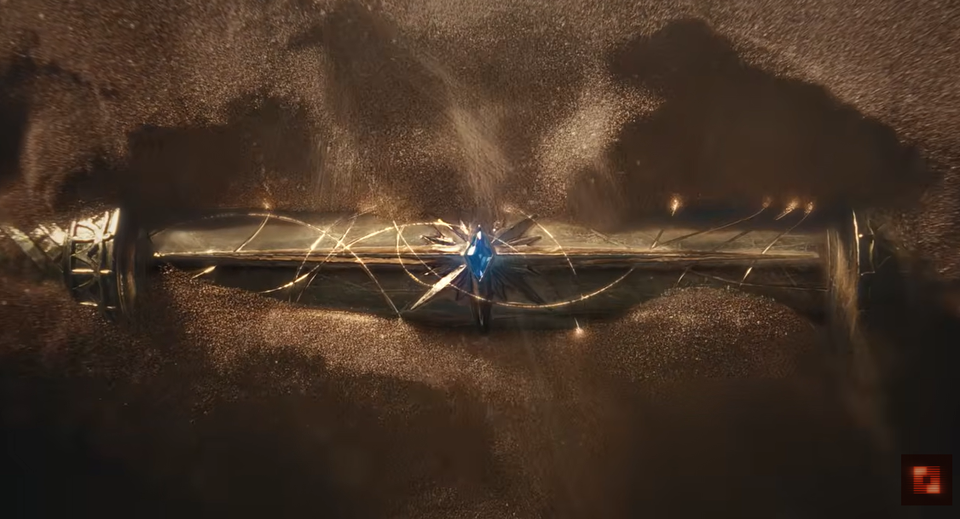
The big news of the week was that eight years after confirming that there will be a new Elder Scrolls game, Bethesda has got as far as confirming its name (delighting the nerds who called it at the time) and absolutely nothing else, although they did throw in a helpful picture of an Elder Scroll which at least means there are enough assets for a screenshot gallery thus saving games media. Come back in 2030 for the announcement it will contain NPC conversations. The game, that is, not games media, which will be solely NPC-powered by Q3 2027.
In corporate oopsie news, Embark said that ARC Raiders used AI voices because actors couldn’t handle reading a lot of voice lines, which suggests they have never actually met an actor. Activision could also have done with spending a bit more down the acting shop. The former COO of Xbox listed at some length the reasons she had not been fired, thus successfully introducing a range of potent new gossip topics into the discourse.
The Saudi fund that bought EA is trying to buy Unity and given the state of the share price I have to assume it'll succeed, so look forward to new adventures in soft power and a sudden spike in indies switching to Godot. For its part, EA re-released updated versions of 25 games from its voluminous back catalogue, including a lot of Ultimas, Road Rash and Theme Hospital, which is a more palatable way to pay back its monster debt load than firing a load of people.
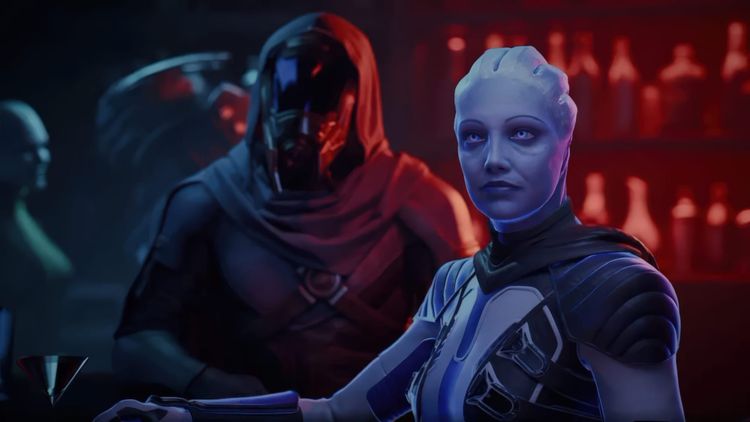
The passing of Bioware has been followed by escalating protest activity and an unfortunate series of N7 Day tie-ins that were clearly agreed and manufactured well before the closure and now cannot be cancelled. We learned that Bioware died because Battlefront 3 would make more money than Mass Effect 5, and of a Bioware documentary that will now serve as a Bioware memorial.
To nobody's surprise, Ubisoft is one of the bidders for Arkane Lyon, and the union is claiming Microsoft ruined everything. The latest game to lose its funding is trying to solve it with wishlists. Old School Runescape now has even older-school permadeath.
Down in the comments, JimJamMajesty has a conspiracy theory:
This week I was thinking about how it seems like every game ever made at some point or another would appear to release a plushie as a bit of merchandise. No matter how appropriate the character is for "plush-ification". Is there really such a market for all of these synthetic soft pals? Or is this game-dev hubris just destined for a micro-fiber island in the pacific? What can be done about this?! Why are we not talking about this! What sinister manufacturer is behind all of this!?
Jakob Schilling grasped the vernacular of New Orc City:
“Hey! I’m orcing here!”
Charlotte's desires are more esoteric:
I don't want to win, I want Miss Flora to bite me 😳
That's all for this week. Go and play some PC games.



Comments ()