
The device I want Valve to make
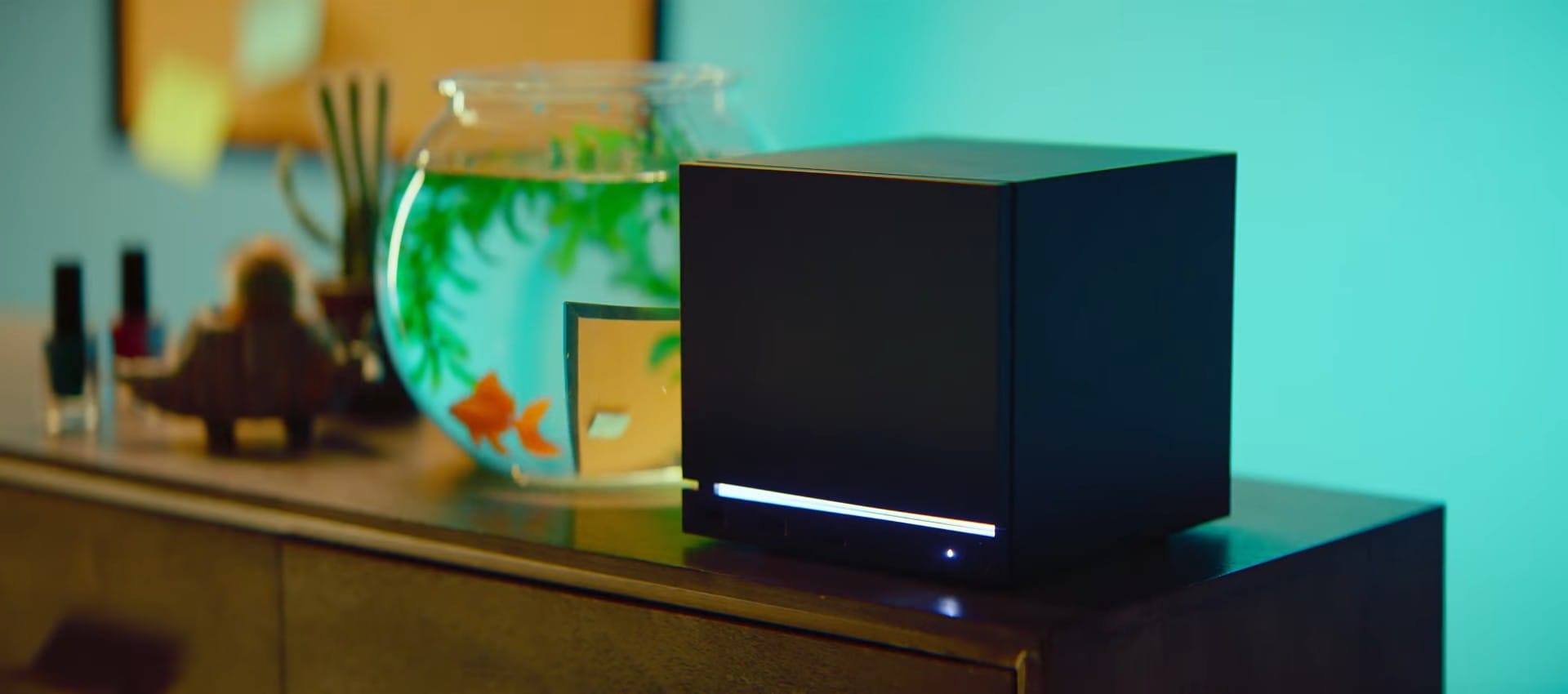
If you want a more powerful Steam Deck designed solely for playing games on your television, good news. On Monday, Valve revealed prices for the Steam Machine, a companion cube designed to bring PC gaming into your living room. All of the reviews pretty much agree: they're cool, small, quiet machines that offer a gateway to the platform, but feel too expensive because everything is too expensive now.
That's great and I've added my name to the waiting list. Now Valve should make what I really want: a less powerful Steam Deck that's still handheld but half the size.
I've owned a Steam Deck since launch and I like it a lot. I don't take for granted how wonderful it is to be able to play PC games on the go - or in my case, while lying in bed or on the couch - and it's great that it's powerful enough to play a surprising number of the games on Steam. I could run Elden Ring on that thing, or Resident Evil Requiem, or with the right settings even multiplayer shooters like Arc Raiders.
I could watch No Country For Old Men on my phone too, but I'm not going to. I use my Steam Deck for playing games that feel more at home on a handheld device, and in most instances the Steam Deck is much more powerful than I actually need it to be.
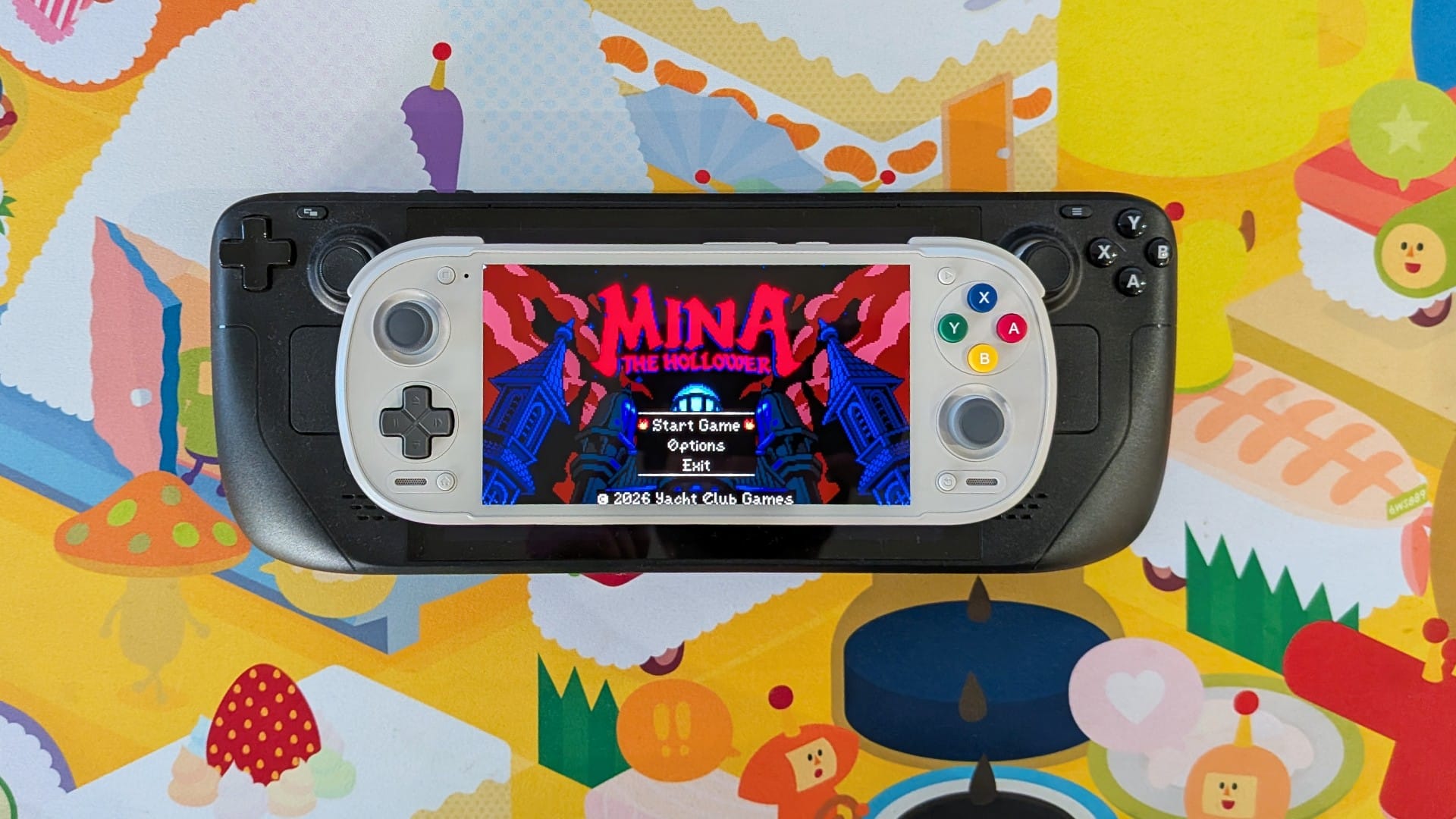
It's also much heavier than I want it to be. I have cubital tunnel syndrome, a repetitive strain injury in my elbows, and holding the Steam Deck for long periods leaves me feeling like I'm a 41-year-old man who can't hold a videogames console for long periods. There are few worse feelings, but even if I wasn't a flesh house for a rapidly disintegrating skeleton, I think I'd still find it uncomfortable to hold something so large while lying down.
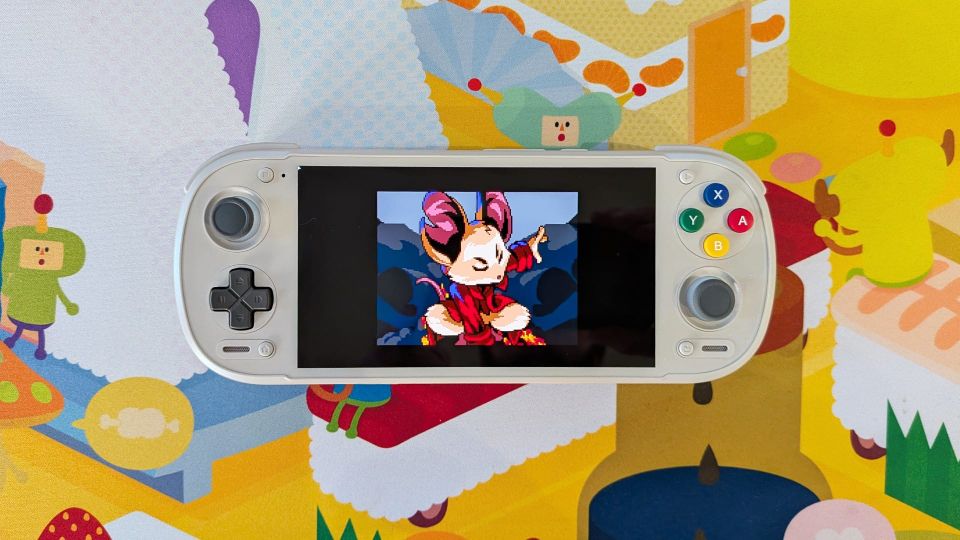
Enter the Retroid Pocket 6. This Android-powered emulation device is the size of a PSP and less than half the weight of a Steam Deck at just 304 grams.
As an emulation device, you're maybe expecting (and expected) to play older console games on it, but it can emulate PC games, too. That's thanks to GameNative, an app that gives you access to games you own on Steam, Epic or GOG. It uses a derivation of Proton, the same compatibility layer that Valve use to make Windows games run under their Linux-based SteamOS, to make Windows games run under Android. It's mostly built upon open software, the development of which Valve are helping to fund.
The Pocket 6 contains a Snapdragon 8 Gen 2. That's a mobile phone processor, hence the Android operating system, but mobile phone chips are powerful enough now to run all kinds of games - including the majority of the kinds of games I, and I bet you, actually play. Resident Evil Requiem? No. Mina The Hollower? Very much yes.
In fact, Mina The Hollower, in all its Game Boy Color pixel art glory, made far more sense to me when held in my hands on a small screen than it did on my desktop monitor. Some games are just handheld games. If there's an indie darling you've been enthralled by this year, it probably plays well on the Retroid Pocket 6. If there's an older game that's been stealing your time, it almost certainly plays well. I've been poking away at Tangle Tower in the evenings, and the Pocket 6 works great when playing it in bed.
The hardware has its limits. I tried playing The Adventures Of Elliot on it and it struggled as all those 2D-HD post-processing effects dropped the framerate to around 17fps during combat. That's fine! I don't need or want every device to be able to play every game - although if I wanted to persevere, I could switch over to GameHub or GameHub Lite, apps that can emulate your Steam library like GameNative, but also stream them from a local PC. Some games are just handheld games, and some are just very much not.
Still, none of this is perfect. There's some setup required to install any of these apps, which I'm glossing over. You don't need to be technically minded to do it, but it takes some effort. The compatibility layer between Windows and Android is not yet as mature as it is for making games run on Linux, although it's getting better all the time. The smaller screen size does mean that in-game text is sometimes small, even for games that have previously been optimised for Steam Deck.
These are all small issues that make me wish there was an official Valve device in this form factor. By supporting the development of the compatibility layer, Valve are clearly interested in making their games run on Android. There are stronger incentives to do so in a world where standard PC hardware is becoming exponentially more expensive due to supply chain shortages (although it's worth noting that Retroid, and other similar manufacturers such as AYN, have not been entirely immune to the same issues). If Valve released a Steam Deck Mini, it would also create incentives for developers to make their fonts bigger.
Do I think Valve will actually do this? Not anytime soon. Valve presumably have their hands full with trying to meet demand for the Deck, the Machine, the Controller, and their still-to-launch new VR headset, the Steam Frame. It is frankly ridiculous behaviour on my part to look at everything Valve are serving up - all of which I like! - and then ask them to make yet another thing.
But I'm a guy with a blog on the internet. Maybe this is all pie-in-the-sky dreaming, but the Retroid Pocket 6 is the pie in my hands. I'm writing this not for Valve, but for the audience I see long for a Steam Deck 2 that's more powerful than the one that already exists. No! No!! Ask instead for a Steam Deck 2 that's cheaper, smaller, and as low-power as my elbows.




Comments ()