
Thousand Hells review
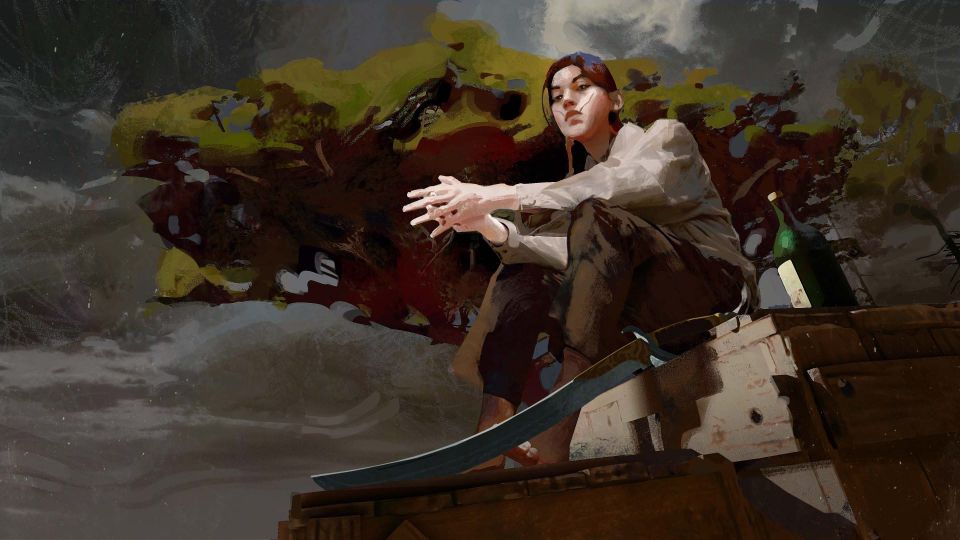
As readers in the UK will know, there are many hells, and you can and should put together a team to rob powerful figures within them. And such a team would of course be not a spreadsheet of optimal (ugh) builds, but a guessing game of hedged bets and approximate ideas.
Thousand Hells has you lead this team on a journey, first to reach hell at all, then to find and retrieve something, or get agonisingly close before making one too many mistakes and losing everything. But this isn't the arbitrary, timewasting death of the roguelike. This is just that story. It can be dissatisfying, and parts of it can not really make sense. This is at times its big flaw, and at others, where it feels most successful. Are we still saying "same"?
Each game is an adventurous journey followed by a heist, then a shorter but still fraught journey back. Each is also a named plot with a specific target, and could take you to one of four hells (the "thousand" are scene-setting) this time. It's also a new team, including you, the leader.
When my first team returned, I was a little disappointed that I couldn't play out her next job, but that was missing the point. This is roleplaying as one-off storymaking, not as a long term commitment to building up a character. This, somewhat counter-intuitively, frees you to play to those characters, defining them as you go, with no specific playstyle or destination in mind.
Your main prompts for that will be the traits that define every party member. The three you recruit come from a shortlist you interview to reveal some, but never enough traits to fully know them upfront. Sometimes you'll reject the most revealed, hoping that their more opaque replacement doesn't reveal anything too disastrous later.
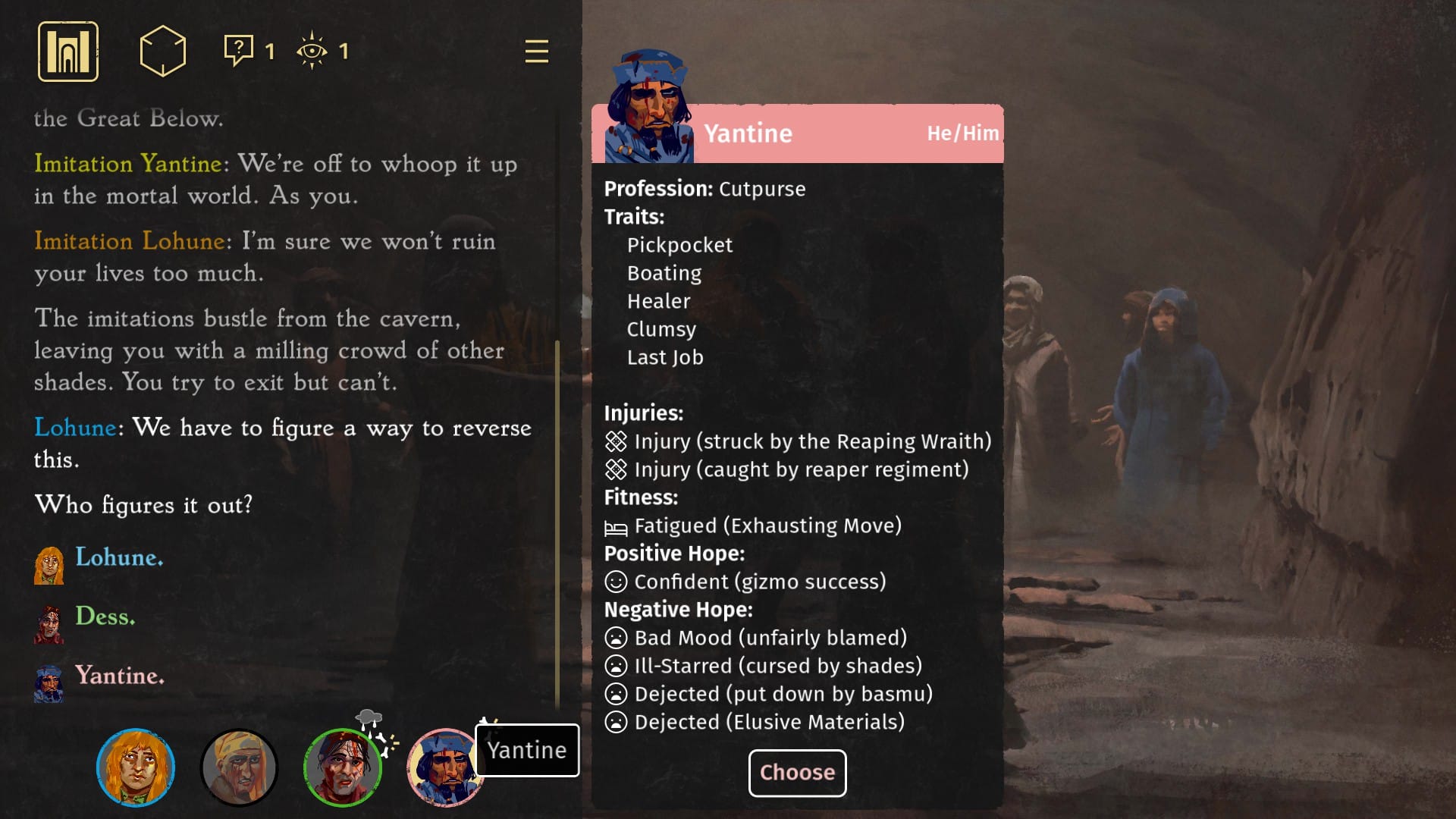
"Traits" includes skillsets, personal characteristics and even physical or psychological limitations. None are numerical, and while some have obvious appeal, you're not calculating odds or comparing numbers to form the ideal team. You're gambling a bit, loosely strategising, and finding a set of people who'll make an interesting go of it. Crucially, you don't really know what you'll face this time beyond some broad recruiting advice. The target and destination only come after creating your protagonist, by describing yourself from a randomised shortlist, one trait at a time in turn. You're known for your cunning plans, perhaps, but held back by clumsiness. Your affinity with animals has been an asset, and your literacy very helpful, but you're terrified of the dark. Perhaps you're extremely ugly. I... don't want to know why that was a hindrance.
This leads to the kind of roleplaying where you know that the proper thing to do is take the extra risk to help someone, and you'd normally do that... but your character is "overcautious". Not as a bonus trait after a list of scores and class features, but one of the few things that fundamentally define them. We're not doing it, team. Stick to the job.
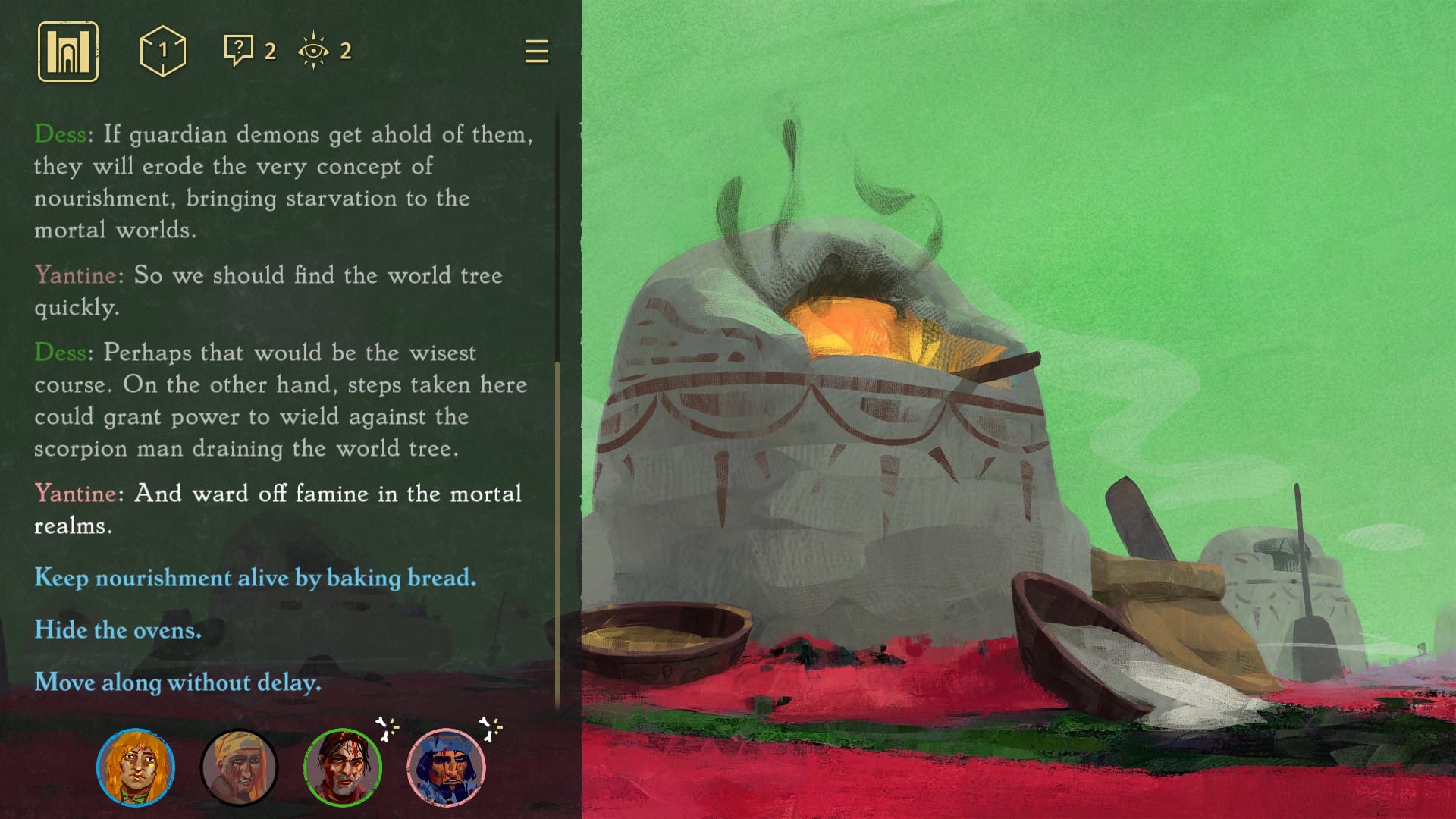
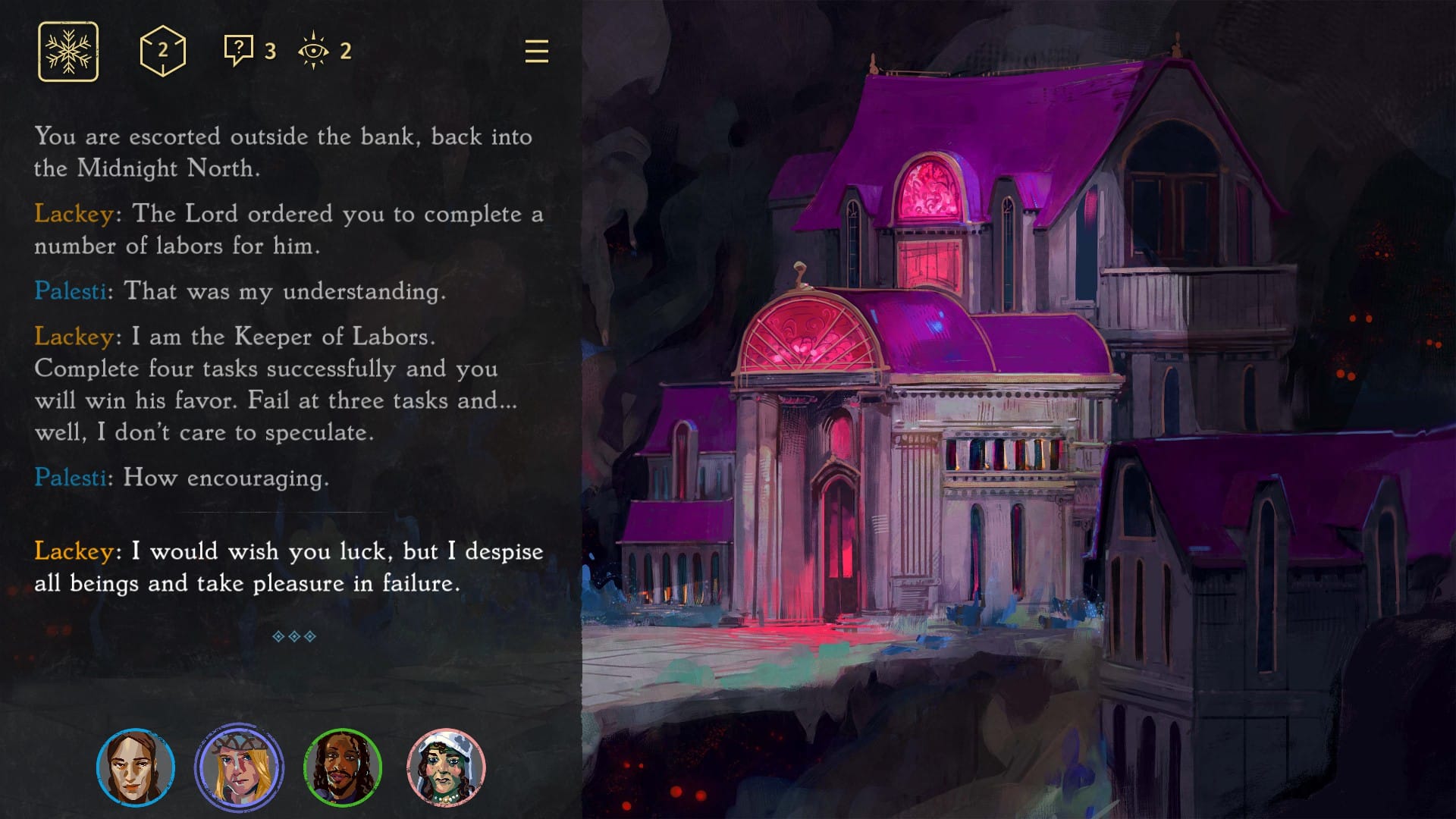
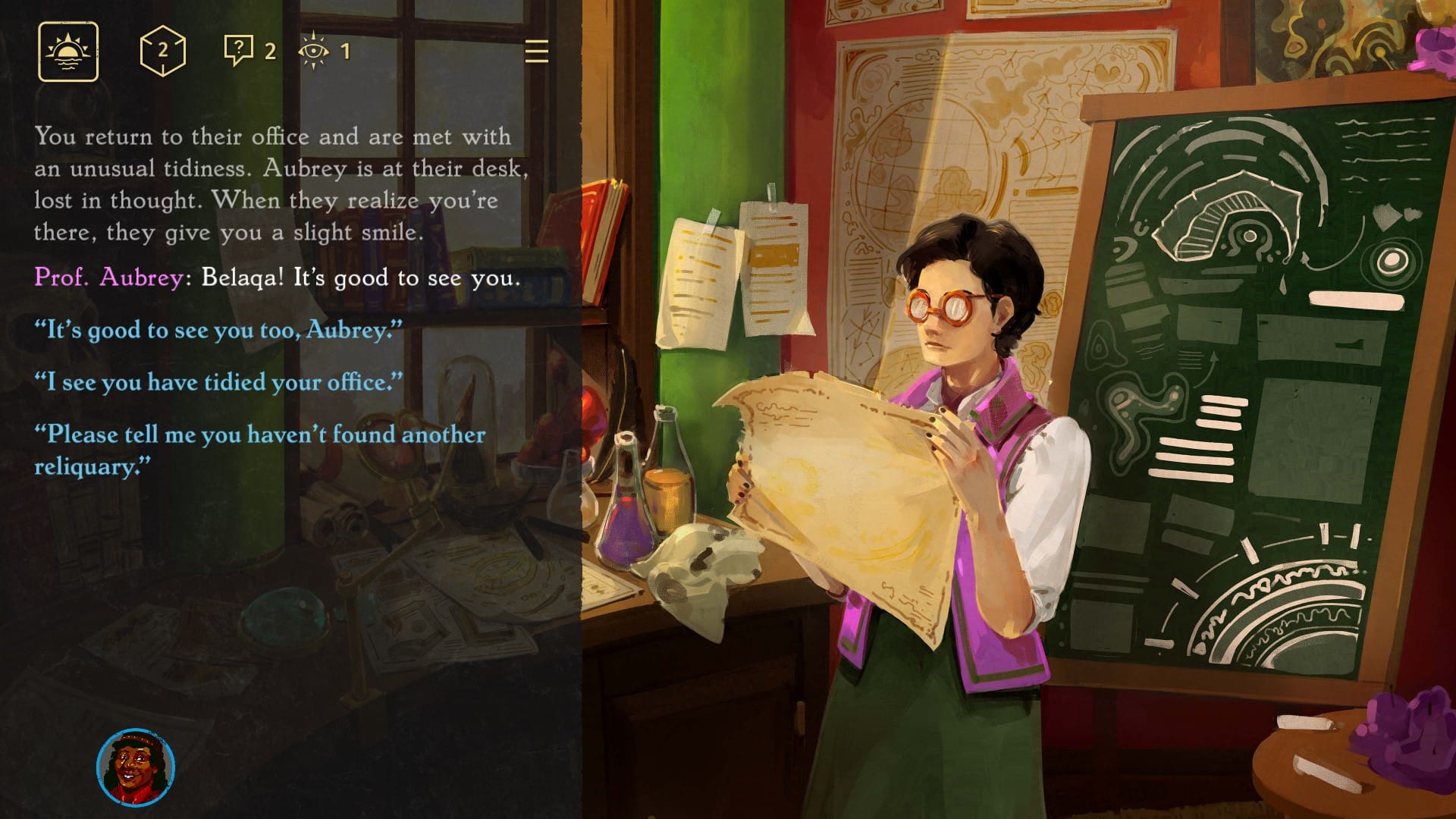
That job is always a retrieval, but could be a heist, or manhunt, or even finding information. It'll play out as a semi-linear series of scenes recognisable to Six Ages players, almost entirely in text, regularly asking for your dialogue, opinion, or a course of action. Combinations of traits, previous decisions, and chance mean familiar plots and hells can present different situations, and your own reasons can vary even for choosing the same path as last time.
Some scenes can be bypassed with the right decision, a person in your party suddenly revealing some hidden trait, or just choosing not to investigate. You might skip one by burning an abstract resource; wild cards to decide that your character, an experienced hellhunter, has retroactively read a book about this riddle, or bribed these guards in advance. But many are resolved with a "challenge": A mini-game where all those traits are tested.
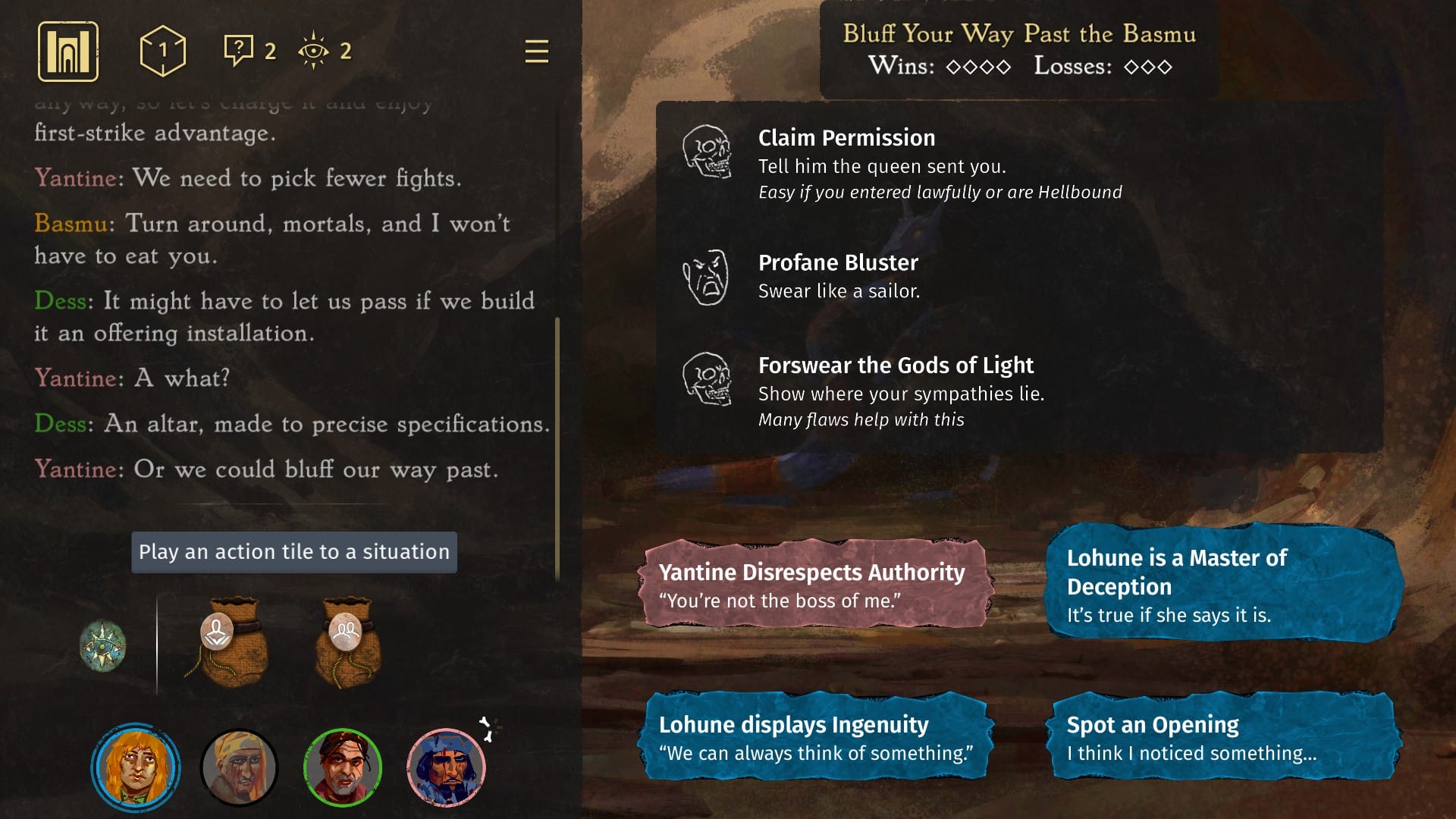
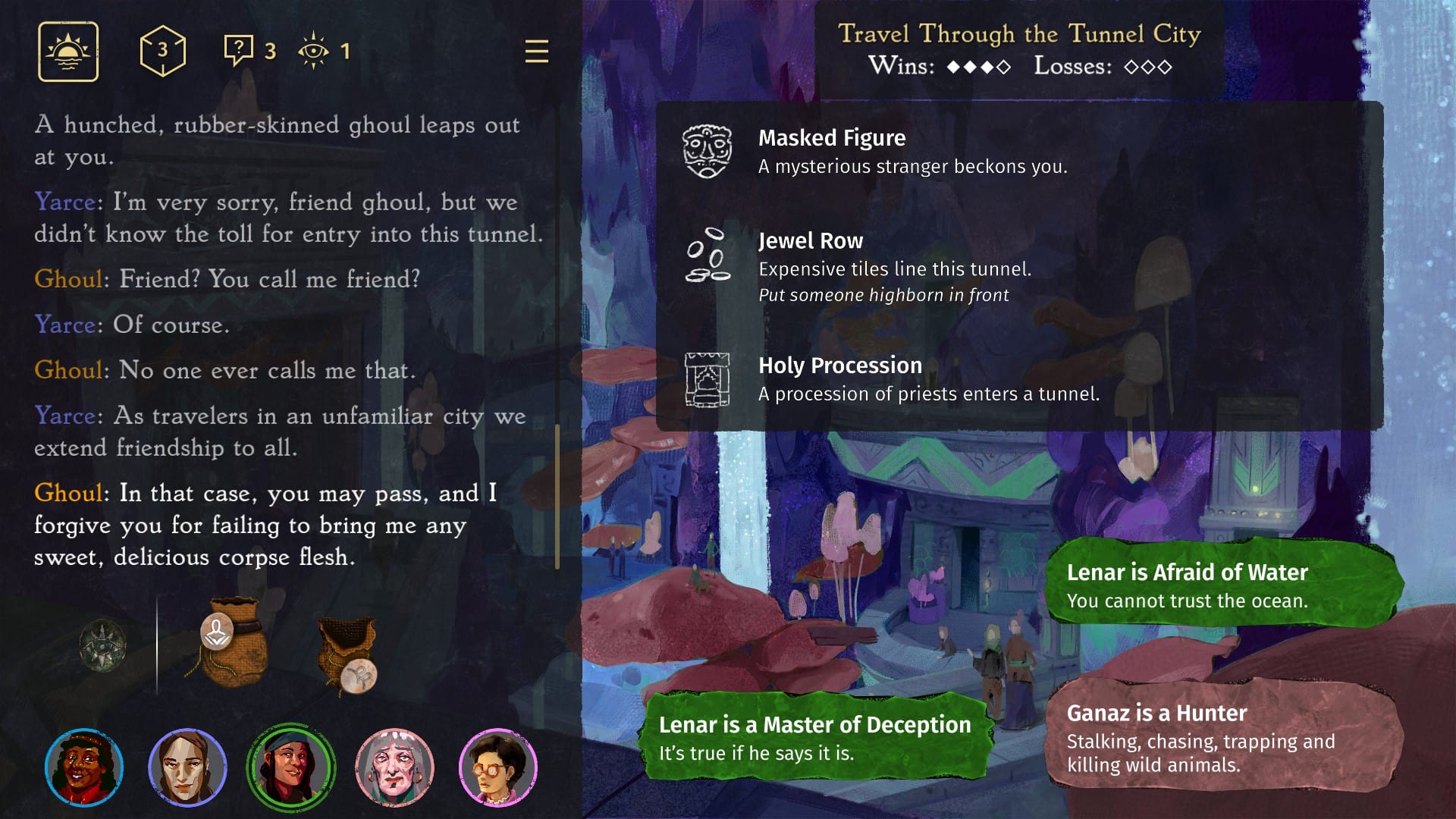
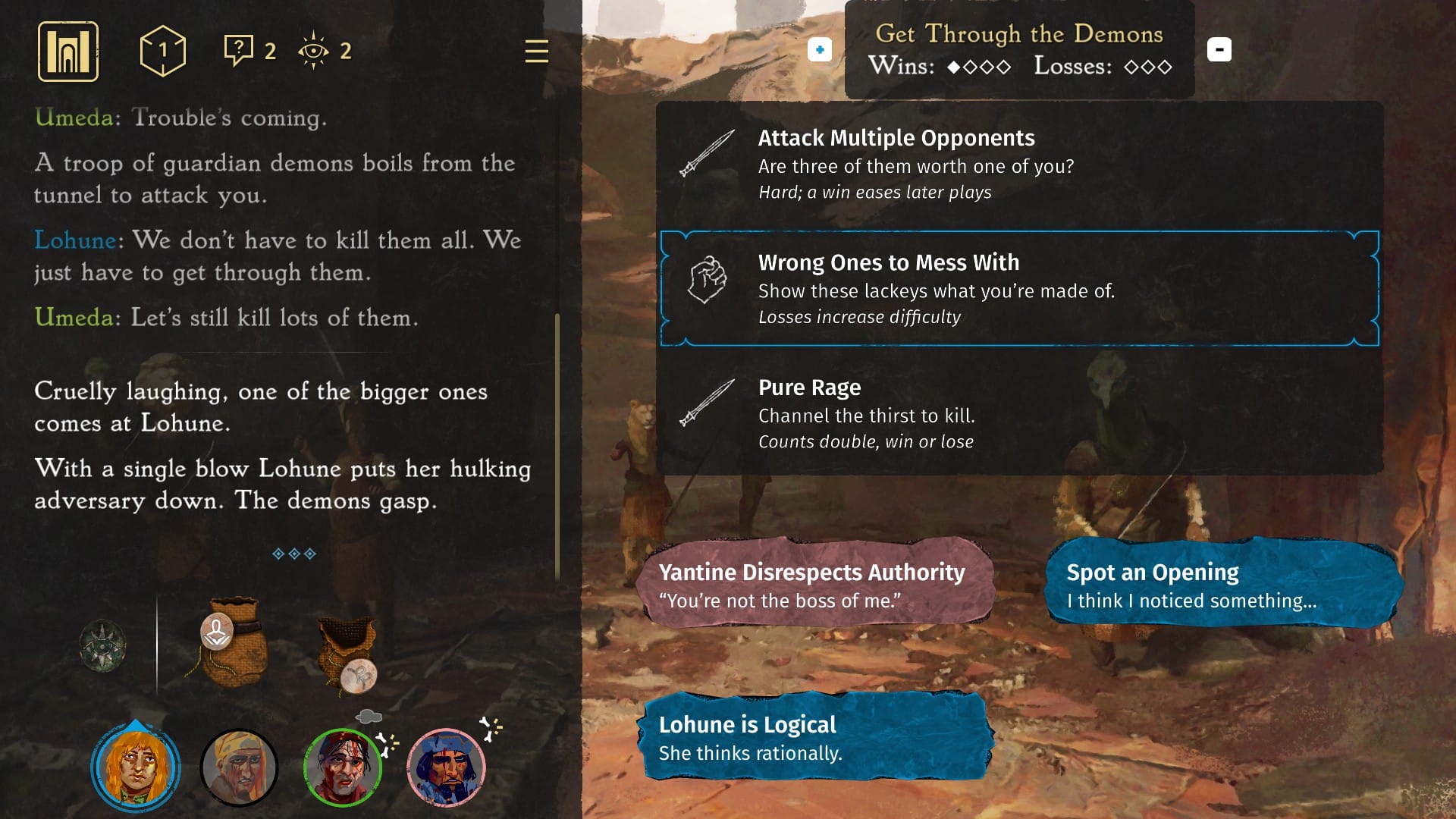
A challenge could be a simple monster fight. It could be disarming a trap. It could be convincing a spirit to let you pass, escaping from an enemy, sneaking into a mansion, or being entertaining enough that a demon doesn't eat your memories. All of them work the same way: three "situations" appear, representing threats to counter or ideas to attempt, and tokens representing your traits sit in abstract bags, from which you draw four per round. You must play one token on one situation each round. Success or failure, your token is binned, you draw another, and repeat until you score enough wins or loses to resolve the challenge.
I come back to "not numerical". Of course there are numbers behind the curtain. Another abstract resource, intuition, reveals them as proportions of dots for one round, but most rounds are essentially vibed through. Traits are not a +5 to Strengitude or "20% chance of Brainosity loss when wielding tubes". They're who your people are, and that's all you really bring to hell. So you might draw Honest, Combat Trained, Perceptive, and Impatient, but some produce offbeat tokens like "Hope for a fluke" or "Inspiring move". All include brief descriptions, not with data but with hints, little nudges that traits and situations are to be interpreted.
There's some strategy, as you nominate someone upfront to lead, putting their full trait set in one bag, while the others contribute one each to a second bag (a third bag covers temporary or circumstantial assets). And obviously you hope for directly relevant tokens, like Educated when persuading some scholars, or Hunter when following tracks, and minimise the chance of flaws (though those are sometimes useful), and balance broadly useful traits against niche specialties against flaws when recruiting and nominating. There's no guarantee, though, that your guy with Lockpicking, whose secret dark triad made him mostly dead weight so far, will actually draw Lockpicking when you finally bloody need it. And of course it'll come out when your failing party is on their last chance to convince a spirit to guide you through the desert, leaving you picturing this clod weakly saying "well, uhhh I can pick locks!".
This is where Thousand Hells is sometimes annoying. But it's a price paid for those moments in between, where you have no sure solutions, but some options that, when you stop taking them literally, get you imagining. Maybe "Fyarg is poetic" could help them identify patterns in the stonework? What if "stealthy" could work figuratively, convincing a judge with an unexpected argument? Hidden factors can make a poor choice work anyway, but NPCs too are interpreting, and like Six Ages, sometimes reward a counter-intuitive approach. And so occasionally you'll be fleeing from monsters, and swear aloud after drawing "Oromal is a virtuoso", but then hover over it for a moment, and think "Actually... what if..?".
Even some awkward results recall that "impulsive nonsense idiot" quality of myths and folk tales, where characters are poetic and philosophical constructs, and make an inevitability out of someone challenging a demon warlord with "STAND ASIDE. I'M A FISHMONGER". The "hells", too, rebuff the Christian assumptions of good and evil; they're bad afterlives, sure, and the wrong moves give them a claim on your soul. But those claims are more contractual questions of rights, loyalties, and belonging. Demons are as likely to be dandyish artists or bored caretakers as they are stabby warriors, and some underworlders are outright likeable. Your characters are implicitly mythological too; scholars fighting hellbeasts, thieves defying gods, warriors charming the dream eater. To leading a magical ritual of unbinding, the warrior who once said "why even ask me about magic?" would normally be the last choice. But she once freed herself from slavery, and this magic binds slaves. Maybe the numbers are still bad, but this is a story, not an equation. I'm choosing her, and if she fails, we keep rolling.
"This isn't a game about finding the optimal path through the maze. It's about inhabiting that space in mythology, in the figurative and poetic. You have to paper over some discrepancies, so narration during challenges comes as highlights and sometimes non-sequiturs, to keep the story moving when you use "boatmaking" on "hide in a bush". Consider that character, play to what you've made them, that time, and work with the narrator a little. Let the beat carry you past the occasional bum note.
There are annoyances, like the party volunteering vital information immediately after it's become useless, and it's disappointing that most of my failures ended suddenly and anticlimactically. One truly disastrous team somehow succeeded against absurd odds, and cleared the last obstacle home, only for an abrupt, wildly paraphrased "but one of you lost hope while doing that, the end" that felt out of step. It's understandable, given the myriad circumstances that could produce the jenga moment, but some doomed soldiering on or some more dramatic flourish would have cushioned it some.
I can't hold my grumbles against Thousand Hells for long, nor insist on more hells and plots without feeling churlish. It asks you to meet it in the middle somewhat, because the very form of play it's inviting you to makes it necessary. If you're willing to do that, it'll be well worth your time.



Comments ()