Total Playtime: Bugpunk

In which people become very cross about Split Fiction

Total Playtime is a Patreon-supported podcast about videogames, hosted by Alice Bell, Jon Hicks, Brendan Caldwell and Nate Crowley. Jank has partnered with them and we'll be posting new episodes each week.

It’s Thursday, so that means a new episode of Total Playtime, and as part of our current partnership I am compelled to bring it to your attention. This week’s episode, after an extended aside about shrimp (real; either annoying or delicious) and ahead of a discussion of Silt Striders (not real; valuable public infrastructure), is anchored by the news that progress has been made on the Split Fiction movie, which Alice cited as a transparent segue into her talking about the fact that she has been playing Split Fiction and is extremely furious about it.

audio-thumbnail
Total Playtime Episode 28: Bugpunk
0:00
/3823.47085

I will not attempt to summarise her argument but the topline is that the characters, narrative and game itself are all bad in ways seemingly calculated to enrage. Some of these views are shared by Graham and, to a degree, Brendy - I have not played the game so I will not judge, but that’s okay because Alice offers

I can't stop playing KOLYDR

A new classic from the master craftsman of browser games.

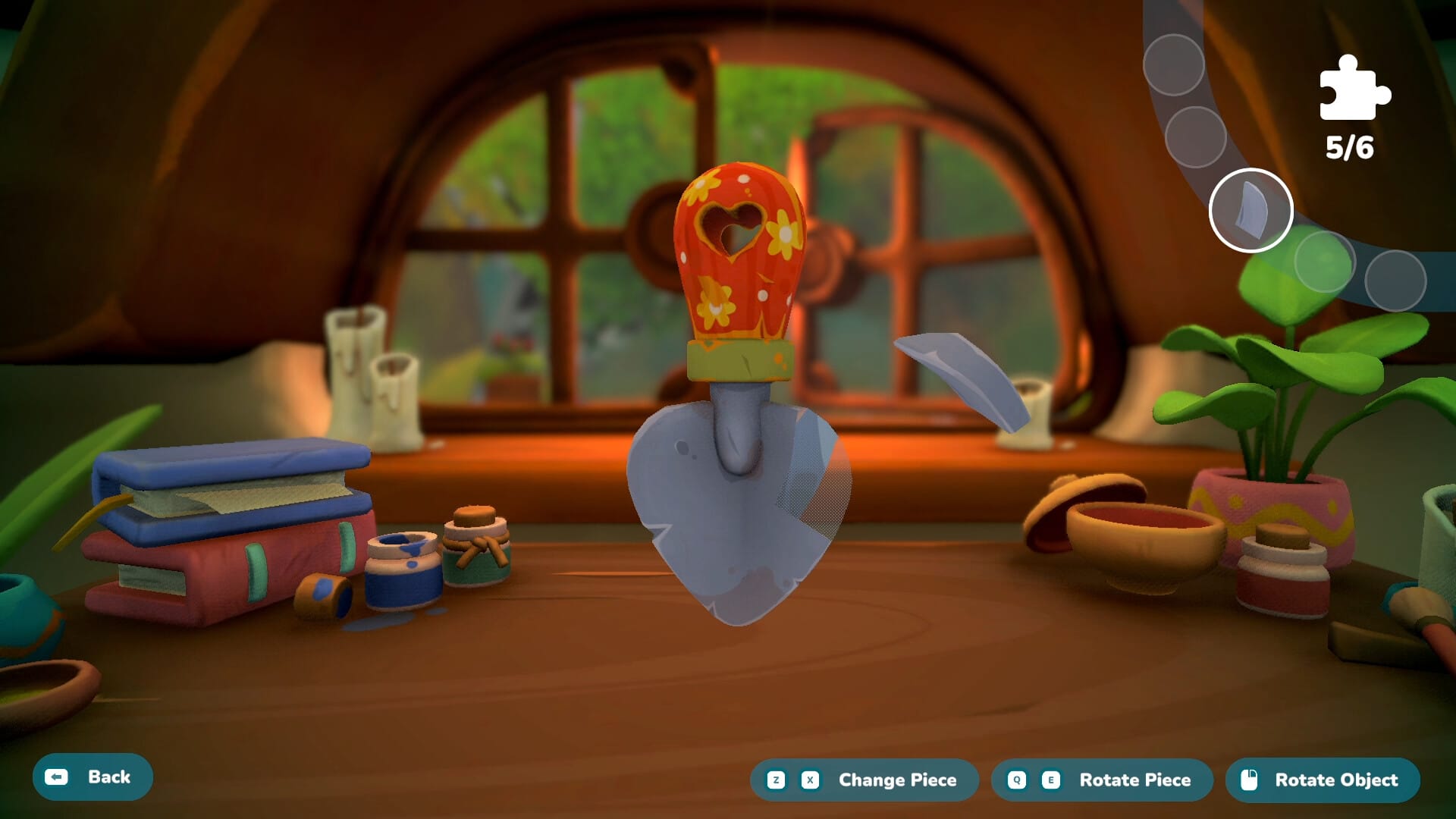
I can't describe KOLYDR more succinctly than it describes itself, as a game in which "you clear out reds by crashing into blues until a green appears." It's a tiny, single screen PICO-8 game you can play in your browser right now. What makes me keep playing is that it's a game of constant risk and reward, one where nearly every moment is a gamble and every death was preventable if only I hadn't pushed my luck.

This is also what makes me yowl in anguish every time I die.

Here's the longer explanation of how KOLYDR works: you move a small craft (using arrow keys, ESDF or gamepad) around a square arena. Blue squares appear which explode when touched, and the explosions destroy red squares, which are otherwise gradually filling the arena. Destroyed red squares drop gold which can be collected and are worth 100 points. After a short while, green squares will begin to appear which allow you to end your run and bank your score.

Naturally, you want your score to be as high as possible, so you don't leave when a green exit first appears. Instead, you keep going,

There are only 9 types of quest, says Fallout creator - but what about these?

Let's talk quest this out

How many types of quest are there in an RPG? Shut up, the question has already been answered by Fallout creator Tim Cain, who says there are nine - count 'em - nine types of quest. When you set off as Goblonk the Brave this morning you didn't know it, but you're only going to see these nine familiar missions as you travel the kingdom. At least according to Cain. 

I think he might be missing a few. More importantly, the whole idea of taxonomising quests this way risks stripping the flavour out of quest design by limiting everything to a set menu of indivisible "ingredients". We're not making a casserole here. And even if we were, why can't I put some nettles in just to see what happens? There are a lot of quests that just don't fit the mold. 

First, you can watch Cain's whole video on the taxonomy here. It's interesting. And to be fair, it's more like a fifteen-minute blast of audible thoughts than any grand theory of quest design. I don't think Cain intends to publish this in a peer-reviewed journal or anything. But

Modders have turned one of racing's most hardcore sims into a Speed Racer game

And I'm crashing out at the first corner over and over.

I love Speed Racer, the Wachowski's kaleidoscopic family film which depicts a form of racing that's both a transcendent act of self-expression and an absurd, Wacky Races-style gauntlet around the coolest Hot Wheels track you've ever seen. The film was accompanied at the time by Speed Racer: The Videogame, a middling tie-in for the Wii. It deserved better.

Enter Assetto Corsa. The 2014 racing game is a staggeringly detailed simulation of real cars and racetracks, but it's also home to a vibrant modding community. Which I discovered when YouTube offered up a video titled "Insane Speed Racer mod" and didn't disappoint.

The copyrighted soundtrack isn't present in the mod, to be clear.

I love arcade racing games, but sims tend to be beyond my tolerance (unless they're about delivering freight across Europe). I have therefore never previously had any interest in playing Assetto Corsa until I saw the video above, at which point I immediately got it on Steam.

If you're now considering doing the same, I should warn you: all my dreams did not come true.

For a start, there is no "Speed Racer mod", as the YouTube

Three game devs climbed a mountain - epilogue

We've Peaked

So all of my interview subjects died. Big deal. We learned some things along the way, didn't we? Back in Peak's lobby (a cartoonish airport you can play around in) the developers and I have a debrief. Is there anything they've learned while playing Peak - apart from the fact that having friends is fun?

"Don't work on a game for five years," says Bennett, referencing the fact that Peak was reportedly made in just a few months, yet has sold a huge number of copies.

"Yeah," says Holly, "that's a big one, honestly... it shows how you don't need to spend a huge amount of time if you just go in with a really simple premise and kind of extrapolate your idea from there."

"Yeah, do a little less," laughs Bennett.

For a full list of articles in this series - click here

What do they think of the game itself? What's interested them most about it?

"I think it's really interesting, especially in multiplayer, if I look at the 40 minutes we've played, we'

The first Splinter Cell novel makes Sam Fisher into a neocon Alan Partridge

I thought this guy was supposed to be stealthy

Total Playtime is a Patreon-supported podcast about videogames, hosted by Alice Bell, Jon Hicks, Brendan Caldwell and Nate Crowley. Jank has partnered with them to bring their premium episodes to our paying subscribers - but we’re making this episode free to all. 

Text Adventure is Total Playtime’s videogame book club, in which we read a videogame novelisation and try very hard to like it. In this episode, Alice, Nate and I were joined by the delightful Johnny Chiodini to read the first book based on Sam Fisher, Tom Clancy’s Splinter Cell by David Michaels. Nate fell at the first hurdle by erroneously reading the second novelisation, Tom Clancy’s Splinter Cell: Operation Barracuda, which speaks to the professionalism of the Total Playtime operation and why we felt it aligned with a website called Jank.

The practical impact of this error was limited, as both books are archetypal hoo-rah Clancyverse publications of the mid-2000s, when the US-lead invasions of Iraq and Afghanistan were still fresh. Both books were best-sellers, neither of them are any good, and the first is notable for capturing the spirit of the game in a startlingly negative way.

audio-thumbnail
Text

TR-49 review: sorry, I'm not up to code

An enigma wrapped in a riddle wrapped in a primary school maths question

I feel like my brain is broken. Sci-fi mystery puzzler TR-49 is the exact sort of clue-hunting solve 'em up I normally love. But somewhere in its thorny forest of fictional author names and twentieth century dates I got lost, hacking my way through more with frustration than curiosity. 

It's packaged as a codebreaking game, but really it's a "database game". Imagine Her Story in an alternate history. You type codes into an odd machine to reveal snippets from books or journals. You're here to find a particular book. But the texts you discover are mostly the jumbled notes from previous users of the machine. Sounds intriguing, and many scribbles display a great range of writing styles. But I found slowly constructing my understanding of the plot and its many characters more cumbersome than rewarding. Putting its cryptic story together felt like building a cathedral out of SQL.  

Some basics. You're Abbi, and you're stuck in a dank cellar with the strange machine. A voice comes over the radio, a bloke called Liam, who asks you to start toying with the levers and dials on this weird old codebreaker.

Three game devs climb a mountain - part 7

Ain't no mountain tall enough (except this one)

I wait around at the bottom of a tree for Bennett Foddy to scramble up the bark, desperately looking over my shoulder for undead threats. I would like the game designer and noted moral philosopher to climb quickly and offer me a hand from the platform above. But he has circled back to a question I asked some time ago about resource management.

"For Baby Steps," he says, climbing painfully slow, "at some point we must have decided we didn't want resource use, but I don't know why. I think partly it's because we got so allergic to implementing UI... and that makes it really hard to have resources."

Bennett climbs a tree as Holly's ghost watches on.
Okay, no, yes, of course, but also: climb faster please.

Bennett runs out of stamina and falls from the tree. He is lightly hurt. I hear zombie noises nearby. I put down the heavy, unconscious body of Emeric Thoa for a moment (I'm sure he'll be okay) and try to climb the tree myself.

Beneath me Foddy continues to talk about user interfaces and how

The homepage is over but you can signup for more
You like more, right?