
The Lie-In

Good morning, videogames. A heatwave has struck the UK this weekend, a country where all the buildings are designed to retain heat. Unfortunately I must remain indoors, because my skin is designed the same way. Let's take a sweaty, sunburnt look at some writing about videogames from across the week.
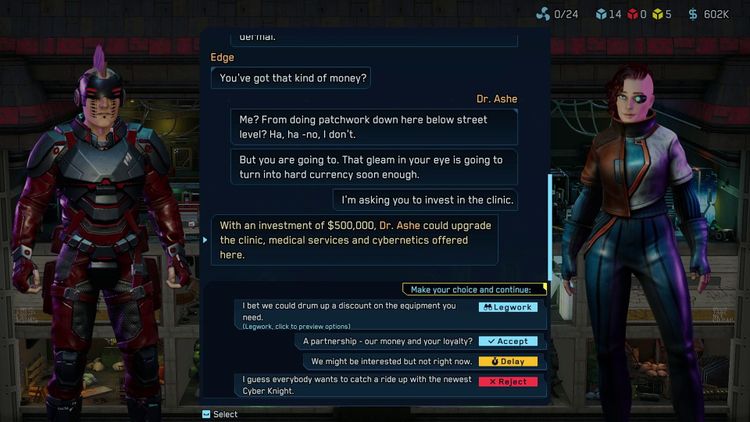
Over at Remap Radio, Dia Lacina took on the unenviable task of reviewing ZA/UM's new game, Zero Parades: For Dead Spies.
We learn in the opening minutes of Zero Parades that CASCADE is the only agent to return from a job gone bad, and now she's warehoused in a filing cabinet-gulag for failed spies called "The Freezer." This is where you stew in self-accusatory depression, spending your days drowning under paperwork while you hold trauma's finger and point it right at yourself. This is spy hell.
The scandal-soaked rat kings over at the Jank spiritual predecessor didn't manage a full review of Zero Parades (unlike us), but Edwin Evans-Thirlwell did deign to bring his takes-one-to-know-one expertise to explaining why ZA/UM's latest is "both bootleg Disco Elysium and a spirited interrogation of fake culture in all its guises".
For many players, Zero Parades: For Dead Spies will never be anything other than a seedy clone of ZA/UM's reputation-making Disco Elysium – a soul-sucking forgery of a doomy leftist masterpiece, whose original lead writers and designers have been ousted by scheming executives. It's appropriate then, that, Zero Parades proves obsessed with clones, forgeries, bootlegs, and the ways in which these entities can be wielded for erasure and displacement. Its opening third is a comical squabble over notions of authenticity and (thereby) identity, an interrogation of connoisseurship and the notion of the 'genuine article' as vectors for assimilation.
For Postmode, Jordan Oloman reviewed Forza Horizon 6, "the best racing game you've already played".
To be fair, I’ve never considered the Horizon games to be highly effective urban racing games — and this one still can’t hold a candle to the vibes of cruising in GTA Online’s Los Santos. It’s a shame because the promise of Tokyo is right there, and the radio is a shopping list of domestic and international talent, from YOASOBI to Yellow Magic Orchestra, Hikaru Utada, Porter Robinson and Turnstile. Even a Crazy Taxi delivery minigame that throws you through the wards at breakneck speed can’t make me care much about this lifeless urban facsimile.
I've never loved a Yoshi game, which are typically tailored towards younger players. But then, neither has my son. The Mysterious Book, released this week, seems like it could change that, if this review by Patrick Klepek is anything to go by.
But in the hours I’ve spent with it, solo and with my kids, I’ve smiled a lot. It’s a joy to hop into a blank page and ask my kids for ideas on what we could try. And because each individual page has dozens of mini goals, just goofing around is going to unearth some reward. But if you want to eventually find all the mysteries, and if you want to track down all the collectible flowers, you will have to put your big adult brain to use.
At Harmony Zone, musings on videogames from thecatamites, developer of many wonderful games. I enjoyed several parts of this, although this part leapt out:
"why this had to be a game", had to be a movie, a comic, etc, the fearfulness of concealing volition as necessity - no, don't worry, it's not that they simply wanted to do such and such a thing, it's that they had to do it, they had no choice, which makes it better. sometimes you just want something and other people look at the wreckage of your miserable desires and relate to it or not. necessity in art discourse is those little bumper rails they put down at kids bowling.
For a reason, I was thinking about Kate Compton's old line that procedural generation, done poorly, produced something similar to 10,000 bowls of oatmeal. I could not remember the wider context of this opinion and so went digging for it. Google is now almost entirely useless, but it eventually showed up in an old Tumblr post by Compton from ten years ago:
o your algorithm may generate 18,446,744,073,709,551,616 planets. They may each be subtly different, but as they player is exploring them rapidly, will they be perceived as different? I like to call this problem the 10,000 Bowls of Oatmeal problem. I can easily generate 10,000 bowls of plain oatmeal, with each oat being in a different position and different orientation, and mathematically speaking they will all be completely unique. But the user will likely just see a lot of oatmeal. Perceptual uniqueness is the real metric, and it’s darn tough.
Music this week is Our Man In Havana by Kate St. John (best known as a member of '80s pop band The Dream Academy) and Roger Eno (yes, Brian Eno's brother).
Sleep well, videogames.


Comments ()