
Vholume review
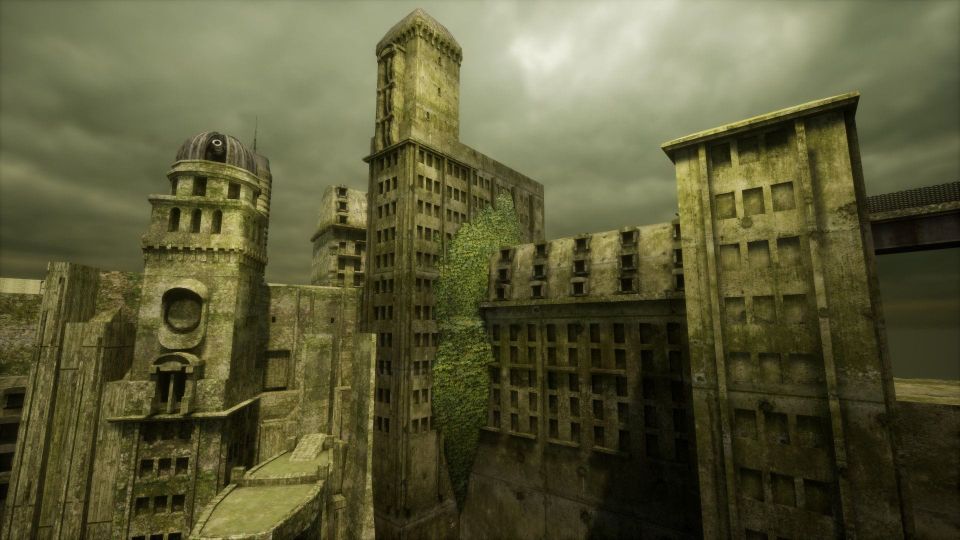
A good parkour game is a gauntlet of faith. You follow the flow of a city designed by some invisible hand: paving stones tilted at angles suggestive of a left turn, a warm light inviting you into a distant doorway, some plank of corrugated scrap extended toward an unseen edge. You are chasing a breadcrumb trail, except you don't always know what's crumb and what's dirt. Over and over, you leap without looking. Sometimes that means you die. But, when it's done right, you feel like you are predicting the future mere milliseconds ahead of time.
The best levels of Vholume make me feel like a clairvoyant with springs for legs. The worst feel like a brief test of my faith, nothing more. The protagonist of this wall-running platformer will often wheeze as if they're running out of breath. At the end of one run, I realised I had been holding my own lungs for the two full minutes it took me to hit the dark doorway that marks the finish line. This game is such a rush, it will deprive you of oxygen.
Thirty-one levels, a wall run, and a bum slide. That's all there is to this, if I described it in a back-of-the-box sort of way. Except those levels are partly designed by one of the Lemaitre Bros (of Babbdi and Straftat brilliance), the wall-running is silkier than anything in Mirror's Edge, and the arse-slipping will see you flying down sewer drains like a lubed trout at a waterpark.
You are competing against the clock, speeding toward a bronze, silver, or gold time (set by the devs), as well as outpacing the ghosts of other players on the leaderboard. It is an entire game worth of that fancy training level from Titanfall 2, but set in megastructure slums. For a game that wants you to go fast, you will often grind to a halt just to appreciate the city's concrete majesty. Or, sometimes, just to inhale.
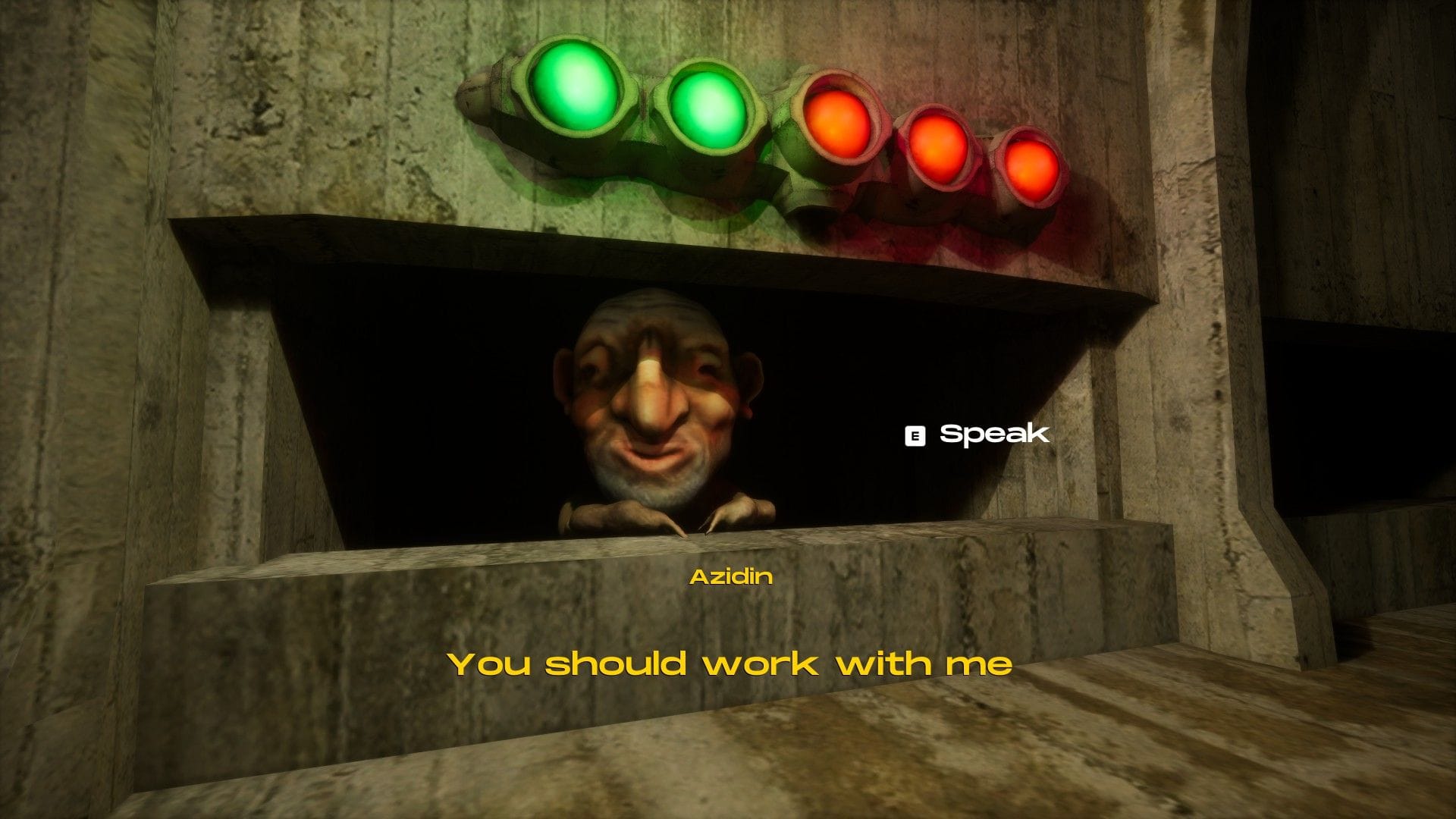
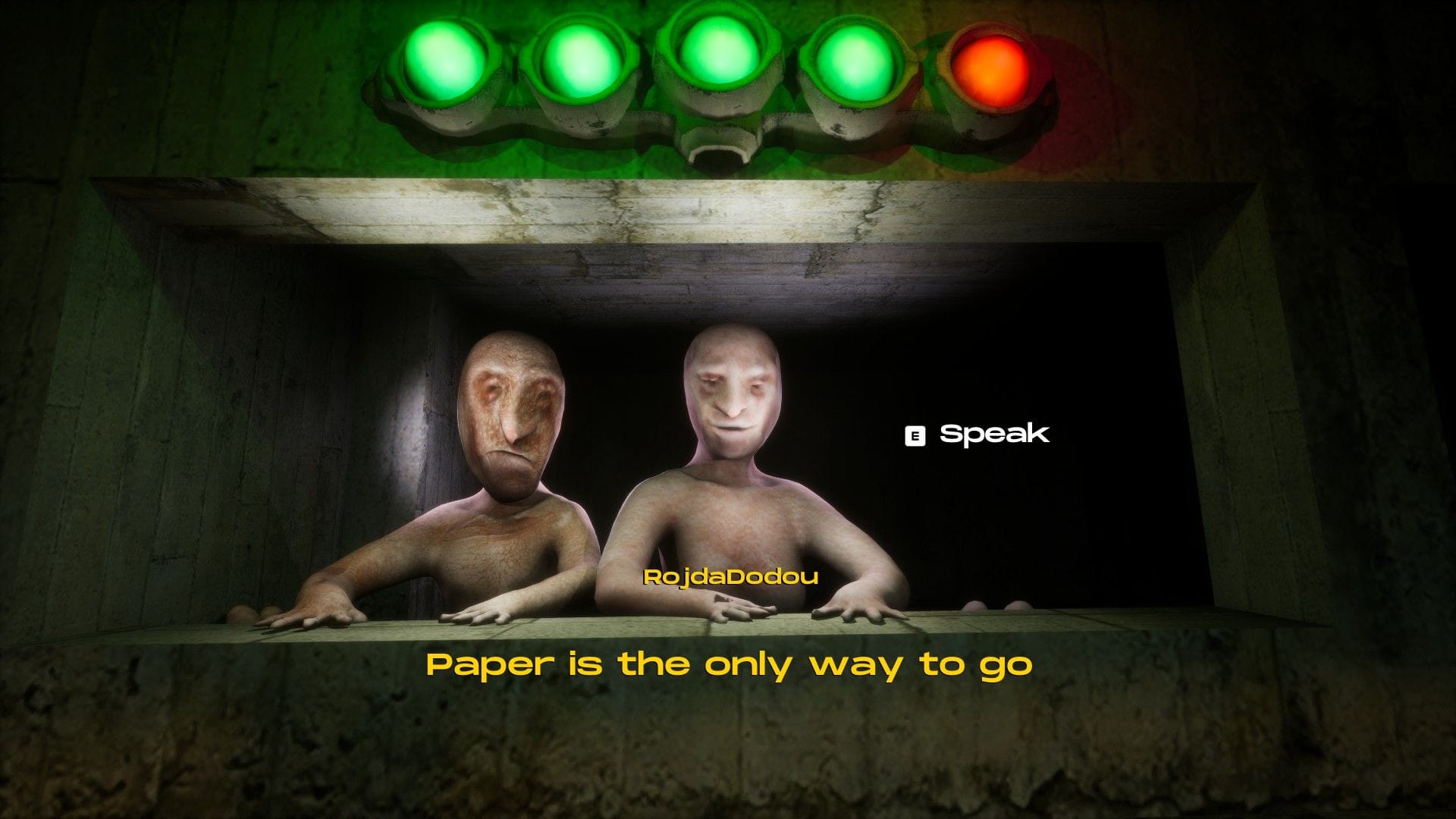
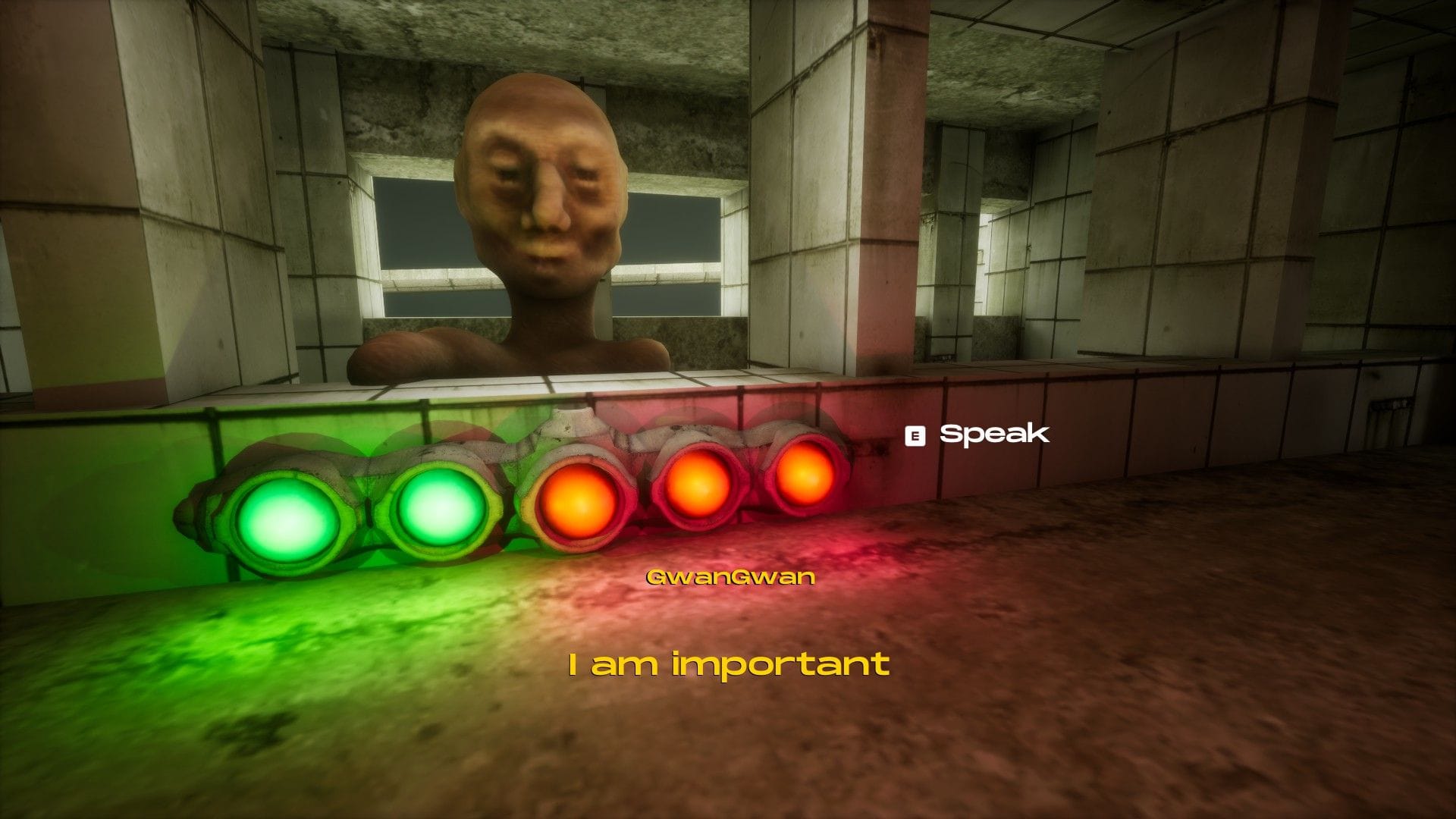
Some levels are firm racetracks with a single clear throughline. Others have branching routes, with shortcuts hidden in a pipe or under a shutter. And then there are the open-ended maps, almost miniature Babbdis of their own. Here you have to ker-bling past grim figures lurching in kiosks, flicking their light from red to green before darting off to find the next freaky face in another dark corner.
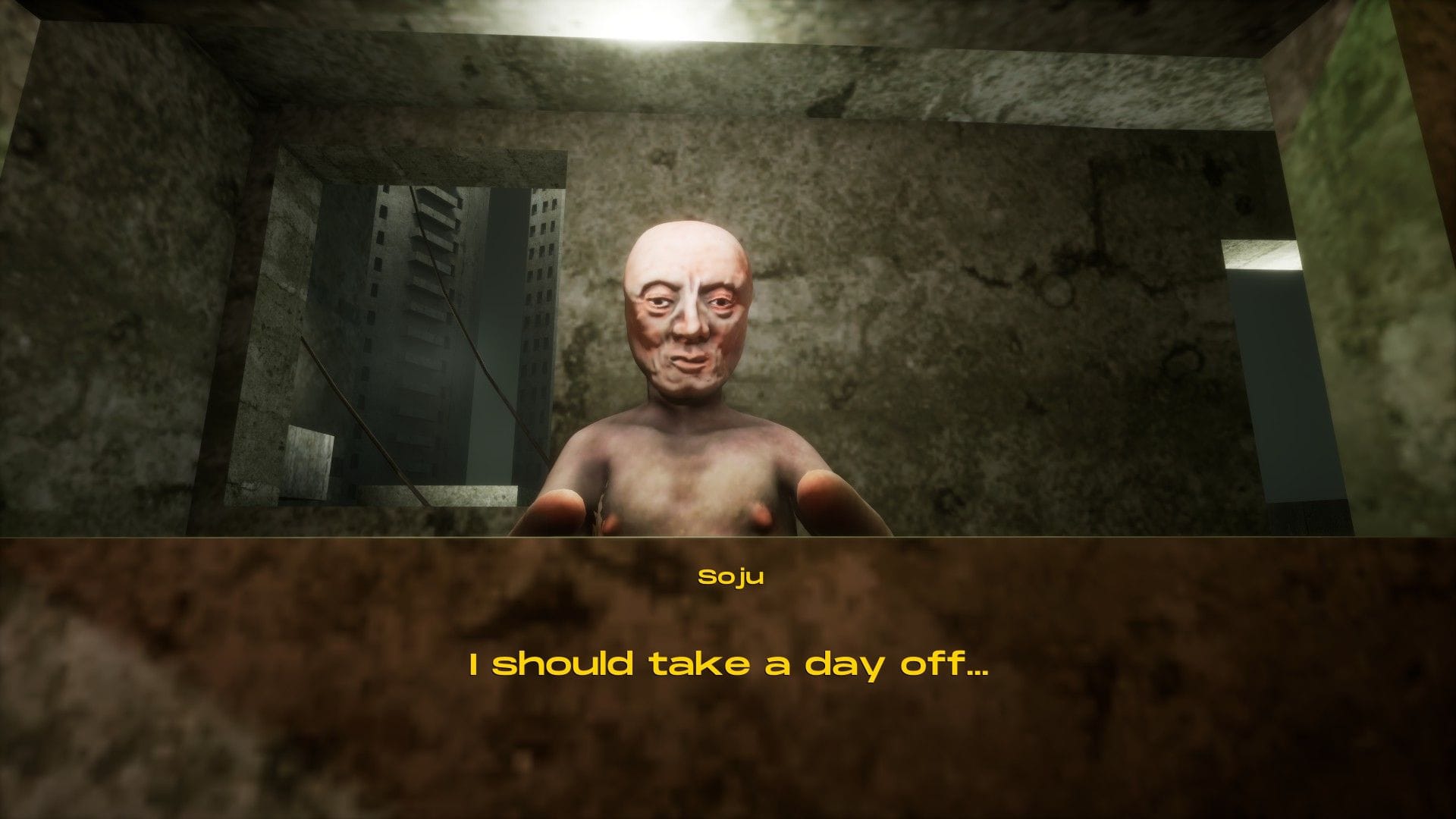
In any other parkour racing game, these choose-your-own-checkpoints might have simply been flashing lines to cross, but Vholume is devoted to municipal ugliness. So the checkpoints are clay-faced bureaucrats reminiscent of the semi-melted masks of sculptor Justin M Zielke, or, like, maybe Morph on a really bad day. They demand you visit each desk with invisible paperwork before being allowed to leave their particular cell of urban wasteland. Just look at some of these sorry misfits. They are wonderful.
The staff of PC Gamer magazine.
You will not always stop to gawp at them. Speed is everything. You'll need to make use of the sliding bunnyhops of a fiendish first-person shooter player to keep pace with the gold standard dev ghosts, and if your Ctrl pinky is as prone to repetitive strain as mine you may suffer from the constant ass-toboggoning. Graham previously wrote that Vholume demands to be played with your whole body, and this is no exaggeration. I too found myself leaning forward into the screen, head cocked 45 degrees as I wrestled with a particularly tricksy sequence of corkscrewing wall jumps. It is a special kind of game that almost makes me want to raise the keyboard at one end for a bit of extra lift.
Like any parkour 'em up, there are moments when the backsideglides come juddering to a halt for reasons other than your own frail fingertaps, a handful of places where flow becomes flummox. Sometimes you have to pause, examine your surroundings for a while, and finally discover a route that feels cheesy or obscure, wondering: no, this can't be what the map maker intended, surely? The levels I enjoyed least were probably the most gimmicky - the obstacle courses with moving parts built out of grimey scaffold and rusty steel, like an episode of Total Wipeout designed by Pyramid Head. Or the levels of scrap metal arranged in haphazard, unreadable chaos where the challenge becomes just picking your stepping stones.
But I will accept these few underwhelming entries because every level - even the ones I don't like - feel like they were helmed with individual intent, not designed by a committee of everlasting playtests. There is old-fashioned level designer tricksterism happening here, in the sense that the game feels like it is sometimes in a form of mental combat with you. In the Doom and Quake era designer chicanery looked like traps or monster closets or foe-flooded arenas. In Vholume the spirit of "gotcha" manifests as a cheekily placed light fixture that is precisely in your way, or a huge fan that will gust you off course, or a trio of tiled platforms arranged in a slightly off-kilter rhythm. I once leapt through a brightly lit window, sure it was the correct path because of how resplendent it was compared to the rest of the corridor - a perfect porthole bullseye. But outside: nothing but sun and air and an endless fall. The real route was a dim doorway two metres to the left. Yes. Kill me more, level designers.
There are secret areas, groaning figures hiding in shutaway alcoves, B-side levels you can unlock by discovering floating artifacts in tucked-away corners of the maps. Again, it is a game that demands you go fast but offers some of its greatest rewards to those who slow down. Think through your steps, explore the possibility of a shortcut. This is a cityscape that invites you to cheese, although not every avenue of investigation will get results. I spent 5 minutes (an eternity in Vholume) trying to clamber up an acutely angled pair of walls, convinced it would lead to a huge shortcut, only to be batted away by an impossible ledge. You start to get skateboarder vision, in other words, looking for new ways to run. Even when it comes to nothing, it's fun to try.
I have discovered there is also mapping documentation for those who want to throw shapes together in Unreal - to my great pain, because I don't have enough free time to become as obsessed with this as I rightly should. I can at least avail of the player-made Workshop maps once the dust settles and the real sickos get to work.
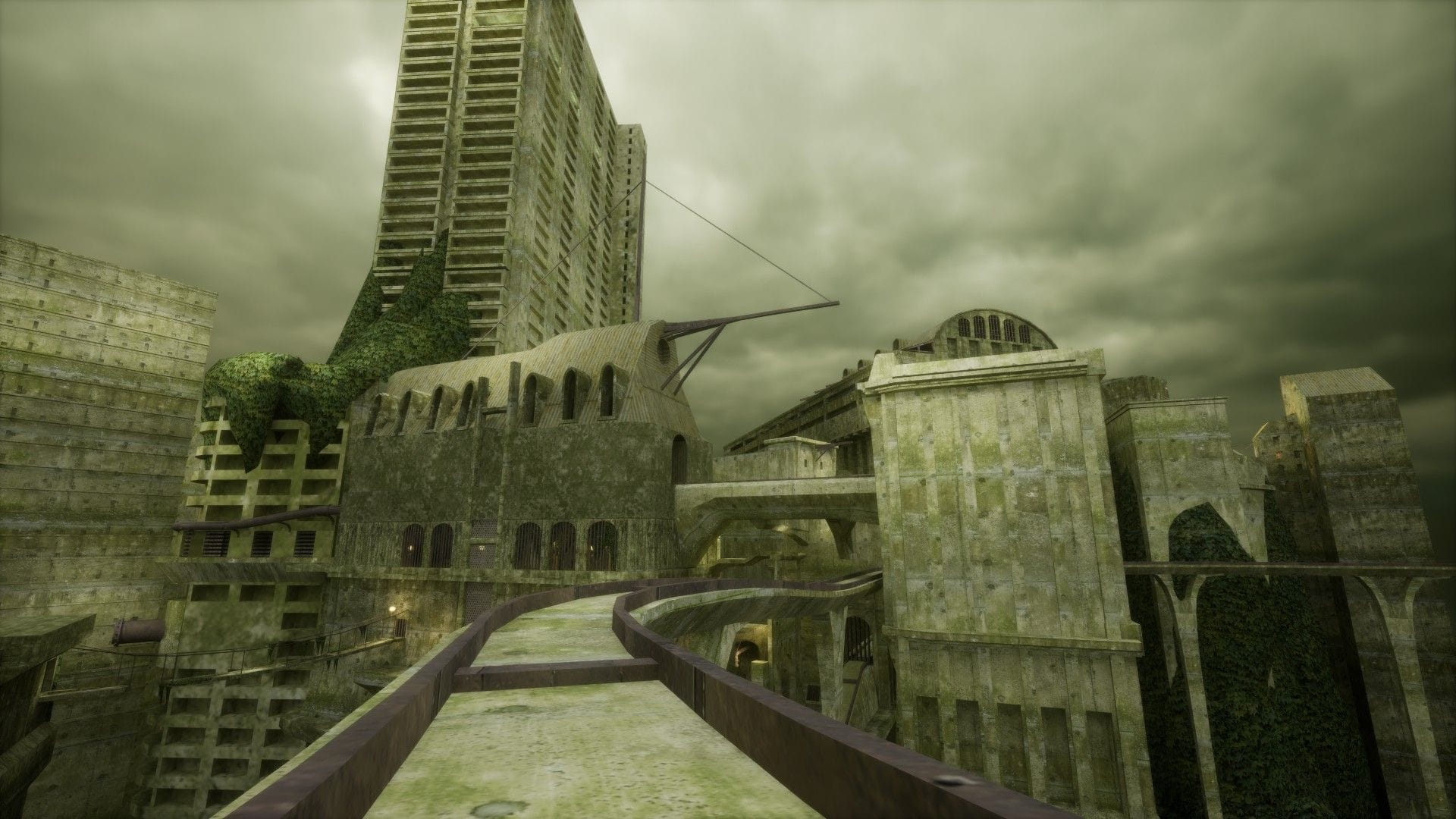
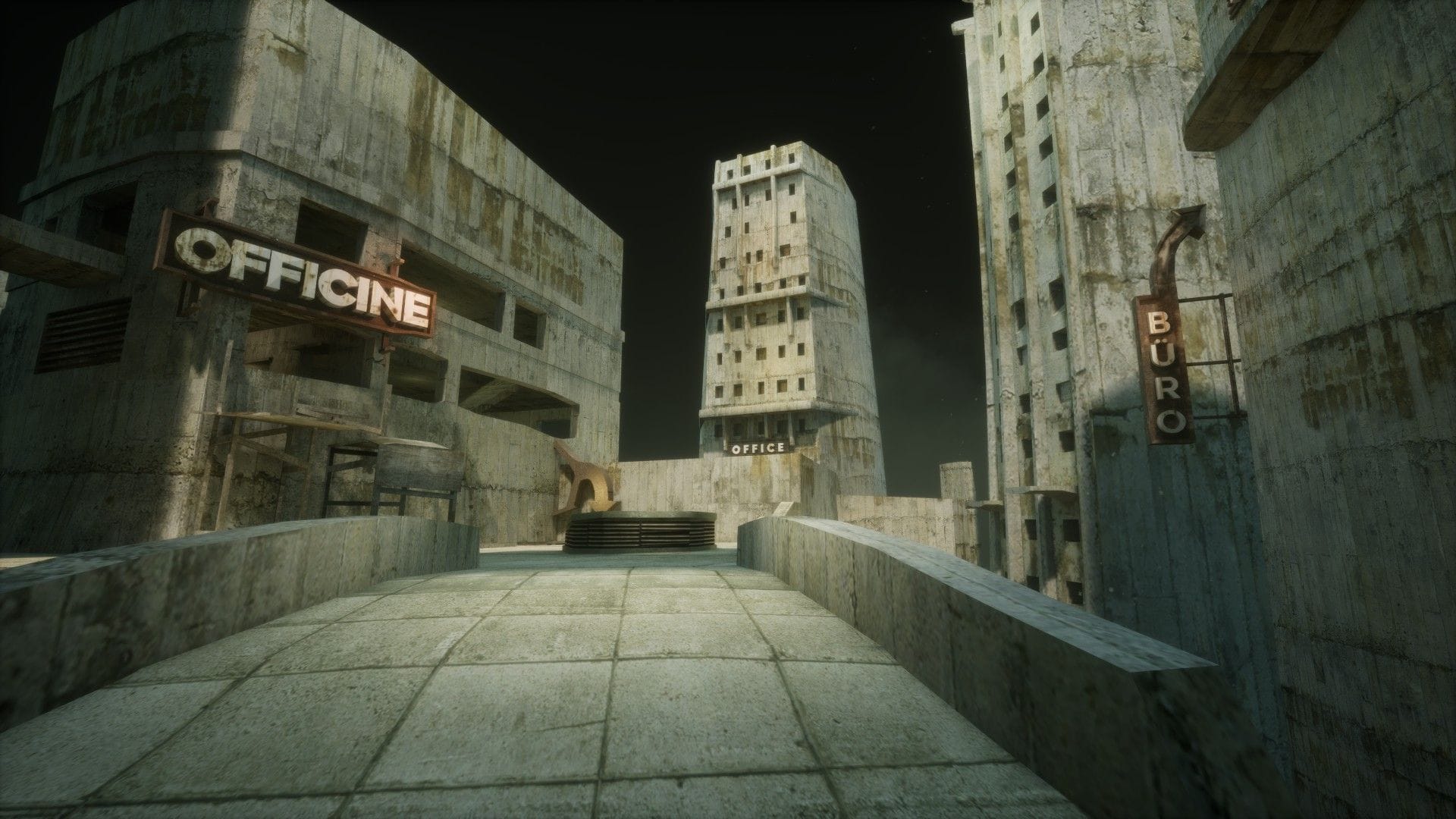
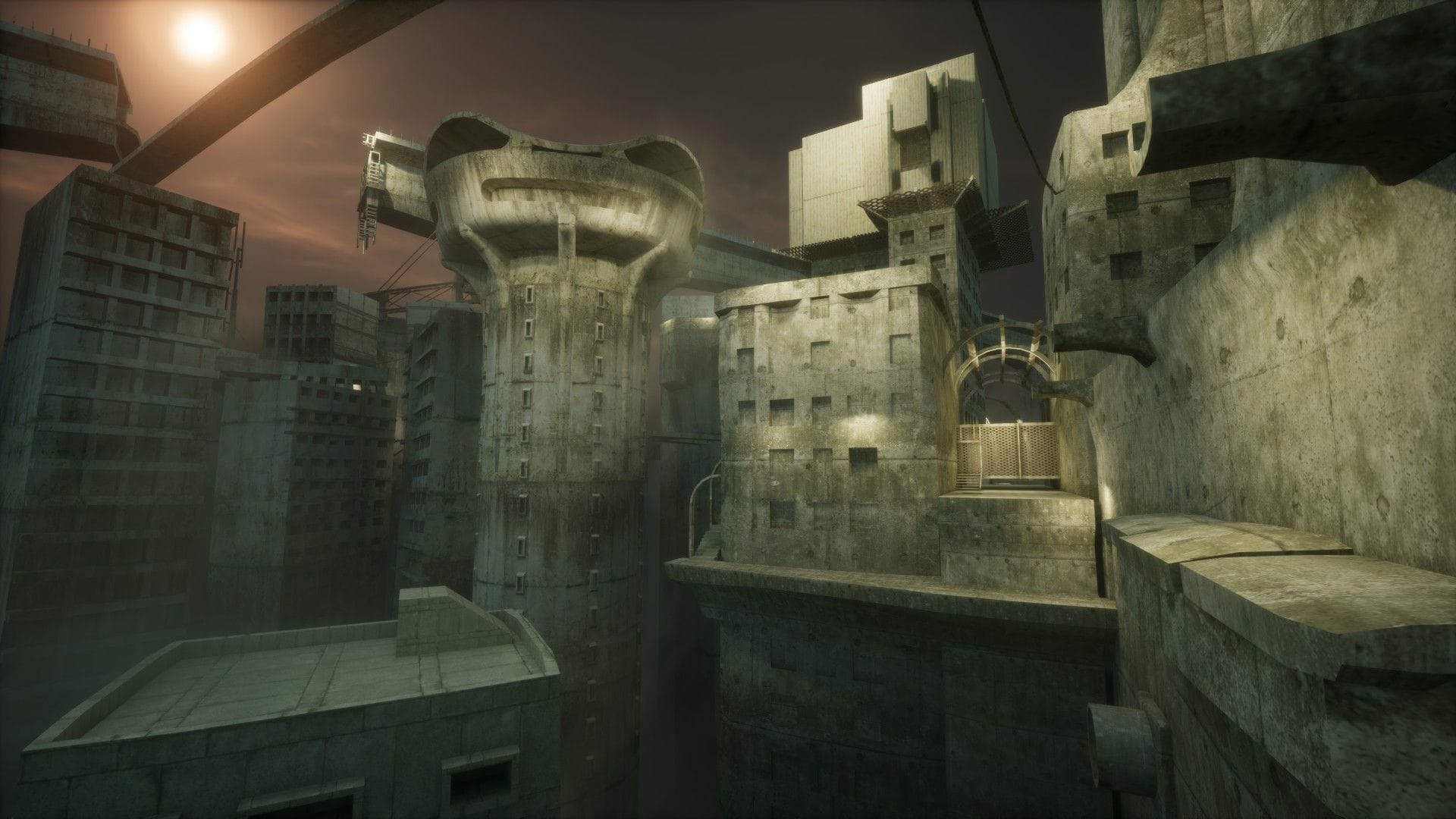
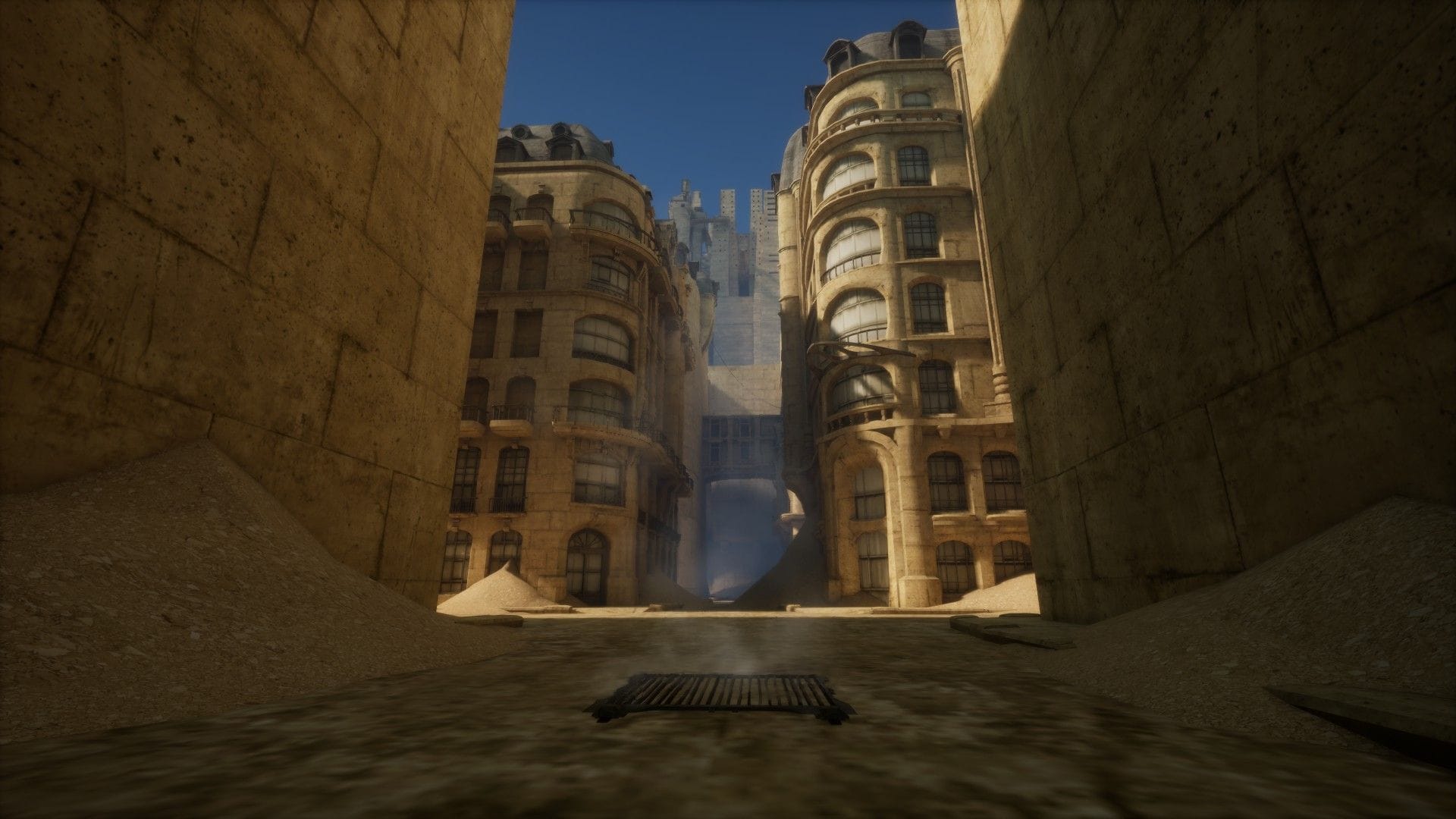
Desolate cities are only one flavour of Vholume level. Others include: brutalist architect's dream, Sonic Adventure level rejected for being too rusty, and children's climbing frame gone badly wrong.
At the very end there is a level where the devs show the credits splayed out on the walls, lit by reflective watery caustics. You can rumpcoast through Vholume's 31 base levels in a few hours, but earning gold on each of them will, I suspect, take much longer. Leaderboard juicers and speed perverts will get their money's worth, and not just because this game costs six fucking pounds. As someone who got to know names and personalities by playing OlliOlli 2 for much longer than anyone with an ordinary brain, I can easily see a similarly small but dedicated crowd of racers calcifying around Vholume like happy limescale. It is a magnet for speed freaks. You can click on any name in the leaderboard to load their ghost. You can share a code with mates to show your own ghost. Even the acknowledgements level has a leaderboard. I did it in 13 seconds, and I'm 800th in the world. If you're better at booty skootin', you'll easily beat that.
But even if you're not that competitive, Vholume deserves to be played, explored, and appreciated for the stunning, heartpumping leapfreakery that it offers even the solo runner. My favourite level is a sunburnt desert map called Apogee01. It is like the archaeological site of Petra has given way to an anachronistic city of ancient sandstone apartment blocks. But you have to play it twice to realise that, because the first time you whip through it all you see is sand and wind and the ledge that you just might make. Plenty of other parkour games are exciting. But this shit will turn your lips blue. Play it fast or play it slow. Either way, Vholume is breathtaking.


Comments ()