Feature

When a lot of words gather in one place, be careful. It might be a feature.

The Lie-In

Our weekly roundup of links worth reading

Good morning, videogames. If you're reading this, then you've survived both the clocks going forward and April Fool's day, two events designed explicitly to kill the exhausted and the middle-aged. Your reward is this long weekend of rest, relaxation and reading about some of the best writing about videogames from the past week.

It was nice of PC Gamer to write some fan fiction about us, with Jeremy Peel producing an ode to eurojank, both the "wonky yet wonderful projects of yesteryear, and their modern successors".

In the same way, ‘eurojank’ is an insult well-meant. On the face of it the term appears to condemn a whole continent's games as laughably buggy and low-budget. But speaking as a proud European, who has had the privilege to spend their working life flying to Frankfurt and Ghent and Uppsala to meet studios punching above their weight, I can tell you that eurojank—a term thrown around often in PC gaming circles in the early 2010s—is a byword for ambition.

Games like Balatro, Luck Be A Landlord and Raccoin don't literally let you bet your money away, but they and many other games have used gambling as inspiration for everything from aesthetics

Living In Sim is our new column on "simulation", whatever that means

Try simulating some enthusiasm

Simulation is a huge genre, no two people will agree where it begins or ends. When a game nails "simulator" to the end of its name, like a big plank of wood, the case seems clear cut. Flight Simulator. Gas Station Simulator. Goat Simulator. But then you have all the high-level systemic games which simulate historical nation building or space exploration. Cities Skylines calls itself a simulation, so does Crusader Kings, Rimworld, Mount & Blade, and Dwarf Fortress. Racing sims distinguish themselves from arcade racers. And sports games can veer that way too. Session is a skateboarding sim in a way that Tony Hawk's is not. Football Manager 2026 is a sim, but Rematch? Hmmm.

As I am constantly reminding Jank readers, all taxonomy is folly. Viewed from the firmament, every game is a simulation. But there is often some extra pedantry or detail that pushes a game into being classified a sim. For the purposes of this column, I don't care where that fuzzy border falls, I only care that it exists. A sim is just any videogame that commits hard to the bit.

Why sims, of all genres? Well, we're a PC gaming site, and the PC does

The Lie-In

Our weekly roundup of links worth reading

Good morning, videogames. As I write this, on Saturday evening, my son has just fallen asleep as I read him the closing chapters of The Hobbit. I don't take this personally. It's the first time either of us has read the book, and I think he's enjoying it, but there is perhaps nothing greater than lulling your child to sleep with a story. As you read this roundup of some good writing about videogames on Sunday morning, may you also drift off for another peaceful slumber.

Aftermath have been publishing up a storm with the delightfully named Woke Week, a "week of stories celebrating Woke 2". There were more interesting articles than I've yet had time to read, so I'm going to pick three. You should start with Gita Jackson's take on what Woke 2 means to her.

In this first version of wokeness, I wasn’t nearly as skeptical of figureheads and corporations co-signing social movements as I needed to be. I had this unshakeable belief that justice would emerge in the end, that people would do the right thing just because it was the right thing to do. I trusted companies, I put my faith in people who

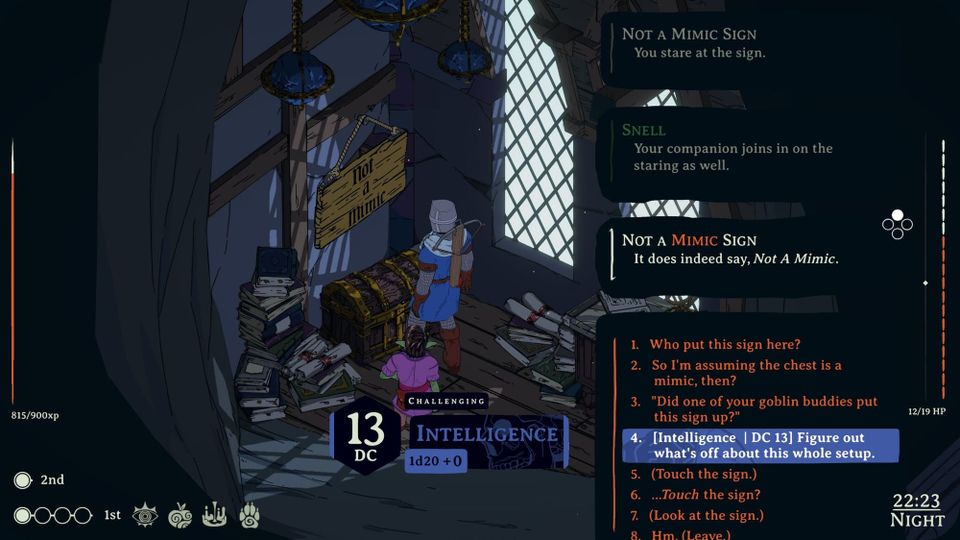
What are you running for?

One cannot survive on The Aesthetic alone

There is a loop of behaviour I get into when I see a game being highly praised by my peers. I try the game, I don't like it, I stew with annoyance, I see more praise, I decide I must be doing something wrong, I try it again, I still don't like it. I write a blast of vaporous thoughts about why I don't like it, but I'm only half-convinced by my own screed, and I see more people enthusing about the game. I think: this can't be right, I am missing something, I am not giving this its fair shake, a proper evaluation, I am playing it wrong, I must commit to it somehow, I must roleplay, or I must get deeper, it will reveal itself soon, surely. I play again, and I still don't like it.

This annoys me because I feel locked out of enjoying, even with great effort, something that others enjoy with no effort at all. This is a silly emotion, but a persistent one. I want to like the videogame. Why can't I just like it? Yes, I am talking about Marathon.

Some praise it as a tense and fatal teamfight generator, while others

The Lie-In

Our weekly roundup of links worth reading

Good morning, videogames. What a week it has been for blog posts. There have been good blogs, bad blogs, new blogs, and much discussion thereof across the internet. It's enough that you could begin to trick yourself into thinking that games media is healing, although I suspect this is in reality a consequence of its recent fragmentation. In any case, I am pleased to be able to link to so many independent writer-owned sites, of one kind or another, in the below roundup of good writing about videogames.

Duncan Fyfe wrote about lore for Remap by looking at the Elder Scrolls series, and talking to its fans and many of its writers about the often haphazard, contradictary way its world has been constructed, for better and worse.

During a dispute with his boss that a colleague remembered as about whether the world of The Elder Scrolls could accommodate Amazon women, Goodall quit the company. “I loved the original Elder Scrolls too much to stop arguing in their favor,” he said later. He had approached The Elder Scrolls full of zeal for the world and conviction in the stories that took place there. He had come into the world factory armed

The Lie-In

Our weekly roundup of links worth reading

Good morning, videogames. My elbows hurt, as they often do in the mornings of late. This has now crossed the rubicon from "oh I slept weird again" to "oh this is some sort of new repetitive strain injury, isn't it." Let's look on the bright side: I now know the word "cubital" and it's a delight to say aloud. Try it. I run my cuticles along by cubital in my cubicle at work. Let's look for other new words by perusing some fine writing about videogames (and beyond) from across the week.

Almost every paragraph of Sam Henri Gold's post about the MacBook Neo is deliciously quotable. I had no interest in the device itself, but this is about what it feels like to be young and finding yourself through a computer.

Yes, you will hit the limits of this machine. 8GB of RAM and a phone chip will see to that. But the limits you hit on the Neo are resource limits — memory is finite, silicon has a clock speed, processes cost something. You are learning physics. A Chromebook doesn’t teach you that. A Chromebook’s ceiling is made of web browser, and the things you run into

The Lie-In

Our weekly roundup of links worth reading

Good morning, videogames. I've been frantically laying track in front of a moving train for too long, and today is the day that changes. Today is the day I plan ahead, get things in order, and build myself a less hectic week. That or I spend too long in bed reading and then spend the rest of the day playing videogames. Hm.

Nicole Carpenter spoke to the creators of Hidden Folks for The Verge and considered the microgenre of "searching" games (their term) that have followed in its wake, including the gorgeous Lost And Found Co. which released this week.

What makes a good hidden object game, both de Jongh and Lee agree, is playtesting. You can have a great art style, clever sounds, and a nice story, but if the game doesn’t work well, it won’t click with players. “It took us years, and it was just trial and error,” Lee said. “Someone who makes a level has a very hard time understanding how difficult or easy it might be for someone else. You just have to keep workshopping and testing.” Playtesting is what made Hidden Folks so satisfying to play. De Jongh said it’s core

The 7 best salesmen in PC games


Earlier this week I earned the disdain of not only wristwatch fans but also fans of older men, in a hyper-efficient blast of upset caused simply by pointing out that Leon Kennedy is a salesman now. But maybe this was harsh. Maybe my spitting upon the practice of product placement was unfair to the salespeople of the world, who do their part to keep the global economy afloat. Afloat, like a raft made out of Coca-cola bottles and bubble wrap drifting on the great Pacific garbage patch.

By way of apology, here is a celebration of the best salesfolks in PC games.

The Merchant - Resident Evil 4

"Hello, stranger!" says this friendly, white-eyed, hooded man in an accent that is either Cockney or Australian depending on the mood of both speaker and listener. He is a decent guy, always willing to buy or sell an egg. He wears odd clothes, is extremely desirous of jewels, and suspiciously well-stocked in harmful weaponry for someone who lives so deep in a ragged and remote part of the Iberian peninsula. Typical British expat to be honest. 

Chu-Chu - Quadrilateral Cowboy

There is a bit between levels in first-person hack 'em up