The Commander Goes Zapping in Hell Let Loose: Vietnam
"War is fun," says the commander. "You get to shoot things."
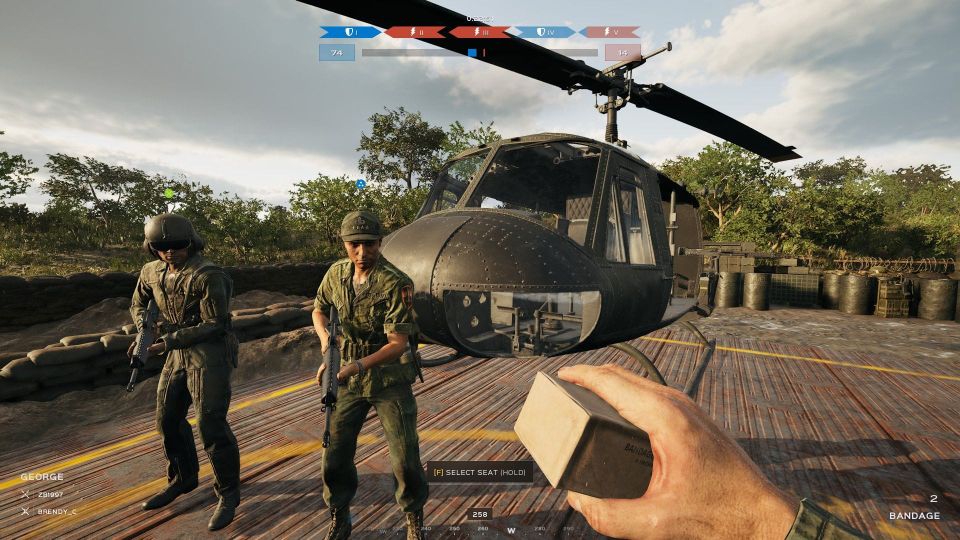
The radio is cracking heavy static, the helicopter blades are whud-whud-whudding over our heads, bullets are whipping past, or plinking loudly against the chopper's hull. The commander in the seat next to me is still speaking but I can only hear snippets of what he says. It's almost impossible to make out the rest of his rubber-banding words.
"It's -— and yeah -— sometimes you -— shot at -— that's -— "
I'd like to say this is an atmospheric feature of Hell Let Loose: Vietnam, the latest multiplayer shooter to be set in the jungles of 1960s Vietnam. But it's really just the game's comm systems buckling under the pressure of a war sim that relies on wall-to-wall chatter. The pilot, who has a clearer radio channel with me, translates.
"Basically, he says: war is fun!"
Like the conflict it's based on, the warfare in Hell Let Loose: Vietnam is not symmetrical. The two factions don't have matching abilities. US players can fly helicopters and drop napalm strikes. The North Vietnamese have tunnel systems and better camouflage. The first Hell Let Loose, set during WWII, had the same hardcore tactical battling and quick deaths. But the factions generally used the same explodey technologies and methods of war. Here, each side has a distinct flavour. The sound of choppers either makes you anxious or relieved.
Down on the ground, you either can't see ten feet ahead of you for jungle bushes, or you can see for miles (and be sniped for miles). You can take a boat downriver, but a dozen muzzle flashes might erupt from the bushes at any moment. You almost never see the person who riflewrecks you from a mysterious position in an abandoned fishing village. The safest place, surely, is a hundred feet up in the sky.
A trail of white smoke whooshes past our helicopter.
"Wow," says the pilot. "Rude."
The commander stirs next to me. "Was that an RPG?" he asks.
Good morning, videogames. Except it's not morning. I have finally failed to deliver this article on time, as I'm away from home at the moment doing other things. Forgive me. We'll add an extra tier to our new subscriber goals at which I will be flogged. In the meantime, a collection of links awaits you below.
The second collection of Metal Gear Solid re-releases is arriving next week, and Polygon's Giovanni Colantonio revisited the fourth game in the series to talk about what's aged well, and less well.
But the poorly aged stealth action is far from the most shocking thing about Metal Gear Solid 4. Instead, it’s how direct Kojima is about tackling political issues without mincing a single word.
I love brush-based level design. Brendon Chung loves it too, and his opinion matters more as the maker of 30 Flights Of Loving, Quadrilateral Cowboy and Skin Deep.
It’s intentionally and specifically not a general-purpose tool designed to do anything – and I think that’s great. It’s built from the ground up to focus on authoring geometry for 3D game levels, allow you to make it as easily
It has been a big week on Jank. By far the main event was Brendy’s extensive explanation of why he doesn’t like auto-battler games, which continues to rack up online commentary from the tiring “let people enjoy things” (he at no point suggested they shouldn’t) to the intriguing “there is a semi-arbitrary distinction between game feel rooted in physical movement and game feel rooted in UX design” (busted).
My point is not that these games make us lesser players or lesser people. It's just that they're not half as interesting or groundbreaking as their huge sales numbers and endless praise suggest. Just because something is powerfully psychologically compulsive doesn't make it good art. Just because something eats your time, doesn't make it worth your time.
So much of our life is already made slick with the grease of automation. It is absurd to think of anybody wanting the self-reading book, the self-watching movie. Why would I want the self-playing game? The whole distinction of games as a medium is that they are about doing stuff. The game that leans more and more towards autoplaying threatens to
What a week it's been. You must be eight or nine months into the school summer holidays by now? Twelve or thirteen heatwaves, effectively one never-ending nightmare of sweaty necks and bleached grass? At least the weekend is here, when you get to put down childish things (the arbitrary strictures of work) and instead commit yourself to the pursuit of being human via the medium of videogames.
I'll tell you what we're playing this weekend if you tell us yours.
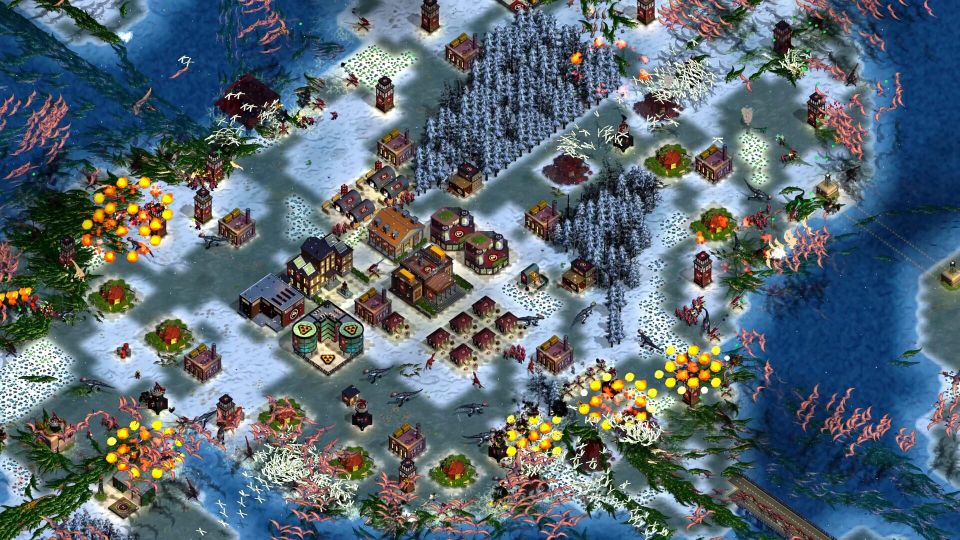
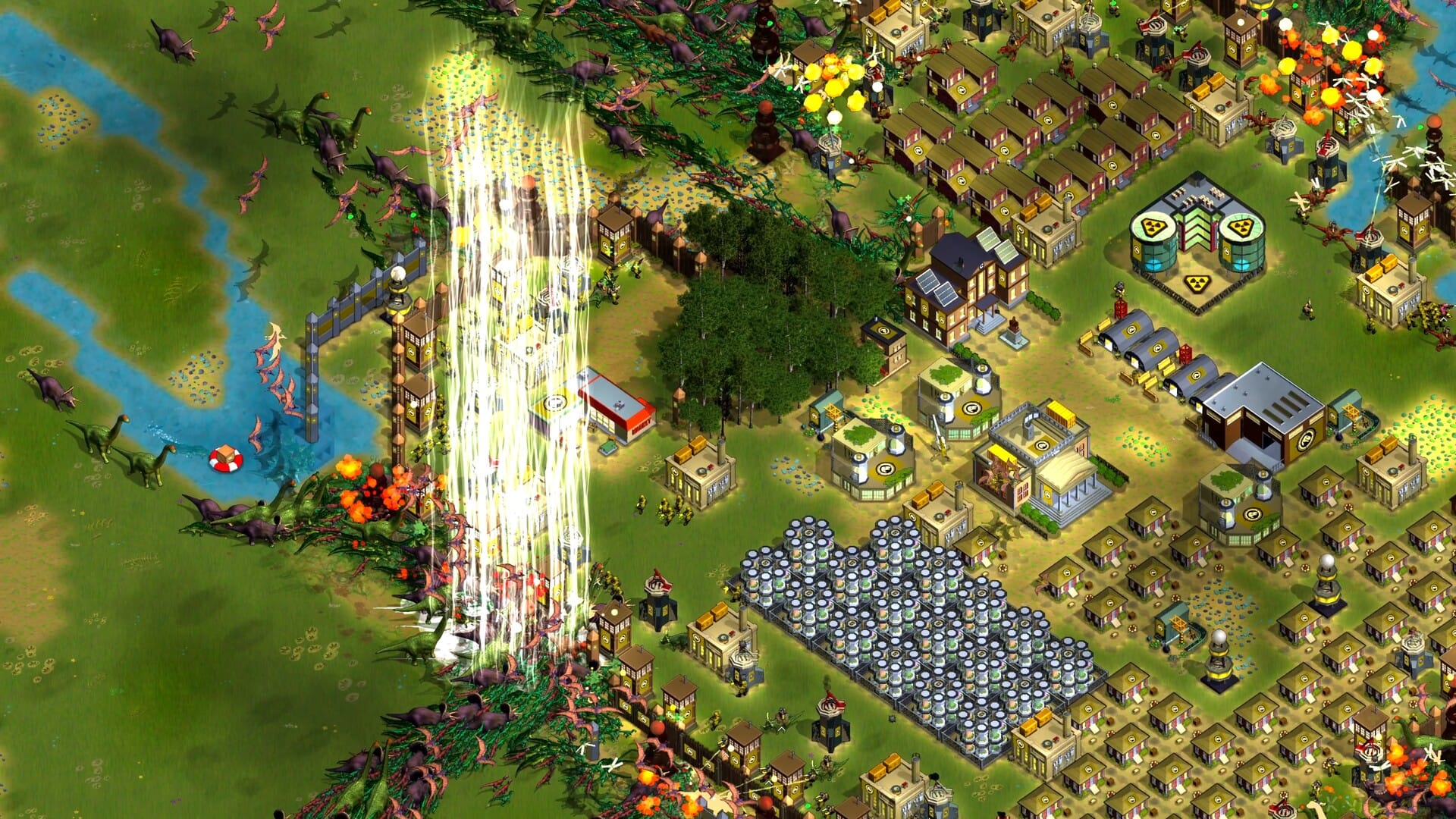
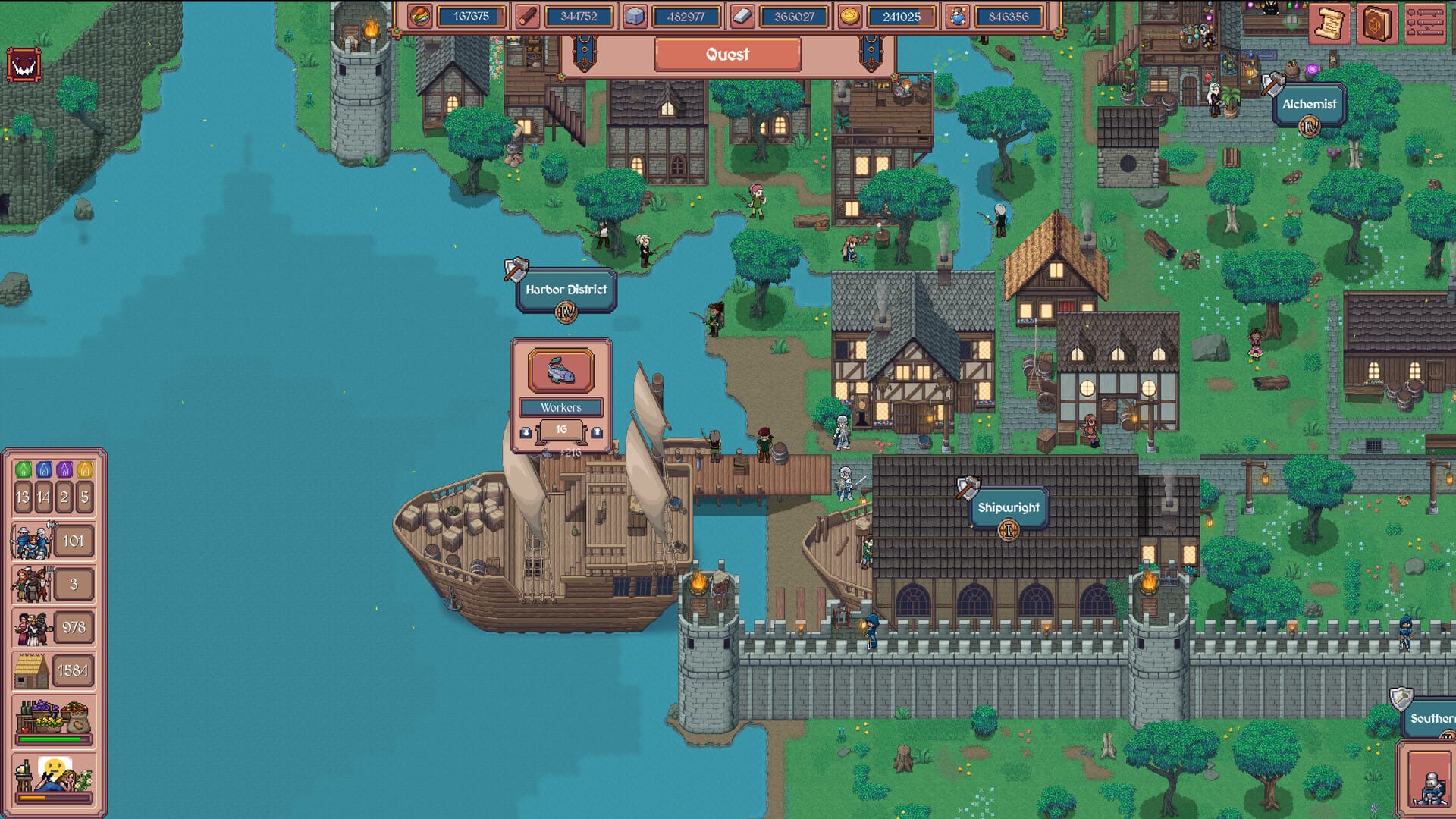
I grew up watching Saturday-morning cartoon Denver, the Last Dinosaur (he's my best friend and a whole lot more). But what if Denver wasn't the last dinosaur? What if there were, in fact, too many Denvers? This is the nightmare scenario posited by Repterra, a "base-building survival RTS" in which you can ultimately turn dinos into your best friend and a whole lot more, where "more" means using them as mounts in your forever-war against their kin.
Brendy Caldwell, Videogame Cop might have outlawed games that play themselves, but I'll continue to smuggle contraband incrementalism into the pages of Jank. Hearth And Hamlet promises "relaxing idle
Total Playtime is the official Jank podcast, funded entirely by our paying subscribers (and formerly our backers on Patreon). This week’s episode is free, but subscribers get additional episodes every other week. You may join them by subscribing here, and you can find all previous episodes here.
Alice and Nate were both unavailable this week, prompting Brendy and I to realise the crushing shortage of local whimsy in our lives. Our daily existence is simply devoid of rural oddities or freestyle whimsy that lends itself to a banging cold open, so we ended up with several minutes of middle-aged car chat which Brendy heroically drags back to a gaming reference.
Those matters aside we turn to the matters of the week, chiefly Saber’s CEO lashing out at a departed writer who handled it by having a great night out that ended in karaoke, which is the sort of karmic vengeance we should all aspire to. Plus: good philanthropy yet with concerns about whether philanthropy can actually be good, the ongoing destructive instincts of large corporations, and big walks with medium guns.
Our music is by God Ribbon, our art is by Marsh Davies
Here’s what we will do if more of you all support us
Seven months into Jank’s life, we have finally put up the paywall, compelling more readers to join the exalted ranks of the discerning literati who have backed us from the beginning. Now, it is time to start tempting more into joining the fold.
At the time of writing, we have been blessed by 747 paying subscribers, bolstered by a series of folks who've contributed one-off donations. We are hugely thankful for all of them: we're grateful that people want to support this sort of website, and we're only able to do it thanks to their generous support. Our audience is small, but perfectly formed: the Discord remains a chill and pleasant place to be, and spawned a dedicated channel for pet photos right on schedule.
The founders do not currently draw any salary from Jank. We are doing this because we want it to exist, and to endure without exhausting obligations to traffic and advertising. The income from subscribers covers our hosting costs for the website and podcast, plus other business expenses, but it’s mostly going on paying other writers to contribute posts to the site: every new subscription will go towards
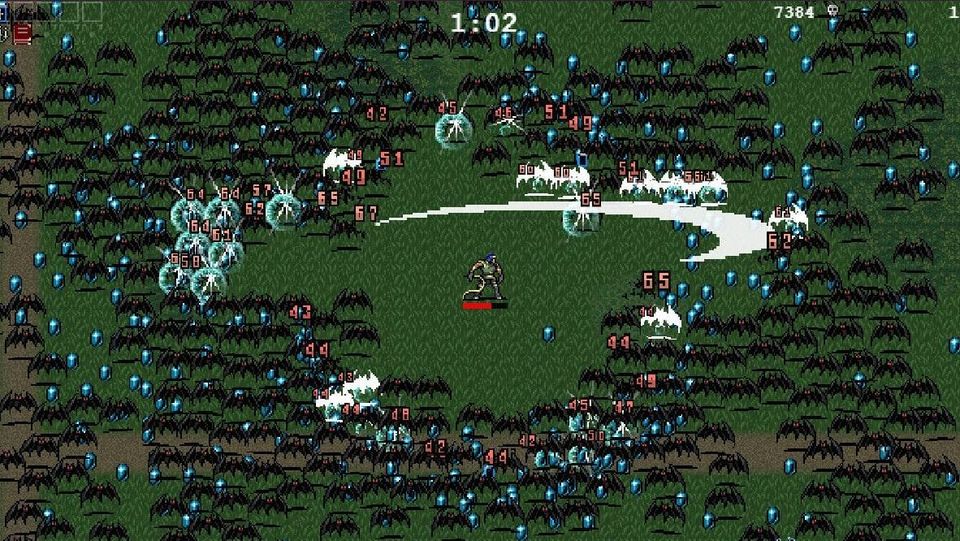
Maybe you've observed this too. There's a line some games cross past which you no longer feel like you're playing the game. The game is playing itself, and you are there to be fed feel-good brainjuices. I'm not talking about idle games - you're doing something, but you're not really doing something. Sometimes you click a glorified "next" button and flashy numbers rocket upwards. Sometimes you put a pip into a skill tree over here, instead of over there. Poncle's bestselling bulletnothing is the leading exemplar of this. I think it's rubbish, partly because it feels like treacle. But mostly because it is accelerating a dull trend in game design: to make the game auto-go while building a coffin of upgrades around the player until they have precisely zero thoughts, swimming in whatever the opposite of a sensory deprivation tank is, flooded with dopamine. Death, I say! Death to the self-playing videogame.
Vampire Survivors is not alone in hoodwinking me into the sensation that I am doing something when in fact I am a sad void pressing left and then right. Loop Hero sets your hero autotumbling around a circuit of monsters, and the closest it comes to having meaningful decisions is in the basic Carcassoning of resource and monster tiles. Ball X Pit is a roguelike ransacking of a classic arcade brickblooper with autofiring bullets. It eventually contains a full admission of defeat to the automaton approach to game design: an unlockable character called "the Radical" who will play brickblasting runs on your behalf and choose upgrades without any input from the player whatsoever.
Vampire Survivors turned a basic shmup into a karmic hamster wheel. BallXPit is an LCD brickpong toy running on cruise control.
The self-playing game automates a primary verb of play. That is a fancy way of saying: Me no shoot, game shoot for me. It then gets you as fast as possible onto a trundling treadmill of dopamine and ostensible progress, while sort of reminding you of another game you played before. The physicality of this "kernel" genre underneath is not really needed. It just needs to look like bullet hell. It just needs to seem like Breakout. They can become lauded, successful games, praised for their addictive charms and approachability.
To me, they are automated fun. Poisoning hand-to-eye happiness with the anti-activity of the idle game. We are lurching toward the idlefication of all genres. Why stop at Asteroids and Breakout? Let us automate Doom. Let us automate Street Fighter. Let us automate Rogue. You think I'm joking, but somebody is already working on the latter and it's giving me a bad case of the squinty eyes.
Self-playing games take microdecisions away from you in favour of macrodecisions. You don't need to choose where to aim your gun every second, but you will need to decide what ammo upgrade to select for the next level. This is an inviting approach for game designers (and not unique to the self-playing game). It allows designers to sidestep the difficult psuedoart of "gamefeel", and player skill becomes less of an issue to account for. You can focus on the metagame, the upgrades and abilities and perks and extras. The exofun. All you need to do is make the braintickling numbers work, and then make it look flashy.
But what if some genres are the microdecisions?
If somebody automated Devil Daggers, I would stab them in the hands with a barbeque fork. If somebody automated Tetris, I would have them arrested. When a designer of a racing game makes drifting round corners feel the perfect balance of scrapey and buttery, this feeling can carry the entire racer despite how bad its story mode inevitably is. On the other hand, when somebody strips an essential verb out of Asteroids and claps on an incremental skill tree, I can't help but feel they have piggybacked on the physical feeling unlocked by bygone engineers to deliver what is effectively Cookie Clicker under the hood. This is not a revolutionary new form. It is Candy Box sans the sense of humour, with a lobotomised arcade classic attached.
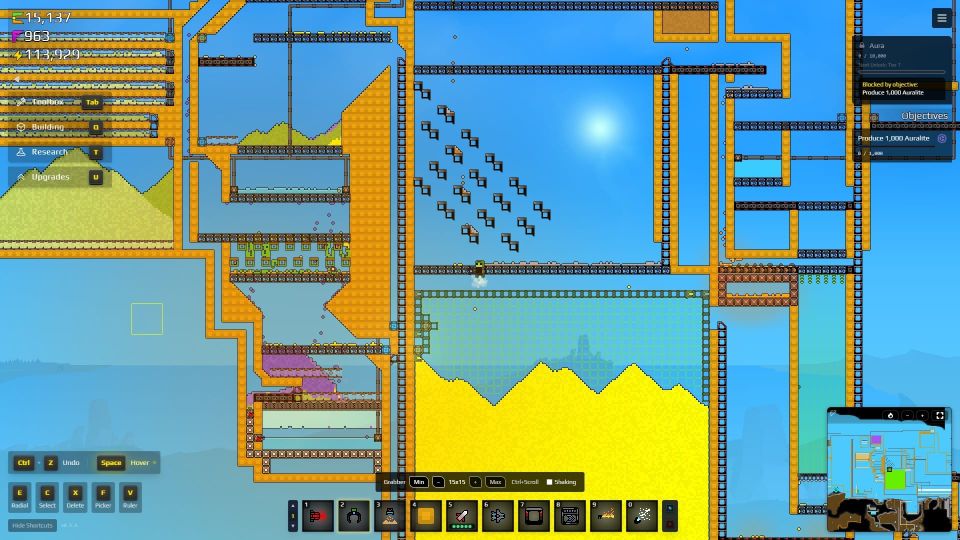
I started Sandustry on a whim at 8:15pm on a Friday evening. I was still playing at 2am. I went to bed, woke up at 9am, and immediately started playing again. It's rare that a game gets its claws into me like this. It's even rarer that I feel good about it.
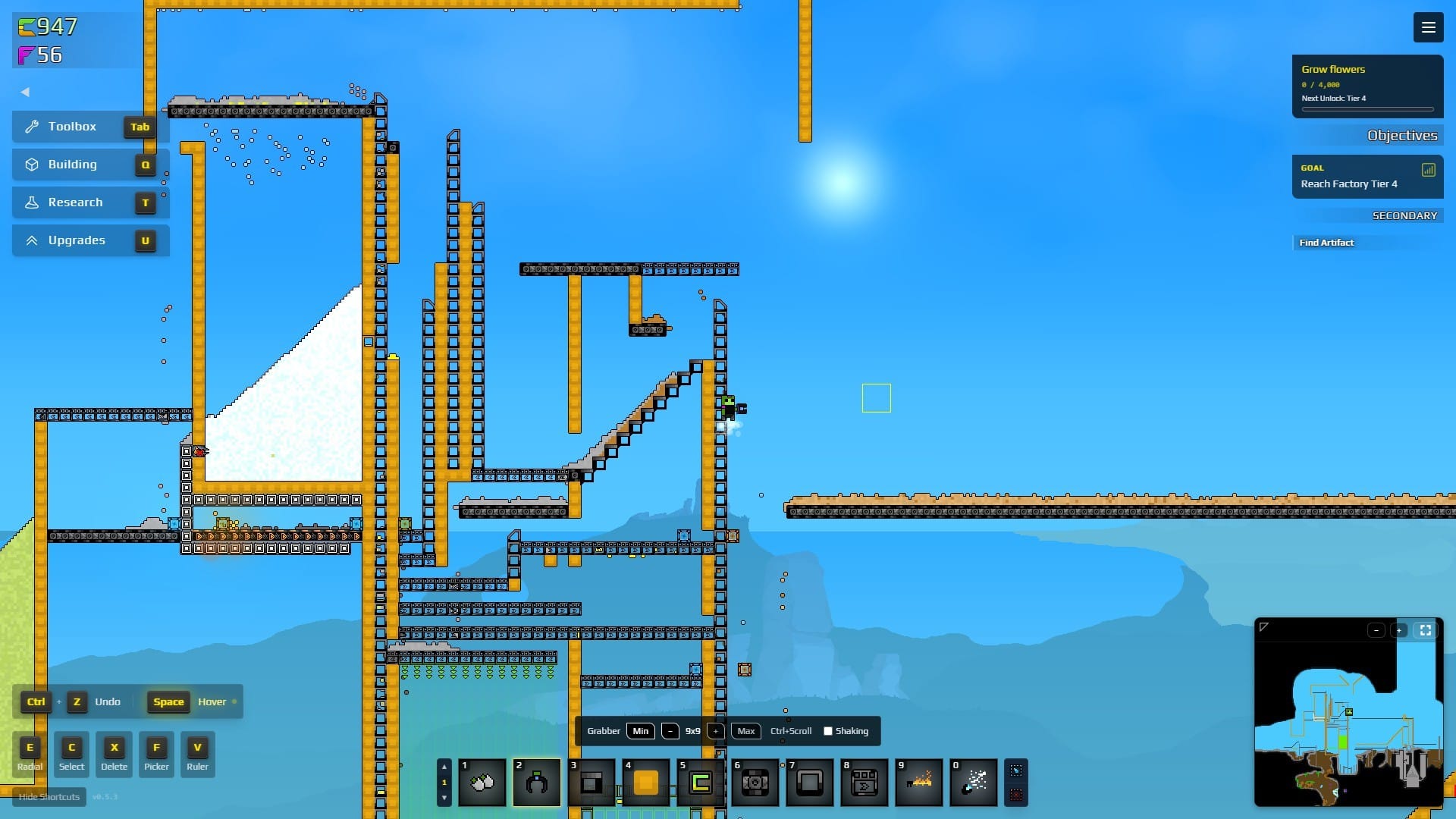
Sandustry, now in Early Access, is a factory builder with a great hook: every pixel is physically simulated. Think Noita, but instead of a deadly roguelike, you're laying down conveyor belts and sorters to gradually process all the natural resources of an alien world. Factorio but with gravity. Satisfactory but I'm satisfied.
I used to think I had a complicated relationship with 'busywork games', the kind that give you a todo list of simple (and sometimes prima facie tedious) tasks, and invite you to decide whether the experience is a flow or fugue state. I love some of those games (Pokémon Pokopia, Turnip Boy) and flee almost instantly from the seeming pointlessness of others. I now think my relationship is very simple: some todo lists feel worthwhile and others do not, and it's a matter of design as to which is which. In other words, it is the games that are good or bad, not me.
This factory was hell but I was proud of it anyway.
Too often factory builders feel like they're putting artificial obstacles in my path and daring me to work hard enough to render the inconveniences moot. That power curve can feel good, but more often than not it feels too much like the bad kind of wasting time. I don't want to cup water for ten hours to earn a bucket.