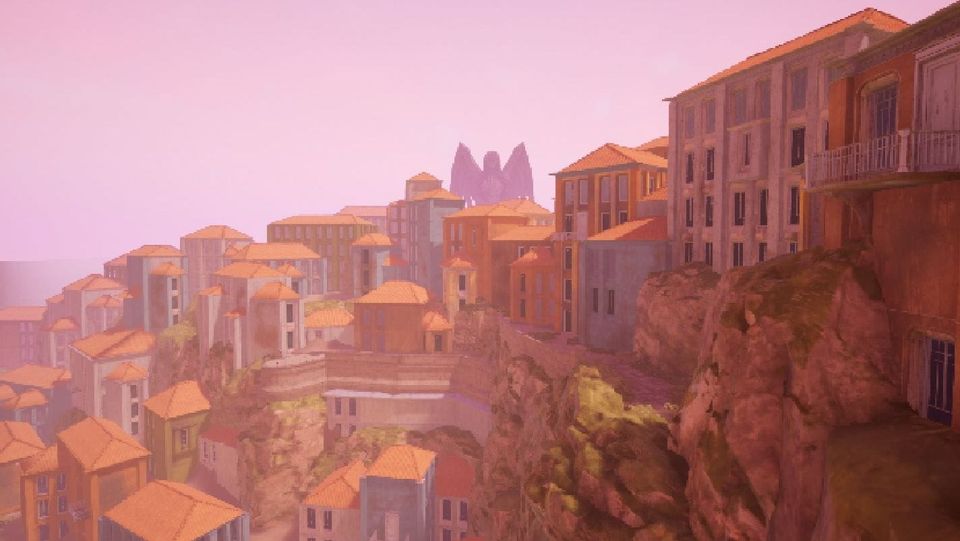
A woman made of leaves asks you this question in City Of Muse, a little-known seaside walking sim released in 2021. "What are you: a brick or a builder?" she says. It's a question I have often remembered, from a tiny game, likely long forgotten by the few who played it.
As Wall Week comes to a close, I want to take a sincere moment at the end of our overextended joke to talk about what we are building here at Jank, and why a paywall is more than just a turnstile charging an entry fee. This article is not paywalled - you're invited in.
When we talk about videogame walls for Wall Week, we're not always thinking of them as a divider. Even our own paywall, which is as porous and reliant on good will as any other, isn't meant to be some impassable and offensive barrier. If I build a wall in Age of Empires 2, or fix a broken one with a team of multiplayer engineers in Foxhole, I'm keeping my enemies out. But when I build a castle rampart or a cabin wall in Minecraft, I'm thinking of the future,
Some kids learn piano or dance. I learned how to keep render speeds low for Half-Life geometry
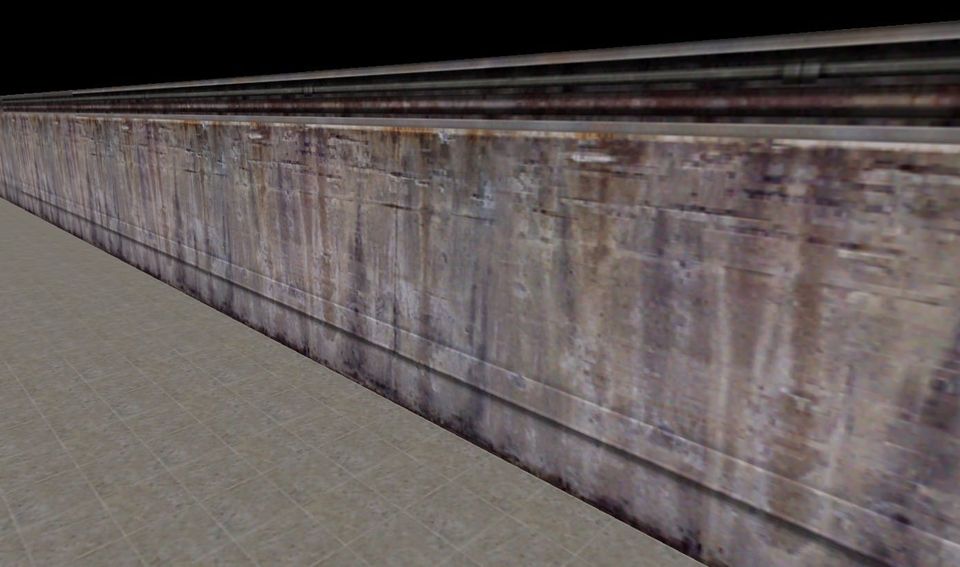
This is Wall Week, but there are no walls here. What you see in the screenshot above is not a wall, but a brush. A brush is a simple geometric shape rendered within Half-Life's Quake-derived GoldSrc engine. This particular brush is constructed within the Valve's mapmaking tool and consists of six faces, their corners defined by vertices. When run through the bsp compilation process, all faces not visible within the vacuum-sealed innerspace of your level are marked so as not to be rendered, and the remainder will rendered in-game as triangular polygons. If you look at the image and see a wall, then it is only an illusion.
Why is any of this important? It's not, really, in 2026, but I spent a thousand hours learning how to make Half-Life maps when I was a teenager and 25 years later I'm still mentally trying to keep the r_speeds down.
"R_speed" stands for "render speed", the speed at which the GoldSrc engine is able to draw whatever is currently on screen. It's a console command you can turn on in any Half-Life level to cause a waterfall of stats to trickle down the console log like you just enabled the Matrix.
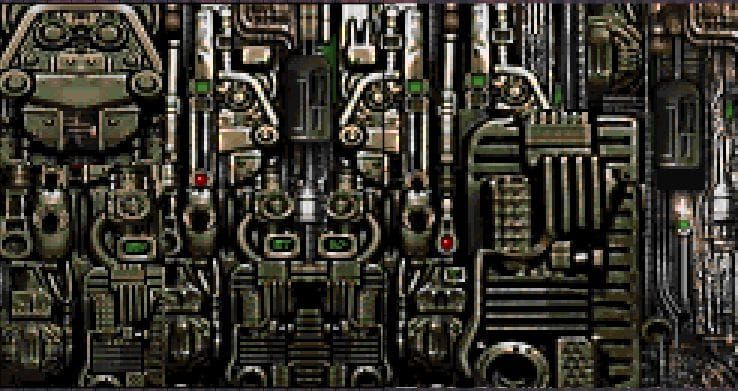
Good walls make for good videogames, as Robert Frost probably wrote. That's why we wanted to celebrate these load-bearing pillars of the medium. They are the textures that engulf us, the boundaries that restrain us, the low cover that protects us, and the canvases awaiting messages daubed in blood or ink to entertain us. They are the ironically overlooked line-of-sight breakers that form the backbone of almost every game you've ever played.
From first-person shooters to collaborative adventures to ancient puzzle games, these are the best walls in PC games.
We can’t go over it, we can’t go under it… or can we?
Getting directions in a city devastated by plague and gang warfare is an alarming business. Excuse me, sir, how might one reach Holger Square, and the office of the High Overseer?
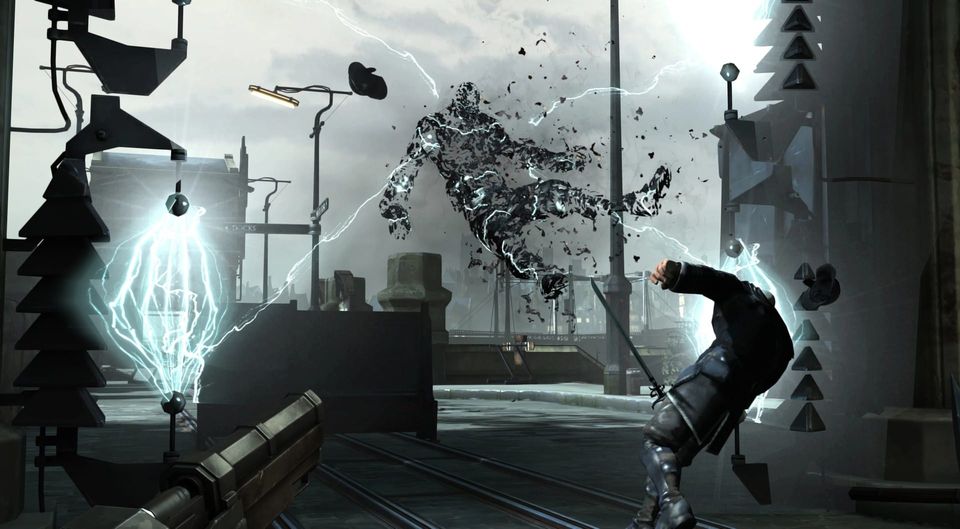
“It’ll be a rough trip,” says Samuel the boatman. “Used to be you’d go straight up Clavering Boulevard, but now it’s not so easy. City Watch still holds the bigger streets and they’ve set up those Wall of Light checkpoints. A man walks through one of those and he ends up burned to a crisp.”
Good gracious, the things they can do with whale oil these days. Sure enough, a banner hangs above the ancient gate that breaks up the Boulevard: ‘THE BOLDEST MEASURES ARE THE SAFEST’. Beneath it, a 16-beam floodlight illuminates the cobbles. And beneath that, a deceptively clear passage, beset by ominous cables and machinery. Through the gap, the City Watch passes unharmed; anyone else is vaporised instantly.
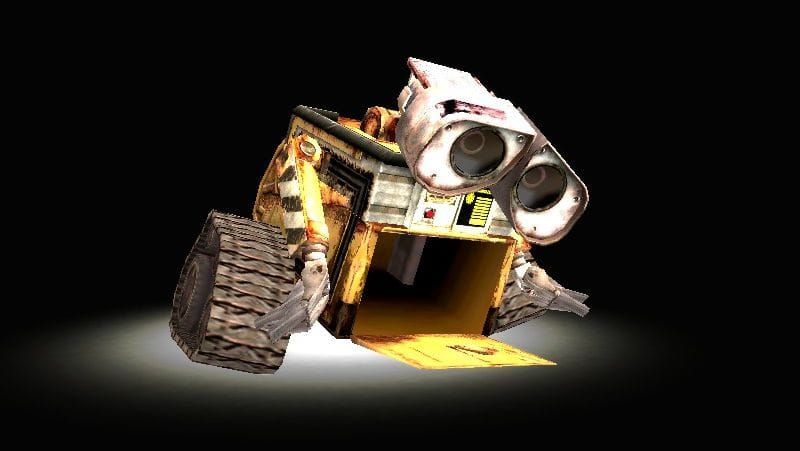
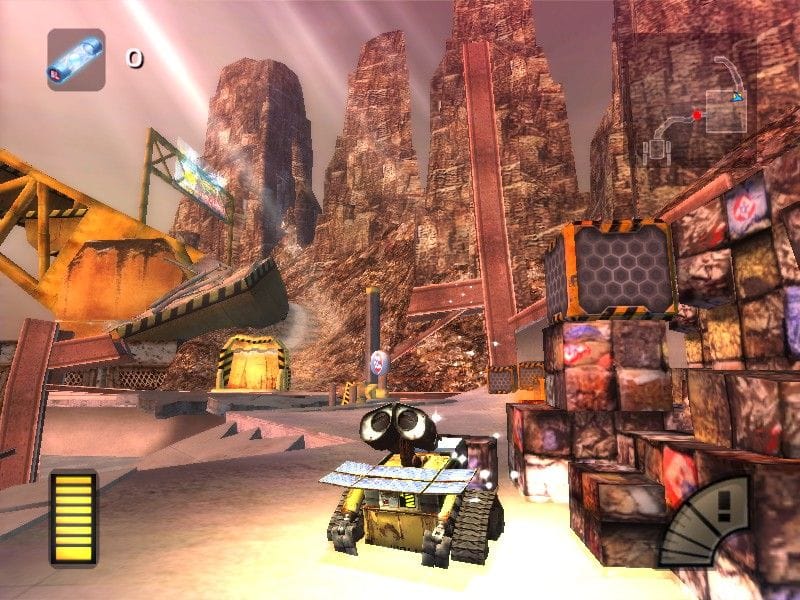
The world of Wall-e (2008) is covered in half-pipes and quarter pipes, as if designed by a committee of Thrasher magazine photographers. It is a wasteland of human detritus and dead buildings, many of which have helpfully collapsed into useful ramps and handy pathways lined by traffic cones. The afterearth of Wall-e is functionally indistinguishable from the post-apocalypse of The Last Of Us, insofar as it is a landscape of signposting and affordances. Finding an old children's toy in the dust of a failed civilisation offers a poignant moment. Good thing they sparkle to make sure you spot them.
Why am I reviewing Wall-e, a licensed Disney tie-in from the year of our dirt 2008? Well, I've been informed we're doing Wall-e week at Jank and I thought: "Weird, but okay".
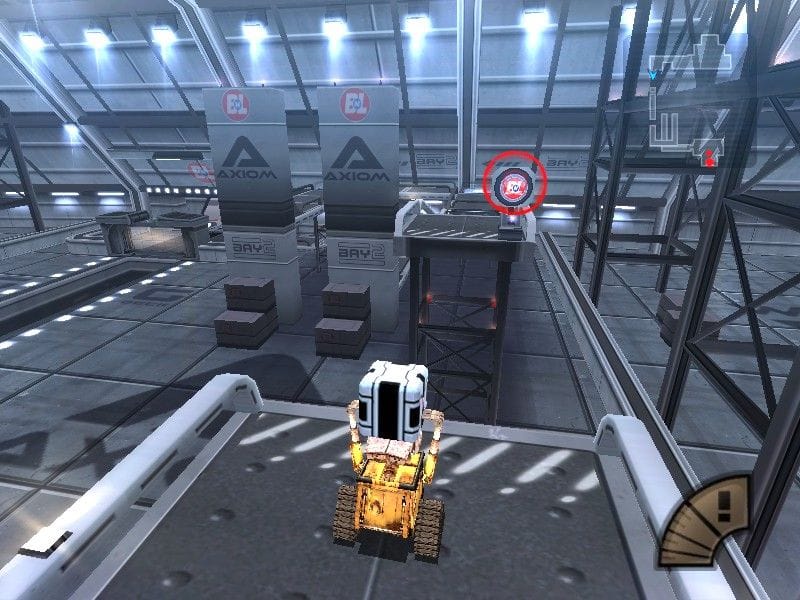
To quickly enlighten you. This is a gentle children's platformer full of set pieces loosely adopted from the film. It has racing levels, gentle box-slinging puzzles, and bright diode collectioneering. There is an insufferable looping calypso track that will make you want to perforate your own eardrums. In one level you may spend a grand total of 120 seconds guiding the floating iPod called Eva away from a sandstorm while blasting incoming obstacles with lasers. In another you will be hoovering up a hundred gizmos to unlock a door. Honey, we're videogamesing. Its best levels showcase the sediment layers of game design practices over the preceding decades that have compacted to produce, finally, a semi-competent movie tie-in for nine year olds. Its worst levels are a kind of shitty Sonic.
You recharge your health in sunbeams and throw cubes a lot.
I did not play Wall-e when it first graced the most bargainous of buckets at your local Gamestop in 2008, which has since transformed into a pawn shop that BUYS YOUR GOLD TODAY. I cannot meaningfully review it in the context of its own time - a year in which I concede Left 4 Dead, BioShock, Portal, Burnout Paradise and Mass Effect may have overshadowed it. All the flesh components of my cerebellum have long since become infected with a kind of psychic mold from the intervening history of pandemics, financial collapses, and news stories about gorillas from Cincinnati being shot in the head.
I was, entirely by accident, one of the people hit by the very first wave of low, rectangular walls that resembled toppled refrigerators and swept through videogames in the late 2000s. Most people encountered them along with the cast of Gears of War, who also resembled refrigerators, lumbering towards equally cumbersome enemies with a view to chainsawing their chest cavity open. But the walls originated in a lower-profile PS2 game called Kill Switch, which Namco published in 2003 and I was given to review on PC in 2004.
This was back in the era when Playstation was the mass-market platform and PC would get indifferently produced non-upscaled ports up to a year after initial release, arriving with dismal graphics and peculiar keyboard mapping well after any wider excitement had peaked. Kill Switch looked just as rough as all the other VGA transplants and I'd never heard of it, but I was very taken with the cover system, in which your third-person army man could be stuck to walls and fire round or over cover to take down the swarms of other army men. You could even blindfire, which was cool and exciting.
Stand and deliver, word scrounger. When we launched Jank back in the primordial days of, let's see, January, we promised the first month would be free to everyone - all posts readable, no registration needed. Then we forgotto put upthe paywall for five consecutive months. That is a 400% increase in the number of free words you were originally promised. You will not get this incredible combo of value and absent-mindedness from any other PC games blog.
But the sun is setting on those glory days. A writer must eat. If we continue to give away all our favourite nouns and verbs for zero British pounds then we will starve before we even play all the videogames. And then what will you read? Rock Paper Shotgun? Don't make me laugh. No. I am sorry. The paywall must go up. So, in a publicity exercise carefully designed to disguise all discontent resulting from this decision, we therefore announce a special week of themed features. This is Wall Week.
Wall Week will make sense when you see what we are writing about. Bricks. Plaster. Robots? Whatever. We don't need to rationalise our off-the-wall celebration of