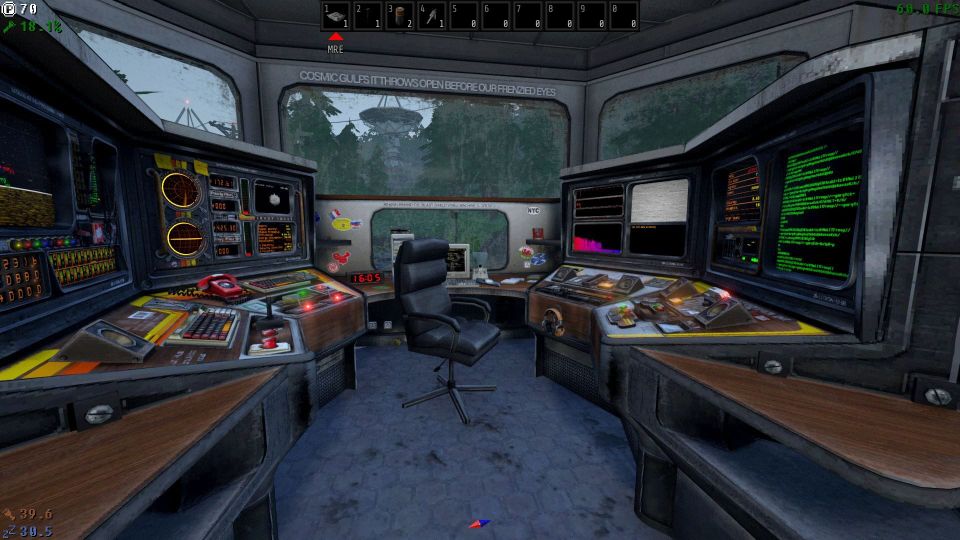
This free SETI simulator mops the floor with other job sims

Doing the dishes

If aliens are watching, I hope they can't see the state of my bedroom. Voices Of The Void is a job sim about being a lonely engineer in a remote signals laboratory, pointing big satellites at the sky in the search for extraterrestrial life. You are like Jodie Foster in Contact, except less qualified. It is extremely my cup of hot tea. It is also about living in a disgusting dormitory full of cockroaches.

I spent the first hours in this surprisingly complex and funny sim not pressing buttons on the old analogue machinery required to do my job, but instead sweeping up years of rubbish that had piled up in the abandoned lab before I took over. Chinese takeaway cartons, bottles, fried circuit boards, busted keyboards, indeterminate pulp. If the little grey men do send a message, I might miss it. I am busy scrubbing the toilet.

👽
Living In Sim is our monthly column about simulation games, and the frequently stupid misadventures they inspire.

You arrive to the lab in the dead of night, your first task to simply go around switching on the lights in every room. You read the emails waiting for you on the computer running on the desk. Your science boss wants you to record signals from space and send the recordings to them every day on hard drives, alongside other data on a big tape reel. I ignore the emails, take a look around, find the cleaner's closet, and come back with a roll of black bin bags. I am NOT working in this absolute shit hole until I have at least cleaned up my desk.

This post is for paying subscribers only

Already have an account? Sign in.

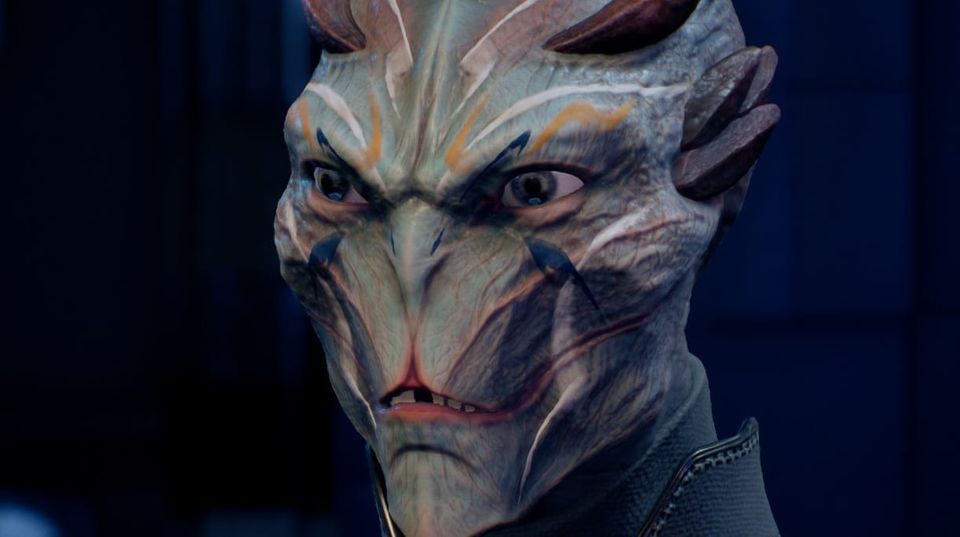
I'm oddly fond of this shonky RTS that's decided Mass Effect is public domain now

An early access look at RPG/RTS hybrid ZeroSpace

Why bother filing the serial numbers off a beloved sci-fi property when you can simply use the file to scratch on your signature and call it a day? To be fair to ZeroSpace, not everything here is a knock-off of Mass Effect - quite a lot of it also pilfers from StarCraft. For instance, it has good ol' boy flamethrower marines that would definitely call Mass Effect a "space opry" if they ever said anything that wasn't a pun about setting people on fire. 

Mostly I just wish I'd known sooner that you can do this. No one can stop you, apparently! ZeroSpace has basically Matriarch Benezia in it. The not-Krogan are here too, except they're also sort of the Cabal from Destiny. It's all up for grabs! I hope you're as excited for Nic Reuben's Denis Villeneuve's Frank Herbert's Dune Part 3 as I am. ZeroSpace is shameless, shonky, and wince-inducingly pricey for how early access it currently is.

And I sort of love it. 

I sort of love it because, while transparently making a clumsy smash and grab for other, better works, ZeroSpace doesn't

The Lie-In

Links worth clicking

Good morning, videogames. I am having an actual, proper lie-in this Sunday for possibly the first time in years, since I have no family appointments to keep. I look forward to waking up thick-headed, groggy and ill, like every 40-something when they get slightly more sleep than usual. Perhaps I can soothe my aching head with some good words about videogames.

Over at Aftermath, Luke Plunkett wrote about Soren Johnson's 4X game Old World, to explain what it gets right in its attempts to design around issues with the Civilization series.

I think a focused 4X game is a good 4X game. Why? By limiting its representation of history to a single era, Old World is able to invest in much more detailed and interesting diversions within that period than Civ has ever been able to manage. Most important of these is a dynasty and relationship system lifted straight from Crusader Kings, where every faction is made up of families and clans, and every major individual within them is represented by personality traits and skills, and the relationships they develop as a result.

Joshua Rivera reviewed Splatoon Raiders for The Guardian and liked it a lot

Jank Mail: Blinx awakening

This week in PC gaming

Graham went camping and lived, and he’s so drunk on success that now he’s going on holiday. His parting words were some games you can play this weekend. Brendy remains but is all tuckered out after his consideration of megastructures:

The same human absence is there in Nier Automata's peopleless ruins, in Stray's domed and sunless city. I don't know if these are big enough qualify as megastructures, but they certainly feel like them. On the other hand, I barely count the Dyson Spheres and habitat craft of Stellaris as megastructures. Not only are there too many people hanging around, but the perspective is all wrong. In Hypogea and Metal Garden you are a small being looking up, but in Stellaris you are a god looking down. For a megastructure to truly hit, the sense of scale must land on you like a ton of cement from above and beyond. For something to feel big, you have to first feel tiny. 

Jeremy Peel considered the megastructure, or at least magnificent structure, of Boiling Point, which means I have to mention the song that plays during the installation process and nowhere else in the game.

Total Playtime: Suck Off Frankenstein

We shall be monsters, cut off from all the world; but on that account we shall be more attached to one another

It is time once again for Total Playtime, now the official Jank podcast, arriving a little late this week due to some production issues arising from my sending the file to the wrong person. I apologise for the error. 

This week it’s a free episode available to all, in which our four hosts gather to judge the news of the week - chiefly, Bethesda’s smoke-bomb declaration of Fallout 5 in an effort to distract from laying off a number of people who would have made it; Sony’s abandonment of discs as a storage medium and EA’s correct prediction of the World Cup final. If that all sounds a little dull, don’t worry, Nate naturally and effortlessly channeled it into pornographic takes of classic Gothic novels. Plus: the four male hobbies, a Henry Cavill origin story and headphones made out of eldritch meat. 

Our art (now feat. Brendy) is by Marsh Davies, our music is by God Ribbon and our editing is by Alix Attenborough. The podcast only exists thanks to those who subscribe to Jank (and previously backed it on Patreon, which will endure for one more month only). 

Links! 

The

What you could play this weekend

Three games with colours

I survived my camping adventure and am now barrelling head first into the school summer holidays, with flights booked to visit family next week. Before that happens I've got one weekend spare to queue up some Jank articles and play some videogames. Let's decide what I should play.

You can help. Tell us what you're playing in the comments down below.

MARVEL Tōkon: Fighting Souls

Captain America bishes Danger with his shield against the backdrop of a cinema marquee.

I'm not really into fighting games or Marvel, but a lack of genre interest has never stopped me playing an Arc Systems Works game in the past. They have tremendous artists and animators, and bringing all their talent with colour and keyframes from their Guilty Gear series works to breathe new life into characters made mundane by the movies. Fighting Souls doesn't launch until early August, but it's in open beta now.

Go-Go Town!

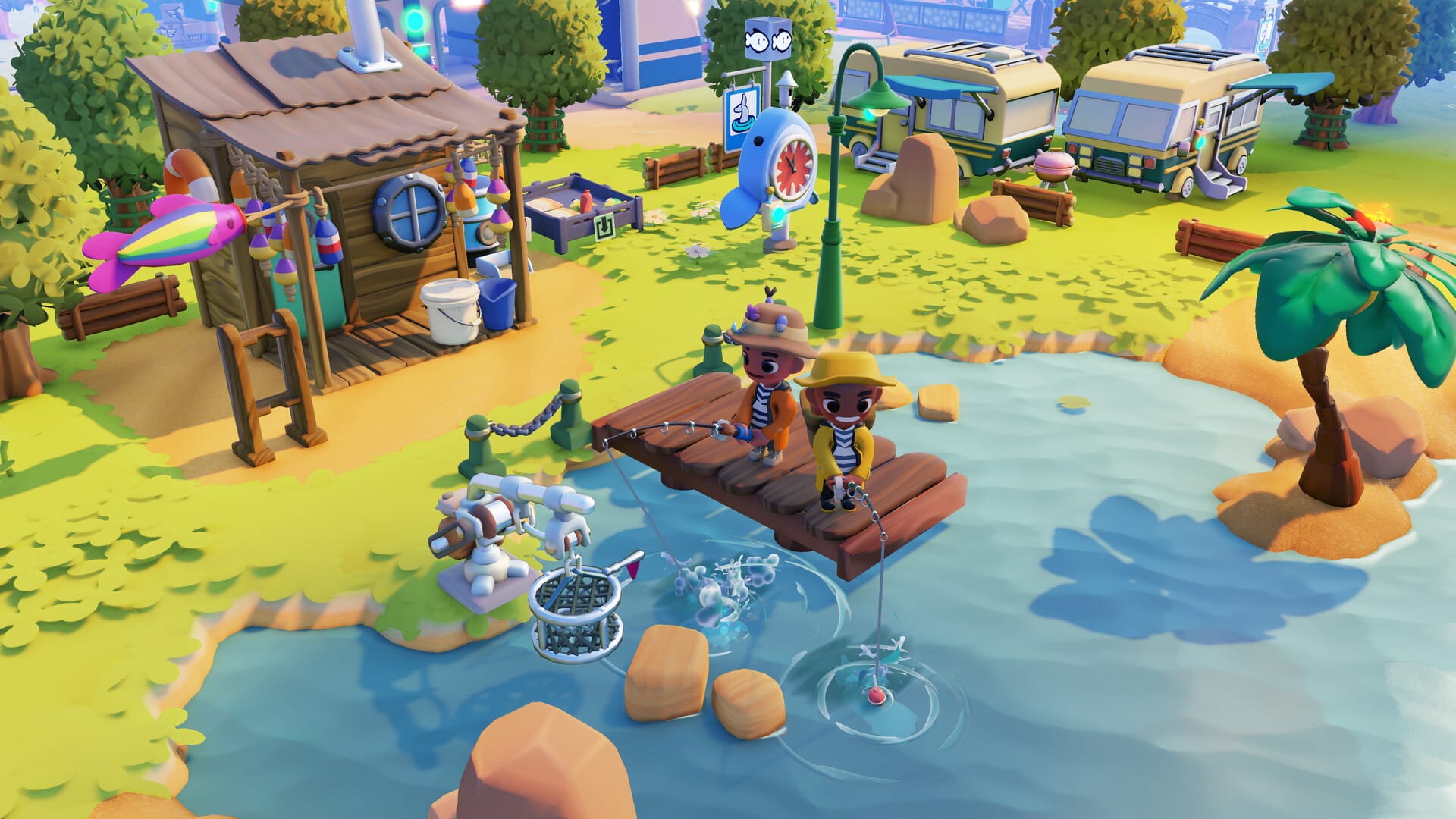
Two cute characters fish in a pond surrounded by grass and palm trees.

A cute, toy town Animal Crossing-like in which you gradually bring a town to life by tidying, fishing and running errands for the locals. It differs from most of its inspirations in two ways: its set in a more bustling urban environment rather than a pastoral village, and it eventually leads you towards

Megastructures.

That's it. That's the headline

Big concrete is taking over. There are now enough megastructures in games to justify a whole bundle on Steam. You may not be familiar with the term "megastructure" if you've not yet been cornered by your architecture-obsessed pal in the pub, or by your manga mate who keeps telling you to read Blame. It is basically an artificial space so huge you can't easily conceptualise it. One enormous planet-covering city encased in a shell. An orbital world many thousands of kilometers in circumference. That awful shopping mall in Edmonton, Alberta.

Big weird places that make you feel like an insignificant pipsqueak, essentially. Megastructures are not new to videogames. The subterranean complex of Portal 2 stretched further than fans of the first game would have guessed, and the cavernous corridors of Halo suggest a galaxy of long-lost giants. But now indie developers are increasingly exploring these colossal spaces. And small developers, it turns out, go pretty big.

"I spent quite a lot of time in my childhood staring out at vast roads from nearby hills full of little travelling dots," says Aleksandra Herout, developer of Metal Garden, a first-person shooter set in a drab land with a titanic concrete ceiling for a sky. "As the place I grew up in is a transport hub for the greater region, there was much of this architecture to be found in local landscapes. 

"It wasn't just the size that made them stick with me, but also the sense of anticipation. The promise that this open road would lead me somewhere else. I kept returning to this feeling again and again throughout my life, and it very much impacted the visual language of Metal Garden."

'It is large enough if it makes your head spin and heart pound'

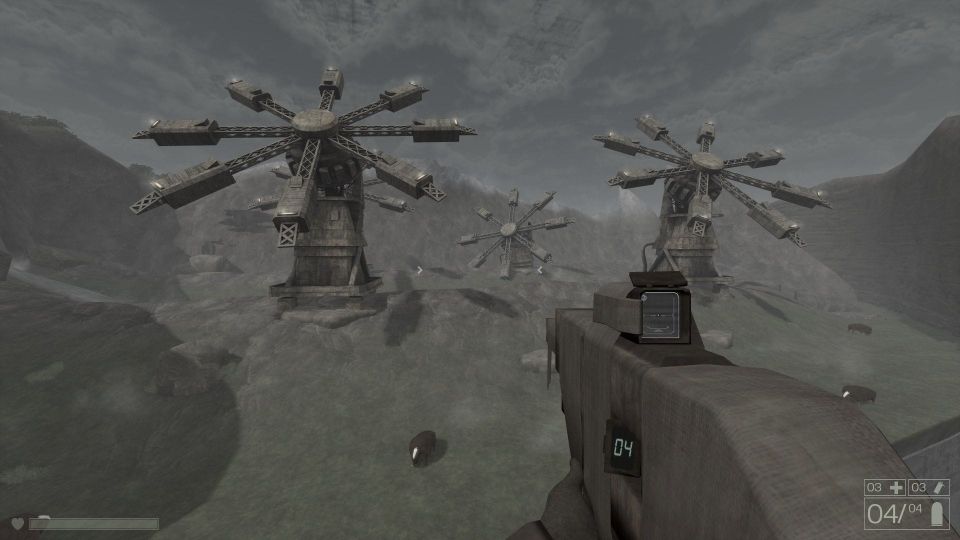
In Herout's 2-3 hour singleplayer shooter, you wander lonely hilltops and lurk through deep blocky catacombs, routinely blasting dark gunfolk and beefy catlads who - it is suggested - have caught wind of a priceless discovery: a way out of the structure. The shotguns and sniper rifles are straightforward, and the jetboot doublejump is as satisfying as equivalent leaps in Destiny 2. But it's the landscape that makes Metal Garden easy to recommend (plus it costs peanuts).

This post is for paying subscribers only

Already have an account? Sign in.

The making of Boiling Point: Road To Hell, the most broken game I've ever loved

How ambition turned an open-world pioneer into a janky cult classic

Sometimes, when a dad squints at a monitor to assess their child's latest PC gaming obsession, they say exactly the right thing. Ilya Gulyaev's dad suggested that, if he liked modding Operation Flashpoint so much, he should seek out an apprenticeship.

"He literally told me to pick up a copy of a local PC gaming magazine, find an article about Ukrainian videogames in development, write down the company names, look them up in the phone book, and call them," Gulyaev says. "Back in those days, such a direct approach actually worked."

The year was 2003. Stalker: Shadow of Chernobyl was little more than a crackle on a Geiger counter, and Ukraine's development scene was in its nascency. "It was in an absolutely embryonic state," says Oleksandr Khrutskyi, who worked at Boiling Point developer Deep Shadows. "I think there were probably no more than one or two thousand people working in the games industry across the entire country."

The team grappled with open-world problems which hadn't been solved by the wider industry

Ukrainians had only a decade earlier detached themselves from the Soviet Union, but the resulting governmental flux was to the benefit of budding developers. "Weak tax policy and imperfect intellectual property laws opened great opportunities to anyone who understood how to operate a computer," says Oleksandr Honcharuk, who worked on Boiling Point as a 3D artist. "We received untaxed payment in the envelopes. If we wanted to try any software, we rode to the book market and bought any cracked software we wanted. Official versions we bought only for final compiling and exporting. These factors lowered the cost of the development dramatically."

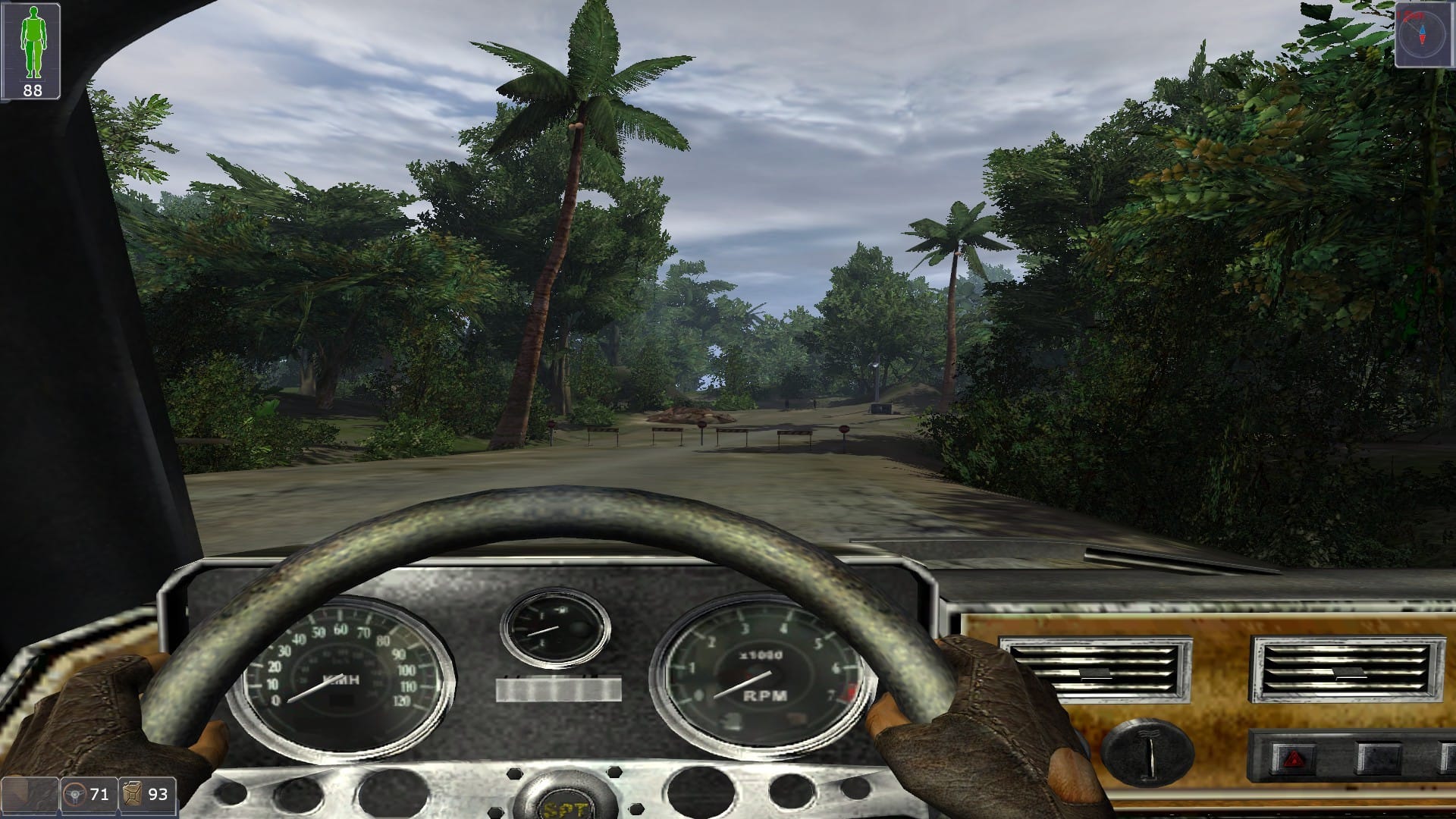
Driving a car in a first-person viewpoint towards a roadblock on a jungle road.

Many entrants to this new field were self-taught enthusiasts, but even they were surprised to see Gulyaev walk into the rented three-room apartment that Deep Shadows called an office with his dad in tow. "Imagine our wonder," says Honcharuk. "Because he was only 15 years old." Nonetheless, Gulyaev proved himself as a 3D modeller, recreating an M167 Vulcan Air Defense System as a test assignment. "It ended up being used in the game because I did it well, receiving only two rounds of feedback for my first-ever real in-game asset," Gulyaev says. "After that, they felt confident giving me more work."

This post is for paying subscribers only

Already have an account? Sign in.
The homepage is over but you can signup for more
You like more, right?