On a certain kind of dull, wet day, my dull, wet brain craves a particular sort of comfort: to burrow into the plush, numbing blanket of a middle-to-lowbrow thirdperson action-adventure. Blockbuster brawling, a light bit of puzzling, and an enviably sunny island idyll backdrop is all I ask. A little bit Uncharted, largely unchallenging and entirely unrepentant.
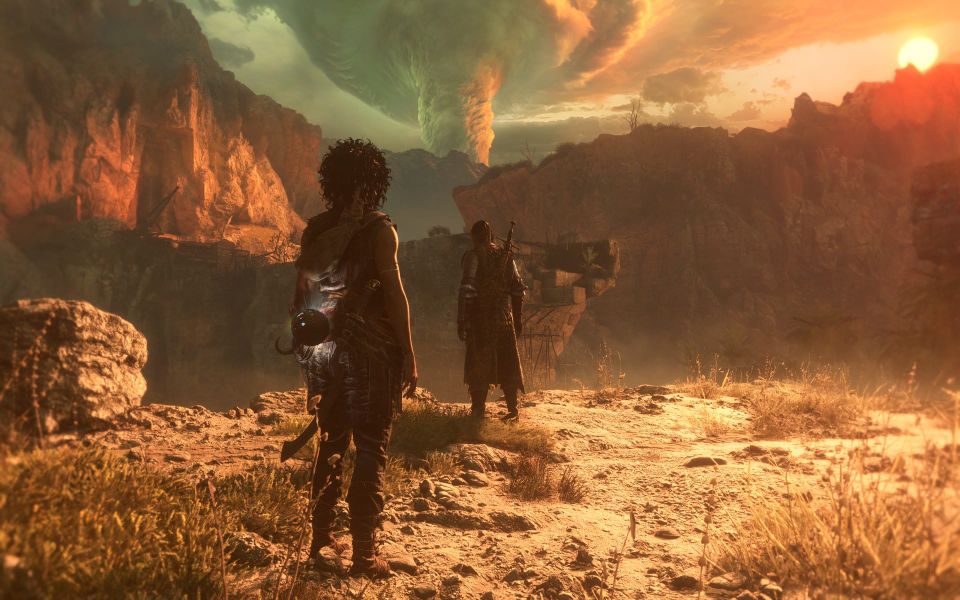
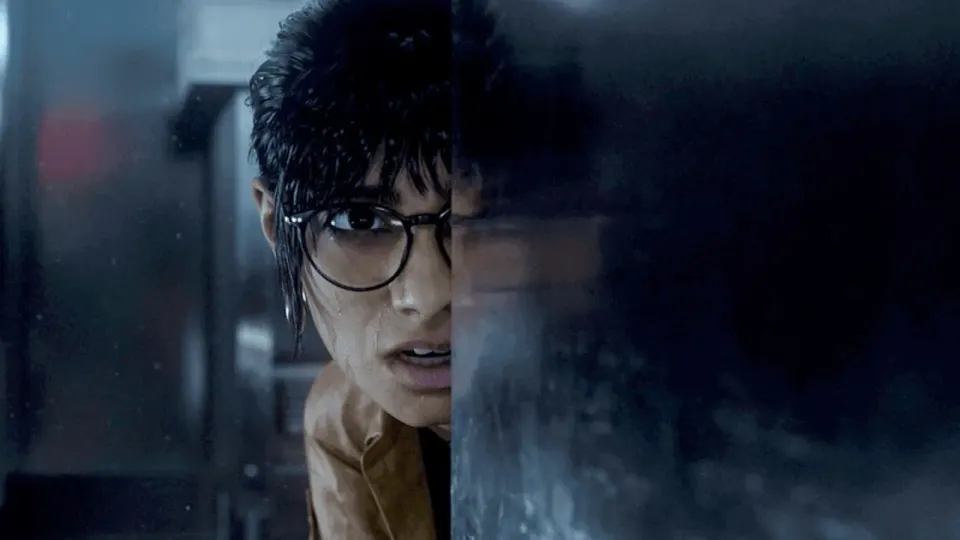
From a cursory glance at the trailers, Resonance: A Plague Tale Legacy presented as exactly this—at least to a fool, such as myself, who had not at that point played the previous, enthusiastically grim Plague Tale games, to which Resonance is a prequel. It is also a departure from their relentless filth and pestilence: a breezier action spectacle that hews closer to mainstream conformity, composed of the popcorn action-adventure staples I crave. There is brawling, puzzling and, yes, a stunning island idyll to explore. But then, just under half-way in, it abruptly decides it isn't content to coast on genre expectations and introduces a novel and horrifying element, a bit of systems-first enemy design that is so unguessably strange that I can't bring myself to spoil it in this review.
The tech is better than it's ever been, but VR game design hasn't progressed
When was the last time you heard about a new VR game? If you've seen anyone mention virtual reality in the past few years, aside from the occasional headset review, it's likely been a eulogy for the medium. Strapping screens to your face was always destined to attain the relative popularity of a force feedback steering wheel or HOTAC flight stick, as far as I'm concerned. And so it has.
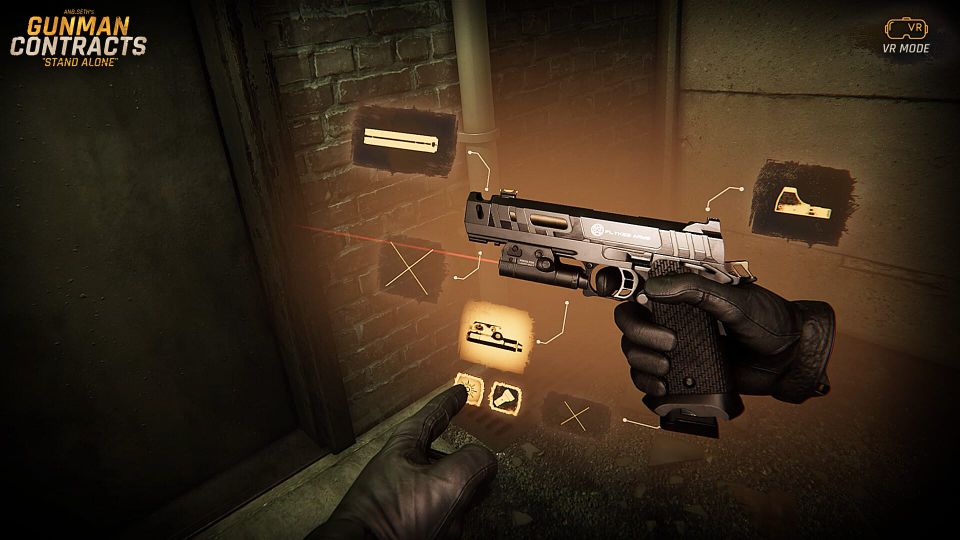
The challenge is that so many of the obstacles to wider adoption have nothing to do with the quality of the tech. Gunman Contracts might be the perfect illustration of that.
Released into Early Access earlier this month, Gunman promises to turn its players into a John Wick equivalent; a balletic assassin who shoots bad guys with a gun in one hand and catches their dropped weapon mid-air with the other. The reality is more Mr. Bean.
Good morning, videogames. I have a question. Who are the videogame reviewers that, to you, have a definable point of view? I don't mean that you like their work, or that you agree with it. I mean, tell me the writers who have a coherently expressed set of aesthetic principles that they apply, resolutely and consistently, in their work? Such that you can say: that guy "hates this type of stuff", that gal "loves this type of stuff"? Maybe that "stuff" is a whole genre, or just a mode of play, a style, a trope, a design choice, anything at all, but whatever it is, it's a defining aspect of that critic's work. Alright? Alright. Now here are some articles worth reading from across the past week.
Japanese game studios have been relatively shielded from the choppy seas of the recent games industry. For This Week In Videogames, Francisco Dominguez tried to find out why.
From the outside looking in, it's a harsh indictment of Western studio culture. Due to Japan's strong labour protections that severely restrict the use of layoffs, reckless cycles of overhiring followed by layoffs never became a regular occurrence domestically. Prominent
Welcome back to another week of Jank. We are steadily accumulating more freelance contributions thanks to the slowly expanding number of smart and generous people who are supporting the site - this week's new arrival is Joshua Rivera, who railed against playtime metrics.
I read those words and I feel foolish about the practice of counting all these hours, as if I know how many I have to draw from, or that I'm even wise enough to know how best to spend them. If I find that I've racked up 300 hours this year swearing at roguelikes and clicking through RPGs, what am I meant to do with that knowledge?
I'm thinking about the wolf and the granaries and the docks because it's taken me facing the end of the world - courtesy of three new apocalyptic end-game scenarios that devastate the planet's surface - to finally stop and smell the roses.
Sin's adventures in the archives surfaced Stellar Monarch 2, which hands off the main 4x burdens to your middle management layer:
I really should be playing Silent Hill: Townfall, a spooky first-person explore 'em up inspired by the kind of Fife towns some of my family currently live in. Alas, I'm no fan of horror games and I've never Silent Hilled at all. It's hard to imagine starting now.
Thankfully there are plenty of other new games to try this week. Tell us what you're playing in the comments down below.
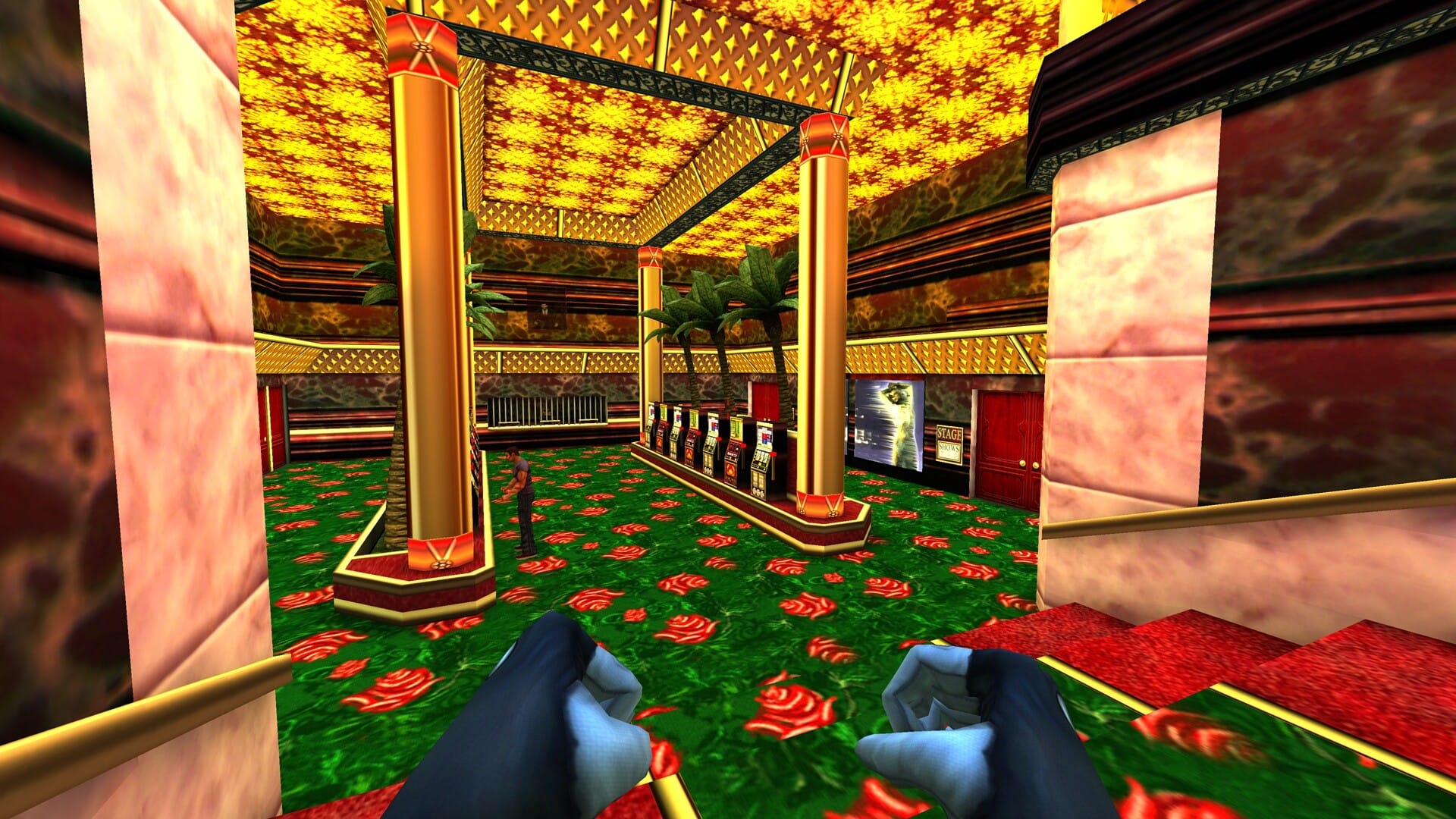
I have fond memories of Sin, a shooter that released two weeks before Half-Life and which offered a different vision of the future of first-person storytelling. One that was considerably stupider, more tacky, and more Build engine-inspired. I'm not sure I'd ever want to go back, but I'm tempted to at least try that opening bank mission with its working ATM screens in this Nightdive remaster.
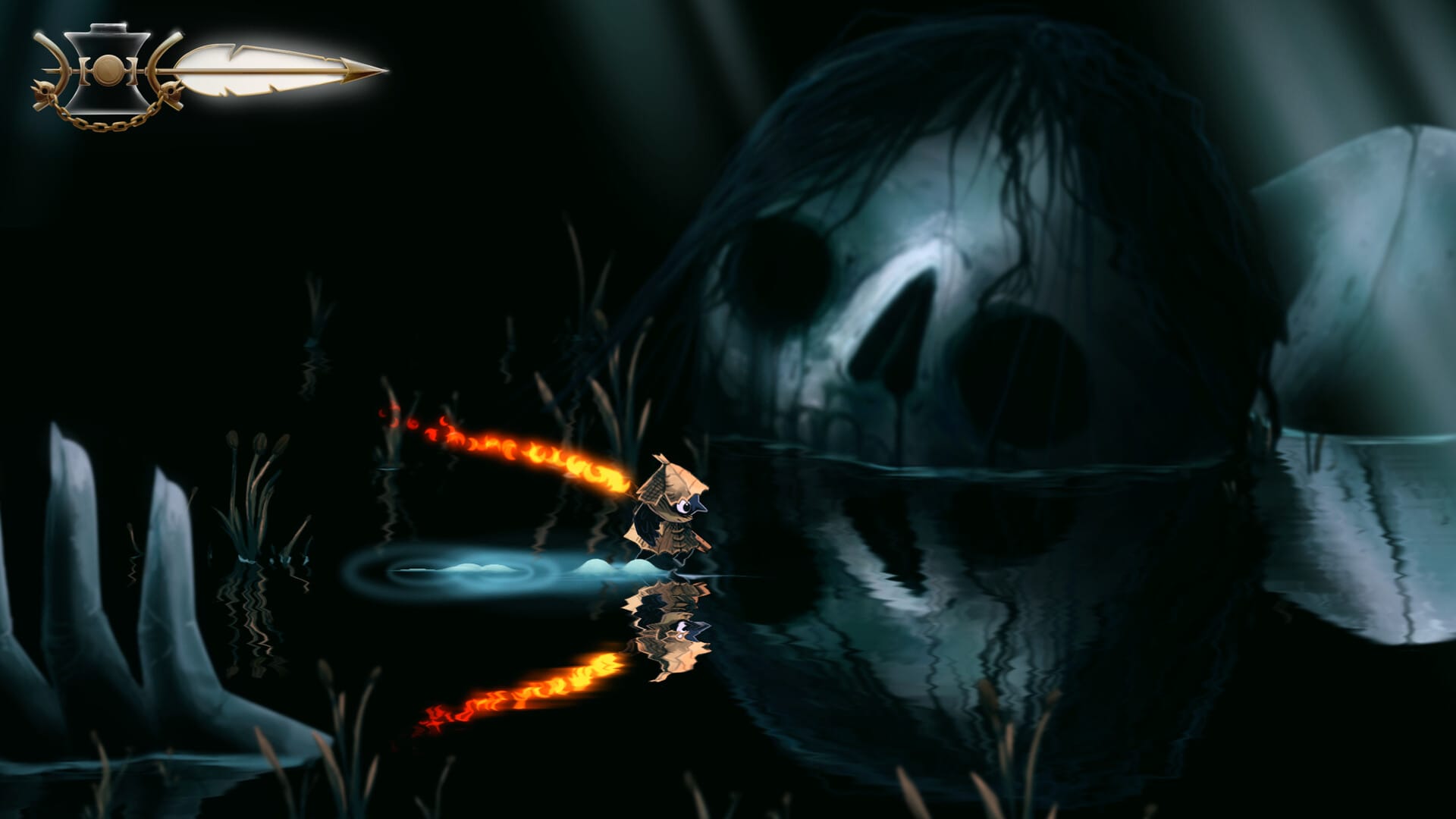
I had a lot of fun with Crypt Custodian, Kyle Thompson's hack-and-slash metroidvania set in a cat-themed afterlife of floating islands. Well Dweller is Thompson bringing his many talents to bear on a Hollow Knight-like, which means it's another metroidvania, but with a
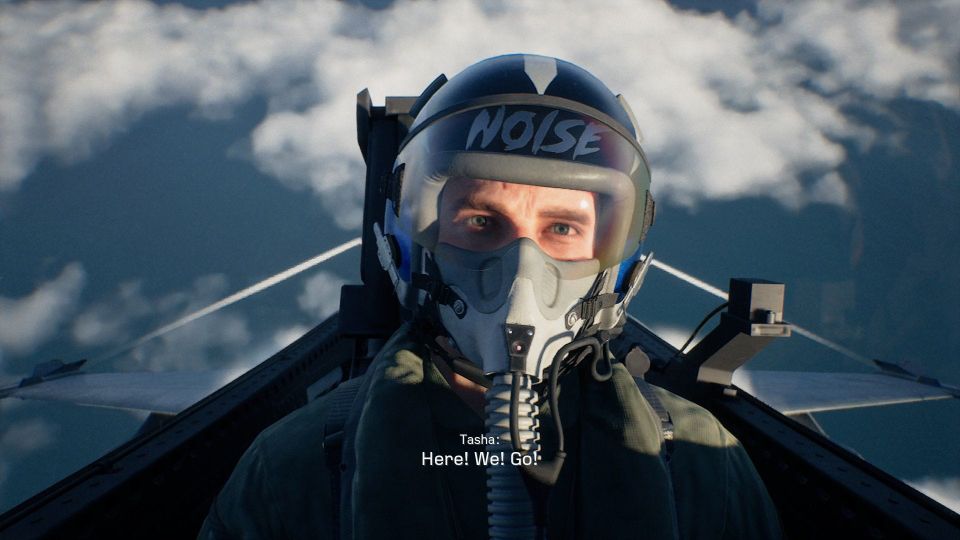
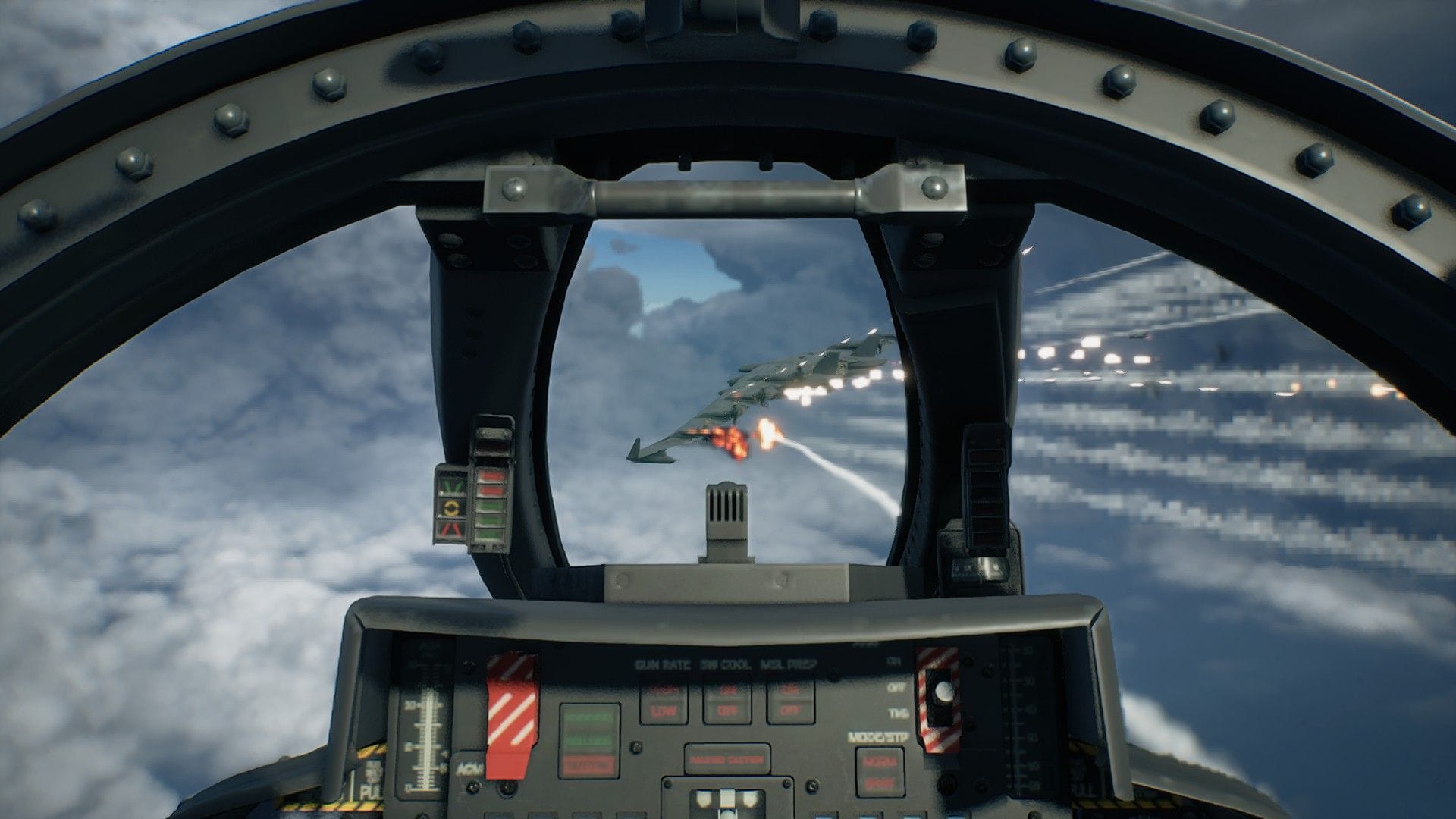
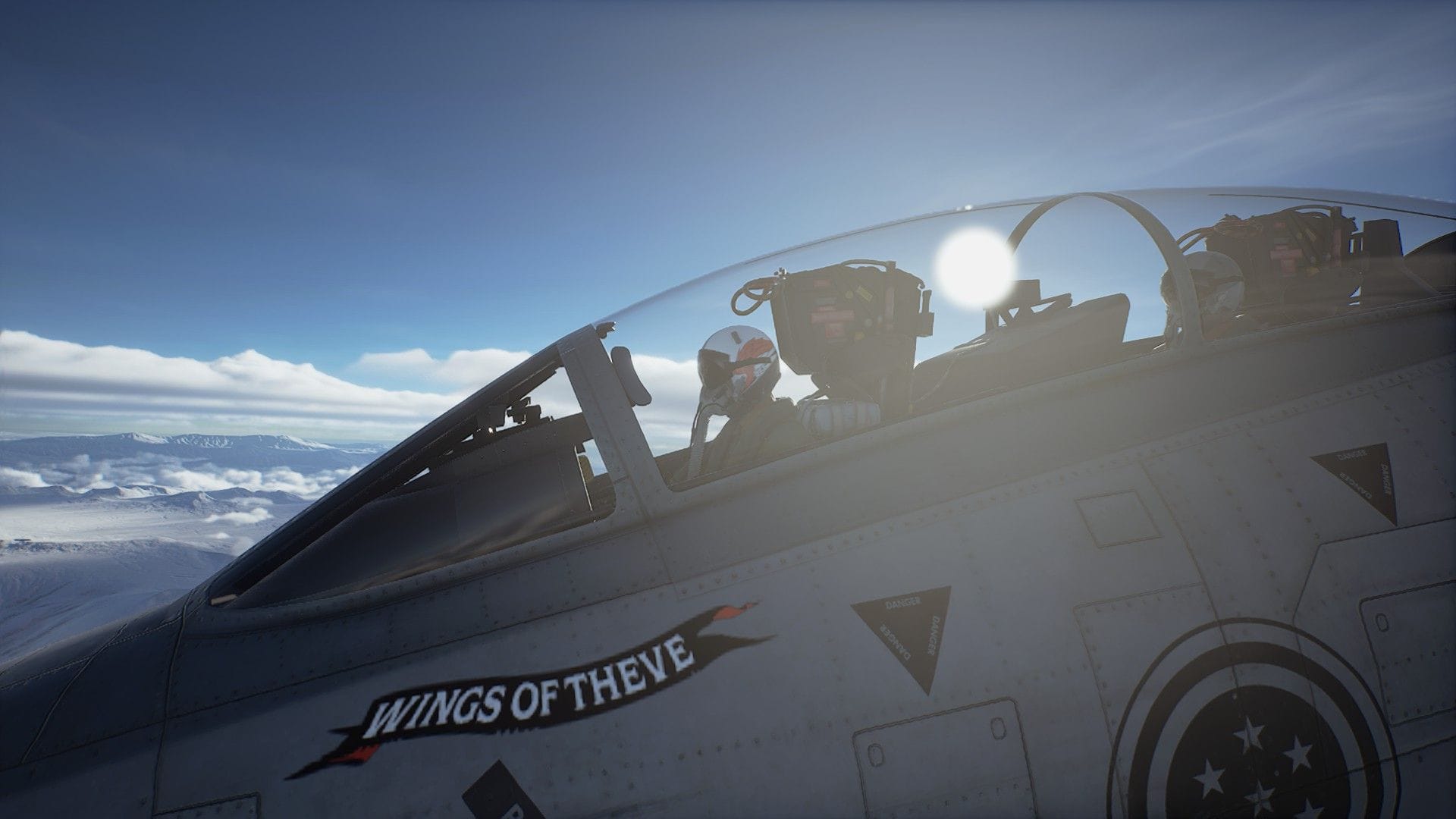
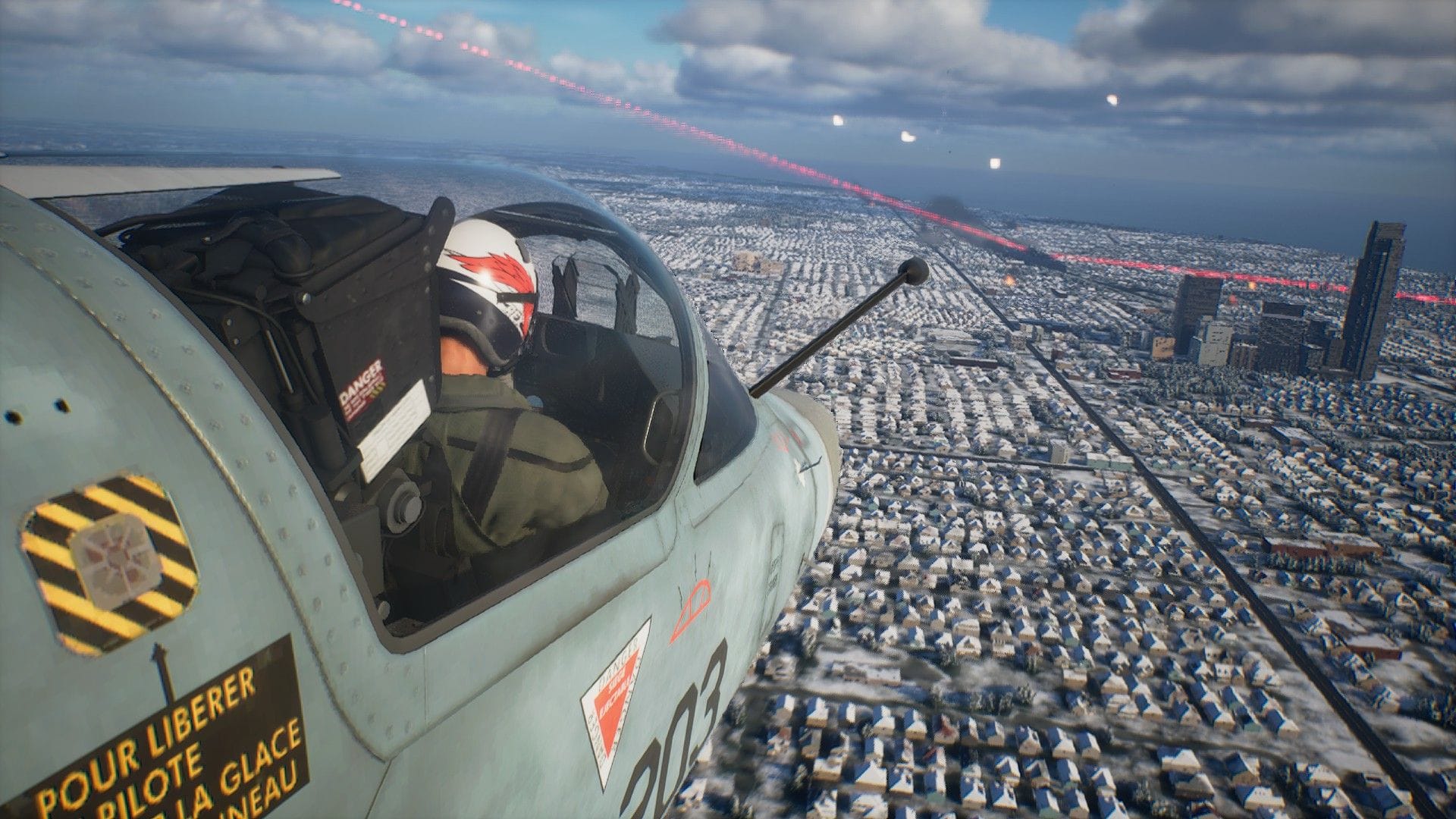
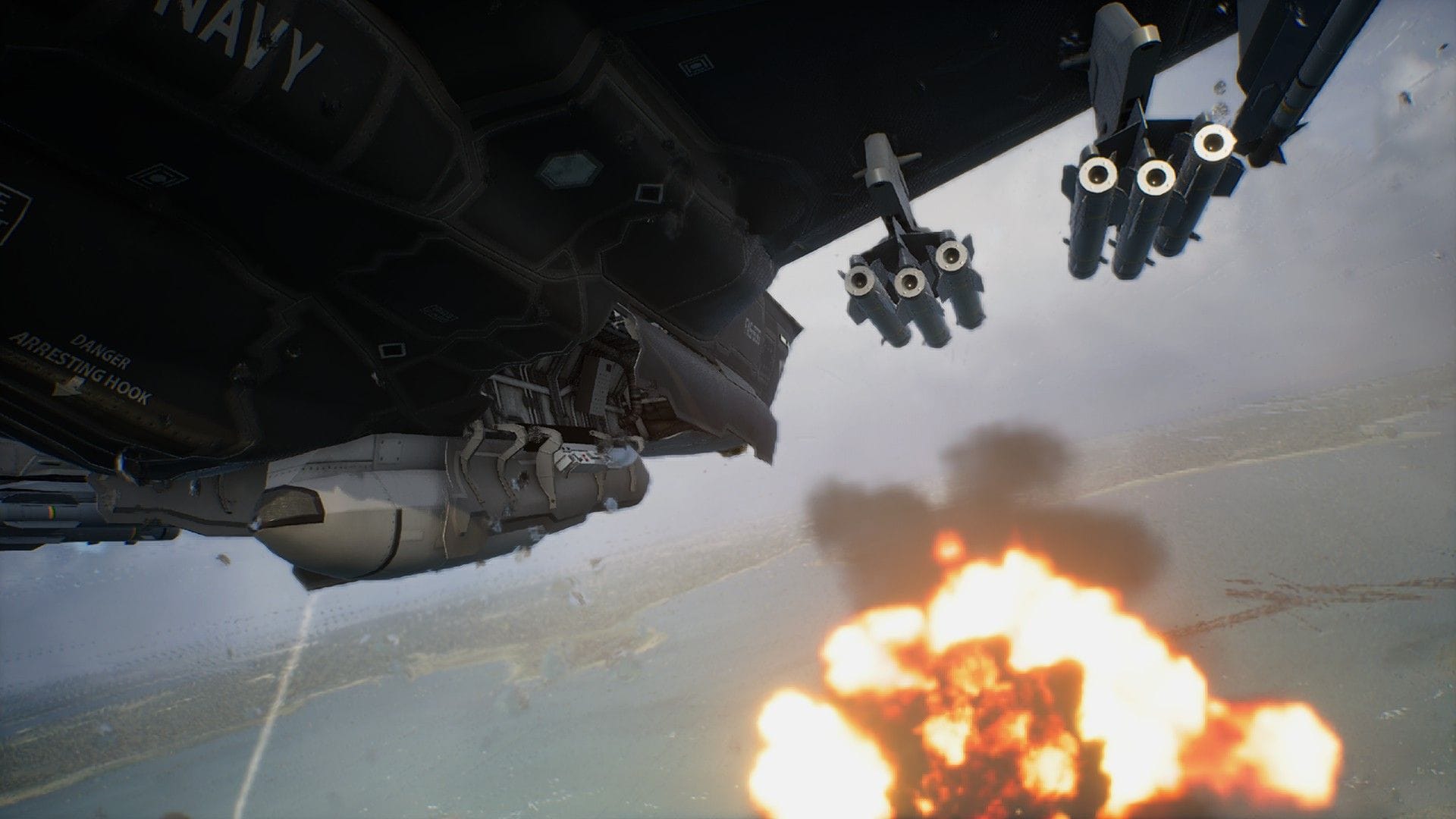
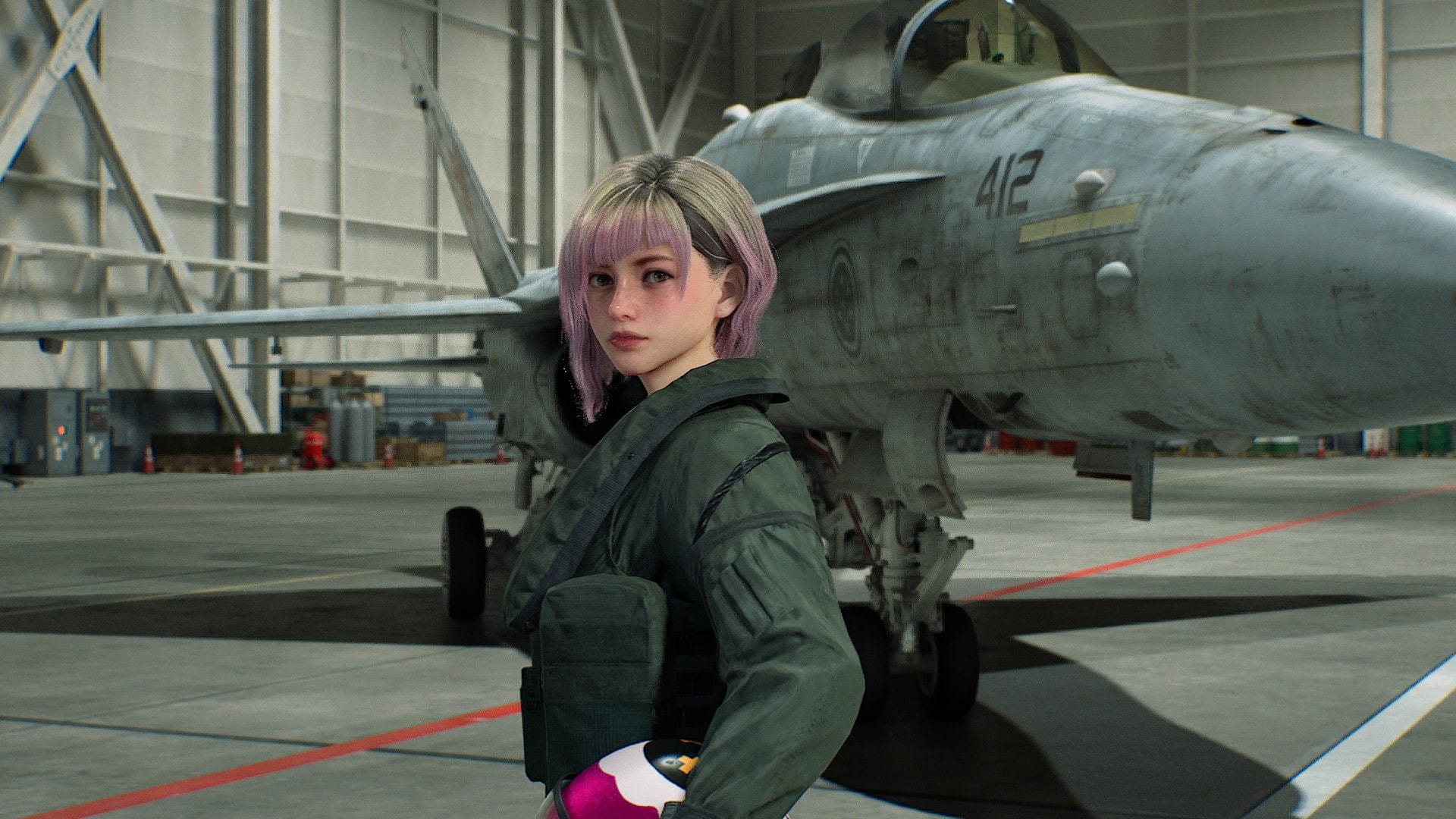
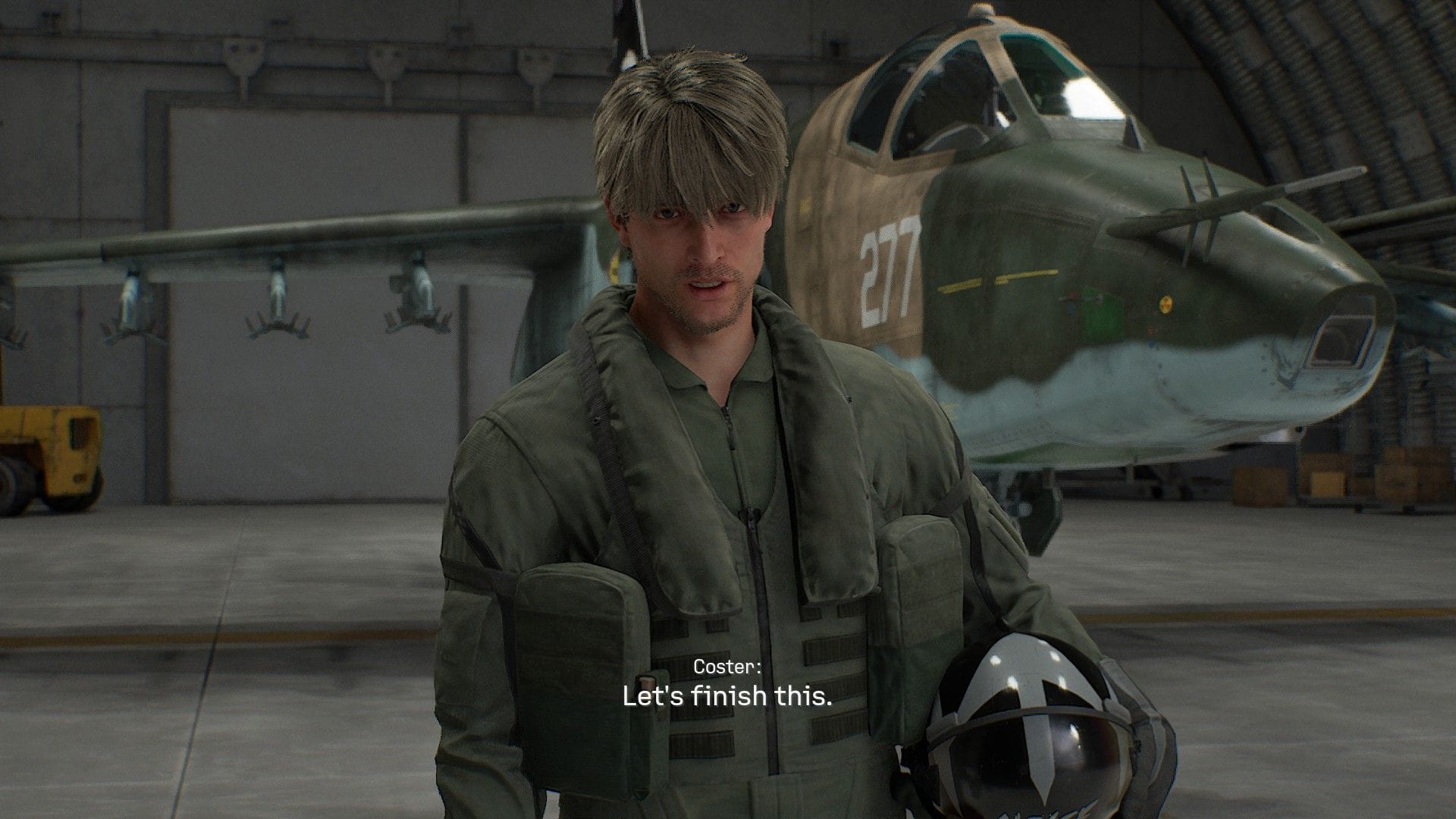
If Ace Combat 7 lacked anything (and I don't think it did) you might say it was a feeling of getting close to your wingmates. Project Aces think so anyway. Ace Combat 8: Wings of Theve repeatedly plonks you right on the deck of its aircraft carrier homebase, in first-person perspective and proximate enough to reach out and touch your squadpal's perfectly rendered stubble. You cannot get much closer than this. But there is a sense of overcompensation. Mission by mission this passive in-flight entertainment takes over and the player gets fewer displays of spectacular air buffoonery of their own.
Luckily, the story is continuously stupid in the refreshing way Ace Combat can be. I don't think this new jetshootser is as airtight as the previous game in the series. There is, frankly, a lot of filler. You find yourself going through the motions of popping ground targets until the next lengthy story beat can hit. But when it's good, it remains an explosive cavalcade of implausibilities that makes me laugh. For Ace Combat, that's enough.
You play as a silent pilot known to the world as "Wings". But only because you've inherited this nickname, Dread Pirate Roberts style, from a pilot you knew for less than a day. To top it off, you now hear his lyrical inner monologue inside your own head for the whole game. It's an off-beat choice that, at first, reminded me of the dead narrator in Sunset Blvd, but was cheapened as soon as the voice drew attention to the conceit ("So you can hear me?" he says. "This is weird for me too."). But that's videogames in general and Ace Combat games in particular. They like to spell things out in big letters written in smoke in the sky.
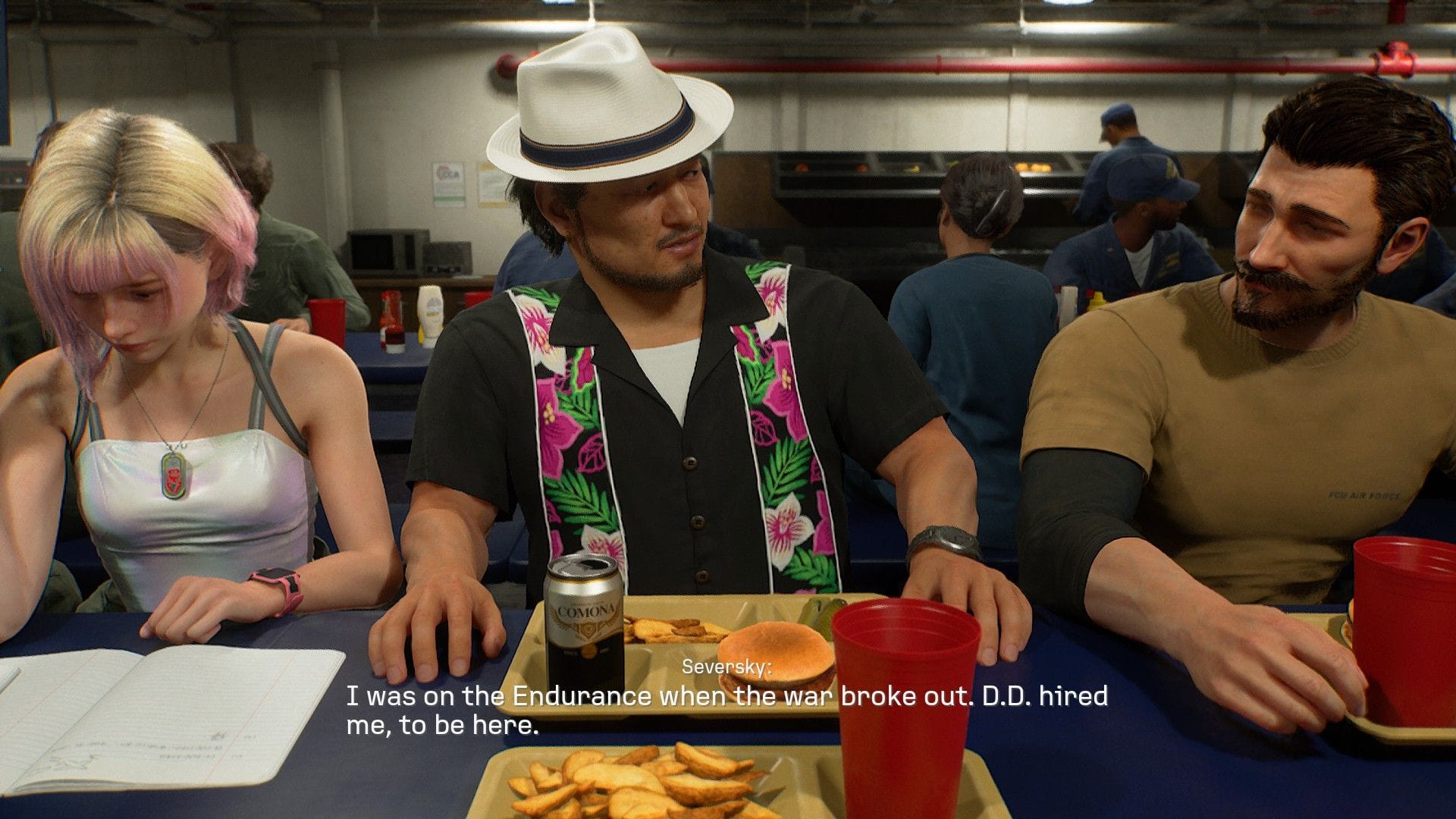
Between the voice in your head, the canteen chats, and the rock musicians, it feels like the narrative designers have been playing a lot of Cyberpunk 2077.
The series' characteristically farfetched storytelling - a head-on collision of sincere cultural observation and comically militant absurdity - is standing to attention throughout. Once again, it's WAR. The best interpretation of these rocketing jet 'em ups I've read is that they belong to the mecha genre. They are theatrical in a disarming way that'll win over anyone willing to accept a world where convicted felons are allowed to fly MIG-29s to atone for their crimes, where global wars with millions of casualties happen every 10 years but where there's still enough optimism to build space elevators and gleaming futuristic cities just in time for the next weapon of mass destruction to be invented. There are interesting themes in Ace Combat games - they are delivered with the subtlety of a cruise missile.
This airship has a 1km wingspan. It deserves to be shot down for its hubris alone.
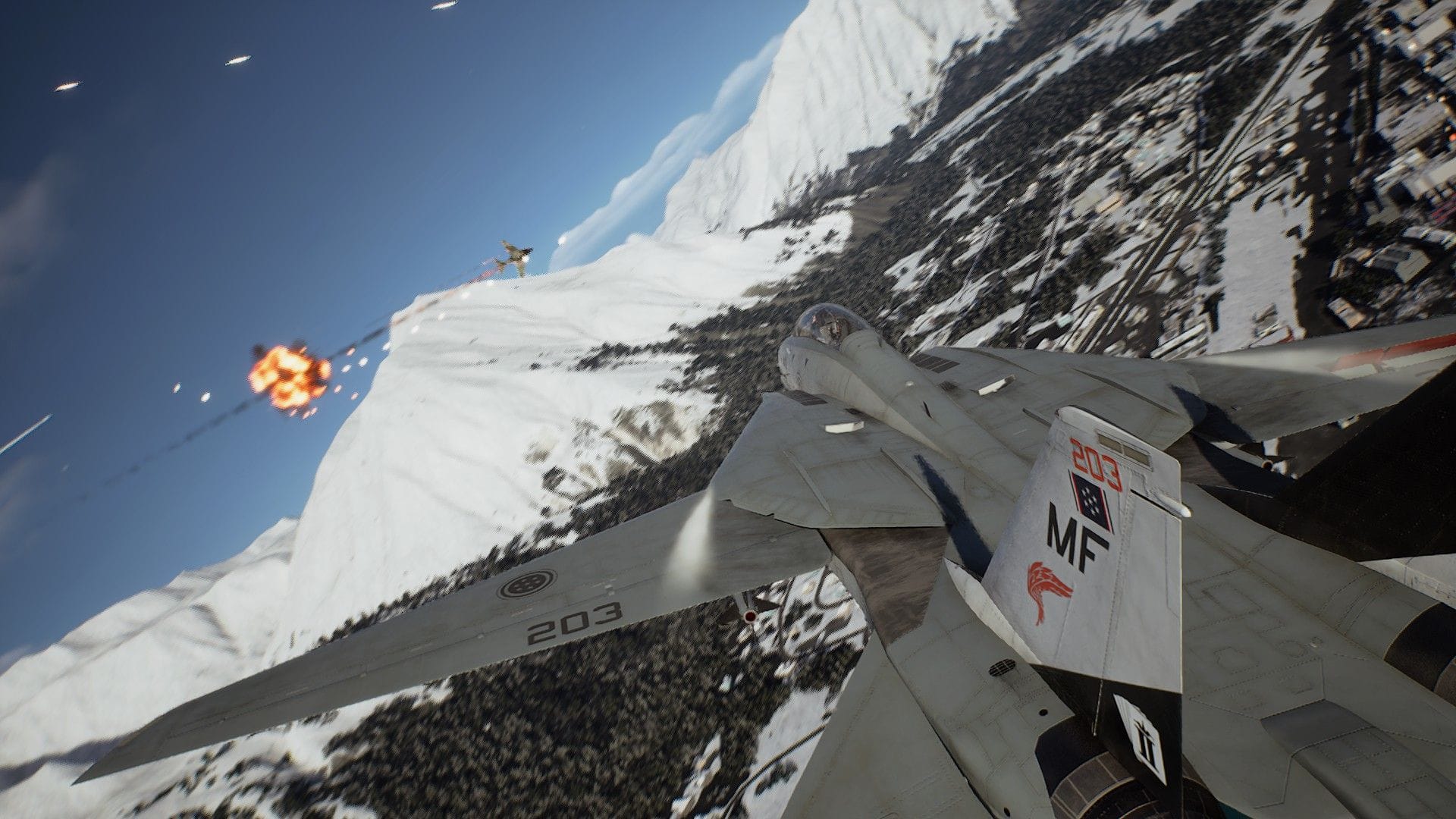
As for what it's actually like to fly: yup, feels good. You airbrake hard into high gravity turns, launch special air-to-air ordinance, pop flares when a missile is locked onto you, and chase bad guys through drippy clouds when your homing reticule is interrupted by beautifully composed sky mist. I miss the thunderstorms of its predecessor but its possible I just didn't fly through the right bits of dark heaven.
Some of the most tense air battles can involve a ferocious amount of airwave chatter. Fighter squadrons, ground troops, commanding officers, and enemy trashtalkers compete for your focus at a clattering pace. In these missions, the feeling can be one of chaotic overwhelm. You are flying through an aural storm of in my sightses, on your sixes, and bombs awayses, with both friendlies and rivals blasting music over the comms. Among all this staticky crosstalk you have to listen for mission critical information - who to shoot and when to get 'em shot by. It's as much an exercise in concentration as a test of your piloting skills.
The post-flight replay after every mission really lets you enjoy whatever dusty graphics card you cannot currently afford to replace. Still looks decent on my crumbling Nvidia RTX 3060. But be warned: I had plenty of hitches and drops when playing on medium settings.
You kit out your jet accordingly. A mission with lots of ground targets? Stuff your steel belly full o' bombs. Anticipate a dogfight with some nippy aces? Pick something fast and stock up on missiles with special guidance abilities. As ever, you earn points in each mission to spend on new planes and parts. You'll fit gadgets to make your missiles lock-on faster, or reload quicker, or grant extra space to carry more ordnance. Later you can unlock some green-flavoured support planes that you'll fob off on your comrades because their special electronic warfare gizmos buff your own missile lock capabilities.
With 30 missions in total, they were destined to be hit and miss. Highlights include flying under the struts of a floating island and blasting the support pillars as you glide past. Or dodging huge glowing bursts of railgun fire from land battleships that have burrowed in among innocent skyscrapers, like a cat at the back of a cupboard filled with delicate glassware.
You pick the planes for the rest of your squadron too, and they give you a little one-liner before you decide, which is cute the first time but tried my patience the 30+ subsequent times.
But there are an equal amount of shrugfests and simple "kill everything" missions set against a timer. One mission sees you and a pilot buddy crashing in enemy turf - a South American coded country full of resistance fighters. Your escape sees you stealth-flying through green blobs of radar in an rickety old plane at agonisingly slow pace while the stakes are melodramatised to you via dialogue on the radio. Aside from being a repeat of Ace Combat 7's most annoying mission, there is almost zero tension. You're just gliding gently to the exit while everyone says: "Oh no!" On the other hand, this is also where the story throttles up to perilously high levels of glamourous idiocy.
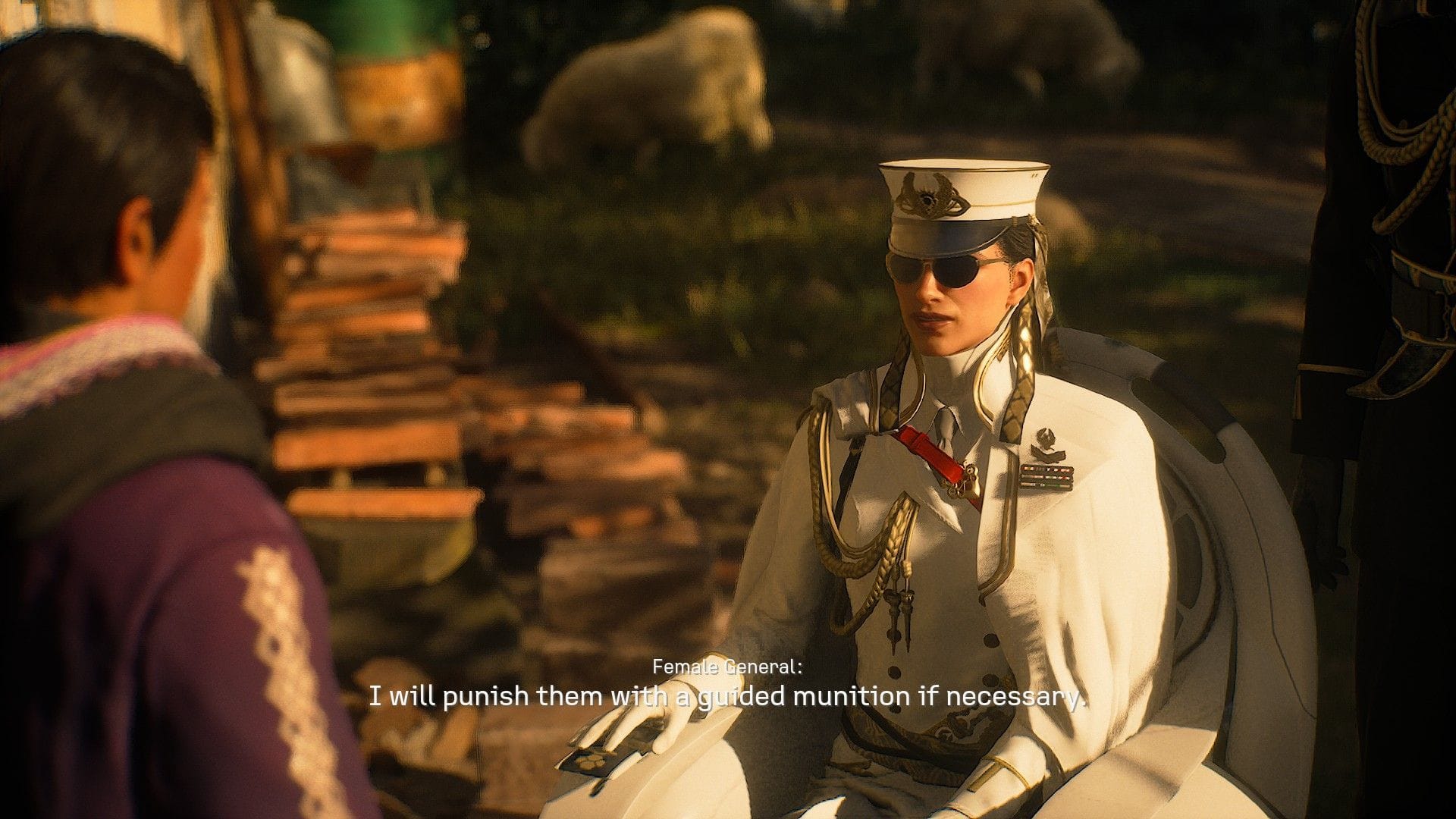
The village you crash near just happens to be visited by the most important General of the enemy air force - a futuristic wheelchair-bound woman of deadpan villainry. The first-person sequence that follows is a kind of Inglorious Basterds style dinner scene with four ace pilots squinting at each other (your head is on a swivel during these sequences, so you can look around, but not do much more). The villainess is served tea and, instead of extending her good arm to take the teacup, a robot arm rises from beneath the table and passes the cup to her working hand. It is a hilarious and needless flex of robotics.
The General notices a villager has been hurt by soldiers and shows her sympathetic side... by promising to launch a missile at the culprits.
This character is not alone in her animeness. Many others feel like the result of a brainstorming session taken to hard-drinking extremes. What if there was a pacifist ghost? What if a famous rock band could pilot F-16s? What if the General was a nomadic tribal heiress? What if the British air traffic guy was called "Dealer" and spoke entirely in gambling metaphors? What if there were a bunch of pilots who hid underground until they went crazy from being deprived of flying for too long?
Total Playtime is the official Jank podcast, and is produced thanks to the support of our paying subscribers (and formerly our backers on Patreon). This week's episode is exclusive to that exalted throng: you may join them by subscribinghere, which will grant access to every episode so far.
This week’s episode was actually recorded during Opening Night Live, and while it’s tempting to say we did this as a deliberate slight on Geoff it was actually just an accident of timing, illness and baby issues. Journey back to this more innocent time when Gamescom was still going, the GTA 6 leakers were still juicing their memecoin ahead of its underwhelming rugpull, and Alice had not been cast by the local amateur dramatics society.
The topic this week is pitching lavish sequels, but specifically only those that could only exist thanks to the backing of generous philanthropists such as the Jank subscribers who fund both this site and this podcast. Join Alice, Nate and Brendy for a brisk run through a wide variety of variously beloved game franchises that could be profitably* re-established to guaranteed** success, plus an extended aside about rural living.
Total Warhammer 3's gorgeous map is going through hell
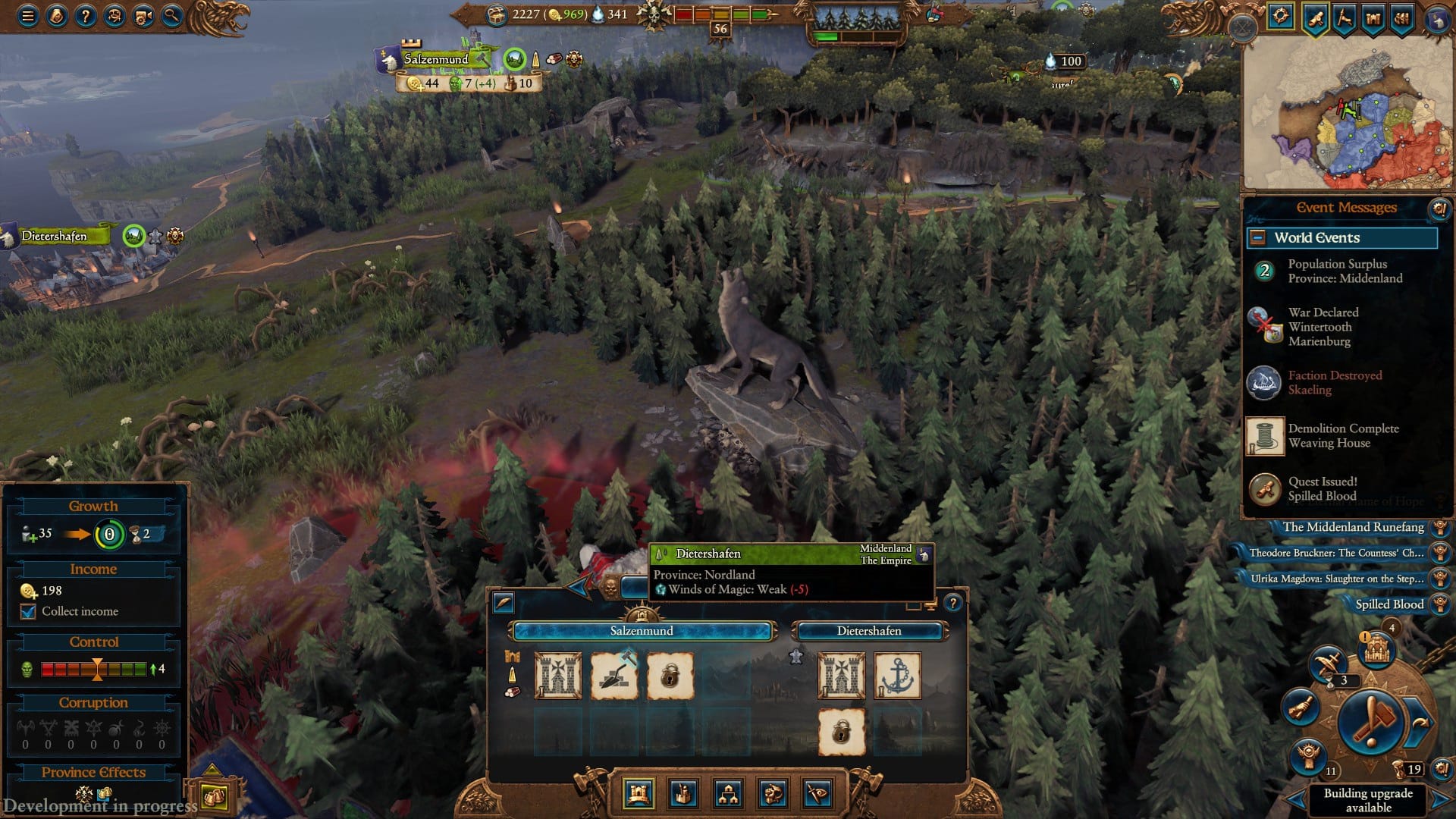
Somewhere in Nordland's forests, atop a rocky outcrop shaped like a crude arrowhead, a grey wolf howls at the sky. Countless hours in Total Warhammer 3, and it's my first time seeing her. I like to think she's saying goodbye to the moon.
She borks in lunatic prestalgia among dozens of bespoke dioramic sites dotted around the Empire of Man's territories. A mill here. A sports arena there. Cartographic peans to the industry and culture of the thousands of conscripts I'll gift dented cuirasses and spears over the length of my campaign, before marching them off to melt under gouts of sour-green warpfire loosed by cackling rats. In Nordland's port settlements - Dietershafen, Salzenmund - I picture dockworkers hauling and cursing, forced to pull double shifts after half the crew were ground to imitation crab meat by mammoth-riding raiders. Click the ports, and four building chains bear the heroic task of abstracting every non-military facet of the Empire's culture - farms, taverns, tailors, roads.
I don't bring these up to call the simulation gaunt. It's precisely the breadth and richness of Total Warhammer's adaption that invites me to dream of more, I think. The maddening brilliance of grand designs is how they plant seeds for endless grander fantasies. Why shouldn't a game world with this much on offer also contain everything, actually? Why can't I zoom in an extra layer - visit the taverns, hang with the soldiers I'm recruiting? Where are the complex strings of branching story events that let me hunt Skaven in Altdorf's sewers? Lazy devs, please fix (my washing machine, my brain, my life).
🐀
The Cooldown is Nic's twice monthly column about shaking strategy games and seeing what stories fall out.
Instead, I'm thinking about the wolf and the granaries and the docks because it's taken me facing the end of the world - courtesy of three new apocalyptic end-game scenarios that devastate the planet's surface - to finally stop and smell the roses.
Not for Blood Bowl, apparently! That's its own universe.
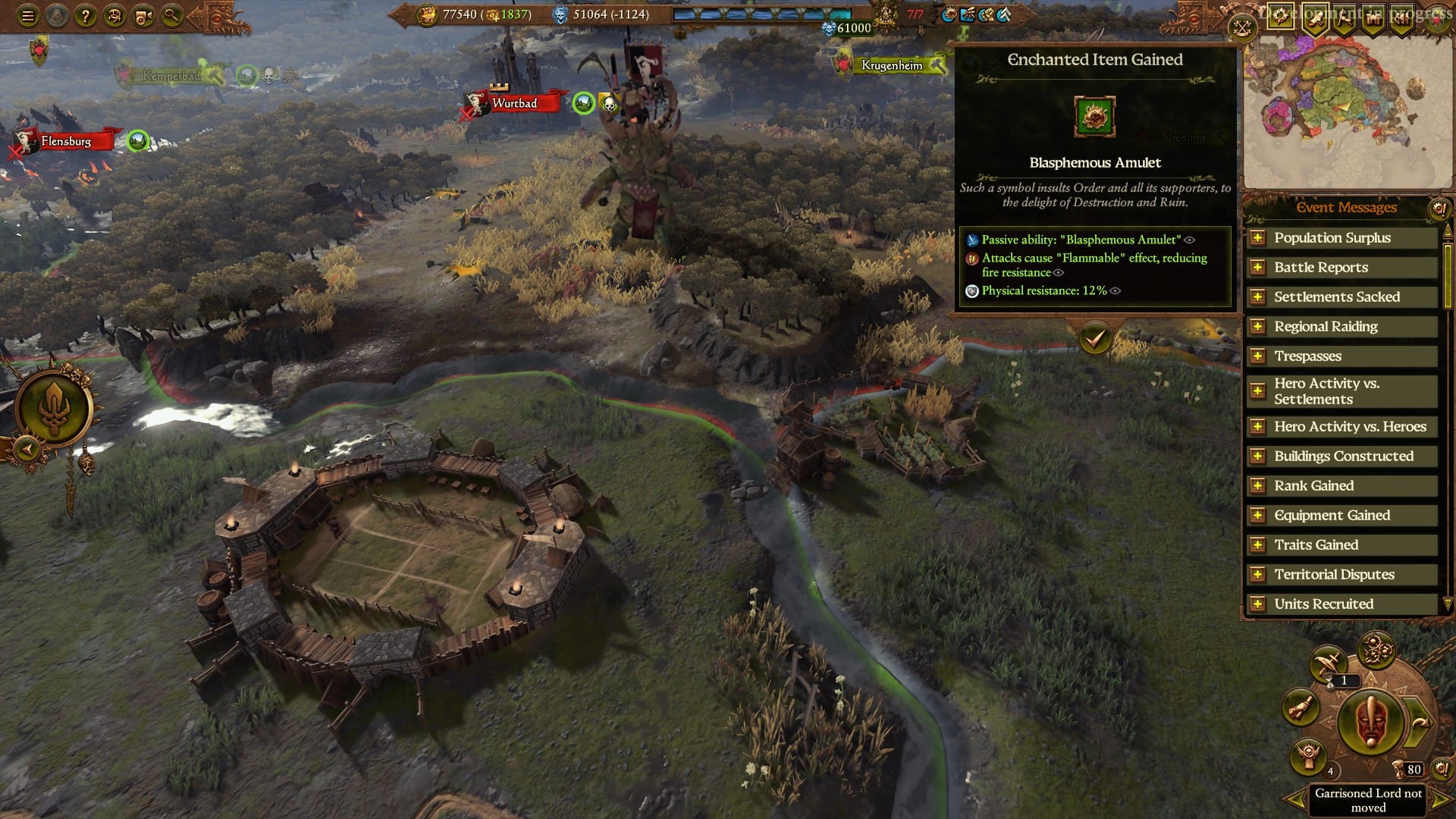
This is Warhammer, of course, where even the roses reek. Just outside my capital city of Middenheim, there's a patch of swampland I've never noticed before. It's so small that it's difficult to move an army any amount and still remain inside of it. In the rare circumstance that Middenheim is ever under siege by two armies at once from this one specific angle, the attrition from the swamp might be enough to slightly weaken the reinforcing force in the one or two turns it takes to build battering rams. It is, in other words, meaningless. Unless…