Total Playtime is the official Jank podcast, funded entirely by our paying subscribers (and formerly our backers on Patreon). This week’s episode is free, but subscribers get additional episodes every other week. You may join them by subscribing here, and you can find all previous episodes here.
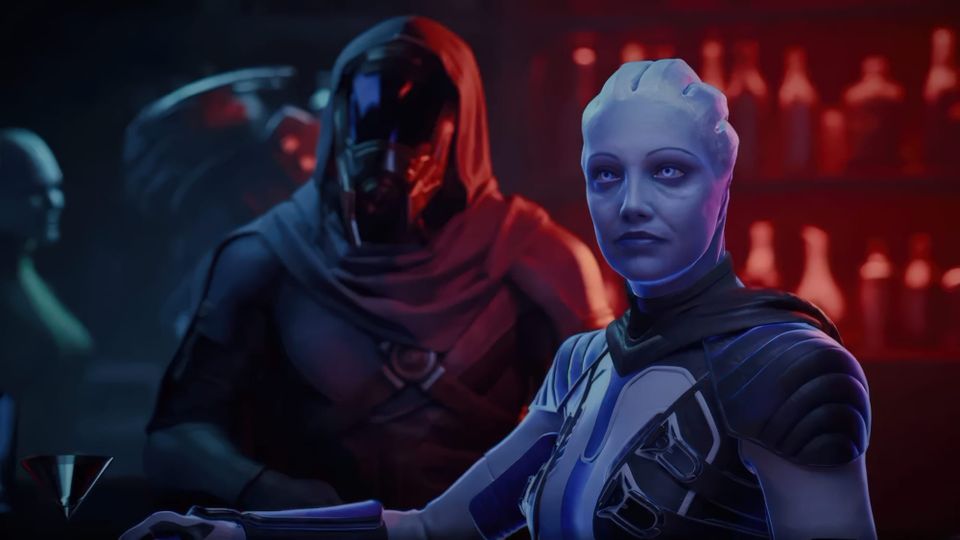
This week's episode is dedicated to a single bit of particularly crushing news: the demise of Bioware as part of EA's cost-cutting/the ongoing contraction of AAA game development. Nate's graphics card also died so he was unable to join us, but Alice, Brendy and myself gathered to say a few words about the departed, and quite a lot more about Alice's new drinking habit.
Plus: the art of finding suitably deranged people to write opinion columns, the complexity of squash, and what to do with 500 surplus missing-cat posters.
This website and its paying subscribers enables this podcast to exist and we thank them for it, along with Marsh Davies for our artwork, God Ribbon for our music and Alix Attenborough for our editing. You can share your memories and/or hating tips at totalplaytimepod@gmail.com, and rate us five stars
I come to bury Bioware, not to praise them. Ah, you know what, I'll praise them a bit. The studio was shuttered last week, the inevitable conclusion of a massive buyout of EA that finalised this year, by crooked persons mired in dirty tricks and impossible sums of Saudi state money. The deal involved whatever the hell "leverage" is. Now, the final 50 people left at the studio are out of a job, and the next Mass Effect game they were working on is cancelled. It is an ignoble end for an influential and historically impactful studio that, in recent years, struggled to make the kinds of chunky, choicey RPGs it once did better than anyone else.
Even when Bioware were good, they were not good at everything. But the studio still did what others couldn't or simply wouldn't. Its back catalogue is stacked with games of the sort that rarely get made today, doing things that simply don't get done anymore. Let's remind ourselves of what we've lost, even if we lost it much longer ago than we think.
Best of the Bio
Renegade and paragon interrupts
Donk.
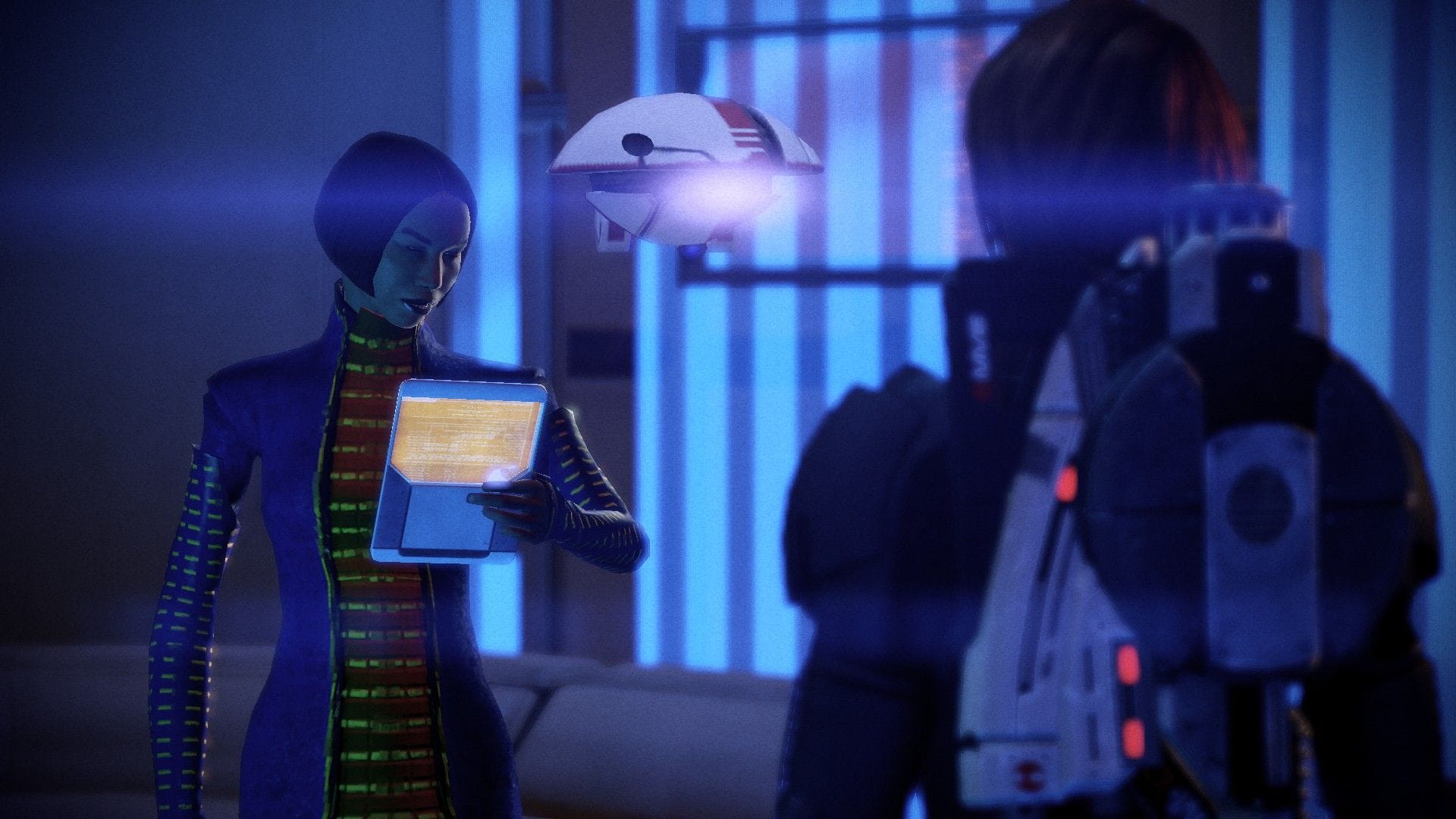
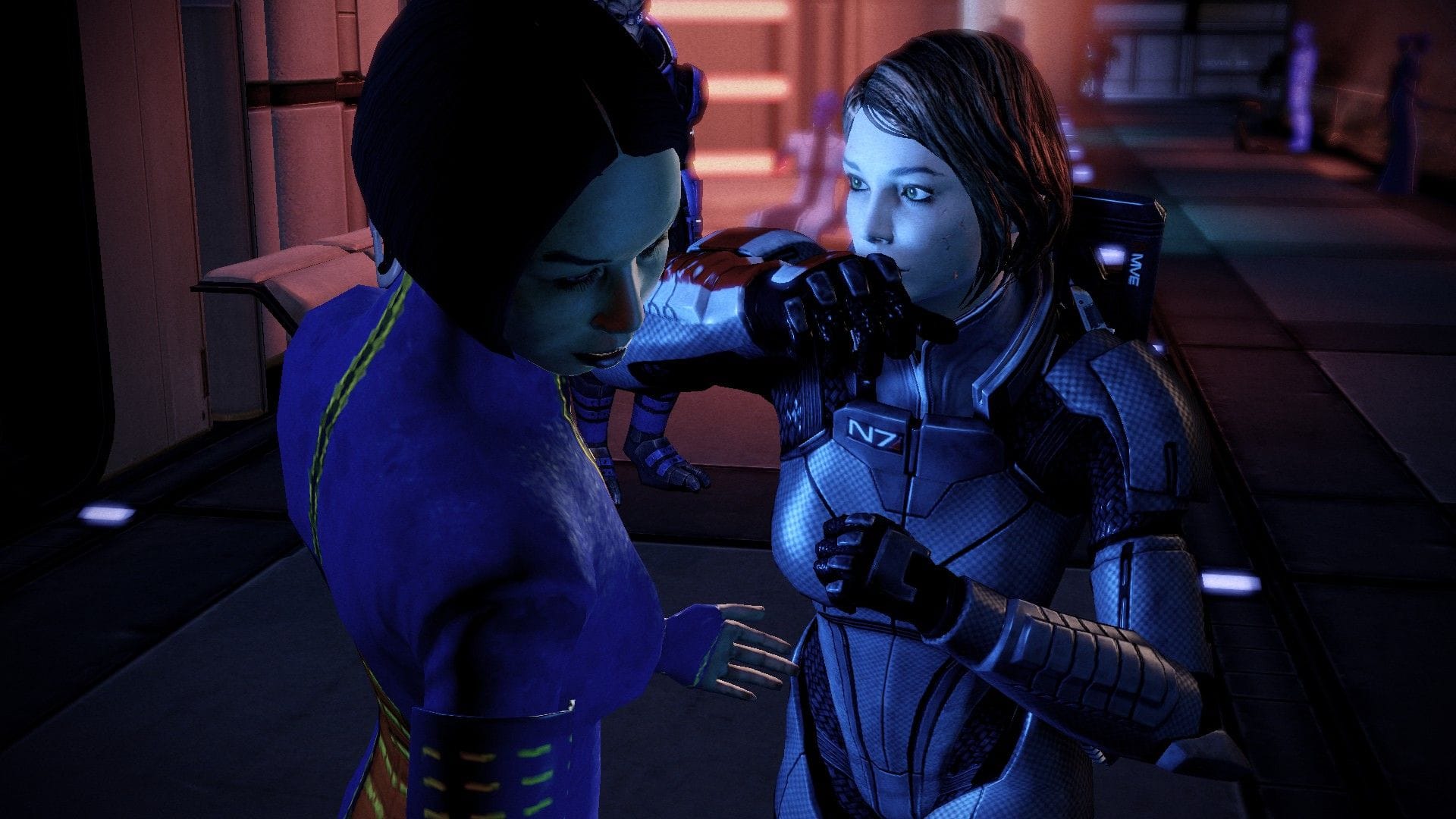
Binary choices are easily parodied but it was still exciting when these little symbols would show up while you talked to people - evil red or goodie blue. It meant you could interrupt whatever was happening and feel like The Big Dick. It let you take action when words were failing. Sometimes that meant awkwardly hugging your grieving shipmates in an attempt to cheer them up (sorry for your loss, Tali). Sometimes it meant punching people and establishing yourself as boss (sorry for your face, Zaeed).
Beginning a game in six different ways
Pity they are all idiots.
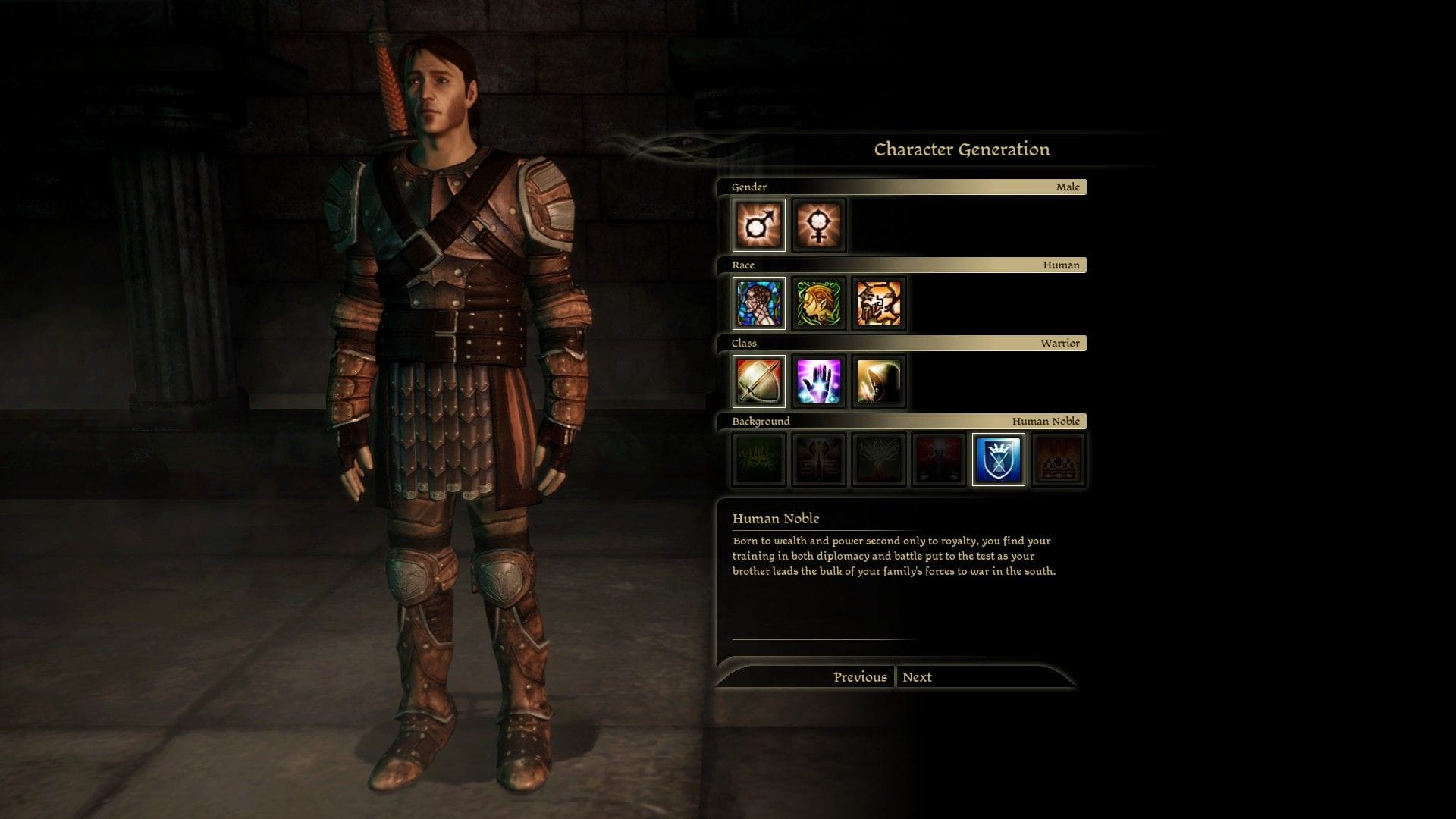
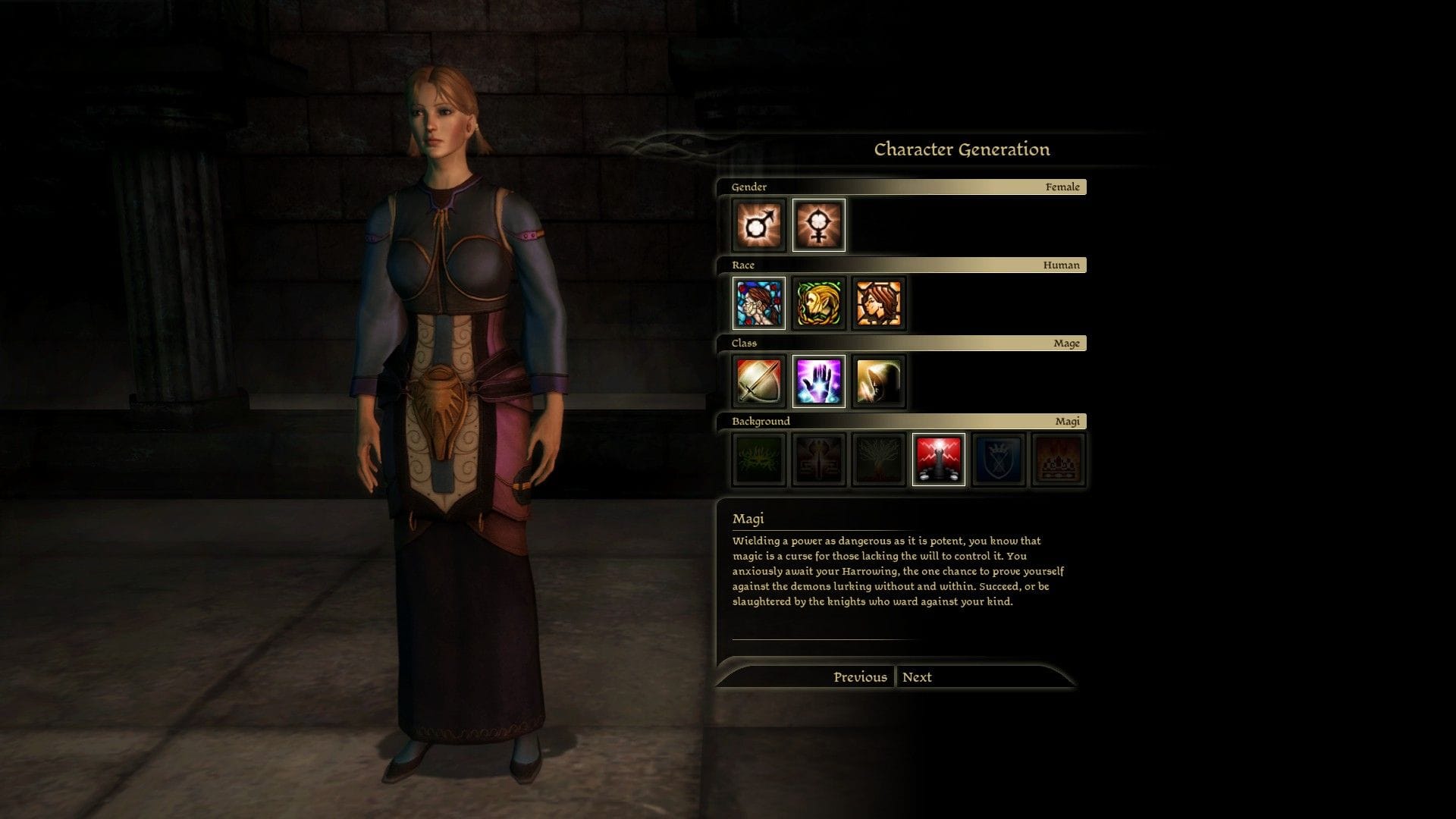
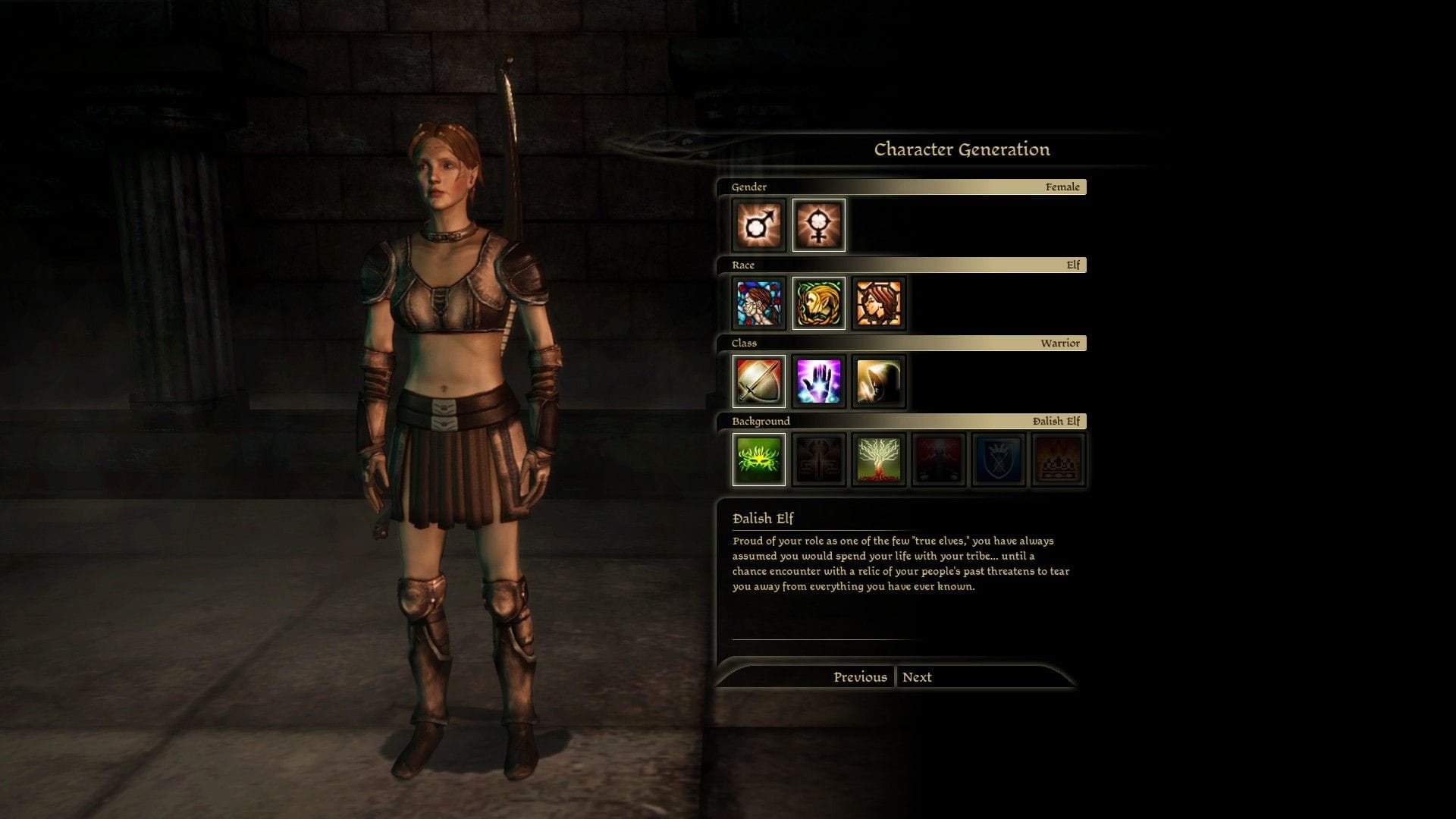
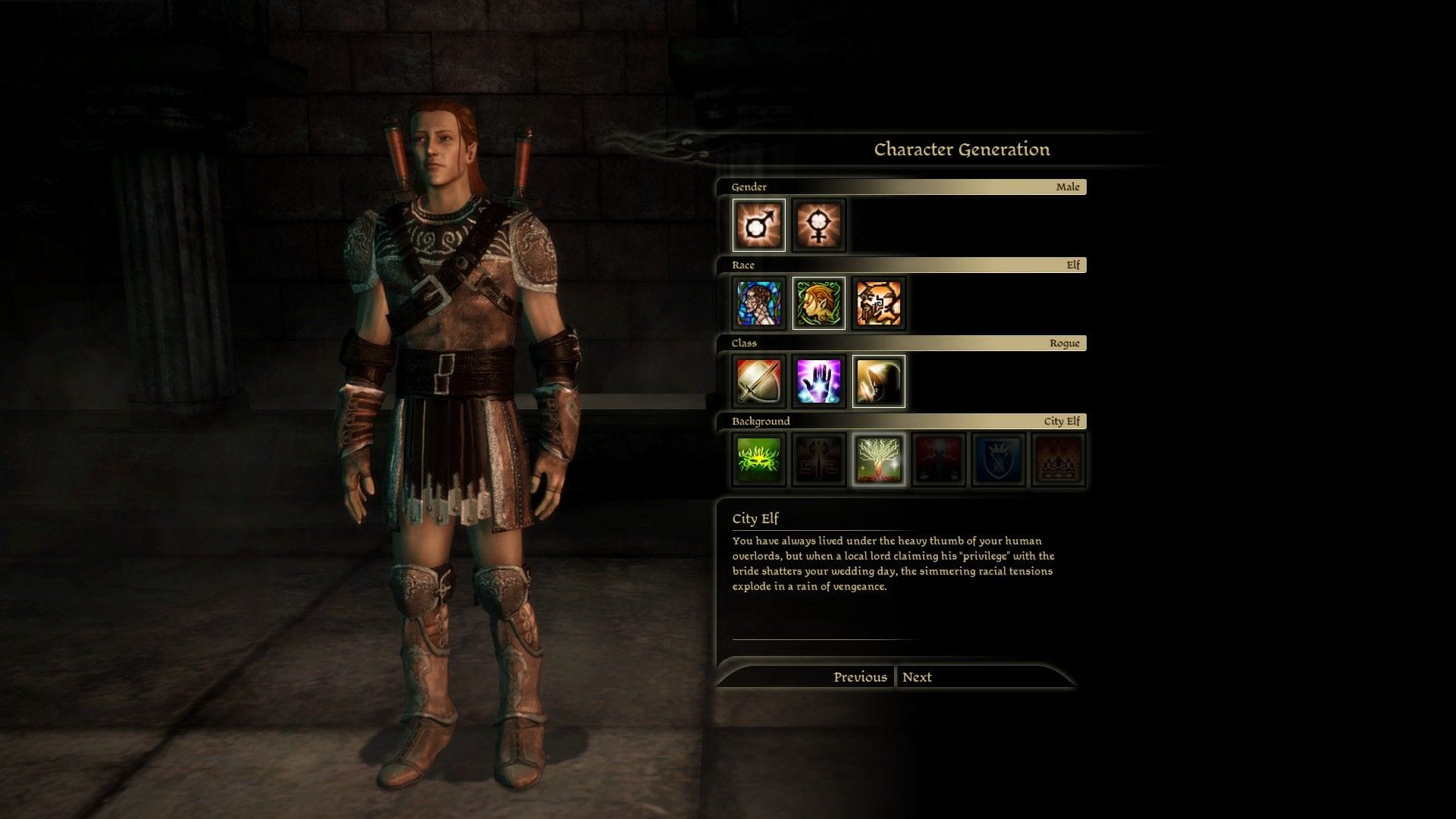
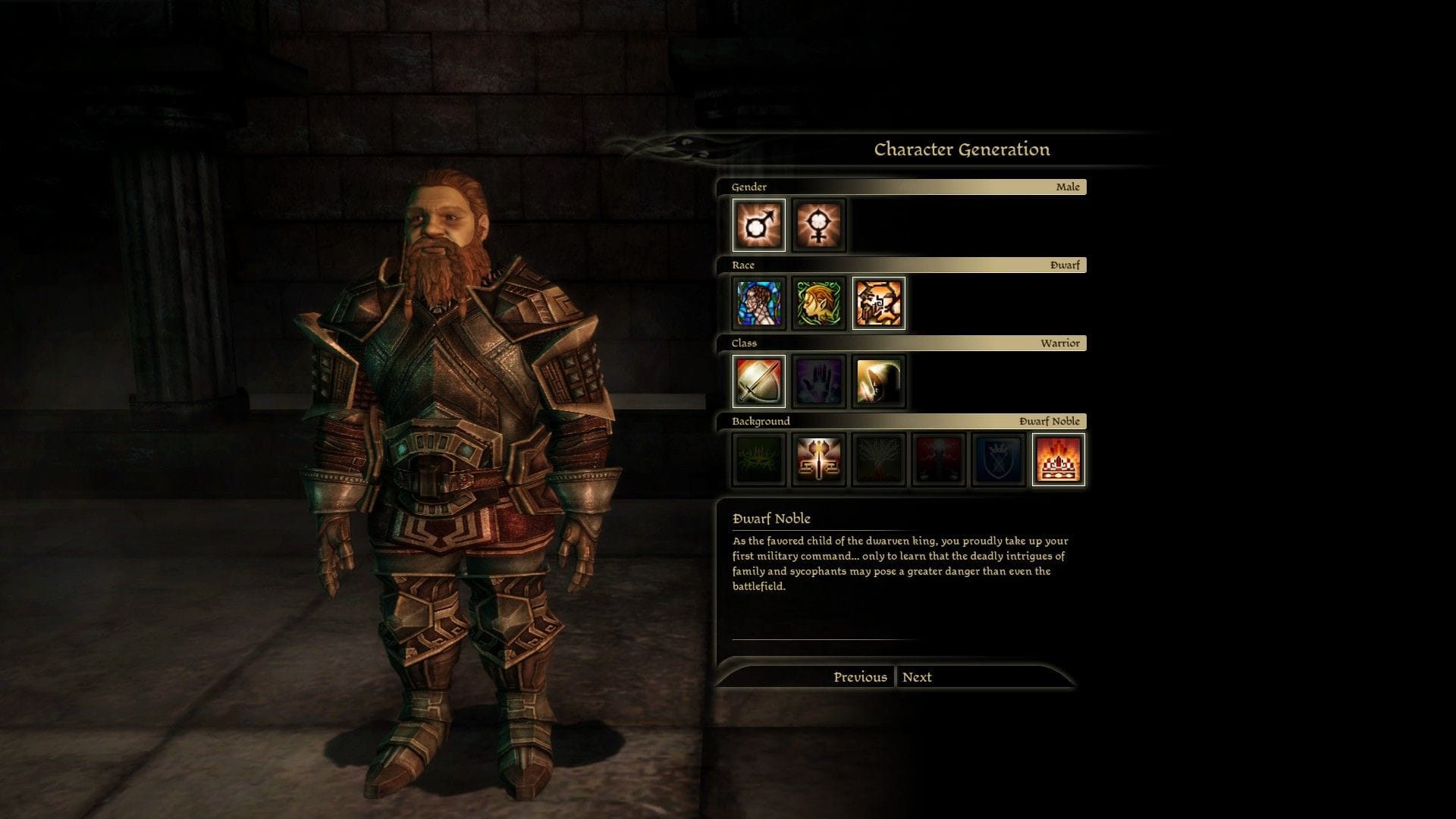
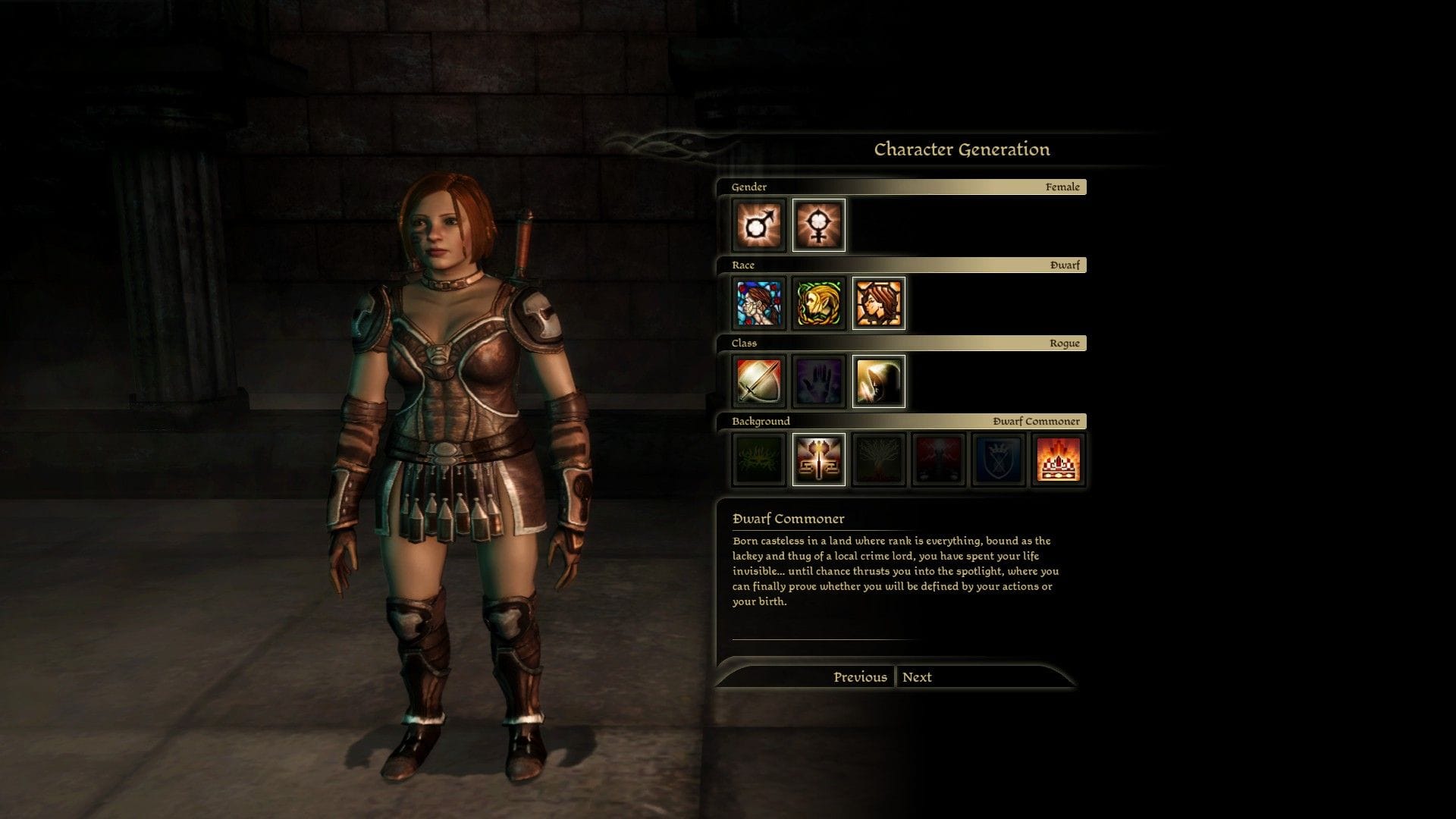
In Dragon Age: Origins there are six different stories to choose at start the game, each with its own distinct player character, storyline, and setting. We are talking hours of game before it all funnels into the same Wardens-save-the-world adventure. Aside from Cyberpunk 2077, few games been brave enough (or expensive enough) to commit to multiple lengthy openings. And even Cyberpunk bugged out at three. Most RPGs usually just let the character creation screen fill in your past with stubs of personal lore. "You were born in the back of a lorry, +1 to balance" and the like. Even Larian don't try to make multiple unique openings. Grand ambition or developmental folly, either way, it was cool.
The kissing
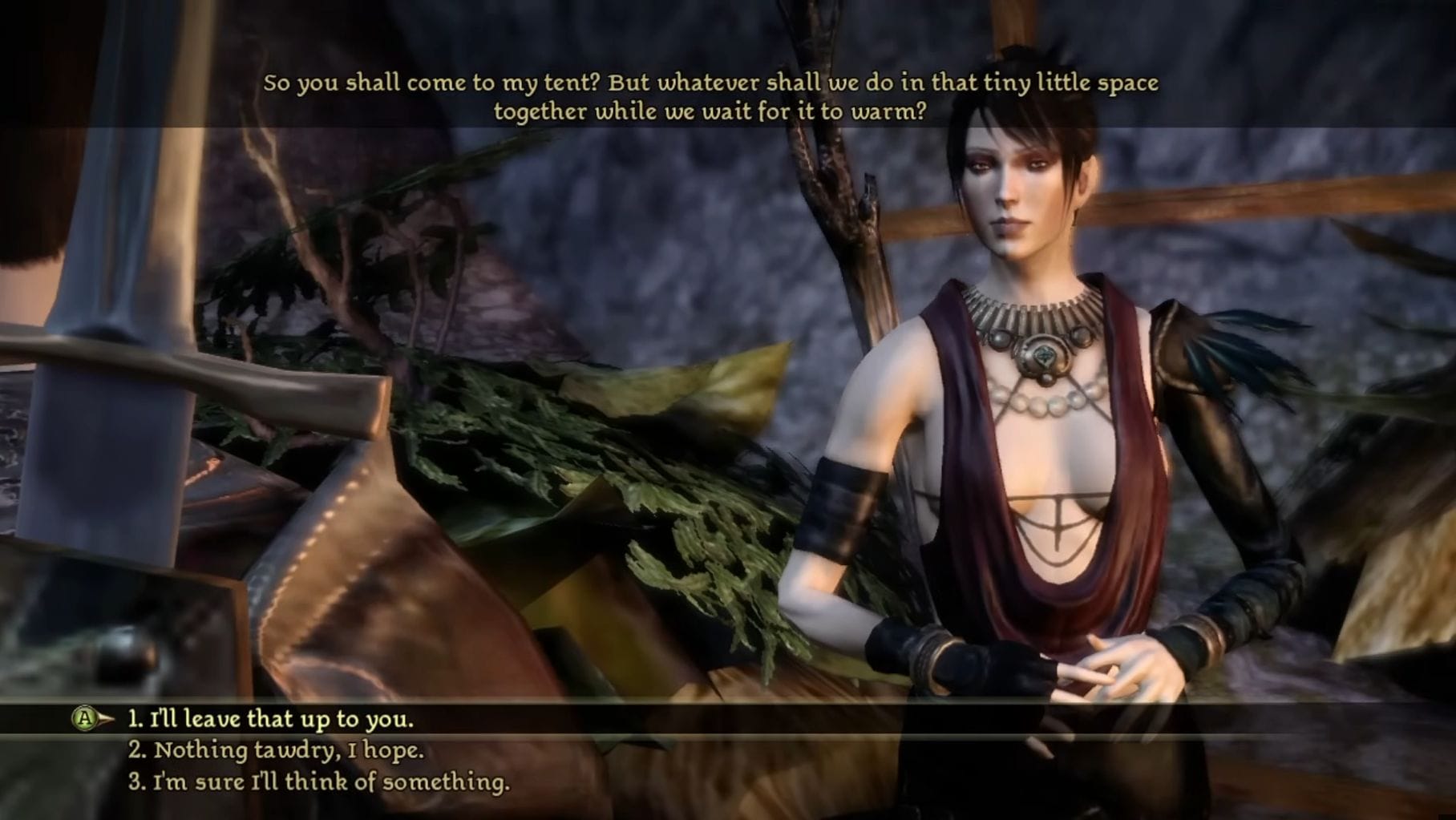
Morrigan is straight and this confused a lot of people.
At least here's one trend that caught on. Bioware established romance as a must for any blockbuster RPG worth its frost salts (and not just RPGs).
"Why ruin a perfectly good book by associating it with the wretched computer?"
Hello Reader who is also a reader, and welcome back to What's On Your Bookshelf? - Jank's twice monthly chat with a selection of game makers about books. Upon first playing Titanium Court, I believe I described it as "like falling through a back-alley door into a secret vaudeville performed by tiny glowing ants". Also probably something about how funny it was - ants being the famous bores they are, I imagine I would have needed to modify the simile. Either way, it's only AP Thomson! Cheers AP! Mind if we have a nose at your bookshelf?
What are you currently reading?
2666 by Roberto Bolaño (and translated from Spanish to English by Natasha Wimmer). I overheard someone recommend this book so I bought it and started reading it with no clue what it was about. It's a great book for that (and in general)!
The thing about this book is the prose is very digestible. It's easy and conversational, pulling you along at a compelling pace, introducing you to its characters and entangling you with their desires. Then suddenly you realize that, within the text, a person has begun telling a story, and that story has completely subsumed the original story, and then someone within that new story begins telling another story, and that story grows, and you look around you and you aren't sure how you got here or what's going on, and it all creeps up on you because the straightforward prose has been pulling you along so so gently. But then, just as gently, you return to the main thread, which seems to be tracing a spiraling shape towards some kind of unseen center. Good stuff.
What did you last read?
Most recently, I finished up a re-read of the Lord of the Rings while reading along with Shelved by Genre (an excellent podcast for fans of genre fiction or podcasts) as they do their year long unit on Tolkien. I wasn't initially excited about re-reading it, mostly because I've grown pretty weary of the Tolkien-inspired dominant strain of fantasy, but I was pleasantly surprised to discover that the original is considerably weirder than its copycats. What struck me in particular during this re-read was the overwhelming melancholy of the story, something that apparently went mostly over my head the first time I read it (i.e. 5th grade lol).
I also recently read Frankenstein by Mary Shelley, which is great, but I bring it up mostly to talk about how my ebook edition had a pretty wild misprint. Basically, at a certain key moment in the early plot, it suddenly seemed like the protagonist was making some pretty grand assumptions based on very little evidence. I was like "did I miss something? This doesn't make sense without some kind of additional detail." Apologies to Mrs. Shelley, but I initially wrote it off as sloppy writing. Lo and behold, when I reach the end of the book (at 60% of the way through according to my ebook app) the words "The End" were immediately followed by more text in a totally different font. Reading this new section, I slowly realized it was the second half of chapter 7, providing the exact details that felt like they were missing during my initial read. Then the rest of the book following chapter 7 was also printed in this new font, so I could read it all again, if I wanted.
How strange. I probably should have just downloaded a public domain copy for free rather than paying $2.99 for whatever happened there.
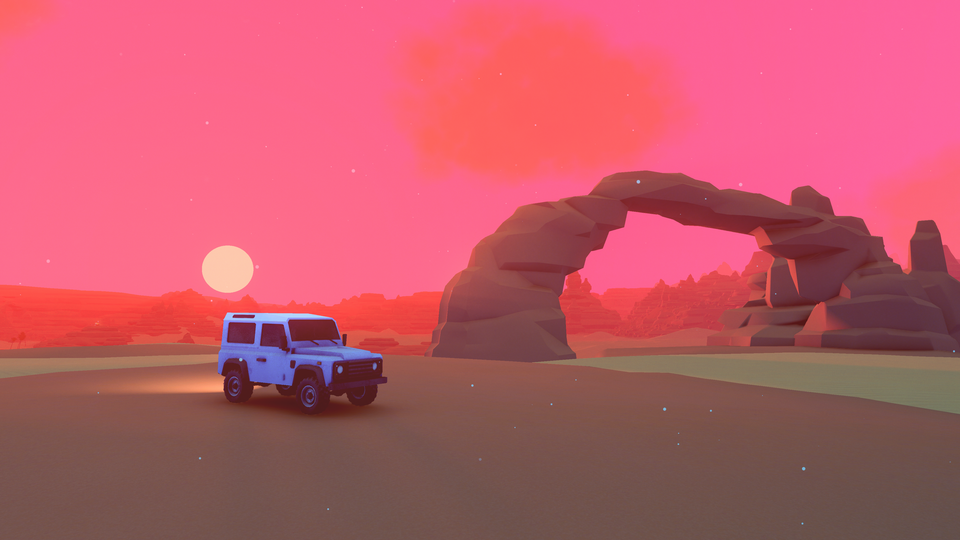
Over the Hill is officially styled over the hill, in defiant lowercase, like how Jack or Jill might nonchalantly reply to a WhatsApp message demanding to know where the pail is. The same casual grammar was deployed with Funselektor’s previous title, the lo-fi racer art of rally, lending Over the Hill the unflappable vibe of a driving game so laid-back it actually doesn’t mind whether or not you play it.
A gentle off-road simulator set across a handful of big ol’ maps, Over the Hill takes the diesel-stinking masochism of MudRunner and strips away anything that might cause your heart rate to spike. Whereas that game had you hauling flatbeds full of timber through Siberian quagmires and learning what a differential is, Over the Hill is about exploring pretty landscapes at your own pace. It’s a cosy memory of an imagined previous life, spent mindfully navigating the piney wilderness of the Canadian Rockies and a sprawling patch of the Algerian Sahara in a selection of dinky, pastel-coloured 4x4s.
There are no fuel gauges, no timers, and no remote villages in need of essential deliveries. Instead there are waterfalls, rock sculptures, scattered cargo crates, photo opportunities and points of interest to roughly aim your car towards, some of which reward you with various bobbins like canoe racks and novelty aerial toppers to decorate your vehicle with. There’s the occasional challenge trail that guides you along tricky routes with steep inclines, boulders and cliff edges to navigate around. Gratifyingly, that’s about as structured and gamey as Over the Hill gets.
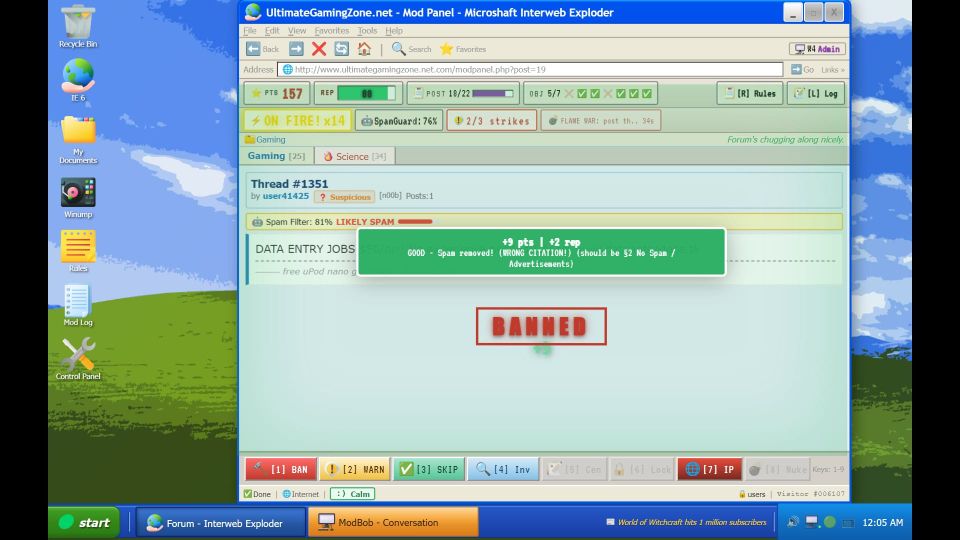
Web forums are one of those things that just quietly passed out of popular view without anybody really noticing, like politicians experiencing shame or Nissan Prairies. 25 years ago they were the chief discourse zone for videogames as a hobby: NeoGAF was the most regularly cited due to its collection of occasionally well-informed industry folk, but every games media brand had its own, notionally created as a place to foster community but invariably in a state of perpetual conflict as members squabbled with both each other and the writers of the work they were ostensibly there to appreciate.
They nevertheless reflected the editorial tone of their origins. I was once delighted to witness the stridently tabloid CVG forum be temporarily evicted for a server upgrade, only to set up in a corner of the more cerebral Eurogamer forum like the gobby kids from the ropey comprehensive temporarily assigned to the grammar school, to largely the same effect; forums that originated from Edge, PC Gamer or the sprawling Ziff Davis portfolio similarly had their own distinct house style. All of them eventually succumbed to schisms that begat rival forums, like cell division, with only the sturdiest lasting long-term.
Good morning, videogames. It's Sunday morning and this is the Lie-In, which makes it the perfect time to offer you a cryptic crossword. If you haven't done the first Jankword yet, go do so now. Marsh has constructed not only a set of moderately devious clues, but a primer on how to play cryptic crosswords for the uninitiated. And if you're still not convinced to try solving it yourself, there are jokes around the margins. Tried it already? Then you may proceed below to some articles worth reading from across the rest of the web.
Likewise Galactic Racer seems wholly uninterested in getting you to learn its tracks by any mechanism other than crashing every time you're surprised. There are no maps of the tracks shown, no best lines while racing, and while there are a few corners worth memorizing because they're difficult and demand careful navigation, more of the ones worth memorizing are because they're simply too difficult to visually parse whether something is a tunnel or
They're free and finding your own ought to be the whole point... But you could start here
Steam Next Fest runs until October 26th, and the many demos therein often remain available long after the fest has ended. That means you've got time, but not enoughtime, to try everything that looks interesting therein. To help you, I've spent the past week playing demos myself, and I've picked 11 that I think could be worth your time.
Should you take this to mean that this is everything the Next Fest has to offer, and all else is trash? No, of course not. I think it's worthwhile for me to highlight some demos I liked - and to acknowledge their warts where I see them - but really the joy of an event like this is the opportunity to go crate digging for yourself in search of the demos that appeal to you. Yes, if you step beyond Steam's personalised recommendation algorithm, you will encounter games that you do not care for, and even despise. Do not be afraid. This is how you strengthen your muscles of personal taste and discover the gems that speak to you but which cannot be predicted by an algorithm. And if you've already done that, share what you found in the comments below, so we can all cheat off your homework.
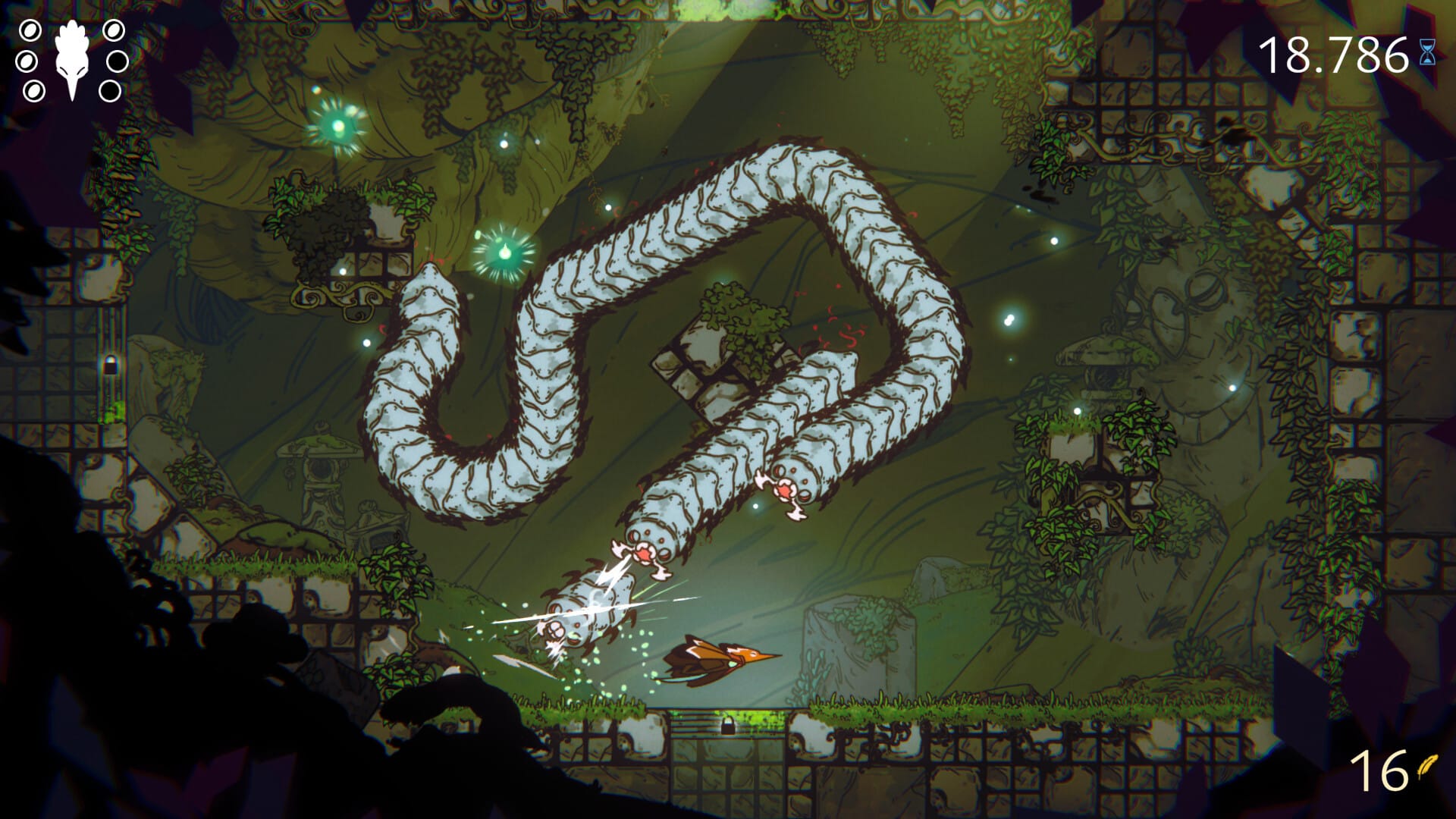
Technically these guys live here and you just showed up and started murdering them.
This is an action platformer built around a single, fun mechanic: your jump can be aimed and charged to fling you across great distances, and to slice through any enemy that's in your path. I am never not happy if a game lets me cling to ceilings, or encourages me to corral a swarm of pursuing monsters so I can line up a single devastating attack. Everything around that one good-feeling move is a lot more rough at this stage. There's lots of handsome art and pleasant music, but menus, upgrades, and level progression feel unfinished. Because they are. Still, there's plenty here to enjoy, and enough that I'll be keeping an eye on Feather's Edge whenever it gets a full release.
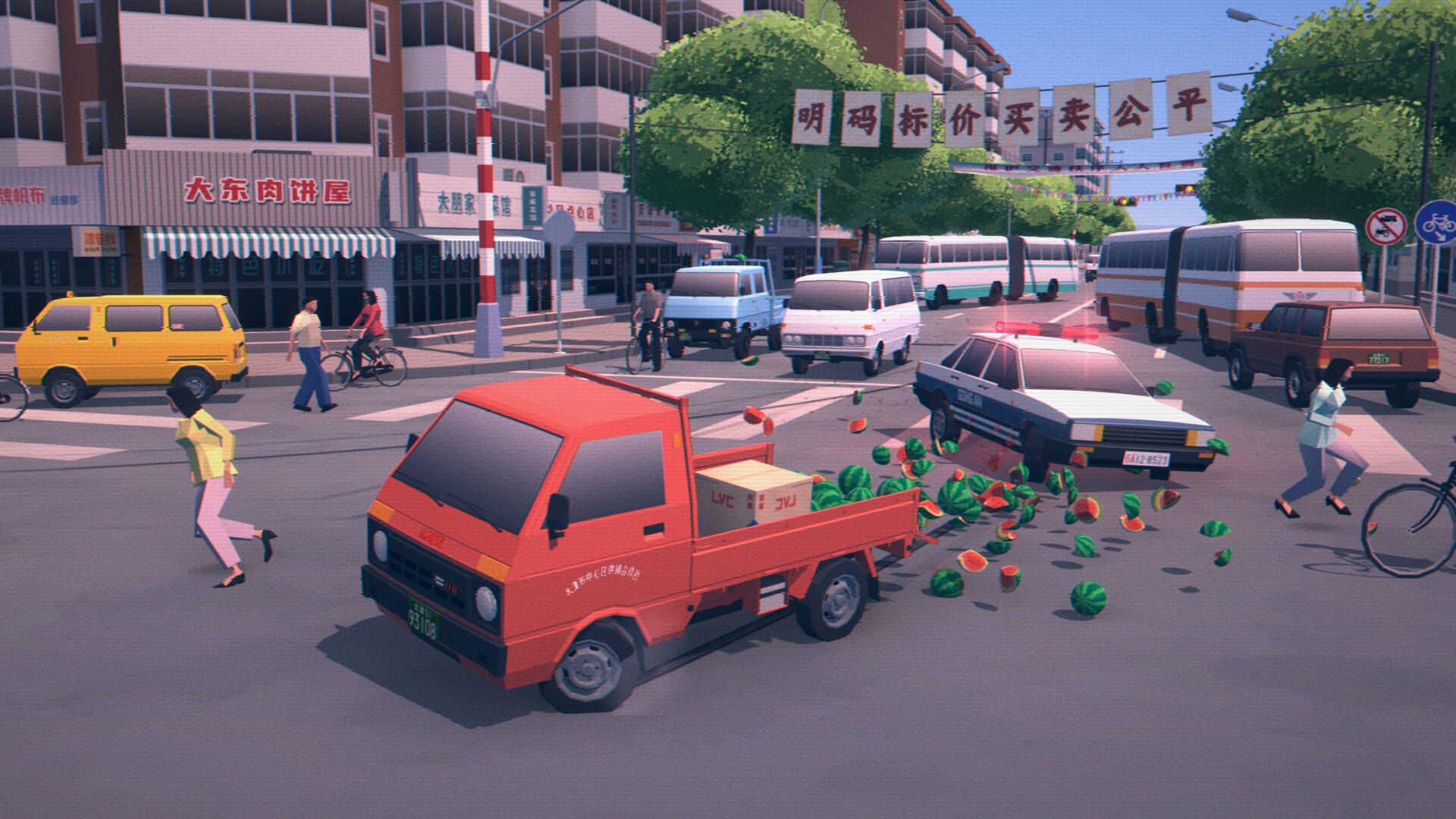
This picture perfectly encapsulates the entire game.
There are a bunch of physicsy delivery sims around now, in which you pack objects into the back of a flatbed truck and then watch them slide and spill as you speed (or carefully trundle) around corners. Whether a new one is worth playing is, I think, based on the vehicle handling and the setting, and Shifu: Traffic Masters succeeds in both. You're making your deliveries (sometimes cargo, sometimes post, sometimes people) around the fictional streets of 1990s China with a VHS aesthetic, police chases, and functional, reasonably priced cars that wobble on their suspension in a way that begs you to whip them down an alleyway like you're playing the original Driver. Do I wish some of the cars were less shit? Yes, especially the police car, which takes an eon to accelerate and rather strips the game of fun when you're trying to box-in a fleeing target.
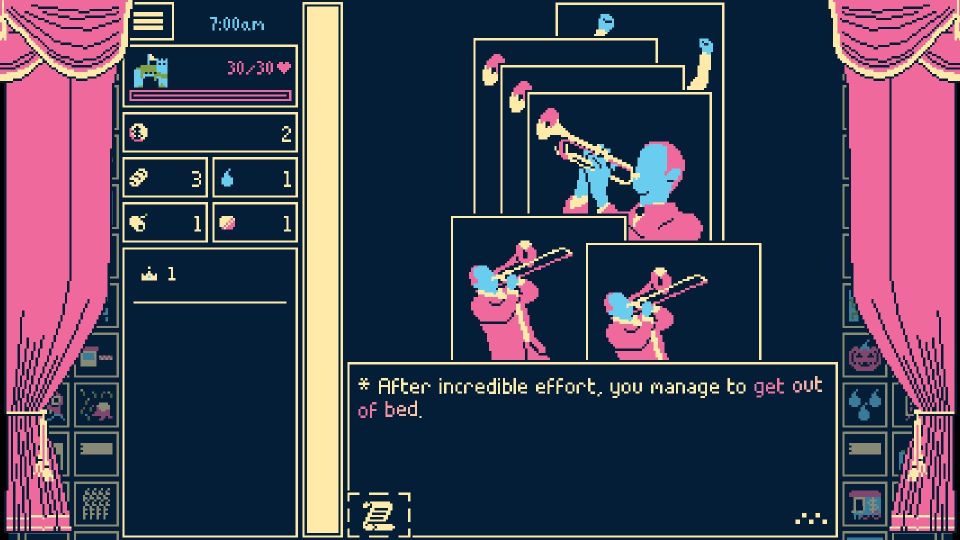
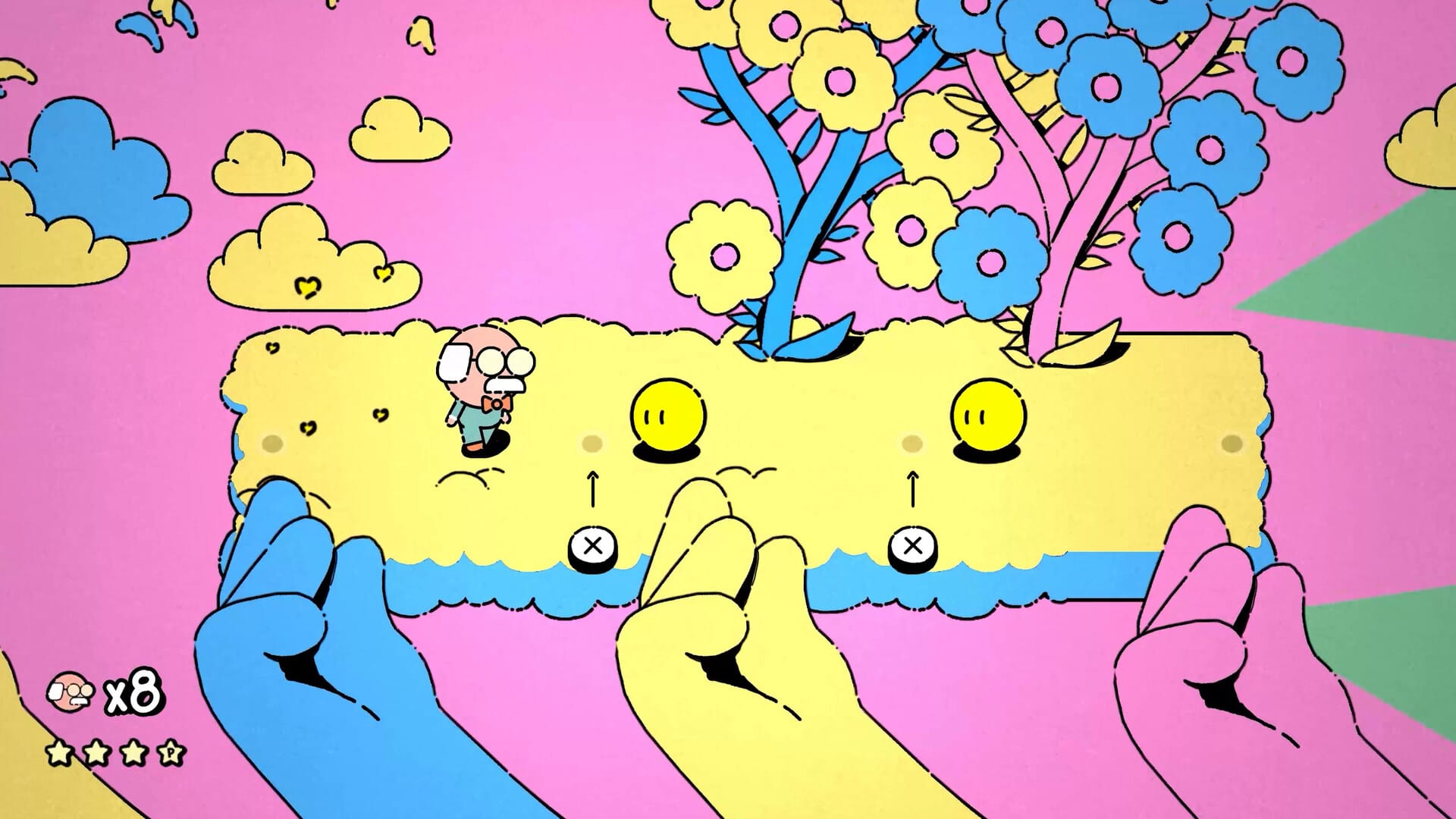
I, too, wear only pants in real life but a bowtie in my dreams.
By day, you run a record shop, choosing the correct vinyl album to hand to customers based upon clues about their taste. At night, you listen to the new records you've purchased for the store, each one of which becomes its own rhythm-based side-scrolling level for you to jump, slide and kick across. As rhythm games go, it's pretty forgiving, at least in this demo, and doesn't require the precise timing of a Rhythm Heaven or the deft platforming of a Geometry Dash. That's a good thing, because I'm terrible at those games. Here I got to enjoy the animation and the colour palette and the old man in his pants. There's a track editor, too, if you fancy importing your own music and building your own courses.
This week on Jank, the reviews kept coming, as our pitiless judgement was applied to still more new PC games. Sin was left largely cold by the whale-based space exploration of Beyond These Stars:
The planets' lack of significance is compounded by the fiddly micromanagement needed to transfer resources from whale to planet, and although it's cool that you can run these planetary towns independently at any time (even before unlocking fast travel gates between them), they suffer from the same problem as the post-apocalypse city builders of recent years: they split your focus so much that the only workable approach is to either make them tiny and perfectly stable, or milk them dry as rapidly as possible.
Marsh had a surprisingly good time with Hellraiser: Revival, which turned out to be more sophisticated than its teenage schlock suggested:
That Revival even gestures towards this sort of deep discussion surprised me, given that the game initially appears to be liberally doused in the Axe Body Spray stank of puerile lockerroom fantasy. Its lurid depictions of sex clubs or even private sex have an edgy absurdity to them, even before you account for the cultists and transdimensional